What are shirataki noodles?
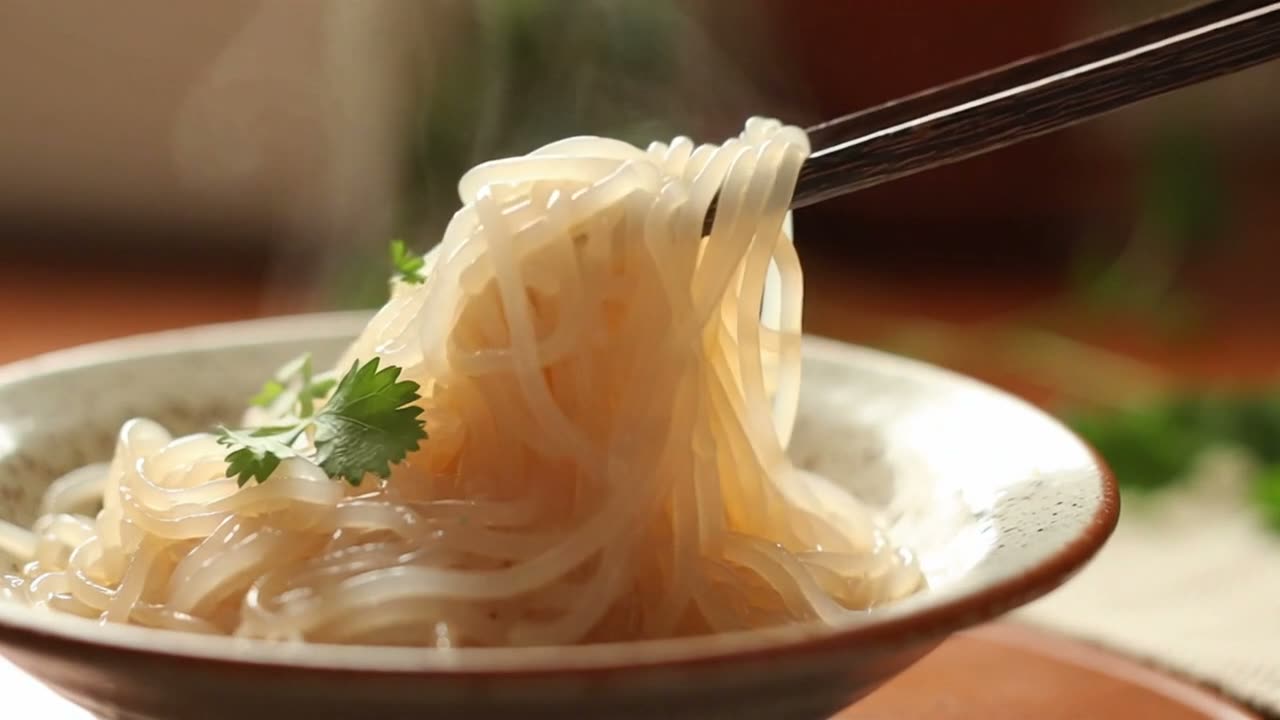
Shirataki noodles are translucent konjac noodles made by gelling glucomannan fiber from the corm of Amorphophallus konjac with water and an alkaline coagulant.
The Japanese word shirataki is often translated as white waterfall, a reference to the pale, flowing appearance of the noodles. In stores, the same product may be labeled konjac noodles, konjac pasta, shirataki pasta noodles, low-calorie noodles, or miracle noodles, depending on the market and package style.
The main functional ingredient is glucomannan, a water-soluble polysaccharide found in konjac corm. Food regulations in the United States list konjac flour as a substance used in foods, with specifications for identity and use in 21 CFR. In practice, noodle makers hydrate purified konjac flour or glucomannan powder, add a calcium source, shape the gel, and pack the noodles in water.
Shirataki noodles are not grain pasta. They do not contain durum wheat semolina unless a manufacturer blends them with other ingredients, which is uncommon for classic konjac noodles. Plain shirataki is usually gluten-free by formulation, but shoppers should still check allergen statements, shared-line notices, and local labeling rules.
| Common name | What it usually means | Buyer note |
|---|---|---|
| Shirataki noodles | Konjac gel noodles packed in water | Classic option for stir-fries, soups, and sauce dishes |
| Konjac pasta | Shirataki shaped like spaghetti, fettuccine, or penne | Made for pasta-style meals |
| Miracle noodles | Generic retail term for very low calorie konjac noodles | Not a nutrition guarantee, read the panel |
| Konjac rice | Konjac gel cut into rice-like grains | See konjac rice for rice-style use |
The key appeal is macro profile. Plain shirataki noodles are mostly water and fiber, so a serving is much lighter than wheat pasta or rice noodles. The tradeoff is texture: springy, slippery, and gel-like rather than chewy, starchy, and elastic.
How are shirataki noodles made from konjac?
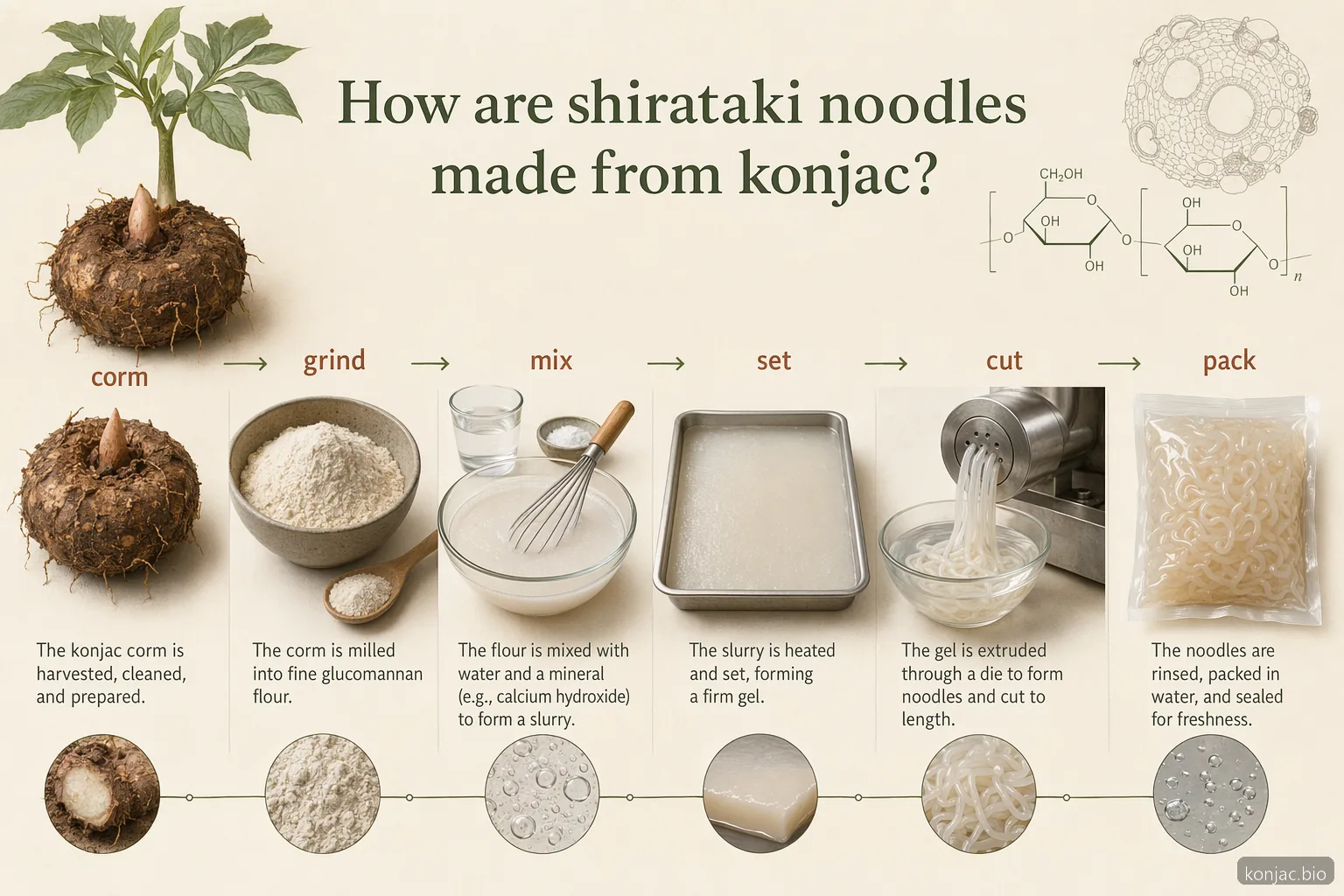
Shirataki noodles are made by hydrating konjac flour or glucomannan powder, adding an alkaline calcium solution, extruding the gel into strands, heating it to set structure, and packing it in water.
The process starts with the konjac corm, an underground storage organ of Amorphophallus konjac. The corm is washed, sliced, dried, milled, and purified into konjac flour or glucomannan powder. For a deeper ingredient view, see konjac flour and glucomannan.
Manufacturing is simple in concept but precise in control. Hydration rate, particle size, pH, calcium level, and residence time influence firmness, breakage, water release, and bite. A noodle that feels pleasantly springy at the factory can become brittle after retort or soft after months in ambient storage if the formulation is not balanced.
- Raw material selection: Higher-purity glucomannan gives a cleaner color and more neutral aroma.
- Hydration: Powder is dispersed in water under shear to avoid lumps and fish-eye particles.
- Alkaline gelling: Calcium hydroxide or a similar coagulant helps form a stable thermally irreversible gel.
- Shaping: The gel is extruded or cut into spaghetti, angel hair, fettuccine, rice, or specialty cuts.
- Setting: Heat stabilizes the noodle matrix and reduces breakage during packing.
- Packing: Noodles are filled with water, sealed, and pasteurized or sterilized based on the target shelf life.
That gel structure explains why shirataki noodles behave differently from pasta. Wheat pasta relies on starch gelatinization and gluten protein structure, while konjac noodles rely on a hydrated fiber network. The result is lower energy density, no al dente starch core, and a texture that improves when excess surface water is removed before saucing.
konjac.bio helps buyers compare wholesale, private-label, and OEM konjac noodle specifications, including cut style, pack size, certifications, and MOQ flexibility. For sourcing support, contact the team.
What do shirataki noodles taste like?
Shirataki noodles taste mild and almost neutral after rinsing, with a springy gel texture that carries sauce better than it creates flavor on its own.
Many first-time buyers notice an alkaline or marine-like smell when opening the pouch. That aroma comes mostly from the packing water and the alkaline setting environment, not from the noodle after proper preparation. A cold rinse followed by brief boiling or dry-pan heating usually reduces it sharply.
The texture is the bigger difference. Shirataki does not soften like wheat pasta, and it does not absorb water like dried noodles. It is already hydrated, so cooking is less about making it tender and more about warming, deodorizing, drying, and coating.
| Attribute | Plain shirataki noodles | Wheat pasta |
|---|---|---|
| Base material | Konjac glucomannan gel | Durum wheat semolina |
| Main texture | Springy, slippery, slightly bouncy | Chewy, starchy, elastic |
| Flavor | Neutral after rinsing | Mild wheat flavor |
| Cooking role | Remove water and add sauce | Hydrate starch and build bite |
Shirataki works best in dishes where sauce defines the experience. Good matches include sesame garlic noodles, spicy peanut sauce, miso soup, tomato ragù, curry broth, pad-thai style stir-fries, and broth bowls. Light butter sauces can work, but they expose the noodle texture more than bold sauces do.
Texture expectations matter. A shopper expecting identical pasta may be disappointed. A shopper wanting a low carb alternative to noodles may find shirataki useful because it adds volume, shape, and sauce-carrying ability with a very different nutrient profile.
How do shirataki noodles compare with pasta, rice noodles, and shirataki rice?
Shirataki noodles have far fewer calories and digestible carbohydrates than wheat pasta or rice noodles, while shirataki rice uses the same konjac gel idea in grain-shaped pieces.
Plain wheat spaghetti, cooked without added fat, is a staple carbohydrate food. USDA FoodData Central lists cooked spaghetti as a meaningful source of energy and carbohydrate, while plain konjac noodles generally provide much less because they are mostly water and fiber; verify exact values on each product label through USDA data and the package nutrition panel.
The comparison is not only nutritional. Pasta brings starch, chew, and familiar cooking behavior. Rice noodles bring soft rice flavor and quick hydration. Shirataki noodles bring volume and sauce compatibility with a gel bite. Shirataki rice brings the same konjac concept into bowls, fried rice, and mixed-grain applications.
| Food | Main ingredient | Typical use | Best fit |
|---|---|---|---|
| Shirataki noodles | Konjac glucomannan gel | Noodle bowls, pasta swaps, stir-fries | Keto, low carb, very low calorie meals |
| Wheat pasta | Durum wheat semolina | Italian-style pasta dishes | Classic texture and starch-based satiety |
| Rice noodles | Rice flour and water | Soups, stir-fries, Southeast Asian dishes | Gluten-free starch noodle meals |
| Shirataki rice | Konjac gel, sometimes blended with plant fibers | Rice bowls, fried rice, meal prep | Low carb rice-style volume |
Shirataki noodles and rice can also be used together. Retailers often merchandise shirataki noodles and rice in the same low-carb shelf set because shoppers compare them as meal bases. Search terms such as shirataki noodle rice, miracle noodles rice, and shirataki rice usually point to the rice-shaped cut rather than a separate plant or ingredient.
For home use, choose the shape based on sauce geometry. Long spaghetti-style noodles suit broth bowls and twirled pasta plates. Fettuccine-style ribbons suit cream sauces, curry, and peanut sauce. Rice-shaped konjac pieces suit stir-fried rice, burrito bowls, and meal prep containers.
The strongest practical rule is simple: replace shape, not cuisine. Shirataki pasta noodles can make a tomato-sauce dinner feel pasta-like, but they will not duplicate durum wheat chew. Shirataki rice can make a low-carb bowl feel fuller, but it will not duplicate jasmine rice aroma.
Are shirataki noodles good for keto and weight management?
Shirataki noodles can fit keto and weight-management eating patterns because plain konjac noodles are very low in calories and digestible carbohydrates, but the full meal still depends on sauce, protein, fat, and portion size.
For keto shoppers, the label is the decision point. Plain konjac noodles usually have very low net carbohydrates, but hybrid products may include tofu, oat fiber, tapioca starch, potato starch, or vegetable powders. Those additions can improve texture or color, yet they may change carbohydrate count and allergen status.
For weight-management shoppers, glucomannan has a specific European claim under defined use conditions. The EFSA-approved wording is: “Glucomannan in the context of an energy restricted diet contributes to weight loss”, with conditions described in the EFSA opinion on konjac mannan. EFSA specifies 3 g daily in three 1 g doses with 1 to 2 glasses of water before meals in an energy restricted diet.
That claim does not mean a single noodle pack guarantees a result. A serving of shirataki noodles may contain less glucomannan than a standardized supplement serving, and a sauce can add substantial calories. The practical advantage is substitution: replacing a large starch portion with a high-water konjac base can reduce meal energy while preserving plate volume.
- Good keto pairings: egg, tofu, chicken, fish, greens, mushrooms, sesame, olive oil, cheese, and low-sugar sauces.
- Watch items: sweet chili sauce, sugary teriyaki, high-carb breading, and starch-thickened gravies.
- Portion cue: one drained pouch often serves one large meal or two side portions.
- Fiber cue: increase intake gradually if you are not used to fiber-rich foods.
For a broader shopper guide to konjac, low-carb meals, and satiety-focused menu design, see konjac keto. For cooking ideas that balance protein, vegetables, and sauce, see konjac recipes.

How should you cook shirataki noodles?
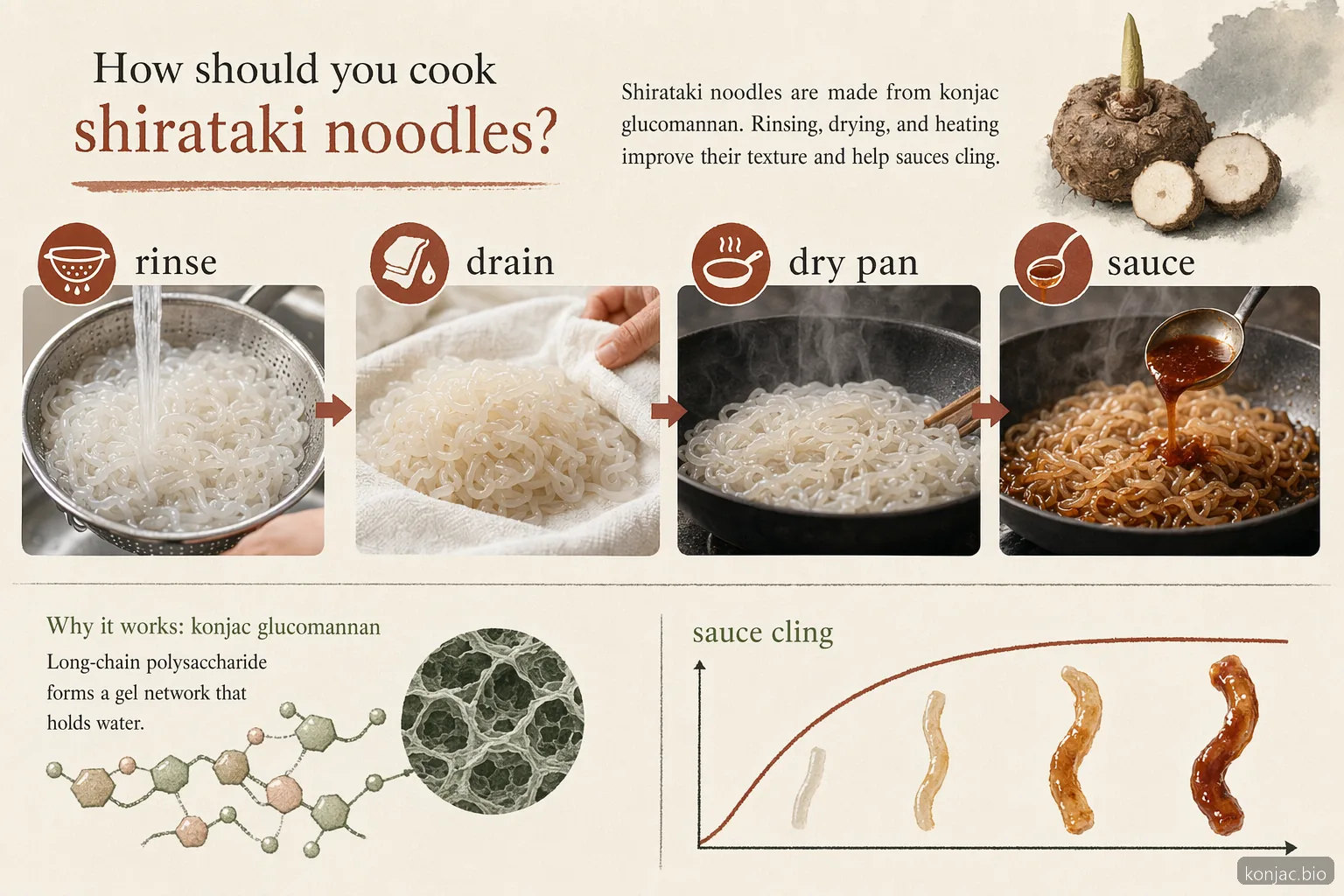
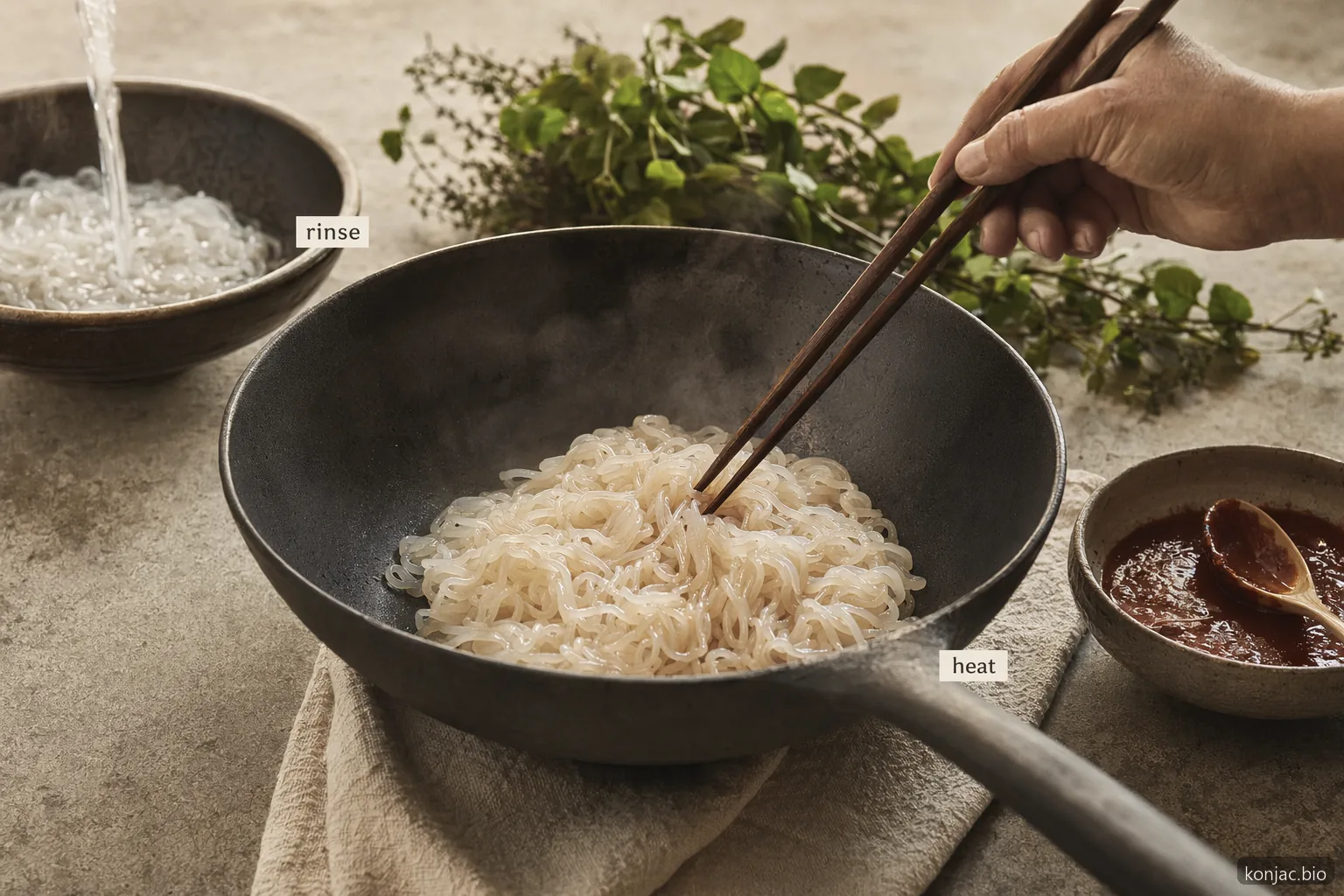
Cook shirataki noodles by draining, rinsing, boiling briefly, dry-pan heating, and then adding sauce after excess water has evaporated.
This method solves the two most common complaints: pouch aroma and watery sauce. Since shirataki noodles are already hydrated, long boiling is unnecessary. The goal is to clean the surface, heat the gel, and remove free water before flavoring.
- Drain: Empty the pouch into a sieve and discard the packing water.
- Rinse: Rinse under cold running water for 30 to 60 seconds.
- Boil: Simmer for 1 to 3 minutes if you want a cleaner aroma and hotter noodle.
- Dry-pan heat: Add noodles to a nonstick pan with no oil for 2 to 5 minutes, stirring until steam drops.
- Sauce: Add sauce, fat, aromatics, and protein after the noodle surface is less wet.
- Finish: Toss until coated, then rest for 1 minute so sauce clings better.
Dry-pan heating is the step many beginners skip. A wet konjac noodle sheds water into tomato sauce, curry, or stir-fry glaze, making the dish thin. Removing surface water lets oil, emulsified sauces, and seasonings cling more effectively.
For stir-fries, cook aromatics and protein separately, dry the noodles, then combine everything at the end. For soups, rinse and boil first, then add noodles to the bowl or pot shortly before serving. For cold noodle salads, rinse thoroughly, boil briefly, chill, drain again, and dress with a strong vinaigrette or sesame sauce.
Do not expect browning. Konjac gel has high water content and little starch or protein, so it does not brown like wheat noodles in a hot wok. Flavor comes from sauce concentration, aromatics, salt balance, acid, and umami ingredients such as soy sauce, miso, tomato paste, mushrooms, seaweed, or aged cheese.
Are shirataki noodles safe to eat?
Shirataki noodles are generally safe for most adults when chewed well and eaten as food portions, but people with swallowing difficulty, digestive sensitivity, or strict dietary needs should use extra care.
Konjac foods are gels, and gel texture matters. Noodles are long, slippery, and resilient, so chewing and cutting for children or older adults can reduce choking risk. Mini-cup konjac jelly has had separate regulatory safety attention because small gel cups can lodge in the throat; the FDA has warned about gel candies. That warning is about mini-cup jelly format, not ordinary noodle meals, but it illustrates why shape and chewability matter.
Digestive comfort is another practical issue. Glucomannan is a soluble fiber, and a sudden large increase in fiber can cause gas, bloating, or loose stool in some people. Start with a modest portion, drink fluids normally, and avoid stacking multiple high-fiber konjac products in one meal if you are new to them.
Powdered glucomannan and tablets have a different risk profile from ready-to-eat noodles because dry fiber can swell. EFSA notes that beneficial use conditions for glucomannan include taking it with sufficient water in divided doses, and safety wording has historically emphasized water intake for concentrated forms in the EFSA opinion. Wet noodles are already hydrated, but careful chewing still matters.
- Check allergens: Some hybrid shirataki includes soy, tofu, or other plant ingredients.
- Check sodium: Plain noodles are often low sodium, but sauces can be high sodium.
- Check storage: Follow the package date, refrigerate after opening, and discard off-smelling leftovers.
- Check format: Do not give long, slippery noodles to anyone who cannot chew safely.
Food additive rules vary by region. Konjac gum is listed in international food additive systems, and the European food additive code E425 is associated with konjac gum and konjac glucomannan. For consumer meals, the most reliable safety action is still basic: buy sealed products, follow the label, chew well, and store opened packs cold.
How do you buy shirataki noodles for home, retail, or private label?
Buy shirataki noodles by comparing ingredient lists, net weight, drained weight, cut style, storage format, certifications, nutrition panel, and sauce compatibility.
For consumers, the first choice is plain versus blended. Plain konjac noodles usually contain water, konjac flour or glucomannan, and calcium hydroxide or a similar setting agent. Blended versions may add tofu for a softer bite, seaweed for color, oat fiber for opacity, or starch for a more familiar chew. Each change can affect calories, carbohydrates, allergens, and texture.
Net weight can mislead because shirataki is packed in water. Drained weight is the useful number for meal planning, cost-per-serving, and B2B comparisons. Two pouches with the same front-panel weight can deliver different noodle quantities after draining.
| Buying factor | Consumer question | B2B question |
|---|---|---|
| Cut style | Spaghetti, angel hair, fettuccine, rice, or penne? | Can the supplier hold cut length and breakage specs? |
| Ingredient deck | Plain konjac or blended formula? | Is the formula compatible with target claims? |
| Packaging | Pouch, cup, multi-pack, or ready meal? | What are shelf life, retort, carton, and pallet specs? |
| Certifications | Gluten-free, vegan, kosher, halal, organic? | Are certificates current and audit-ready? |
| Nutrition | Calories, net carbs, fiber, sodium? | Do lab values support label declarations? |
Retail shoppers can find shirataki noodles in refrigerated produce cases, shelf-stable Asian grocery sections, keto shelves, online marketplaces, and meal-prep specialty stores. Shelf-stable packs are convenient for pantry storage, while refrigerated packs may use different formulations or textures.
Brand comparison without trademark names is still possible. Compare product types instead: plain konjac spaghetti, tofu-blended shirataki, oat-fiber konjac pasta, rice-shaped konjac, and ready-sauced konjac meals. Plain products give maximum macro control. Ready-sauced meals give convenience but require closer sodium, sugar, and oil review.
For procurement teams, the specification sheet matters more than the front label. Request moisture range, pH, drained weight tolerance, breakage rate, shelf-life validation, microbiology limits, allergen statement, country of origin, packaging material, carton dimensions, pallet pattern, and production lead time. Buyers with ISO 22000, BRCGS, HACCP, halal, kosher, or organic requirements should verify certificates before sampling.
Are shirataki noodles the same as miracle noodles, konjac pasta, and low-calorie noodles?
Shirataki noodles, konjac pasta, and miracle noodles usually refer to the same broad product family, but exact nutrition and ingredients depend on the package formula.
Search language is messy because shoppers use many names for the same item. A query like shirataki miracle noodles usually means konjac noodles sold as a dramatic pasta swap. A query like miracle noodle shirataki noodle is an awkward wording that still points to the same category. A query like shirataki noodles noodle simply repeats the noun, but the intent is still product discovery.
The phrase noodles konjac is often used by buyers searching from non-native English markets or translating from supplier catalogs. Shirataki pasta noodles usually means long-cut konjac in spaghetti, angel hair, or fettuccine shapes. Low-calorie noodles and very low calorie noodles are broader terms because they can also include kelp noodles, hearts-of-palm pasta, zucchini noodles, and other vegetable-based options.
| Search phrase | Likely intent | Best page fit |
|---|---|---|
| Shirataki miracle noodles | Find konjac noodles with very low calories | This guide |
| Miracle noodle shirataki noodle | Compare generic miracle noodles and shirataki | This guide |
| Shirataki pasta noodles | Use konjac as pasta | This guide and recipes |
| Noodles konjac | Supplier or product search | This guide and konjac |
| Shirataki rice | Find rice-shaped konjac | konjac rice |
| Low carb alternative to noodles | Compare swaps for pasta | This guide and keto guide |
Use ingredient lists to separate true konjac noodles from adjacent products. Kelp noodles are seaweed-based. Hearts-of-palm noodles are vegetable strips. Zucchini noodles are fresh spiralized squash. Chickpea or lentil pasta has more protein than wheat pasta but also more carbohydrates than plain shirataki.
The most accurate generic term is konjac noodles. The most recognized Japanese-style term is shirataki noodles. The most shopper-friendly meal term is konjac pasta. The best commercial description depends on the sales channel, target diet, and product shape.
Frequently asked questions
01 Are shirataki noodles really zero calories?
02 Why do shirataki noodles smell when opened?
03 Can shirataki noodles replace pasta in every recipe?
04 Are shirataki noodles keto-friendly?
05 What is the difference between shirataki noodles and shirataki rice?
06 How much glucomannan is in shirataki noodles?
07 Are shirataki noodles gluten-free?
08 Where can I buy shirataki noodles?
- Konjac: The Plant Behind Shirataki, Jelly, Flour, and Sponges
- Glucomannan Guide: Benefits, Dosage, Safety, and Forms
- Konjac Flour and Powder: The Food-Ingredient Guide
- Konjac Rice: The Low-Carb Rice Swap, Cooked Right
- Konjac for Keto and Weight Loss: Evidence and Practical Use
- Konjac Recipes for Shirataki, Konjac Rice, Jelly, and Flour
- Scientific Opinion on health claims related to konjac mannan · EFSA Journal · 2010
- Import Alert 33-15: Detention Without Physical Examination of Gel Candies Containing Konjac · U.S. Food and Drug Administration · 2024
- Questions and Answers on Dietary Fiber · U.S. Food and Drug Administration · 2024