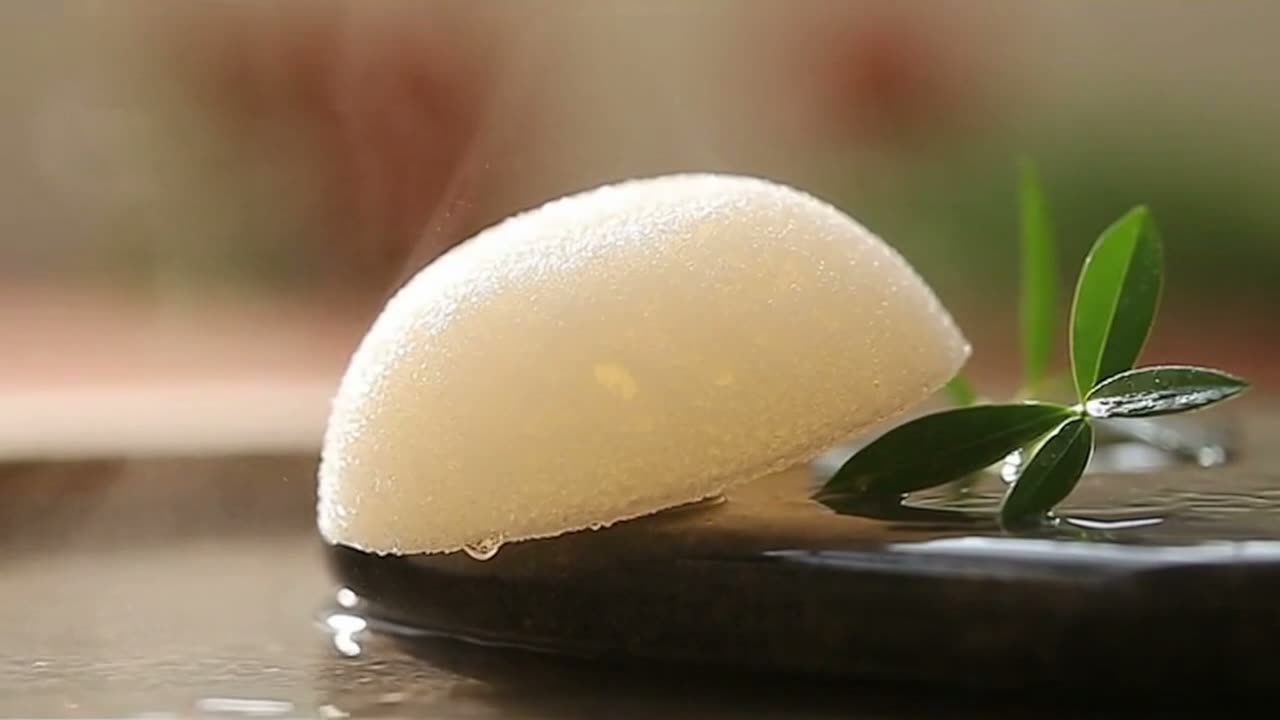
What are private-label konjac sponges?
Private-label konjac sponges are dry, rehydratable cleansing sponges made for a brand's own packaging and label system.
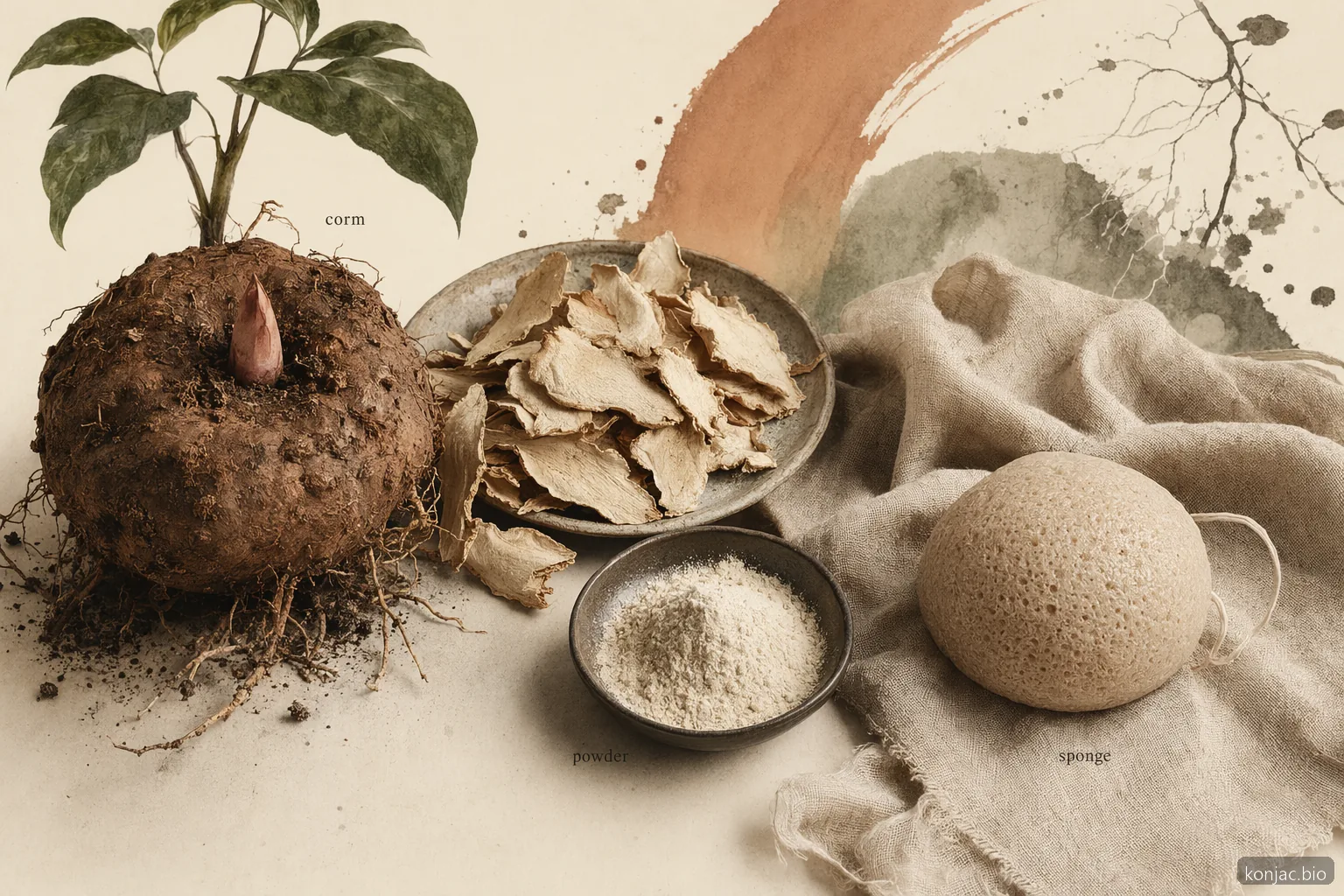
The base material comes from Amorphophallus konjac, a plant whose corm contains konjac glucomannan, a water-binding polysaccharide used in food, personal care, and material applications. In sponge production, hydrated konjac material is molded, set, washed, frozen or structured, dried, and packed.
For skincare brands, the product is usually sold as a facial cleansing accessory. The most common private-label scope includes sponge color, additive type, shape, hang string, retail packaging, barcode placement, carton mark, and outer shipping specification.
Ready to source? Typical specifications, MOQ, lead time and a quote form for private-label konjac sponges are on the product page. Supplier: Konjac Bio Limited, Shanghai (sourcing company; specification sheet and COA from the producing factory with every shipment).
Which private-label konjac sponges variants should a skincare brand source?
Skincare brands should source private-label konjac sponges by matching each variant to a clear customer use case, skin feel, and merchandising story.
Plain white konjac is the safest starting point for broad positioning because it keeps the ingredient story simple. Additive variants can help segment a line, but pack copy should focus on color, texture, and routine fit unless the brand has substantiation for stronger claims.
| Variant | Typical color | Best B2B positioning |
|---|---|---|
| Plain konjac | White to ivory | Minimal, everyday facial cleansing accessory |
| Bamboo-charcoal | Grey to black | Oil-focused or unisex skincare line extension |
| Kaolin-clay | Cream to light beige | Soft mineral-inspired cleansing accessory |
| Red-clay | Pink to terracotta | Warm visual identity for dry-feel or mature-skin ranges |
| Green-tea | Pale green | Botanical, fresh, or daily routine positioning |
| Lavender | Pale purple | Spa, relaxation, gift set, or night routine positioning |
If a sponge includes fragrance, color additives, or cosmetic preparations, review local label obligations before printing. For the United States, the FDA labeling guide explains cosmetic labeling principles for ingredient declarations, identity statements, and responsible-party details.
Shapes, sizes, and user formats
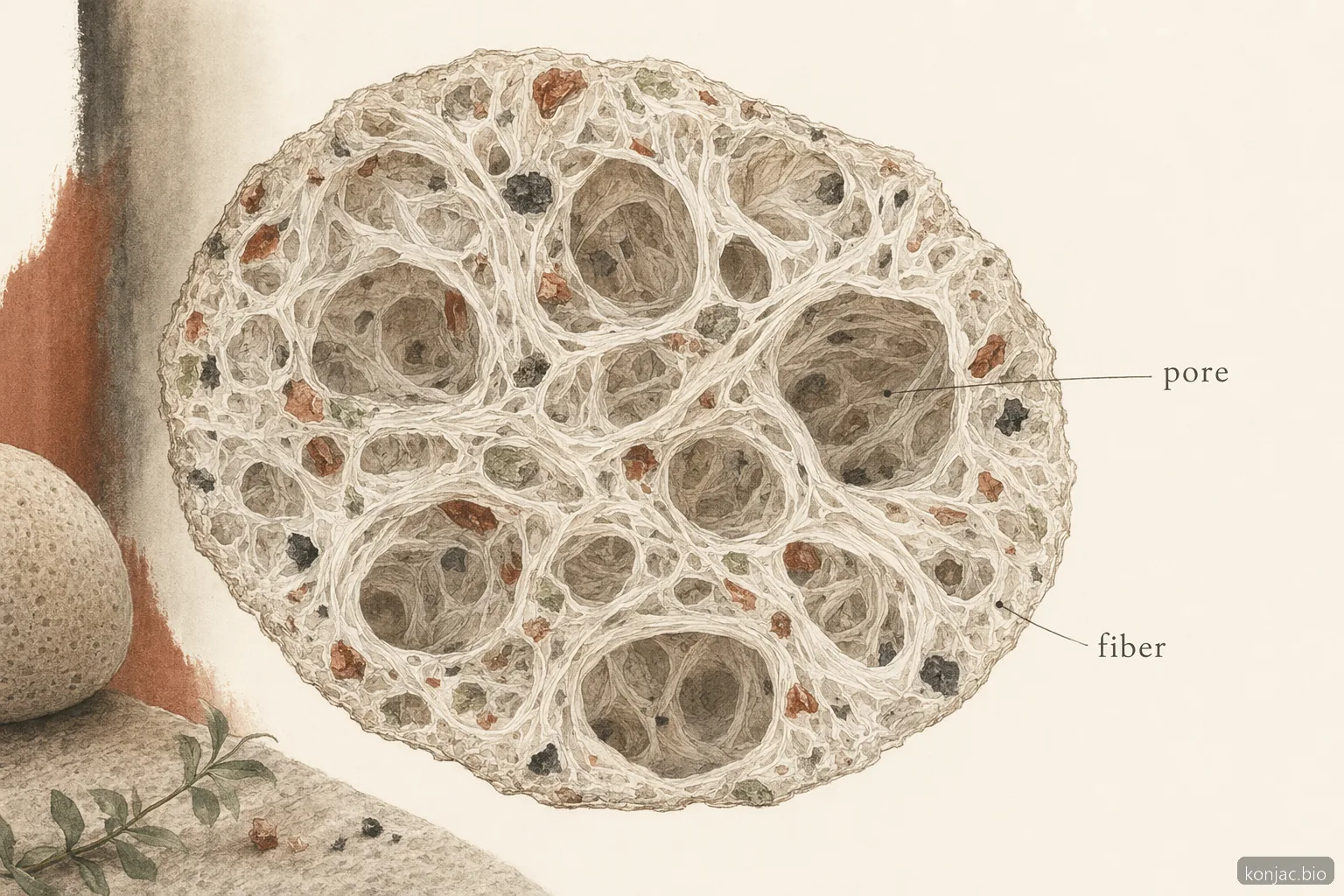
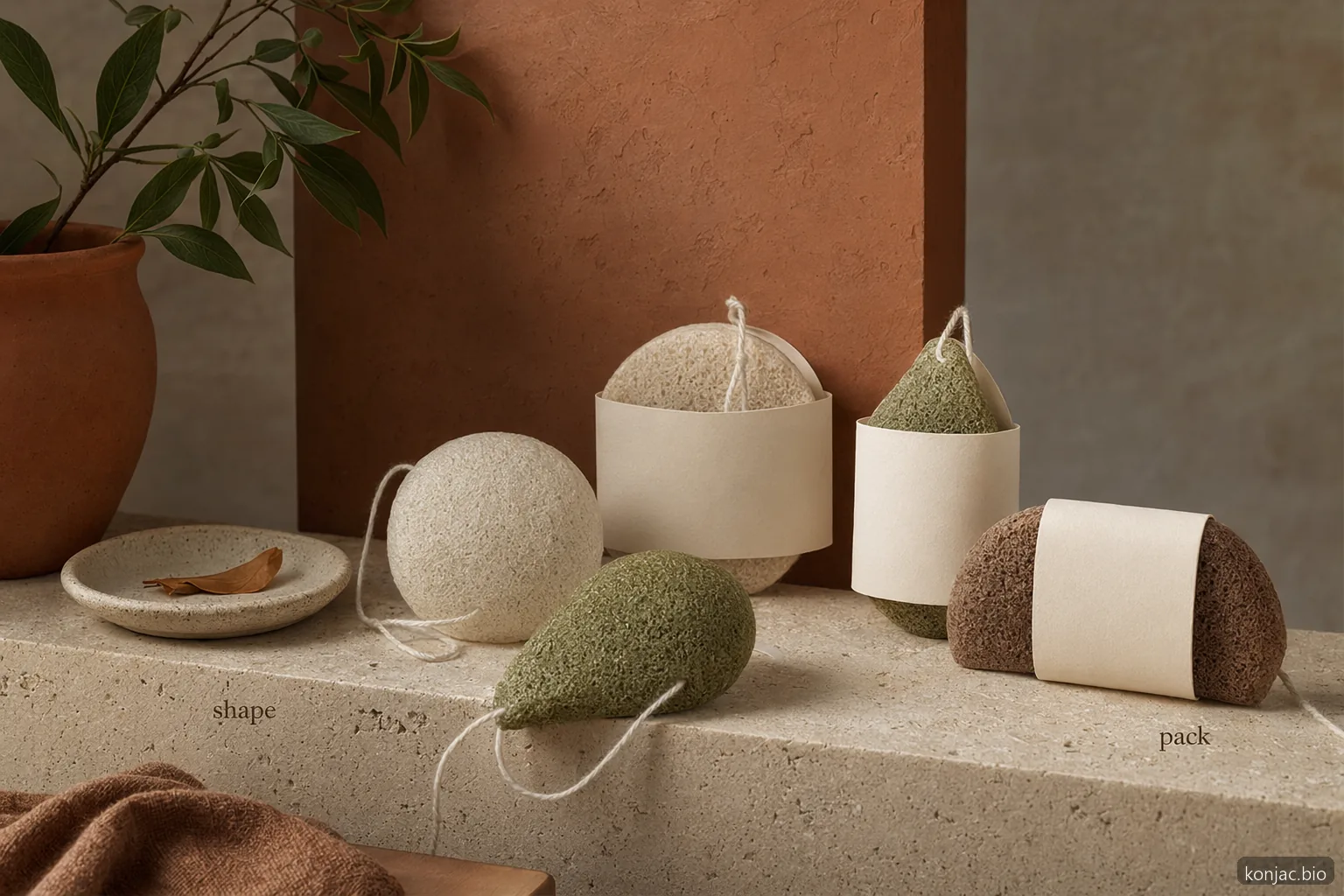
Shape selection affects shelf appeal, handling, dry-down speed, and carton efficiency. Most B2B programs begin with one facial shape and add a body format after repeat demand is proven.
| Shape | Common use | Sourcing note |
|---|---|---|
| Round | Classic facial sponge | Most universal, efficient for cartons and blister cards |
| Heart | Giftable facial sponge | Good for seasonal kits, higher visual impact |
| Half-moon | Facial sponge with grip edge | Easy to hold, clear differentiation from standard rounds |
| Body-puff | Shower and body cleansing | Larger drying mass, needs stronger hanging and ventilation checks |
Common retail facial sponge weights are usually lighter than body-puff formats, so brands should approve both dry dimensions and fully hydrated dimensions. A good sample approval sheet records dry diameter, wet diameter, dry weight, hydrated weight, string length, and rehydration time.
How should private-label konjac sponges be packaged?
Private-label konjac sponges should be packaged in a dry, breathable or moisture-protective format that fits the brand's retail channel and sustainability claims.
The three most common retail options are mesh bag, blister card, and custom-print box. Mesh bags are lightweight and low-cost, blister cards give strong shelf visibility, and boxes provide the best surface for brand story, directions, barcode, and multilingual copy.
| Packaging | Strength | Watch point |
|---|---|---|
| Mesh bag | Low material use, easy drying after opening | Limited printable area unless hang tag is added |
| Blister card | Clear retail display and theft resistance | Plastic content must match sustainability positioning |
| Custom-print box | Premium brand surface and easy compliance copy | Higher MOQ, longer artwork approval, needs humidity control |
For branded labeling, lock the dieline before ordering bulk sponge production. If compostable, recyclable, or degradable claims appear on the pack, the FTC Guides require claims to be clear, qualified when needed, and supported by competent evidence.
What MOQ tiers and sample policies are normal for private-label konjac sponges?
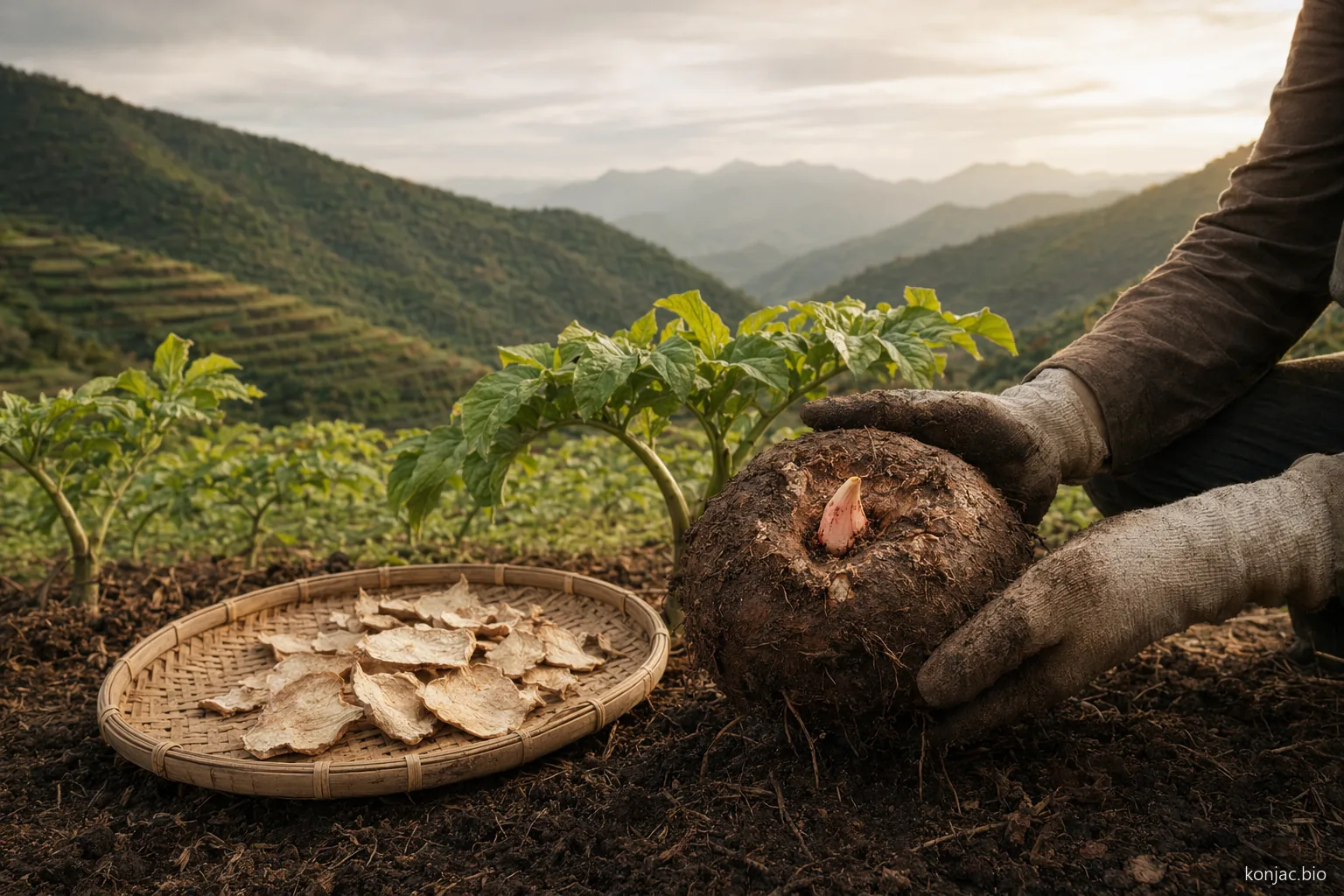
MOQ tiers for private-label konjac sponges usually rise with custom shape, custom packaging, and the number of sponge variants in one order.
A practical launch plan separates sponge MOQ from packaging MOQ. A factory may be able to mold standard round sponges at a lower starting quantity, while custom-print boxes or blister cards often require larger print runs.
| Tier | Best fit | Typical customization |
|---|---|---|
| Pilot | Market test, creator kit, spa trial | Standard shape, standard variant, sticker or simple label |
| Launch | First retail order | 1-3 variants, custom box or hang tag, branded carton marks |
| Scale | Retail chain, distributor, subscription program | Multiple variants, printed packaging, batch-level QC documentation |
A strong sample policy includes 3 sample types: stock reference sample, pre-production sample, and sealed approval sample. The sealed approval sample should define color tolerance, odor baseline, dry firmness, string strength, pack fit, and print accuracy before mass production begins.
How should brands verify shelf life, QC, and safety?
Brands should verify shelf life, QC, and safety through dry storage testing, incoming inspection, production hygiene records, and clear defect thresholds.
A dry konjac sponge program should specify a 24-36 month shelf life when the sponge is fully dried, sealed from excess humidity, and stored away from heat. The factory should provide moisture-control steps, packaging closure details, and carton storage instructions for each SKU.
| QC checkpoint | Pass expectation | Reject flag |
|---|---|---|
| Odor | Neutral to mild plant smell after opening | Off-smell, sour note, chemical note |
| Dry structure | Firm, intact, no powdering during handling | Crumbling, cracked edge, weak hanging hole |
| Visual check | Uniform color for approved variant | Mold spots, dark specks outside tolerance, staining |
| Rehydration | Softens evenly in warm water | Hard core, uneven swelling, surface slime |
| Packaging | Correct barcode, batch code, artwork, carton count | Wrong label, missing code, damp inner pack |
For inspection structure, many buyers use AQL sampling based on ISO 2859-1. For factory hygiene expectations in personal care supply chains, ISO 22716 is a useful reference for cosmetic good manufacturing practice, even when the sponge is sold as an accessory rather than a filled cosmetic product.
Sustainability and claim language for konjac sponges
Konjac sponges have a strong sustainability angle because the main sponge body is plant-derived, lightweight, and commonly positioned as compostable after use. That claim still needs evidence because composting conditions, additives, strings, dyes, and packaging can change the result.
Konjac glucomannan has been studied in biodegradable material systems, including KGM films. For retail language, ask suppliers for biodegradation or compostability support that matches the exact sponge, including bamboo-charcoal, clay, green-tea, lavender, and any colorant or fragrance system.
Many brands describe pure konjac sponge bodies as biodegradable in weeks under warm, moist, microbe-rich compost conditions. Safer B2B wording is specific: 'pure konjac sponge body is designed to biodegrade in active compost conditions', then qualify strings, labels, and outer packaging separately. Formal compostable packaging claims can be aligned with standards such as ASTM D6400, while marketing copy should follow the FTC Guides for environmental claims.
Frequently asked questions
01 What is the best starter SKU for private-label konjac sponges?
02 Can a brand order several sponge variants in one MOQ?
03 What shelf life should be printed on a dry konjac sponge?
04 Are konjac sponges biodegradable?
05 Which packaging is best for sustainability positioning?
06 What defects should buyers reject during QC?
07 Do konjac sponges need ingredient labels?
08 How long should sampling take before a purchase order?
- Amorphophallus konjac K.Koch · Plants of the World Online, Royal Botanic Gardens Kew · 2024
- Cosmetics Labeling Guide · U.S. Food and Drug Administration · 2024
- Guides for the Use of Environmental Marketing Claims · Electronic Code of Federal Regulations · 2024
- ISO 22716:2007 Cosmetics Good Manufacturing Practices · International Organization for Standardization · 2007
- ISO 2859-1:1999 Sampling procedures for inspection by attributes · International Organization for Standardization · 1999
- ASTM D6400-23 · ASTM International · 2023