What does private-label shirataki mean for a retail brand?
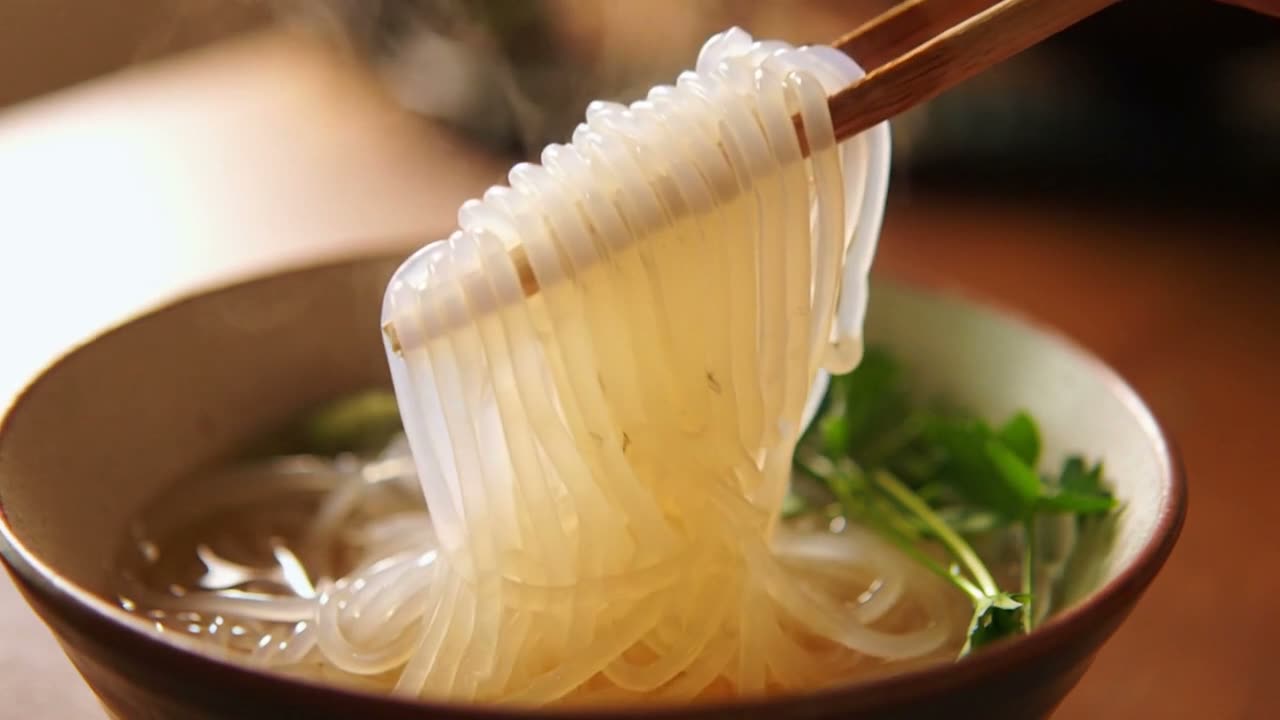
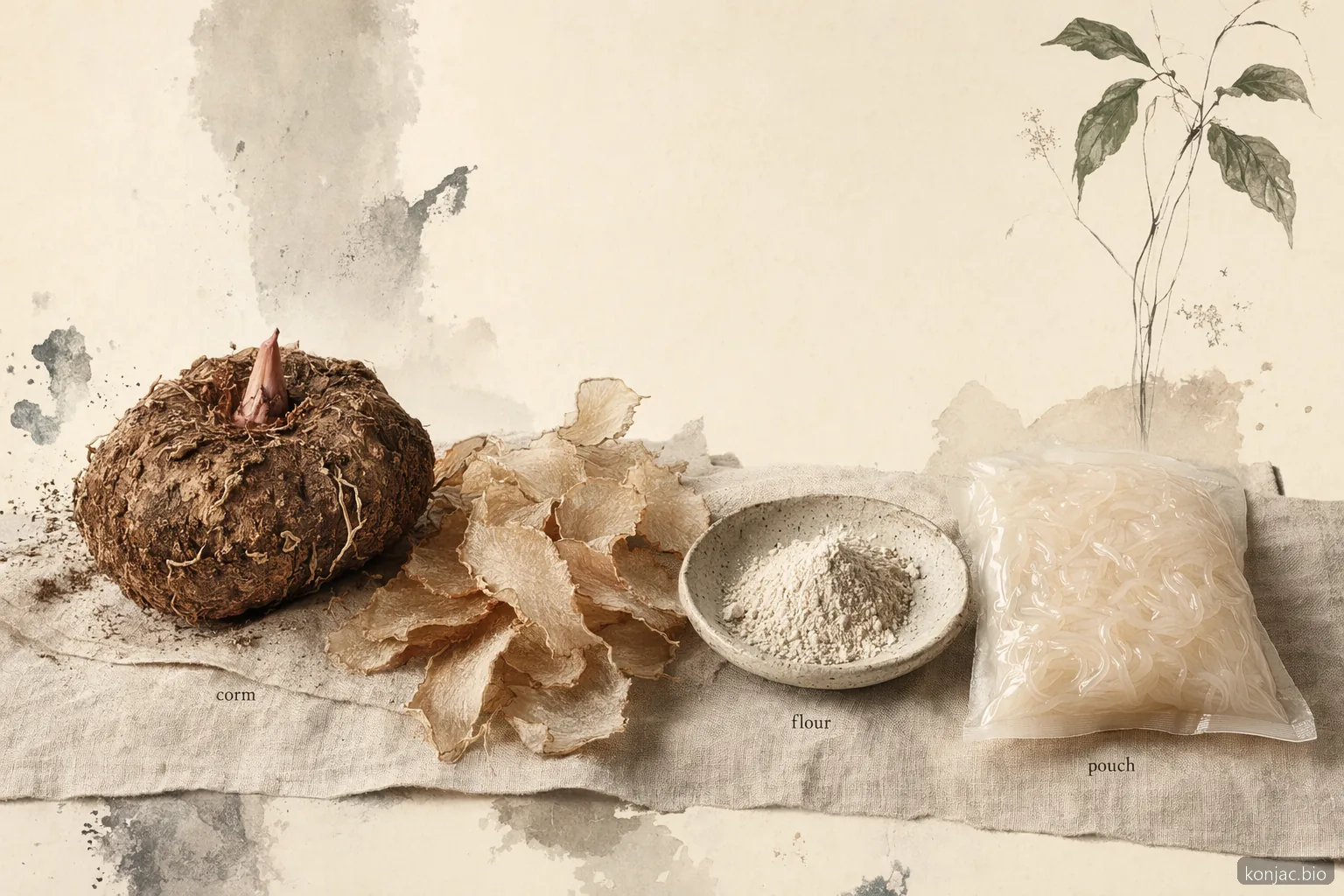
Private-label shirataki means a manufacturer produces shirataki noodles, rice, or pasta-style cuts that are sold under your brand name. The product is usually made from water, konjac glucomannan, calcium hydroxide, and sometimes oat fiber, seaweed powder, or added texture ingredients.
Shirataki is built around konjac glucomannan, a soluble fiber from Amorphophallus konjac. The European Food Safety Authority recognizes glucomannan in specific authorized health-claim contexts, including the wording, "Glucomannan in the context of an energy restricted diet contributes to weight loss," when conditions of use are met under the EU health claims register EU claims.
For a brand owner, the operational question is not only "Can we source noodles?" It is "Can we repeat the same texture, drained weight, pH, seal strength, label, carton count, and certificate set across every purchase order?" That repeatability is what separates a retail-ready private-label shirataki program from a one-time import buy.
Ready to source? Typical specifications, MOQ, lead time and a quote form for shirataki and konjac noodles for private label are on the product page. Supplier: Konjac Bio Limited, Shanghai (sourcing company; specification sheet and COA from the producing factory with every shipment).
Is contract manufacturing or co-packing better for private-label shirataki?
Contract manufacturing is better when you need formulation, processing, or packaging control, while co-packing is better when you use an existing shirataki base with your label. The right model depends on how much differentiation your brand needs.
| Model | Best fit | Brand control | Typical tradeoff |
|---|---|---|---|
| Contract manufacturing | Custom recipe, texture, cut, pack size, or channel specification | High | Higher development time and MOQ |
| Co-packing | Standard shirataki SKU with private label packaging | Medium | Faster launch, less formulation flexibility |
| Hybrid | Standard base with custom cuts, pouch, or carton | Medium to high | Good balance for first retail launch |
Contract manufacturing should include documented specifications for raw material grade, pH target, net weight, drained weight, sterilization process, metal detection, pouch material, coding, and carton configuration. Food-safety systems such as ISO 22000 define management-system requirements for food safety across the chain ISO 22000.
Co-packing can shorten timeline because the factory already has validated process parameters. It is usually the cleaner choice for Amazon, natural grocery, club tests, and first distributor trials where speed and cash discipline matter more than a proprietary bite profile.
What MOQ tiers should a private-label shirataki launch expect?
A private-label shirataki launch should expect MOQs to rise with customization, certification, and packaging complexity. A practical planning range is pilot pallet, mixed-container launch, full-container replenishment, and multi-container annual contract.
| Tier | Approximate order size | Typical use | Notes |
|---|---|---|---|
| Pilot pallet | 1 to 5 pallets | Distributor pitch, photo samples, ecommerce test | Usually limited to standard recipes and packaging |
| Launch order | 5,000 to 30,000 packs | First retail or DTC run | May allow custom label and carton |
| Container program | 1 x 20 ft or 40 ft container | Regional retail distribution | Better freight economics and production scheduling |
| Annual contract | Quarterly or monthly call-offs | National retail, club, or foodservice | Best pricing if forecasts are reliable |
MOQ is not only a factory number. It is shaped by printed pouch minimums, carton printing, organic ingredient segregation, gluten-free verification, label-language versions, and destination-market testing. A low factory MOQ can become uneconomical if the packaging supplier requires 30,000 to 100,000 printed pouches per design.
Brands should request two quotes: one using stock pouch plus adhesive label, and one using fully printed retail packaging. The stock-pouch version is often better for validation, while printed packaging is better once velocity is proven.
Which private-label shirataki formats should a brand launch first?
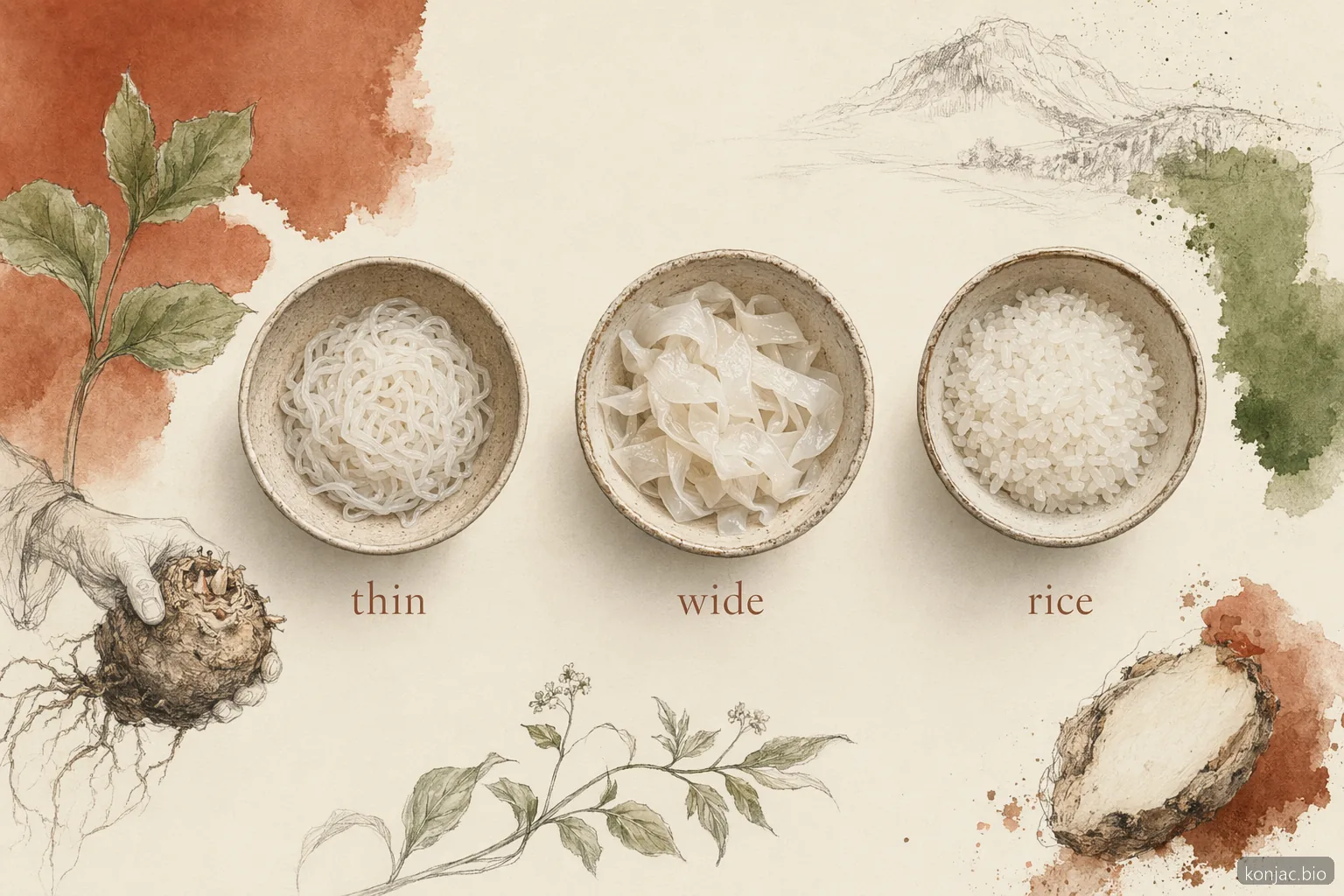
A brand should usually launch private-label shirataki with 2 to 4 core formats: noodles, rice, fettuccine, and spaghetti. Lasagna sheets are useful for recipe-led brands, but they require more consumer education and tighter pack handling.
| Format | Common use | Launch priority | Buyer note |
|---|---|---|---|
| Noodles | Soup, stir-fry, ramen-style bowls | High | Broadest recognition and easiest retail placement |
| Rice | Low-calorie bowls, fried rice, meal prep | High | Strong fit for keto and calorie-counting shoppers |
| Fettuccine | Cream sauces, Italian-style meals | Medium | Good premium pasta substitute positioning |
| Spaghetti | Tomato sauce, simple meal kits | Medium | Familiar shape, needs texture control |
| Lasagna | Baked recipes, frozen meal components | Selective | Best for recipe content and foodservice pilots |
Format choice should match shopper intent. A keto grocery set often wants rice and spaghetti first, while an Asian-foods set may prefer noodle cuts. Foodservice buyers may ask for bulk packs, shorter cuts, or a target drained weight instead of retail pouch count.
Each shape should have a written tolerance for strand width, sheet thickness, breakage, drained weight, and texture after reheating. Small differences matter because shirataki has a neutral flavor and the eating experience depends heavily on bite and sauce pickup.
Packaging and shelf-life decisions for shirataki lines
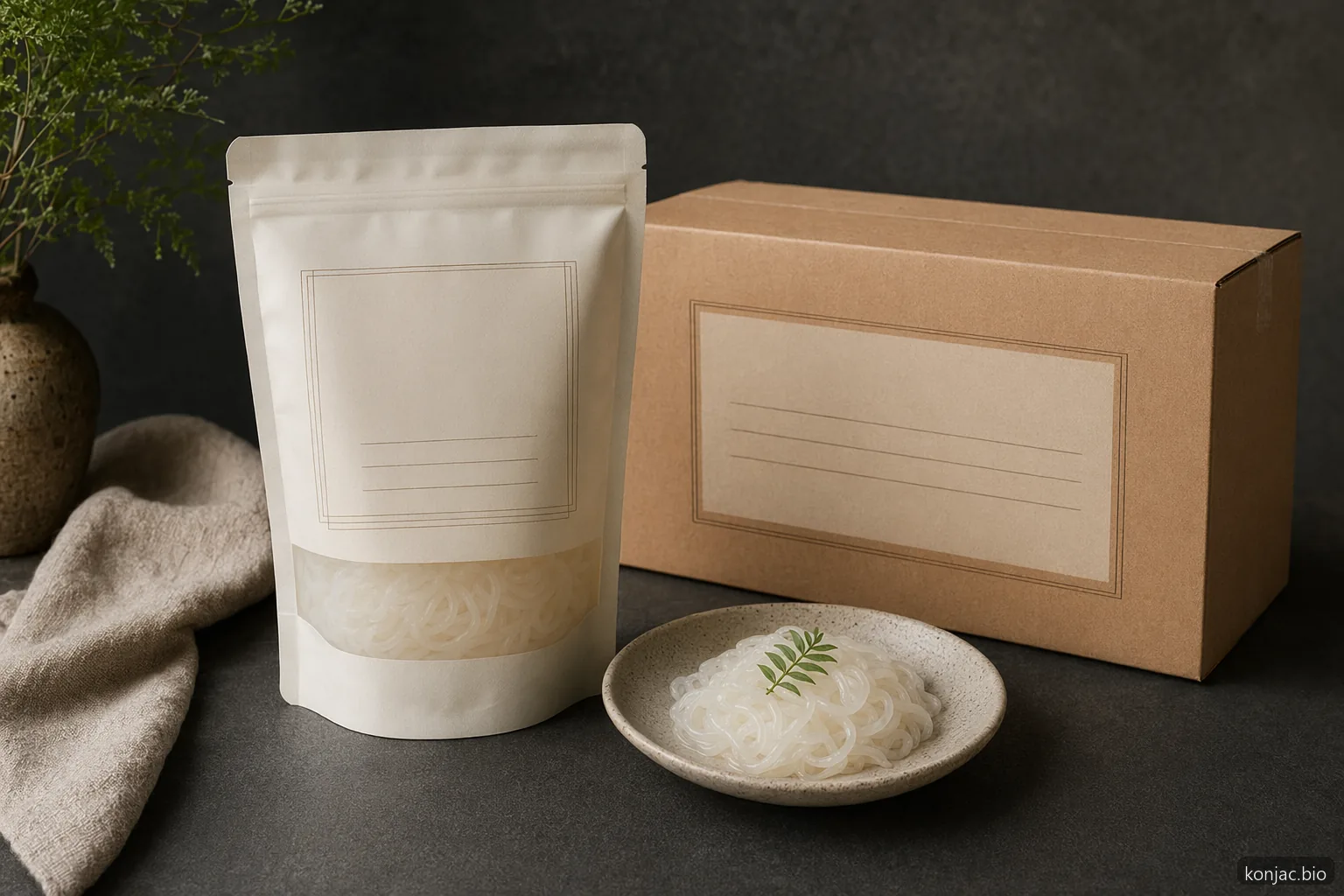
Packaging decides how the consumer finds, stores, opens, drains, and trusts a shirataki product. The main options are water-pack pouch, vacuum pack, shelf-stable pack, and refrigerated pack.
| Packaging option | Typical positioning | Operational advantage | Watchpoint |
|---|---|---|---|
| Water-pack pouch | Mainstream retail shirataki | Familiar, flexible, cost-efficient | Requires clear draining and rinsing instructions |
| Vacuum pack | Premium or reduced-liquid positioning | Lower liquid weight and cleaner unboxing | Texture and seal integrity must be validated |
| Shelf-stable | Ambient grocery, ecommerce, export | Lower cold-chain cost | Process validation and shelf-life records are critical |
| Refrigerated | Fresh set, natural grocery, prepared foods | Fresh perception | Shorter distribution radius and higher logistics cost |
Shelf-stable shirataki commonly targets 12 to 24 months, depending on formulation, heat process, pH, water activity, packaging barrier, and storage validation. The shelf-life statement should be supported by real-time or accelerated stability data, sensory checks, seal testing, and microbiological specifications.
US labels should follow FDA Nutrition Facts requirements for packaged foods nutrition label. EU retail packs should align with Regulation 1169/2011 for food information to consumers, including mandatory particulars and allergen presentation EU labeling.
What label and regulatory checks apply to private-label shirataki?
Private-label shirataki labels should be checked for identity, ingredients, nutrition facts, allergens, net quantity, country of origin, claims, storage, preparation, and responsible business details. The review should be done for each destination market, not only for the factory country.
In the United States, shirataki noodles are generally positioned as conventional foods, so the pack normally uses Nutrition Facts rather than Supplement Facts. DSHEA is relevant when a company sells a dietary supplement format, and FDA explains the separate supplement category on its dietary supplement guidance pages dietary supplements.
Allergen review should cover the nine major US food allergens, including sesame, which became subject to major allergen labeling requirements in 2023 food allergens. Even if the shirataki formula is simple, a brand should request facility allergen controls, shared-line disclosures, cleaning validation, and supplier statements for any oat fiber, soy sauce sachet, seasoning, or meal-kit component.
For Europe, konjac gum and konjac glucomannan are listed as food additives under E 425 in EU additive rules additive list. Novel Food review can still matter when a brand changes the ingredient form, use level, supplement positioning, or claim strategy, so EU launches should verify status with local counsel and the European Commission Novel Food framework novel food.
Claims need special control. If a brand uses the EU weight-management claim, the wording and conditions must match the authorized claim register. In the US, avoid disease-style language and keep claims consistent with the product’s Nutrition Facts, serving size, and substantiation file.
How do certifications and pricing tiers change private-label shirataki cost?
Certifications and pricing tiers change private-label shirataki cost by adding audit costs, ingredient constraints, segregation steps, testing, packaging claims, and documentation time. Volume can reduce unit price, but certification and packaging decisions often set the real floor.
| Cost driver | Typical impact | Buyer question |
|---|---|---|
| Organic | Higher ingredient and audit cost | Is the factory certified for the exact SKU scope? |
| Gluten-free | Testing and cross-contact controls | Can the supplier meet the destination-market threshold? |
| Non-GMO | Affidavits, traceability, possible testing | Which standard supports the on-pack claim? |
| Printed pouch | Lower unit cost at scale, higher upfront commitment | What is the packaging MOQ by artwork? |
| Container volume | Lower production and freight cost per pack | Can the brand sell through before best-by pressure? |
USDA organic claims require compliance with National Organic Program rules USDA organic. Gluten-free claims in the United States must meet FDA’s gluten-free rule, which uses a limit of less than 20 parts per million gluten for foods bearing the claim gluten-free.
A simple pricing model should separate ex-works product cost, packaging, certification, testing, inland freight, ocean or air freight, duties, customs brokerage, warehousing, retailer allowances, and returns reserve. For retail planning, quote at three annual volumes, such as 30,000 packs, 150,000 packs, and 500,000 packs, because the best pack format at launch may not be the best pack format at scale.
Launch checklist for brand owners
A strong shirataki launch file contains commercial, technical, regulatory, and logistics documents before the first purchase order is placed. Missing one file can slow retail onboarding or create rework after packaging is printed.
- Define target market, channel, format, serving size, and pack size.
- Choose contract manufacturing, co-packing, or hybrid production.
- Approve formula, cut style, drained weight, texture, pH, and sensory benchmark.
- Select water-pack, vacuum, shelf-stable, or refrigerated packaging.
- Confirm MOQ by product, artwork, carton, and certification.
- Review FDA, EU, UK, Canadian, or other destination-market label rules.
- Collect allergen, organic, gluten-free, non-GMO, and food-safety documents.
- Validate shelf life, barcode, lot coding, carton marks, and pallet pattern.
- Quote pricing at launch, container, and annual-contract volume.
- Build a reorder calendar that protects against stockouts and best-by compression.
Brands comparing ingredient and finished-product options can also review the related konjac ingredient guide at konjac, the finished noodle overview at shirataki noodles, the fiber explainer at glucomannan, and B2B sourcing details at konjac wholesale.
Frequently asked questions
01 What is the difference between private-label shirataki and wholesale shirataki?
02 What is a realistic MOQ for private-label shirataki noodles?
03 Can shirataki noodles be shelf-stable for 24 months?
04 Which shirataki formats are best for a first retail launch?
05 Do private-label shirataki products need allergen statements?
06 Is glucomannan approved for health claims in Europe?
07 Should a shirataki brand use refrigerated or shelf-stable packaging?
08 What certifications matter most for private-label shirataki?
- EU Register of Health Claims · European Commission · 2024
- How to Understand and Use the Nutrition Facts Label · U.S. Food and Drug Administration · 2024
- Food Allergies · U.S. Food and Drug Administration · 2024
- Gluten-Free Labeling of Foods · U.S. Food and Drug Administration · 2024
- Regulation (EU) No 1169/2011 · EUR-Lex · 2011
- Regulation (EC) No 1333/2008 on food additives · EUR-Lex · 2008
- Novel Food · European Commission · 2024
- ISO 22000 Food Safety Management · International Organization for Standardization · 2018
- National Organic Program · U.S. Department of Agriculture · 2024