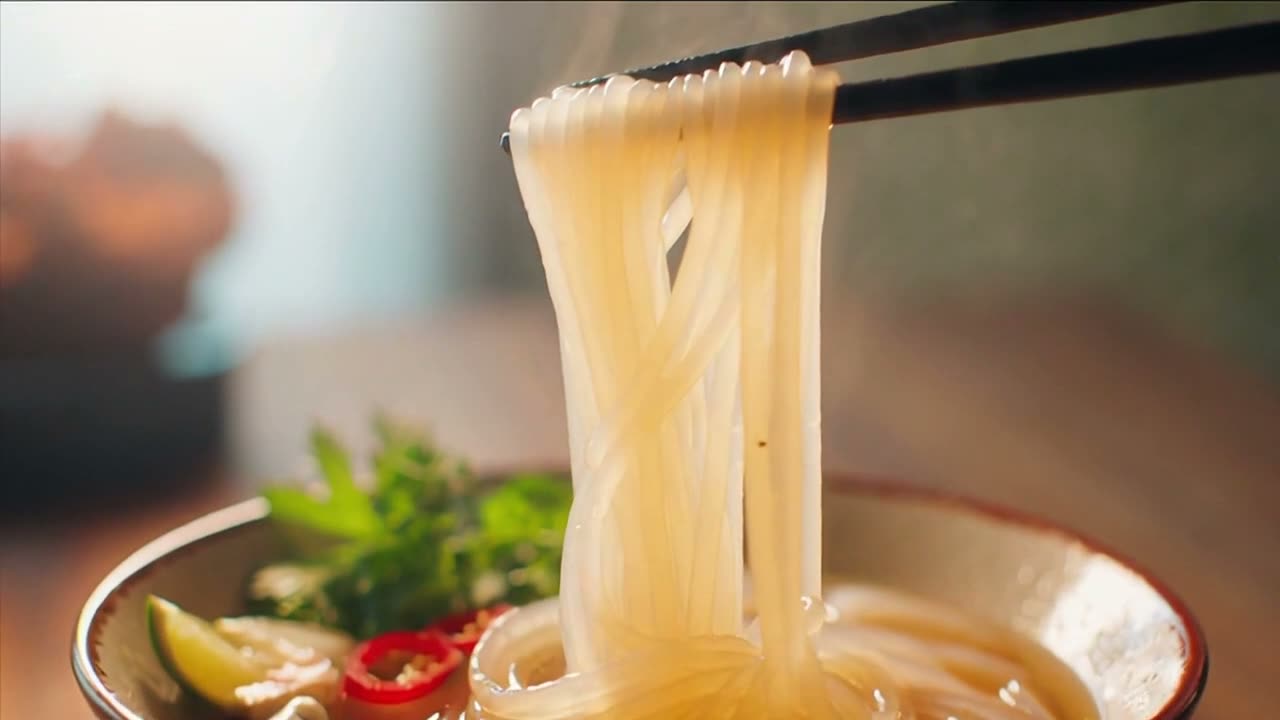
What are low-calorie noodles?
Low-calorie noodles are noodle-style foods designed to deliver a pasta-like eating experience with fewer calories per serving than wheat pasta, rice noodles, or egg noodles.
The main categories are shirataki, vegetable spirals, kelp noodles, hearts of palm noodles, and reduced-carb wheat blends. Shirataki is the most distinct because it is made from water and glucomannan, the soluble fiber found in the corm of Amorphophallus konjac.
For shoppers comparing labels, the useful number is calories per 100 g, not calories per package. Cooked unenriched spaghetti is listed at about 158 calories per 100 g in USDA data, while plain shirataki often appears near zero because the serving contains mostly water and fiber.
Use shirataki noodles when calories are the top priority. Use zucchini spirals or hearts of palm noodles when a vegetable flavor and firmer bite matter more than a neutral noodle base.
Why are shirataki low-calorie noodles so low in calories?
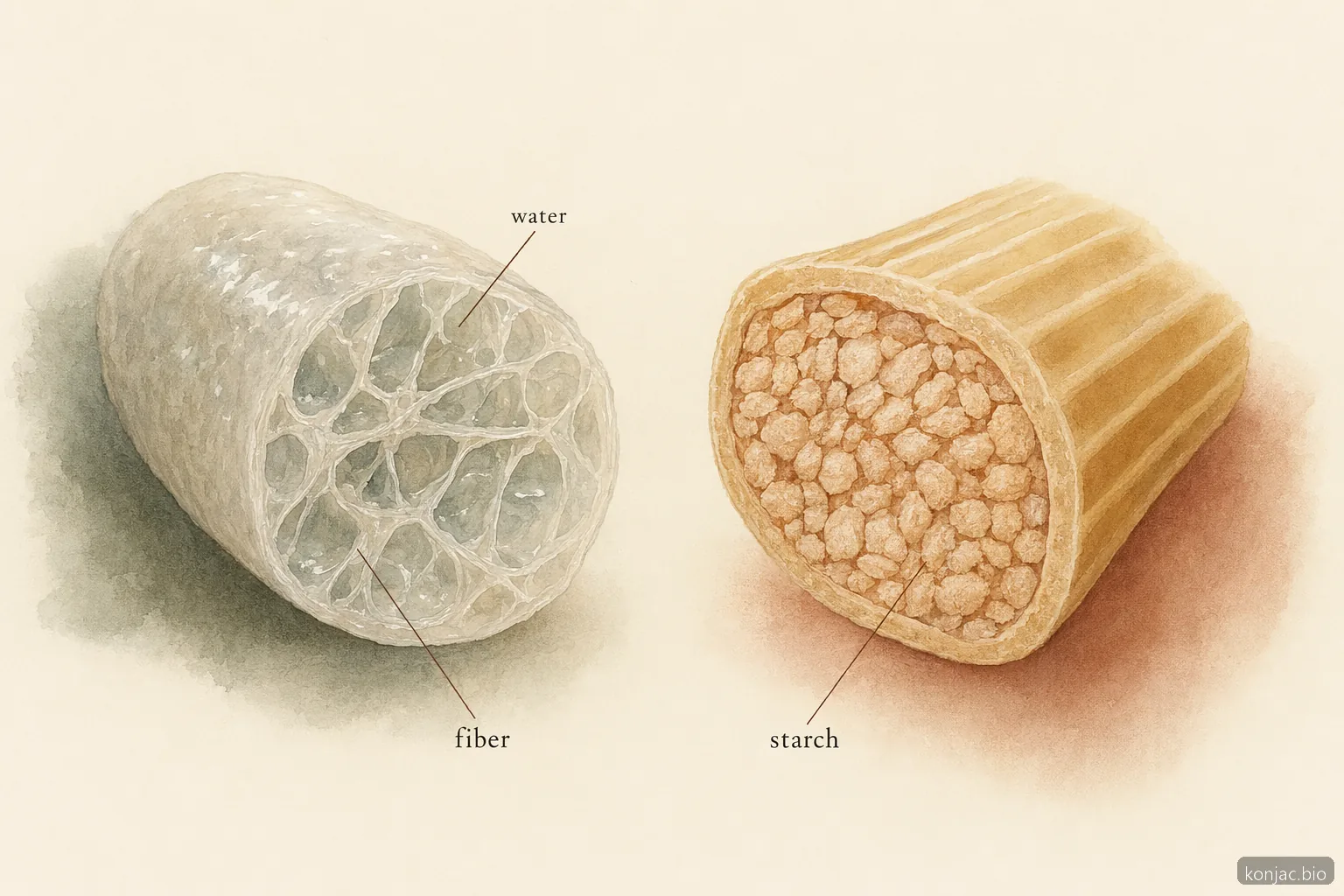
Shirataki low-calorie noodles are so low in calories because they are mostly water held in a gel network made from konjac glucomannan fiber.
Glucomannan is a viscous soluble fiber. EFSA reviewed konjac mannan, also called glucomannan, and authorized the weight-management wording: "Glucomannan in the context of an energy restricted diet contributes to weight loss" when intake and use conditions are met in the EFSA claim.
In plain shirataki, the noodle is formed by mixing konjac flour with water and an alkaline coagulant, then heating it into a stable gel. That structure gives shirataki its bounce, slipperiness, and resistance to overcooking.
US labeling can also affect how the calorie number appears. Under federal nutrition labeling rules, foods with fewer than 5 calories per serving may declare 0 calories, depending on serving size and format in FDA labels.
That does not mean shirataki is nutritionally complete. It is best used as a low-energy base, then paired with protein, vegetables, and fats for satiety, flavor, and micronutrients.
EFSA's authorized weight-management wording for glucomannan applies to a specific condition of use: 3 g a day, taken as three 1 g doses with a glass or two of water before meals, inside an energy-restricted diet. A serving of noodles will not always match that dose, and toppings can undo the calorie savings -- a plain 15-calorie noodle base can turn into a 600-calorie bowl once heavy cream, cheese, or a sugary dressing is added.
Low-calorie noodles compared with pasta, rice noodles, and zucchini
The best low-calorie noodle depends on whether the meal needs the fewest calories, the closest pasta texture, or the most familiar flavor.
| Noodle type | Typical calorie profile | Texture | Best use |
|---|---|---|---|
| Shirataki | Usually 0 to 20 calories per serving | Springy, slippery, chewy | Stir-fries, broths, saucy bowls |
| Wheat pasta | About 158 calories per 100 g cooked in USDA pasta | Firm, starchy, elastic | Classic Italian sauces |
| Rice noodles | Usually higher than shirataki because starch is the main ingredient | Soft, tender, slightly sticky | Pad Thai, pho, cold salads |
| Zucchini spirals | Low calorie because zucchini is water-rich | Soft, vegetable-like | Fresh bowls, light sauteed meals |
| Kelp noodles | Low calorie, mineral-forward | Crunchy unless softened | Raw salads, sesame sauces |
Shirataki wins on calorie reduction, but wheat pasta wins on classic texture and starch-based sauce cling. For a deeper comparison of bite, macros, and cooking behavior, see shirataki versus pasta.
Vegetable noodles are useful when the meal benefits from fresh flavor. They are less neutral than shirataki, so they work better with lemon, herbs, tomato, garlic, olive oil, or light broths than with heavy cream sauces.
How do low-calorie noodles fit into weight-management meals?
Low-calorie noodles fit weight-management meals by lowering the energy density of the plate while keeping volume high.
A practical plate uses shirataki as the base, then adds 20 to 35 g protein from tofu, chicken, fish, eggs, edamame, or tempeh. Add at least 1 to 2 cups of vegetables for bulk, color, potassium, and texture.
The NIH Office of Dietary Supplements lists glucomannan among ingredients studied for body weight, while noting that supplement evidence varies by study design, dose, and product form in NIH ODS. Food use is different from capsules because noodles bring water, volume, chewing time, and meal context.
Three balanced meal templates work especially well:
- Broth bowl: shirataki, miso or chicken broth, mushrooms, bok choy, egg, scallions.
- Stir-fry: dry-panned shirataki, shrimp or tofu, cabbage, garlic, ginger, soy sauce.
- Red sauce bowl: shirataki, tomato sauce, turkey or lentils, spinach, parmesan-style topping.
For food manufacturers, konjac.bio sources konjac ingredients at wholesale scale for noodle, gel, and fiber applications. Contact the team for specification and pricing discussions.
Cooking steps for better texture
Shirataki tastes best when treated as a gel noodle, not as wheat pasta.
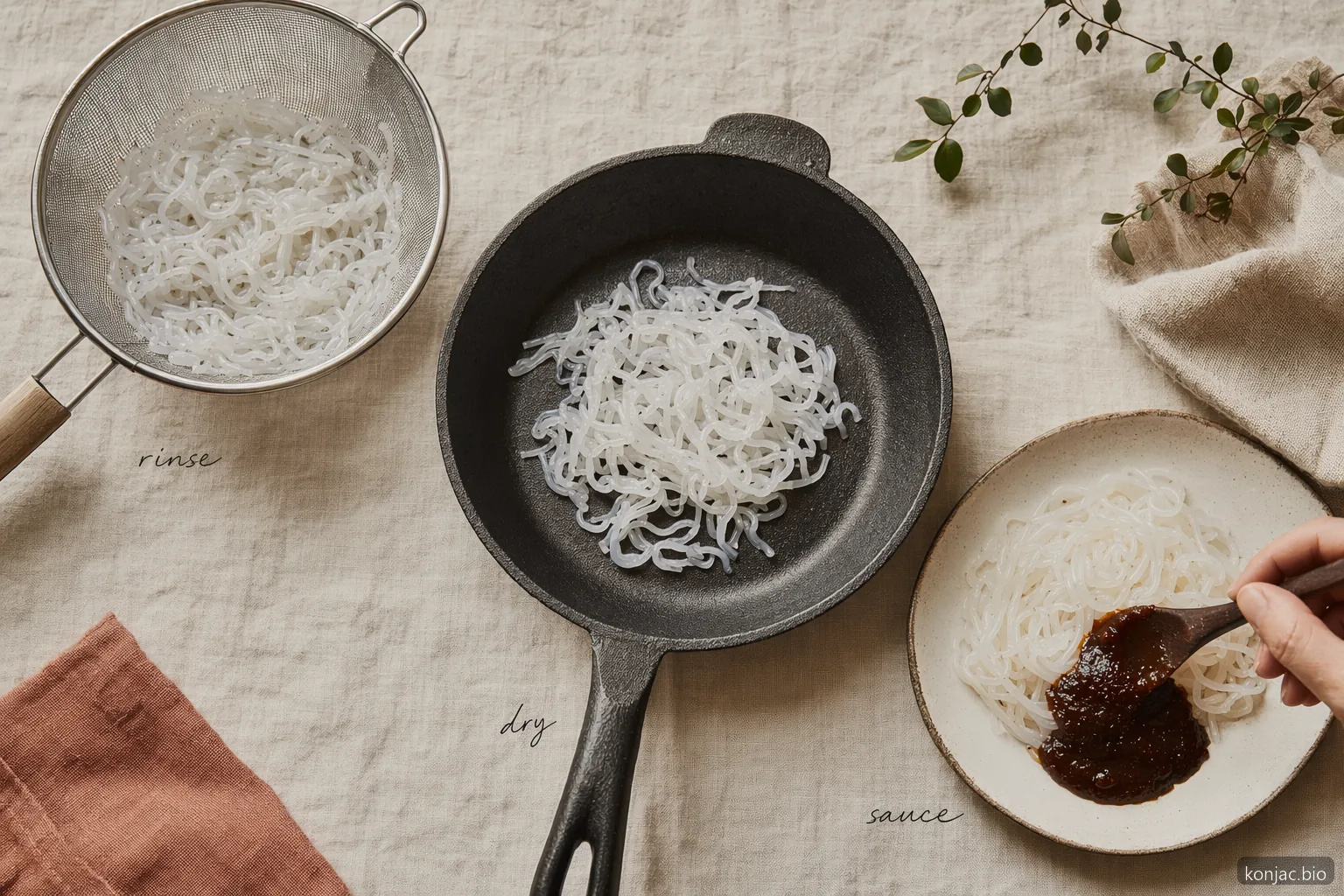
The standard package liquid can have a mild alkaline or sea-like aroma. Rinsing, boiling briefly, and dry-panning removes much of that aroma and helps the surface grab sauce.
- Drain: pour noodles into a sieve and discard the packing liquid.
- Rinse: rinse under cool running water for 30 to 60 seconds.
- Boil: simmer for 2 minutes if the aroma is noticeable.
- Dry-pan: heat in a skillet without oil for 3 to 5 minutes until squeaky and drier.
- Sauce hard: finish in a bold sauce for 1 to 2 minutes.
Shirataki does not absorb sauce like wheat pasta, so concentrated flavors work best. Use soy sauce, miso, chili crisp, tomato paste, garlic, ginger, sesame oil, lemon, anchovy, nutritional yeast, or reduced stock.
For a step-by-step method with timing, pan cues, and sauce ideas, use the how to cook shirataki noodles guide.
Frequently asked questions
01 Are shirataki the lowest-calorie noodles?
02 Do low-calorie noodles keep you full?
03 Why do shirataki noodles smell when opened?
04 Are low-calorie noodles safe to eat every day?
05 Can I replace all pasta with low-calorie noodles?
06 What sauce works best with shirataki low-calorie noodles?
07 Can I mix shirataki with regular pasta instead of switching completely?
- Scientific Opinion on konjac mannan health claims · European Food Safety Authority · 2010
- Weight Loss Fact Sheet for Health Professionals · NIH Office of Dietary Supplements · 2024
- FoodData Central: Pasta, cooked, unenriched · USDA FoodData Central · 2019
- Import Alert 33-15: Detention Without Physical Examination of Gel Candies Containing Konjac · U.S. Food and Drug Administration · 2024
- Amorphophallus konjac K.Koch · Plants of the World Online, Royal Botanic Gardens Kew · 2024