
What specifications define wholesale konjac flour quality?
Wholesale konjac flour quality is defined by grade, glucomannan purity, particle size, viscosity, microbiology, heavy metals, moisture, ash, and packaging integrity.
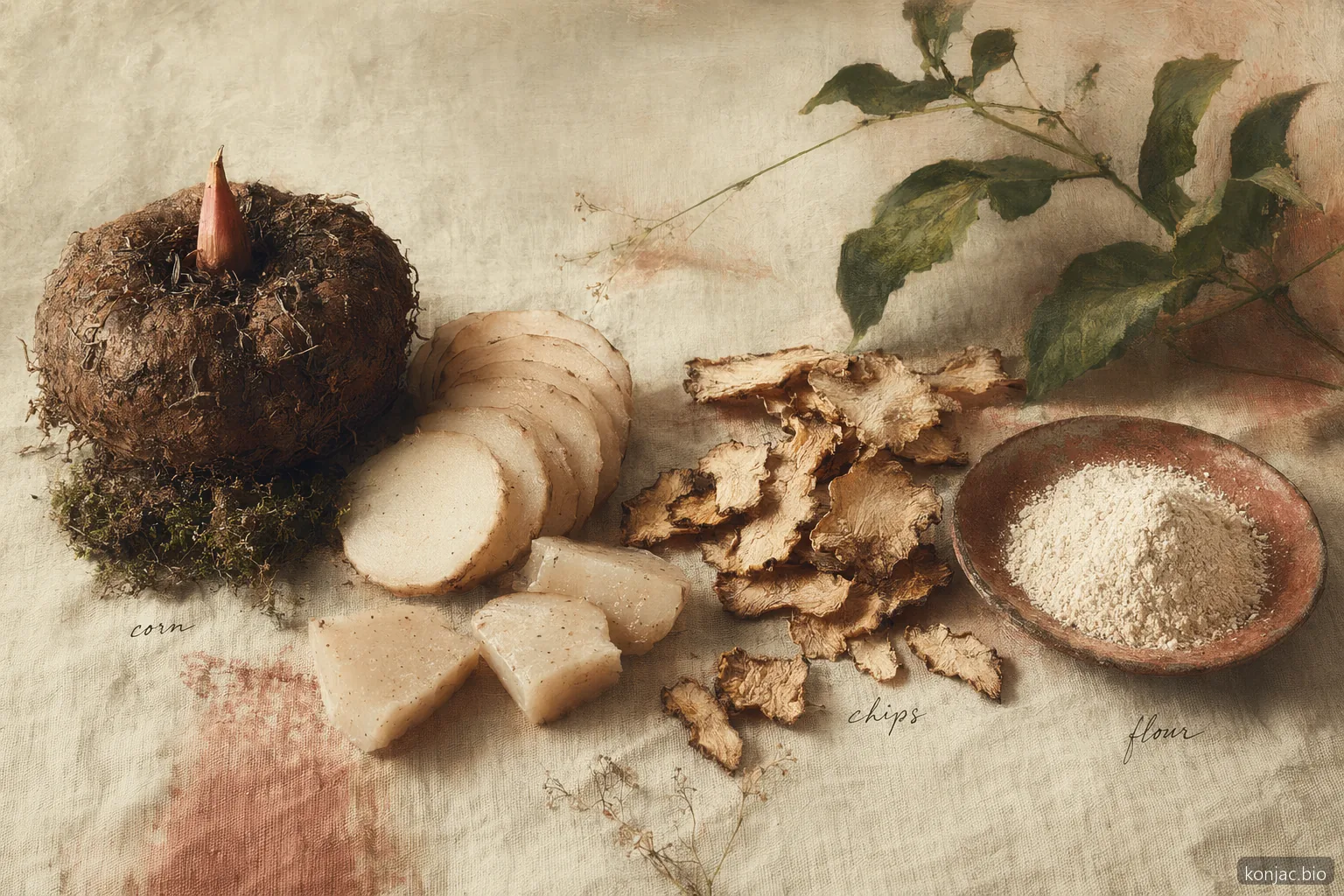
Konjac flour is made from the corm of Amorphophallus konjac, and its key functional component is glucomannan, a high-molecular-weight soluble dietary fiber recognized in European additive specifications for E 425 konjac products under EU specs. A B2B purchase order should convert that identity into measurable release criteria.
| Specification | Common RFQ range | Why it matters |
|---|---|---|
| Grade | Food-grade or supplement-grade | Defines intended use, documentation, and packaging controls |
| Glucomannan | 80%, 85%, 90%, or 95% | Controls water binding, gel strength, and label positioning |
| Mesh size | 60, 80, 100, 120 mesh | Affects dispersion speed and mouthfeel |
| Viscosity | Buyer-specified mPa.s method | Predicts thickening and gel behavior |
| Moisture | Usually below 10% to 12% | Supports shelf life and flowability |
| Microbiology | TPC, yeast, mold, E. coli, Salmonella | Confirms hygienic handling |
| Heavy metals | Pb, As, Cd, Hg | Supports destination-market compliance |
Food-grade material is typically used in shirataki noodles, sauces, bakery systems, plant-based gels, and prepared foods. Supplement-grade material usually requires tighter documentation, higher purity, smaller variance between lots, and label-ready dietary fiber data.
For adjacent sourcing context, buyers can compare this guide with konjac basics, glucomannan specifications, shirataki applications, and konjac wholesale.
Ready to source? Typical specifications, MOQ, lead time and a quote form for bulk konjac flour are on the product page. Supplier: Konjac Bio Limited, Shanghai (sourcing company; specification sheet and COA from the producing factory with every shipment).
Which wholesale konjac flour purity tier should a brand buy?
A brand should buy the lowest wholesale konjac flour purity tier that meets its viscosity, label, sensory, and cost targets without failing production trials.
Purity is usually expressed as glucomannan percentage on the COA. Higher purity normally gives cleaner hydration, stronger thickening, lower odor, and a higher price per kilogram. Lower purity may be suitable for cost-sensitive food systems where starch, ash, and color are less critical.
| Purity tier | Typical use case | Procurement note |
|---|---|---|
| 80% glucomannan | Noodles, sauces, basic gels | Best when cost per finished unit matters most |
| 85% glucomannan | Better sensory food applications | Common midpoint for food-grade RFQs |
| 90% glucomannan | Premium foods, drink powders, capsules | Useful when cleaner flavor and stronger hydration matter |
| 95% glucomannan | High-purity supplement blends and technical formulas | Requires careful viscosity and dispersion validation |
For supplement positioning in the European Union, the authorized wording is specific: "Glucomannan contributes to weight loss in the context of an energy-restricted diet," with conditions of use in the EFSA opinion. Marketing teams should not turn that wording into stronger health language.
A practical RFQ should request side-by-side quotes for at least two purity tiers, such as 85% and 90%. The cheapest tier can become expensive if the formula needs more powder, longer hydration, extra deodorization, or higher reject rates.
How do mesh size and viscosity change konjac flour performance?
Mesh size changes dispersion and texture, while viscosity measures the thickening strength of hydrated konjac flour under a defined test method.
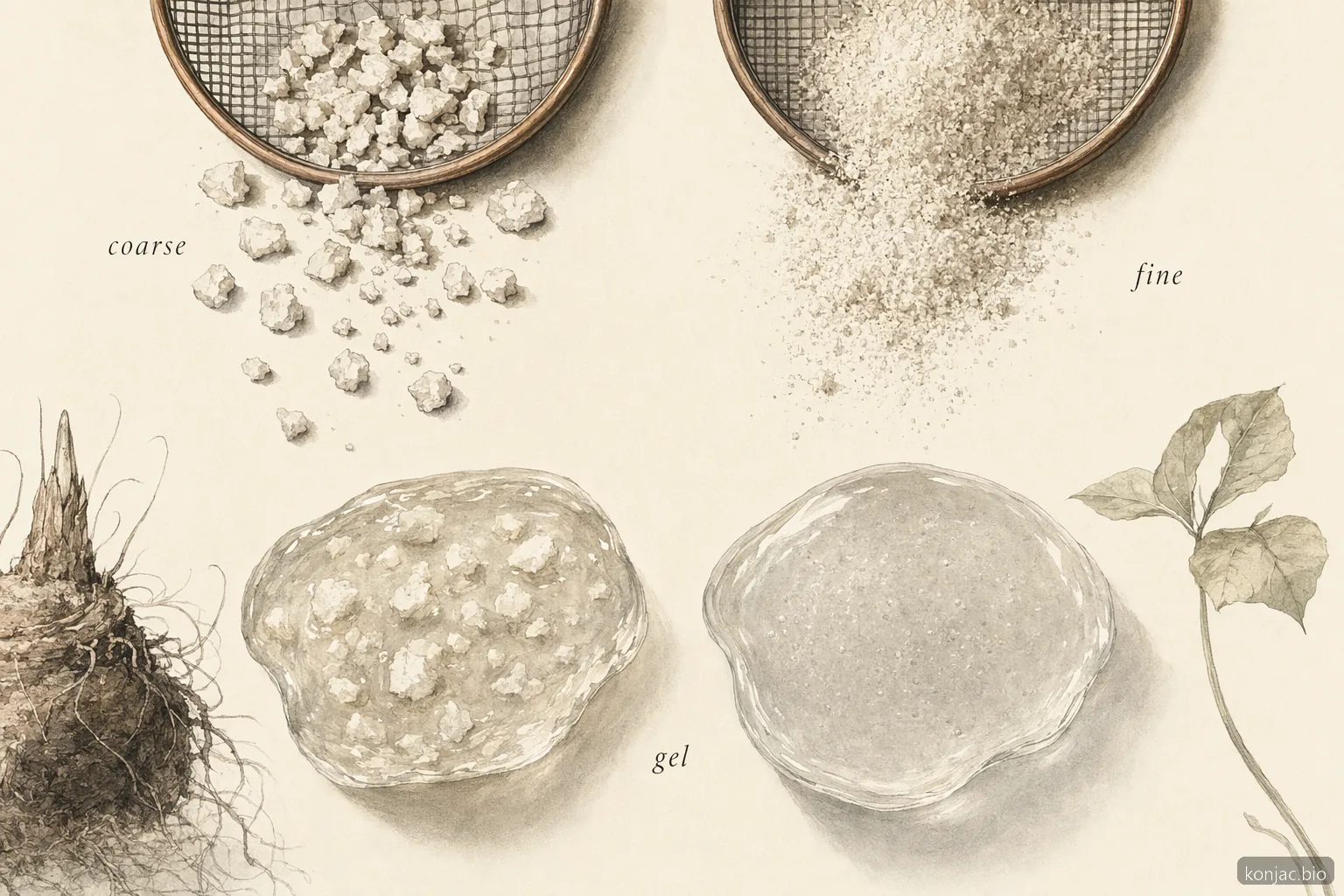
Mesh describes particle size. A higher mesh number generally means a finer powder, faster wetting, and smoother mouthfeel. A lower mesh number may hydrate more slowly but can be easier to handle in large dry blends.
| Mesh | Typical behavior | Common fit |
|---|---|---|
| 60 mesh | Coarser, slower hydration | Industrial mixes and less sensitive textures |
| 80 mesh | Balanced flow and hydration | Noodles, sauces, bakery blends |
| 100 mesh | Finer texture, faster hydration | Gummies, beverages, premium foods |
| 120 mesh | Very fine, smoother mouthfeel | Capsules, sachets, instant powders |
Viscosity is only useful when the method is fixed. The COA should state concentration, water temperature, hydration time, spindle, speed, and instrument type, such as a Brookfield-style rotational viscometer. Without method details, a 30,000 mPa.s value from one supplier may not match 30,000 mPa.s from another.
Buyers should request a retained sample from the production lot used for the COA. The receiving lab can then compare dispersion, viscosity, odor, and gel formation against the pre-shipment sample before approving the lot for production.
What microbiological and heavy-metal limits belong on a COA?
A konjac flour COA should list total plate count, yeast and mold, E. coli, Salmonella, Pb, As, Cd, and Hg with numerical limits, results, units, and methods.
Common commercial microbiology targets include total plate count below 10,000 cfu/g, yeast and mold below 100 cfu/g, E. coli negative, and Salmonella negative in 25 g. FDA laboratory methods describe food testing approaches for E. coli and Salmonella.
| COA item | Common commercial limit | Unit |
|---|---|---|
| Total plate count | < 10,000 | cfu/g |
| Yeast and mold | < 100 | cfu/g |
| E. coli | Negative | per g or per 10 g |
| Salmonella | Negative | per 25 g |
| Lead, Pb | Buyer-defined, often ≤ 2.0 | mg/kg |
| Arsenic, As | Buyer-defined, often ≤ 1.0 | mg/kg |
| Cadmium, Cd | Buyer-defined, often ≤ 1.0 | mg/kg |
| Mercury, Hg | Buyer-defined, often ≤ 0.1 | mg/kg |
Heavy-metal limits should be set against the destination market, finished-product serving size, and customer requirements. European Union food contaminant rules are consolidated in EU 2023/915, while additive specifications are separately listed for food additives such as E 425 konjac products in EU specs.
Do not accept the phrase complies with standard without numbers. The buyer should require the actual result, such as Pb 0.38 mg/kg, and the method, such as ICP-MS or ICP-OES, for every lot.
What should a wholesale konjac flour COA include?
A wholesale konjac flour COA should identify the lot, grade, test results, methods, release date, manufacturing date, expiry date, and authorized quality sign-off.
The COA is the buyer's lot-release document. It should be issued on supplier letterhead, match the batch number on the bag label, and state whether the result comes from in-house testing or a third-party laboratory.
- Product name, botanical source, and grade.
- Batch number, manufacturing date, expiry or retest date.
- Glucomannan percentage and test method.
- Mesh size, viscosity, moisture, ash, pH, odor, and color.
- Microbiology results with units and methods.
- Heavy metals results for Pb, As, Cd, and Hg.
- Allergen, GMO, irradiation, residual solvent, and pesticide statements where relevant.
- Packaging format, net weight, and storage conditions.
- Quality manager signature or controlled digital release.
For food-safety systems, suppliers may operate under ISO 22000, a food safety management system standard described by ISO 22000. Certification does not replace lot testing, but it helps buyers assess supplier process controls.
A clean COA template makes multi-supplier comparison easier. Before issuing a purchase order, procurement should align the supplier COA with the buyer's internal release specification so incoming quality teams are not forced to interpret vague results at receiving.
How should packaging, MOQ, and lead times be planned?
Packaging, MOQ, and lead times should be planned around annual volume, warehouse humidity, container utilization, and the buyer's production calendar.
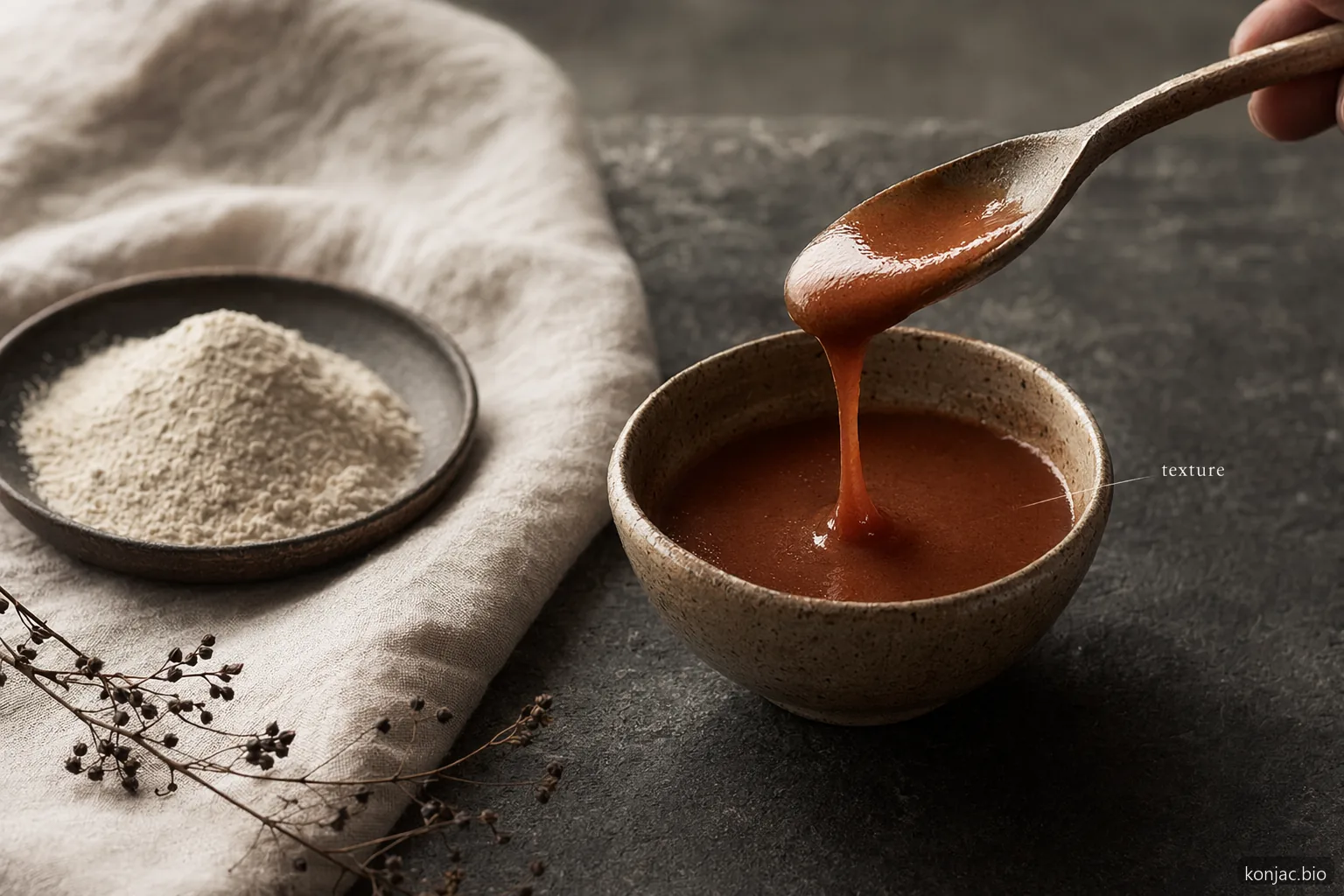
Konjac flour is hygroscopic, so packaging must protect against moisture, odor pickup, puncture, and pallet damage. The most common formats are multi-layer kraft bags with inner polyethylene liners and fiber drums or cardboard drums for smaller, higher-value lots.
| Format | Common net weight | Best fit |
|---|---|---|
| Kraft bag with PE liner | 20 kg or 25 kg | Food factories and full-pallet orders |
| Fiber drum | 20 kg or 25 kg | Premium grades, capsules, and air freight |
| Carton with inner bag | 10 kg or 20 kg | Samples, pilots, and small production runs |
MOQ depends on grade and origin. Practical planning ranges are 100 kg to 500 kg for paid trial orders, 500 kg to 1 metric ton for standard commercial lots, and 5 metric tons or more for container-level pricing.
| Origin | Planning lead time | Procurement note |
|---|---|---|
| China | 3 to 6 weeks after deposit for common grades | Largest sourcing base and broadest purity range |
| Japan | 6 to 10 weeks for specialty grades | Often higher documentation expectations and smaller supply pool |
| Indonesia | 5 to 9 weeks depending on crop and processing capacity | Useful for diversification and origin strategy |
Buyers should add transit time separately. Ocean freight may add several weeks, while air freight is faster but expensive for dense powder. Always confirm whether quoted lead time means production completion, port delivery, vessel departure, or arrival at the buyer's warehouse.
Which Incoterms, payment terms, and sample policy reduce buying risk?
The safest buying setup uses clear Incoterms, staged payment, a retained pre-shipment sample, and written approval criteria before mass production.
Incoterms define which party pays freight, insurance, customs clearance, and risk transfer. The International Chamber of Commerce maintains the current ICC rules, and buyers should state the exact rule and named place, such as FOB Shanghai, CIF Rotterdam, or DDP Los Angeles.
| Term | Buyer control | Best fit |
|---|---|---|
| FOB | High control after port loading | Buyers with freight forwarders |
| CIF | Moderate control | Buyers wanting supplier-arranged ocean freight |
| DDP | Lower logistics burden | Small orders or buyers without import setup |
A common payment structure is T/T 30% deposit and 70% against copy of bill of lading. For new suppliers or large orders, buyers may request third-party inspection, pre-shipment COA approval, or a letter of credit.
A sample policy should cover 100 g to 500 g free evaluation samples, paid freight, and 1 kg to 5 kg pilot samples for production trials. The sample label should show grade, purity, mesh, viscosity, batch number, and whether the sample represents current production stock.
Risk drops when the purchase order states rejection criteria. If the delivered lot fails agreed glucomannan, mesh, viscosity, microbiology, heavy metals, or packaging requirements, the supplier should provide replacement, credit, or agreed corrective action.
Frequently asked questions
01 What is the best purity level for wholesale konjac flour?
02 Is food-grade konjac flour different from supplement-grade konjac flour?
03 What viscosity should procurement request for konjac flour?
04 What microbiological tests are standard for konjac flour?
05 Which heavy metals should appear on a konjac flour COA?
06 What MOQ is realistic for a new konjac flour buyer?
07 Which packaging is better, kraft bags or drums?
08 Should buyers choose FOB, CIF, or DDP for konjac flour?
- Commission Regulation (EU) No 231/2012 laying down specifications for food additives · EUR-Lex · 2012
- Scientific Opinion on the substantiation of health claims related to glucomannan · European Food Safety Authority · 2010
- BAM Chapter 4: Enumeration of Escherichia coli and the Coliform Bacteria · U.S. Food and Drug Administration · 2020
- BAM Chapter 5: Salmonella · U.S. Food and Drug Administration · 2023
- Commission Regulation (EU) 2023/915 on maximum levels for certain contaminants in food · EUR-Lex · 2023
- ISO 22000 Food safety management systems · International Organization for Standardization · 2018
- Incoterms Rules · International Chamber of Commerce · 2020