What is the konjac plant?
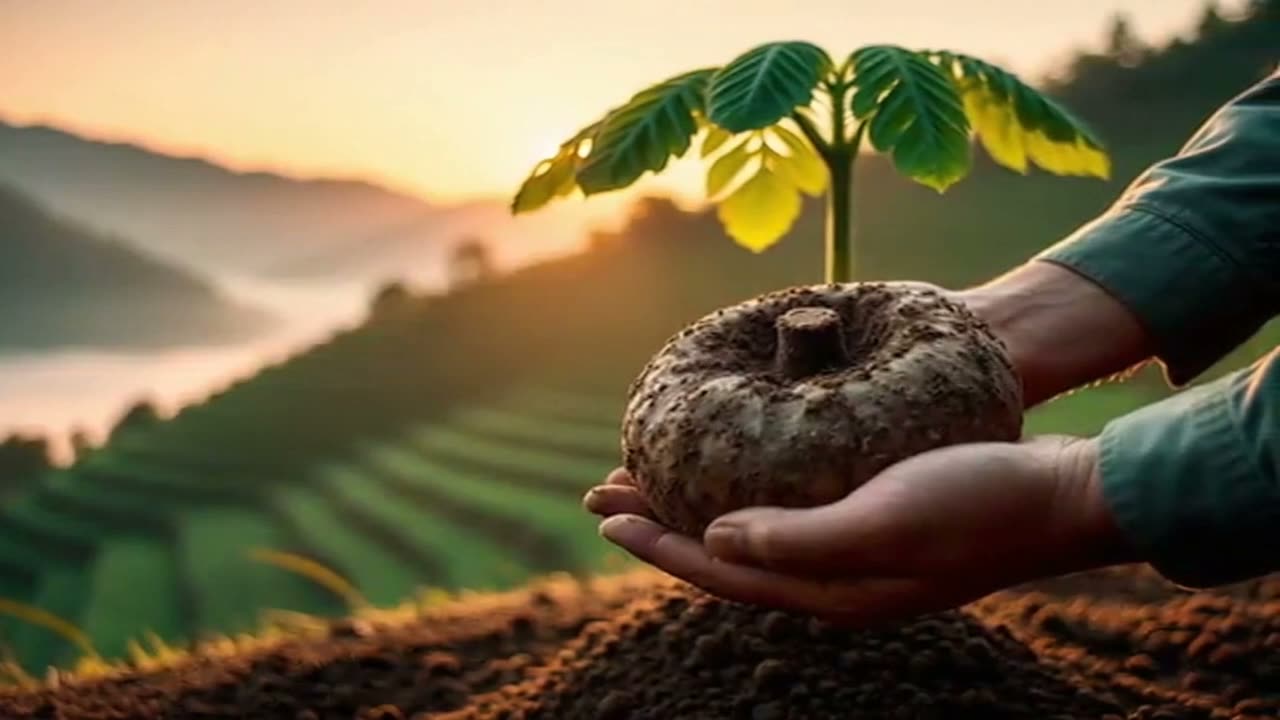
The konjac plant is Amorphophallus konjac, a tuberous perennial in the arum family grown for an underground corm rich in glucomannan fiber.
Botanically, Amorphophallus konjac belongs to Araceae, the same family as taro, peace lily, and other aroids. Kew’s Plants of the World Online lists Amorphophallus konjac K. Koch as the accepted scientific name, with distribution records in China and Japan Kew taxonomy.
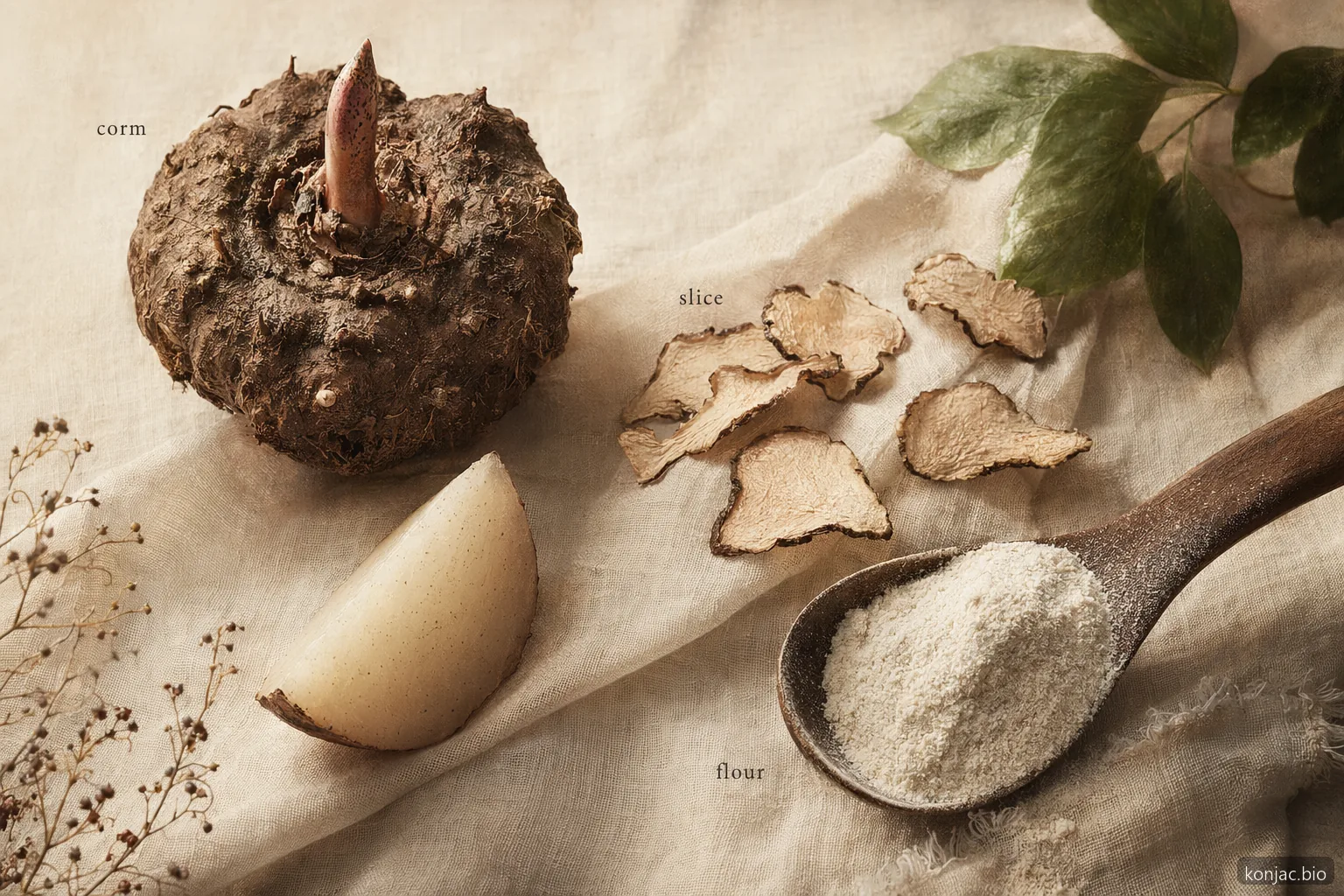
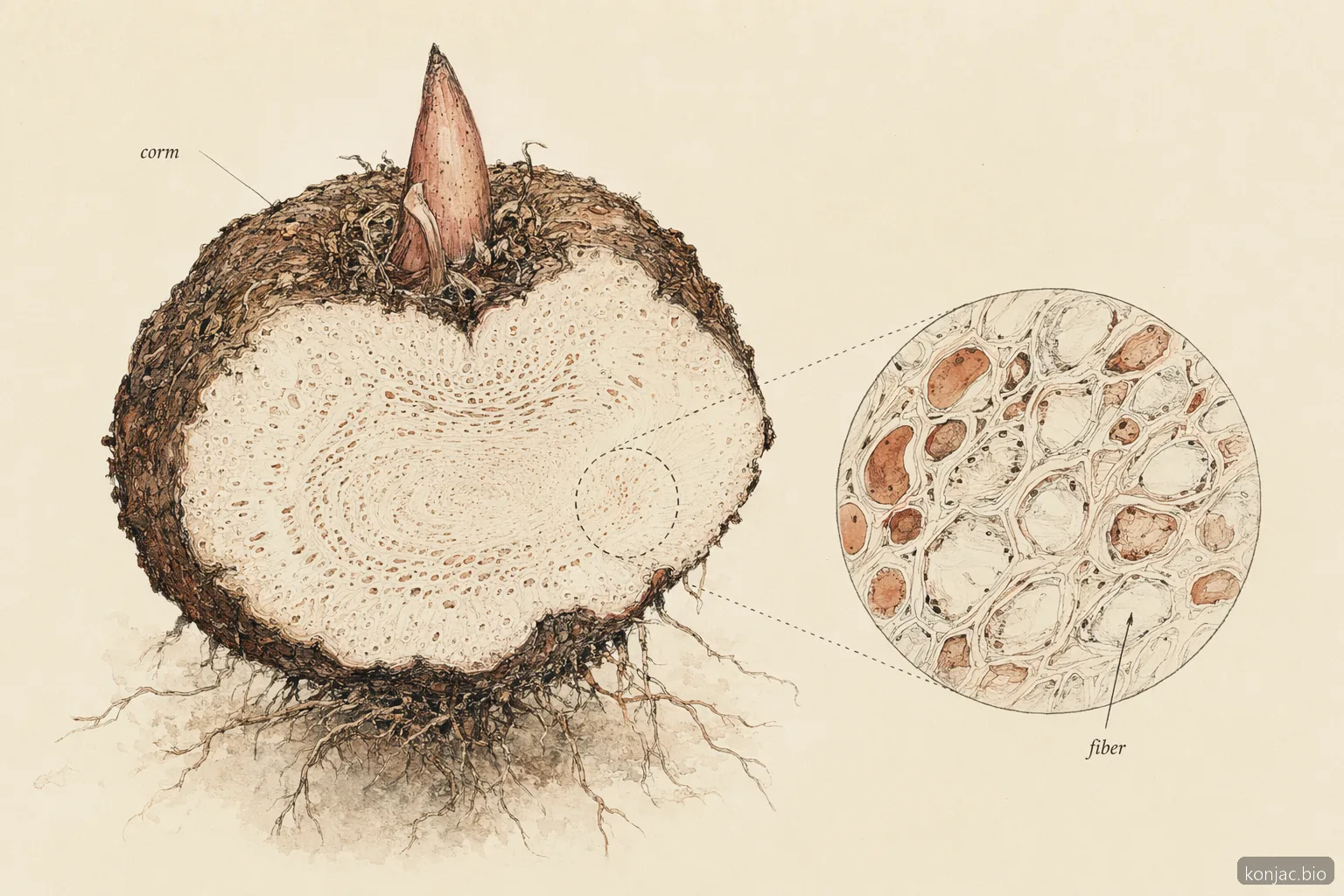
The edible and industrial value of the plant comes from the corm, not the leaf or flower. A mature corm is a swollen underground stem that stores carbohydrates and glucomannan, a water-binding polysaccharide used in foods, supplements, and hydrocolloid systems.
The plant has a single large compound leaf in the vegetative stage. When mature, it can also produce a dramatic inflorescence with a spathe and spadix, a structure common in the genus Amorphophallus.
| Plant part | What it does | Why it matters |
|---|---|---|
| Corm | Stores glucomannan and carbohydrate | Source of konjac flour and glucomannan powder |
| Leaf | Photosynthesizes during the growing season | Builds corm size before dormancy |
| Inflorescence | Supports reproduction | Gives the genus its striking aroid appearance |
| Roots | Absorb water and minerals | Support corm expansion in loose, well-drained soil |
The name konjac is also used for finished foods and ingredients. On konjac.bio, the broader food and ingredient category is introduced on the konjac guide, while this page focuses on the living plant, cultivation, and corm-to-flour pathway.
How is Amorphophallus konjac classified botanically?
Amorphophallus konjac is classified as an aroid, a flowering plant in the family Araceae and the genus Amorphophallus.
The genus name comes from Greek roots often translated as referring to the shape of the inflorescence. The species is known for a large underground corm, a seasonal growth pattern, and a prominent spathe-and-spadix flower structure.
Some older literature and trade documents use the name Amorphophallus rivieri or Amorphophallus rivieri var. konjac. Modern botanical references generally use Amorphophallus konjac as the accepted name, while older names may remain in nursery catalogs, historical Japanese crop literature, and ingredient supply documents Kew record.
The plant is sometimes confused with the phrase Amorphophallus konjac voodoo lily. Voodoo lily is a common name applied loosely to several aroids with dark spathes, so it is less precise than the Latin binomial. For food, supplements, and ingredient sourcing, Amorphophallus konjac is the name that matters.
| Level | Konjac plant classification |
|---|---|
| Family | Araceae |
| Genus | Amorphophallus |
| Accepted species | Amorphophallus konjac K. Koch |
| Older name seen in records | Amorphophallus rivieri and related forms |
| Common food names | Konjac, konnyaku, devil’s tongue, elephant yam |
Common names can cause sourcing confusion. Elephant yam can also refer to other Amorphophallus species, so procurement specifications should state the scientific name, plant part, intended grade, and whether the buyer wants konjac flour, purified glucomannan, or konjac gum E425.
Where does the konjac plant grow best?
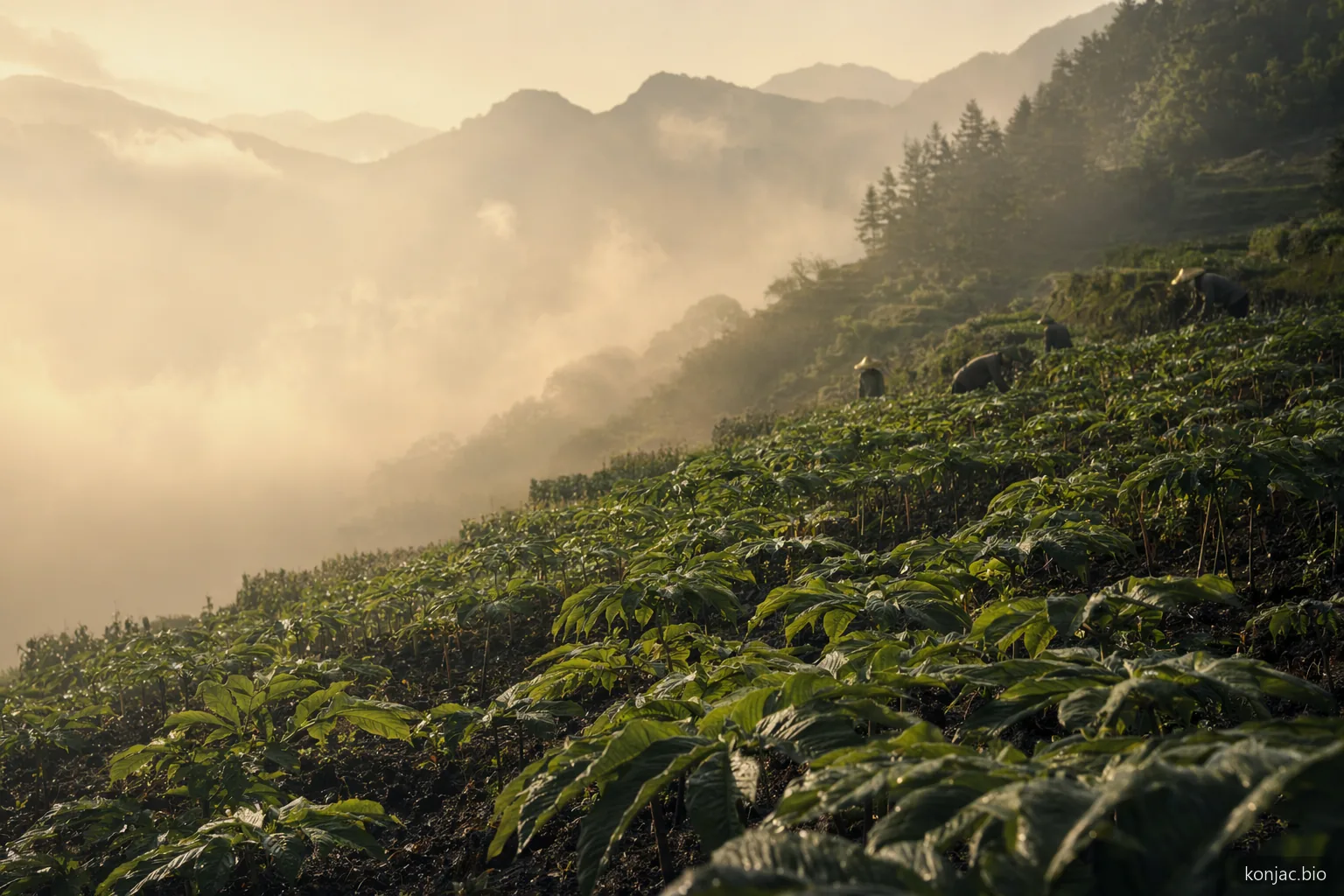
The konjac plant grows best in warm, humid, upland environments with partial shade, loose soil, and a frost-free growing season.
Traditional and commercial cultivation is concentrated in parts of China, Japan, and Southeast Asia. China is a major producer of konjac raw material and processed konjac flour, while Japan is closely associated with konnyaku foods, shirataki, and refined food culture around the crop.
The plant prefers well-drained soil because waterlogging can damage corms. Growers often favor sloped land, raised beds, or friable volcanic and mountain soils that let the corm expand without prolonged standing water.
Konjac is seasonal. The leaf grows during the warm months, transfers energy into the corm, and then senesces before dormancy. Farmers harvest corms when they reach the desired size and glucomannan quality for food or industrial processing.
- Temperature: warm growing season, with protection from frost.
- Water: consistent moisture, but not stagnant water.
- Light: partial shade or filtered light in many production systems.
- Soil: loose, well-drained, organic-matter-rich soil.
- Harvest target: corm size, solids, glucomannan level, and low spoilage.
Commercial buyers usually care less about the leaf and more about the corm’s processing yield. Flour color, viscosity, sulfur dioxide residue, ash, moisture, mesh size, and microbiological status often matter more than corm appearance once the crop enters an ingredient supply chain.
Growers sometimes compare the konjac plant to taro, since both are aroids with an underground storage organ, but the end use differs: taro is commonly cooked and eaten as a starchy vegetable, while konjac is mainly grown to isolate functional glucomannan for food and ingredient processing.
Why is the konjac plant central to Japan konjac and konjac Japanese food culture?
The konjac plant is central to Japanese konnyaku culture because its corm produces the gel used in konnyaku blocks, shirataki noodles, and regional winter dishes.
Konjac has been associated with Japanese food history for many centuries, often described in food histories as a crop with more than 1,000 years of culinary use in Japan. The Japanese word konnyaku usually refers to the firm gel made from konjac flour or grated corm and an alkaline coagulant.
Japan konjac culture is practical as much as symbolic. Konnyaku is valued for its chewy texture, low calorie density, and ability to absorb broth flavors in dishes such as oden, simmered vegetables, and hot pot.
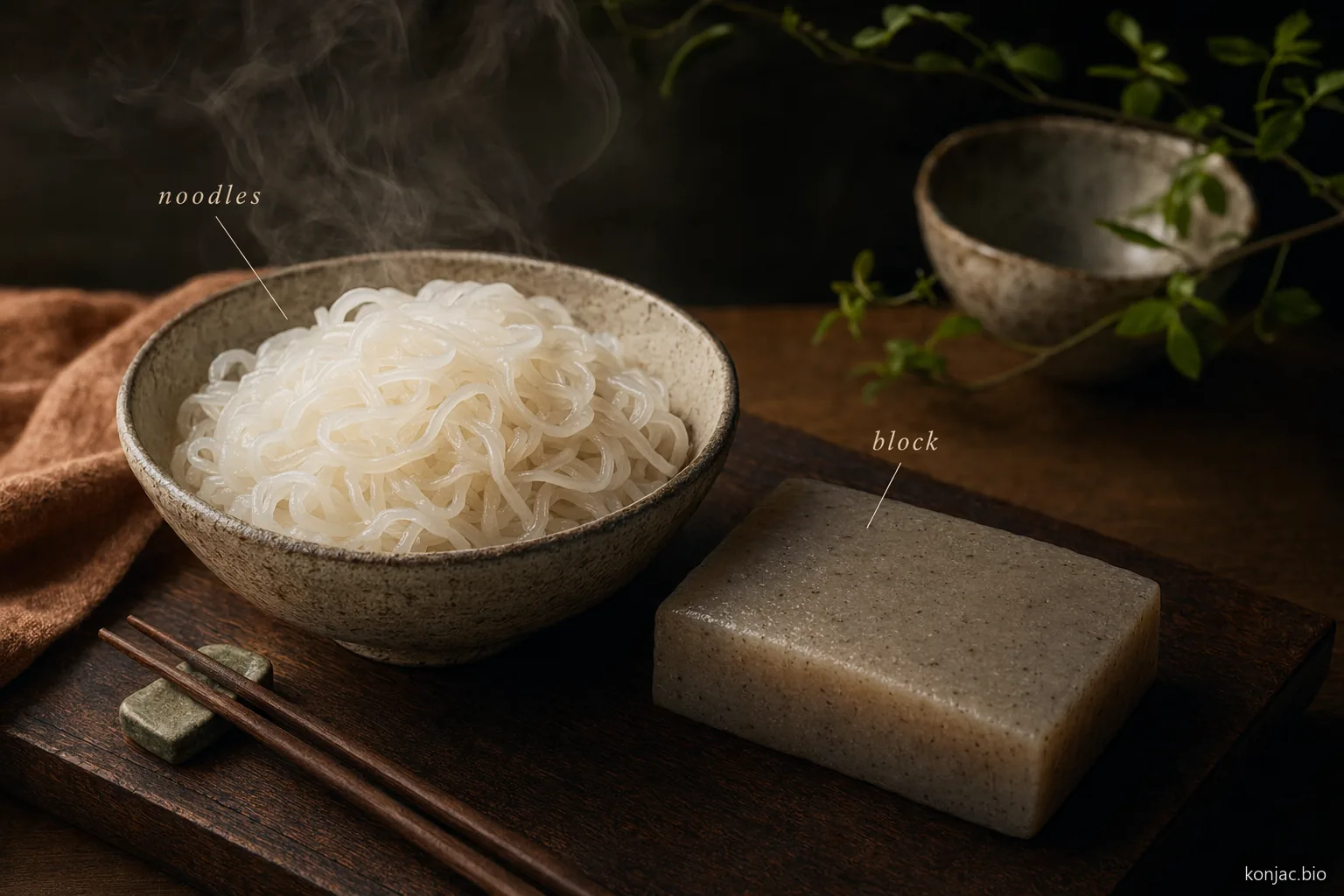
The phrase konjac Japanese food can mean several forms. Blocks are sliced or scored, shirataki is extruded into thin strands, and regional styles can include white konnyaku, gray konnyaku, and seaweed-speckled versions. For a product-focused comparison, see the konjac.bio guide to shirataki noodles.
| Japanese form | Typical shape | Main use |
|---|---|---|
| Konnyaku block | Firm rectangular gel | Simmered dishes, oden, hot pot |
| Shirataki | Thin noodle strands | Soups, sukiyaki, low-calorie noodle swaps |
| Ita konnyaku | Board-like slab | Sliced, scored, or braised |
| Tama konnyaku | Small balls | Regional snacks and simmered dishes |
Modern Japanese konjac products still rely on the same botanical foundation: glucomannan from the corm forms a stable gel when processed with water and an alkaline setting agent. That gel behavior also explains why the crop moved from local food traditions into global hydrocolloid and specialty diet markets.
How does the konjac plant become konjac flour?
The konjac plant becomes konjac flour when harvested corms are washed, sliced, dried, milled, and separated into particle sizes or purity grades.
Processing begins soon after harvest because fresh corms are bulky and perishable. The outer surface is cleaned, damaged tissue is removed, and the corm is cut into chips or slices to increase drying efficiency.
Drying lowers moisture so the chips can be stored and milled without rapid spoilage. Milling breaks dried chips into flour, and air classification or purification can raise glucomannan concentration by reducing starch, fiber fragments, and other plant material.
- Harvest: corms are lifted when size and solids match the processor’s target.
- Cleaning: soil, roots, and damaged sections are removed.
- Slicing: chips create more surface area for drying.
- Drying: moisture is reduced for storage and milling.
- Milling: dried chips become crude konjac flour.
- Purification: classification improves glucomannan concentration, color, odor, and viscosity.
- Packing: powder is packed with moisture control and quality documentation.
Regulators recognize konjac flour as a food ingredient in specific contexts. The United States Code of Federal Regulations lists konjac flour at 21 CFR 184.1459, describing it as derived from the tuber of Amorphophallus konjac and used under specified conditions 21 CFR.
Ingredient names can differ by market. Konjac flour is often the broader milled product, purified konjac glucomannan is higher in soluble fiber, and konjac gum is the food additive term used in many hydrocolloid specifications. For manufacturing details, see the dedicated konjac flour pillar.
What is glucomannan inside the konjac plant?
Glucomannan is the main water-soluble polysaccharide in the konjac plant corm and the compound responsible for konjac’s high viscosity and gel texture.
Chemically, konjac glucomannan is built mainly from glucose and mannose units. Its high molecular weight and strong water-binding capacity explain why small powder doses can thicken sauces, form gels, or create the slippery bite of shirataki and konjac rice.
The European Food Safety Authority reviewed glucomannan health claims and authorized the wording "Glucomannan in the context of an energy-restricted diet contributes to weight loss" under stated conditions, including 3 g daily in three 1 g doses with 1 to 2 glasses of water before meals EFSA opinion. Consumer content should keep that wording precise and avoid overstating outcomes.
From a food science perspective, glucomannan matters because it changes water behavior. It can increase viscosity, form thermostable gels with alkali, and work with other hydrocolloids in plant-based foods, low-calorie noodles, meat analog systems, and bakery applications.
| Property | Practical meaning | Example use |
|---|---|---|
| Water binding | Absorbs large amounts of water | Shirataki noodles and konjac rice |
| Viscosity | Thickens liquids at low inclusion rates | Sauces, beverages, and fillings |
| Gel formation | Creates elastic texture with alkaline setting | Konnyaku blocks and jelly formats |
| Dietary fiber | Contributes soluble fiber | Supplements and high-fiber foods |
The glucomannan guide covers supplement-grade powder, dosage language, safety considerations, and regulatory wording in more detail. For food brands, the key distinction is whether the formulation needs crude konjac flour character, purified glucomannan performance, or E425 konjac gum labeling.
How is the konjac plant used in modern foods and ingredients?
The konjac plant is used in modern foods as a source of low-calorie gels, noodle substitutes, rice alternatives, jelly desserts, soluble fiber supplements, and hydrocolloid ingredients.
Most consumer products start with konjac flour or purified glucomannan rather than fresh corm. Powder is easier to standardize, ship, test, and blend into controlled formulations.
Shirataki noodles and konjac rice use hydrated konjac material shaped into strands or grains. Their appeal comes from very low calorie density, neutral flavor, and a springy texture that works in soups, stir-fries, curries, and meal-prep bowls. The product-specific konjac rice guide explains how rice-shaped konjac differs from grain rice and cauliflower rice.
Konjac jelly uses glucomannan’s gel-forming behavior in sweet or fruit-flavored formats. Safety design matters because some firm mini-cup jelly formats have been restricted or flagged by regulators due to choking risk, including FDA import actions for certain jelly cup products containing konjac FDA alert. Softer textures, larger formats, warning labels, and responsible serving practices reduce product risk.
Industrial ingredient buyers evaluate konjac by function. The European Union lists E425 for konjac gum and konjac glucomannan within its food additive framework EU additives. Specifications often include viscosity, moisture, particle size, ash, pH, odor, color, microbial counts, and contaminant limits.
konjac.bio can help brands and procurement teams source wholesale, private-label, and OEM konjac products with practical MOQ options, and inquiries can start at contact.
Cultivation, supply chains, and quality specifications
Konjac supply chains connect mountain agriculture, corm drying, powder milling, hydrocolloid testing, food manufacturing, and branded retail products.
The crop is not a simple commodity like wheat or corn. Corm age, variety, growing region, drying method, and purification level all influence viscosity, odor, color, and processing behavior.
China is a major global source for konjac raw material and konjac flour processing, with production clusters in provinces suited to humid upland agriculture. Japan remains important for food culture, quality standards, and konnyaku product identity. Indonesia and other Southeast Asian regions are relevant for broader Amorphophallus cultivation and export interest, especially as demand rises for soluble fiber and plant-based texture systems.
For a procurement manager, the living plant matters because agricultural variation shows up in the certificate of analysis. A powder with the same label can behave differently if glucomannan purity, drying quality, particle size, or storage humidity differs.
| Specification | Why buyers ask for it | Common impact |
|---|---|---|
| Viscosity | Measures thickening strength | Texture, dosage, batch consistency |
| Glucomannan content | Indicates functional purity | Water binding and fiber positioning |
| Moisture | Controls stability | Caking, shelf life, microbial risk |
| Mesh size | Shows particle distribution | Hydration speed and mouthfeel |
| Color and odor | Signals refinement and drying quality | Finished product appearance and aroma |
| Microbiology | Confirms food safety status | Release decisions and import clearance |
Quality systems often reference HACCP, ISO 22000, FSSC 22000, halal, kosher, organic, or non-GMO documentation depending on the buyer and destination market. The most useful sourcing brief states product type, intended application, target viscosity, packaging size, destination country, annual volume, and compliance documents needed before sampling.
Consumer product pathways branch from the same corm. Konjac can become noodles, rice, jelly, sponge fiber, or supplements, but each pathway requires different testing and labeling. For weight-focused product positioning, the konjac keto pillar explains how konjac fits low-carb eating without overstating results.
Frequently asked questions
01 Is the konjac plant the same as Amorphophallus konjac?
02 What is Amorphophallus rivieri konjac?
03 Why is konjac important in Japan?
04 Can you eat the konjac plant raw?
05 How long does the konjac plant take to grow?
06 Is Amorphophallus konjac the voodoo lily?
07 What part of the konjac plant becomes glucomannan?
08 What is the difference between konjac flour and konjac gum?
09 Can konjac plants be grown indoors?
- Konjac: The Plant Behind Shirataki, Jelly, Flour, and Sponges
- Shirataki Noodles: The Complete Guide to Konjac Pasta
- Glucomannan Guide: Benefits, Dosage, Safety, and Forms
- Konjac Flour and Powder: The Food-Ingredient Guide
- Konjac Rice: The Low-Carb Rice Swap, Cooked Right
- Konjac for Keto and Weight Loss: Evidence and Practical Use
- Amorphophallus konjac K.Koch · Plants of the World Online, Royal Botanic Gardens Kew · 2024
- Scientific Opinion on the substantiation of health claims related to konjac mannan (glucomannan) · EFSA Journal · 2010
- Import Alert 33-15: Detention Without Physical Examination of Gel Candies Containing Konjac · U.S. Food and Drug Administration · 2024
- Regulation (EC) No 1333/2008 on food additives · EUR-Lex · 2008
- Konjac Glucomannan: From Molecular Architecture to Translational Applications. A Critical Review of Structure-Function Relationships, Emerging Biomedical Frontiers, and Industrial Challenges · Foods (PubMed) · 2026