What is a konjac sponge?
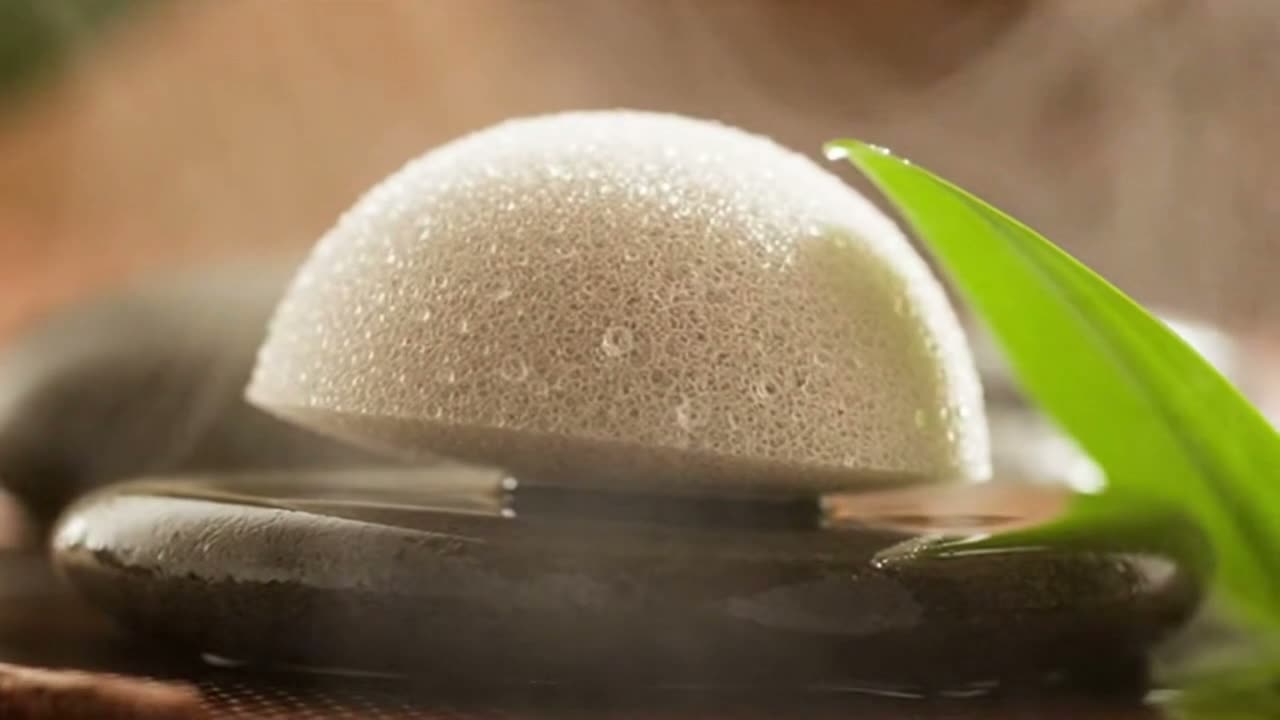
A konjac sponge is a porous skincare sponge made from hydrated, processed glucomannan fiber from the corm of Amorphophallus konjac.
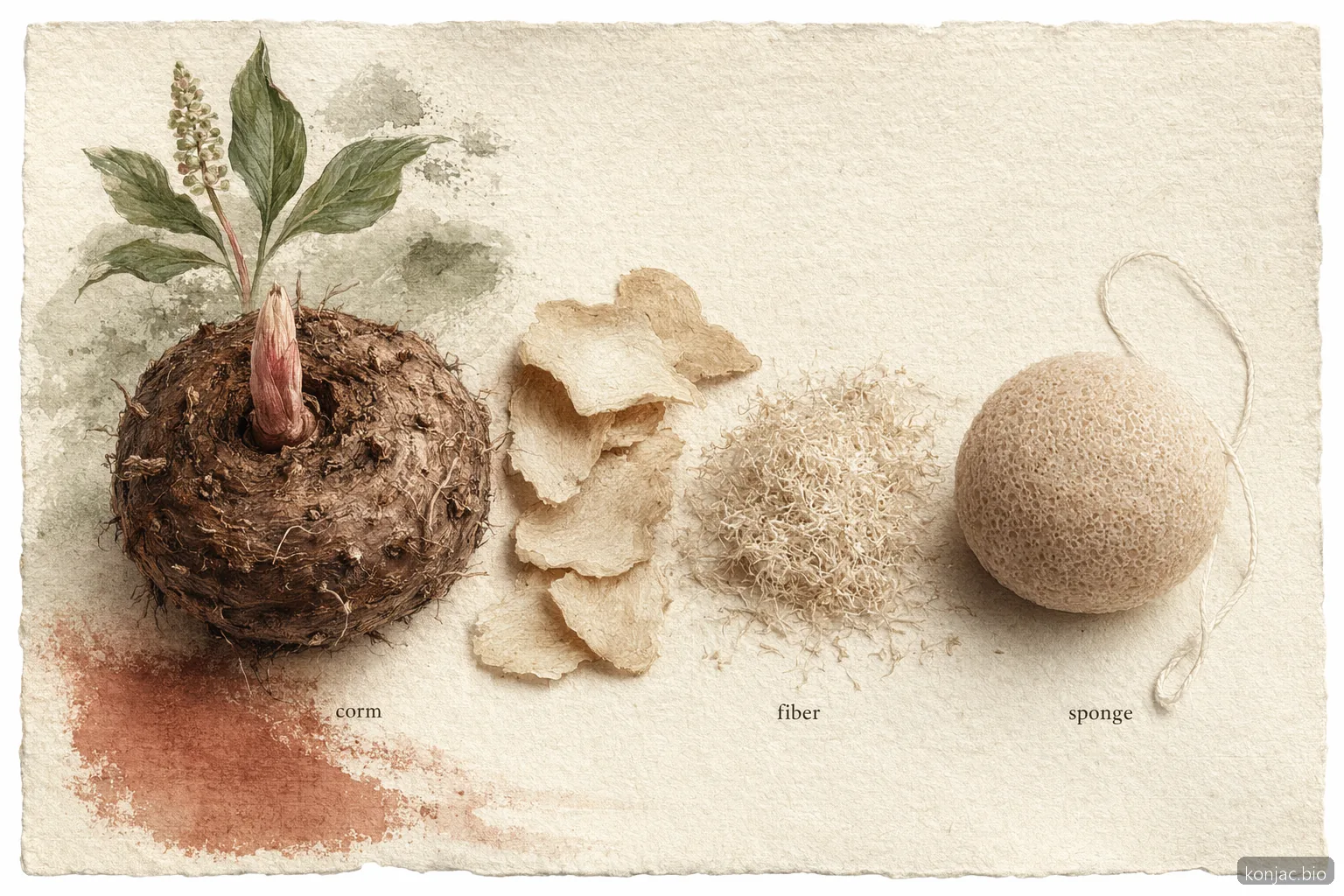
The plant is the same species behind food ingredients such as konjac flour, glucomannan, and the gel structure used in shirataki noodles. In skincare, the root-derived fiber is cleaned, milled, mixed with water, shaped, and dried into a hard sponge that softens when soaked.
Amorphophallus konjac is a valid plant species listed by the Royal Botanic Gardens, Kew in Plants Online. Its main functional polysaccharide, glucomannan, is described in the National Center for Biotechnology Information database as a plant-derived polysaccharide with high water-binding behavior in PubChem.
When dry, a konjac sponge feels rigid and lightweight. After soaking, it becomes springy, cushion-like, and slippery enough to glide over the skin with minimal pressure. This change from hard to soft is the key reason the tool is marketed for gentle cleansing rather than aggressive scrubbing.
Common formats include:
- Facial konjac sponge: a small round, teardrop, or heart-shaped sponge for the cheeks, nose, chin, and forehead.
- Face konjac sponge with additives: a sponge blended with charcoal, clay, green tea powder, or plant colorants.
- Konjac body sponge: a larger sponge for shoulders, arms, legs, and torso.
- Mini sponge: a compact sponge for travel, sampling, or targeted cleansing around the nose.
A konjac sponge is not a cleanser by itself. It is a physical tool that can be used with plain water or with a low-foaming cleanser. The American Academy of Dermatology recommends gentle face washing and avoiding harsh scrubbing in its face washing guidance, which is consistent with the light-pressure use style that konjac sponges require.
How is a konjac sponge made?
A konjac sponge is made by converting purified konjac root fiber into a hydrated gel, shaping it, freezing or setting the structure, then drying it into a lightweight porous sponge.
The exact process varies by factory, but the manufacturing logic is similar across plain, charcoal, clay, and body sponge formats. The goal is to create an interconnected pore network that can hold water, compress gently, and return to shape after squeezing.
- Raw material preparation: konjac corms are washed, sliced, dried, and milled into flour or glucomannan-rich powder.
- Hydration: the powder is dispersed in water until the fiber swells and forms a viscous gel.
- Additive blending: charcoal, clay, mineral colorants, or botanical powders may be added for product positioning.
- Molding: the gel is poured into round, oval, teardrop, or body-size molds.
- Structure setting: freezing, heating, alkaline setting, or a combined process creates a stable sponge matrix.
- Rinsing: the sponge is washed to remove processing residues and loose particles.
- Drying: water is removed until the sponge becomes firm, light, and shelf-stable before packaging.
The same raw material family is used in food manufacturing, although skincare sponges are not food products. Food-grade konjac gum is recognized in food additive systems, including the Codex listing for konjac gum, while cosmetic sponges follow cosmetic and consumer-product expectations for labeling, cleanliness, and safe use.
Finished sponges are usually packed either dry or pre-moistened. Dry-packed sponges are lighter, cheaper to ship, and less vulnerable to microbial growth before opening. Pre-moistened sponges feel more premium at retail, but they require stronger packaging controls because retained water shortens the safe storage margin.
For brand owners, konjac.bio can help with wholesale, private-label, and OEM konjac sponge sourcing, including plain, charcoal, clay, facial, and body formats. Request sourcing details for MOQ, packaging, and specification options.
Konjac sponge benefits and limits
The main konjac sponge benefits are gentle cleansing, light exfoliation, water-assisted massage, and a softer skin feel after washing. The limits are equally practical: it cannot replace sunscreen, moisturizers, acne guidance, or hygiene discipline.
A wet konjac sponge can lift surface debris, cleanser residue, and loosened flakes through mild mechanical action. Because the sponge is soft when fully hydrated, many users find it less scratchy than a washcloth, stiff facial brush, or gritty scrub. That makes it attractive for daily or near-daily cleansing routines.
Skin has a protective surface barrier that is sensitive to repeated friction, harsh surfactants, and high-pH products. Human skin surface pH is commonly reported around the mildly acidic range, with one review noting values below 5 in many measurements of skin pH. A sponge does not control formula pH, so the cleanser used with it still matters.
Useful benefits include:
- Low-abrasion cleansing: the sponge softens after soaking and glides without needing strong pressure.
- Light exfoliation: the porous texture helps remove loose surface flakes without a gritty scrub.
- Reduced cleanser load: some users need only a pea-size amount of cleanser because the sponge helps spread foam.
- Massage feel: circular motion can make washing feel more thorough without extending the routine.
- Biobased material story: konjac root fiber gives brands and consumers a plant-derived sponge option.
Limits include:
- No guaranteed result: texture, oiliness, dryness, and comfort vary by person and by cleanser pairing.
- No sterile surface: a used sponge holds water and skin debris, so drying and replacement are required.
- No deep resurfacing: it is a light exfoliating konjac sponge, not a peel, device, or professional procedure.
- No universal fit: people with stinging, active irritation, or open areas should avoid friction until skin feels comfortable.
The safest expectation is simple: a konjac sponge may make cleansing feel softer and more even. It should not be bought with expectations that belong to regulated skincare actives or clinical devices.
Which konjac sponge type should you choose?
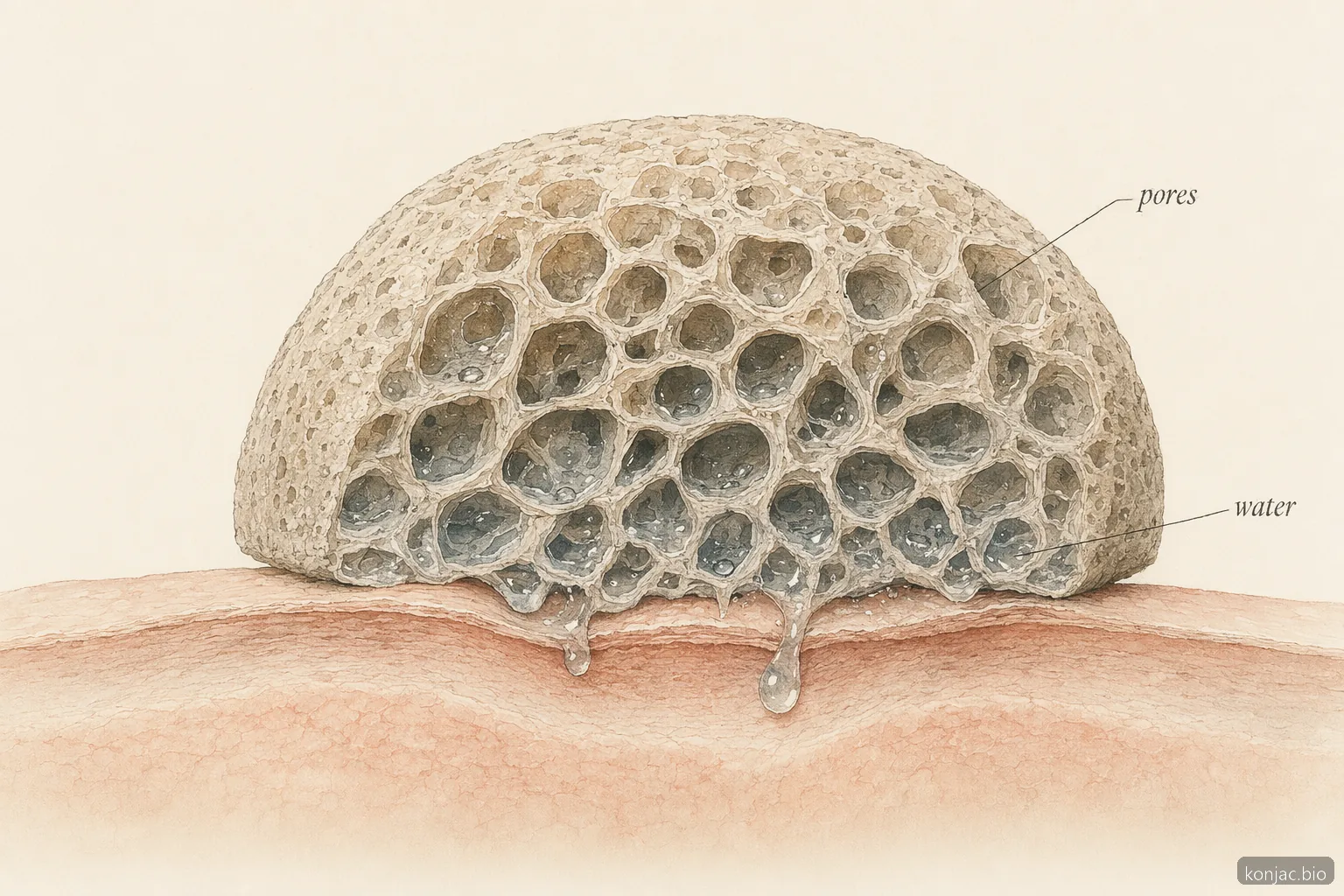
The best konjac sponge type is the plain, undyed version for most first-time users, while charcoal, clay, and body versions are better chosen for specific texture, color, or merchandising goals.
Plain sponges minimize variables. They contain konjac fiber without the extra sensory story of charcoal or clay, making them easier to evaluate if your skin is reactive or if you are comparing different cleansing methods.
| Type | Typical use | Best fit | Caution |
|---|---|---|---|
| Plain white konjac sponge | Daily face cleansing | First-time users, simple routines, sensitive skin shoppers | Choose fragrance-free packaging if irritation is a concern |
| Charcoal konjac sponge | Oilier-feeling skin, darker retail aesthetic | Consumers who like charcoal positioning | Charcoal does not guarantee better results |
| Clay konjac sponge | Matte feel and colored product lineups | Combination skin shoppers and spa-style brands | Clay particles should feel smooth, not gritty |
| Green tea or botanical sponge | Natural-color skincare ranges | Gift sets and plant-forward product lines | Botanical additives can vary in color and odor |
| Konjac body sponge | Shower cleansing | Arms, legs, shoulders, torso | Too large or textured for eyelids and delicate facial areas |
Charcoal and clay sponges are often marketed as targeted solutions, but the sponge’s main action remains physical cleansing. If a product makes cosmetic claims, the wording and label must match local rules. In the United States, the FDA explains that cosmetic labeling must not be false or misleading in its labeling guide.
For consumers, the buying decision can be reduced to 4 questions:
- Where will it be used? Choose a face sponge for cheeks and nose, or a body sponge for shower use.
- How reactive is the skin? Choose plain konjac for sensitive skin and avoid fragrance-heavy packaging.
- How often will it be replaced? Buy multipacks if the sponge will be used daily.
- How will it dry? Choose a product with a hanging string or ventilated storage plan.
For private-label skincare, the strongest starting assortment is often 3 SKUs: plain white facial, charcoal facial, and larger body sponge. This keeps packaging, forecasting, and quality checks simpler than launching 6 colors at once.
How do you use a konjac sponge correctly?
Use a konjac sponge by soaking it until fully soft, squeezing out excess water, massaging with light circular pressure for 30 to 60 seconds, rinsing it clean, and hanging it to dry.
The most common mistake is using the sponge before it is fully hydrated. A dry or half-soaked sponge feels hard and can drag across the skin. A properly softened sponge should compress easily between two fingers.
- Soak: place the sponge under warm water for 1 to 3 minutes until it becomes fully pliable.
- Optional cleanser: add a small amount of mild cleanser to the sponge or directly to damp skin.
- Massage: use light circles over the face, avoiding aggressive pressure around the eyes.
- Time: keep facial use to about 30 to 60 seconds, especially during the first week.
- Rinse skin: rinse the face with lukewarm water, then pat dry with a clean towel.
- Rinse sponge: rinse until water runs clear and no visible cleanser remains.
- Squeeze: press between palms rather than twisting, which can tear the sponge matrix.
- Dry: hang in open air, not inside a wet shower corner or sealed container.
The American Academy of Dermatology recommends washing the face gently, using lukewarm water, and avoiding harsh scrubbing in its cleansing advice. Those same principles apply to konjac sponges for face routines.
Frequency depends on comfort. Many people use a facial konjac sponge once daily, usually at night. If the skin feels tight, hot, or unusually dry afterward, reduce use to 2 to 3 times weekly or switch to hand cleansing.
Do not use a konjac sponge on broken skin, sunburned areas, or areas that sting when touched. Do not share a sponge between people. Personal cleansing tools collect skin oils, cleanser residue, and water, so sharing increases hygiene risk.
For makeup removal, use the sponge after a dedicated makeup remover or cleansing oil if heavy sunscreen, long-wear foundation, or waterproof mascara is present. A konjac sponge can help with residue, but it should not be forced across eyelashes or eyelids to remove resistant makeup.

Facial konjac sponge vs konjac body sponge
A facial konjac sponge is smaller, softer, and shaped for controlled movement around the nose and chin, while a konjac body sponge is larger and designed to cover more skin in the shower. The material family is similar, but size, texture, drying time, and replacement habits differ.
Face konjac sponge products commonly measure about 6 to 8 cm across. They are easy to hold with 2 or 3 fingers, which helps keep pressure light. Shapes include round, oval, dome, teardrop, and heart formats.
Konjac sponge for body products are often 8 to 12 cm or larger. They may be oval, rectangular, mitt-style, or rope-hung. Some body versions are slightly firmer after hydration because they need to survive larger motions over arms, legs, and torso.
| Feature | Face sponge | Body sponge |
|---|---|---|
| Typical size | 6 to 8 cm | 8 to 12 cm or larger |
| Texture | Very soft when wet | Soft to medium-soft when wet |
| Use area | Face, neck, jawline | Arms, legs, shoulders, torso |
| Use time | 30 to 60 seconds | 1 to 3 minutes |
| Drying need | High | Very high because larger sponges retain more water |
Konjac sponges for face should not be replaced by a body version unless the body sponge is unusually soft and small. Bigger tools make it easier to apply too much pressure around the nose, under-eyes, and chin.
A body sponge can be useful for people who want a gentler alternative to a rough loofah. It may also fit minimalist shower routines because it can spread body wash with less product than hands alone. After use, the larger sponge should be squeezed thoroughly and hung where air can reach both sides.
Retailers often merchandise face and body formats together because the usage occasions are easy to understand. A simple set might include one plain face sponge, one charcoal face sponge, and one larger body sponge with a rope hanger.
Is a konjac sponge good for sensitive skin?
A konjac sponge can be suitable for sensitive skin when it is plain, fully hydrated, used with very light pressure, and paired with a mild cleanser.
For sensitive skin, the goal is to reduce variables. Choose a plain white konjac sponge for sensitive skin rather than a charcoal, clay, fragranced, or strongly colored version. Additives are not automatically harmful, but every extra ingredient makes the product harder to evaluate if the skin reacts poorly.
Sensitive skin is often described by sensations such as stinging, burning, tightness, or itching after routine products. A review in Frontiers Medicine describes sensitive skin as a syndrome involving unpleasant sensations in response to stimuli that usually should not provoke such sensations.
A safe first-week approach is:
- Day 1: soak thoroughly and use on one small facial area for 20 to 30 seconds.
- Days 2 to 3: skip or use hands only, then check comfort.
- Days 4 to 7: use every other day if the skin feels calm.
- After week 1: continue 2 to 4 times weekly or daily only if comfortable.
Pressure matters more than sponge marketing. A wet konjac sponge exfoliate effect should come from soft contact, not from force. If the skin looks shiny, feels hot, or stings after use, stop using the sponge until the skin feels normal again.
People with known allergies should read the packaging. Some sponges are sold with plant powders, colorants, essential oils, or fragrance components. In the United States, FDA cosmetic rules require ingredient information on cosmetic retail packaging in many contexts, and the agency summarizes labeling expectations in its cosmetic guide.
For the most conservative routine, use the sponge with lukewarm water only in the morning, or with a fragrance-free cleanser at night. Avoid pairing it with gritty scrubs, strong acid exfoliants, or retinoid-heavy routines on the same wash if the skin is easily irritated.

Konjac sponge hygiene, replacement, and storage
A konjac sponge should usually be replaced every 4 to 8 weeks, and sooner if it smells, changes color, cracks, becomes slimy, or no longer rinses clean. Hygiene is the main ownership cost of this product category.
The sponge’s advantage is also its weakness: it holds water. A damp, porous material left in a warm bathroom can become unpleasant quickly. FDA consumer guidance notes that cosmetic products can degrade over time and that storage conditions affect shelf life in its shelf life information.
Use these practical rules:
- Rinse fully: remove cleanser, makeup residue, and skin debris after every use.
- Squeeze gently: press between clean palms instead of wringing.
- Hang openly: use the string or place on a ventilated rack.
- Avoid sealed storage: do not keep a wet sponge in a closed jar, pouch, or travel case.
- Separate tools: do not store pressed against razors, soap bars, or used towels.
- Replace on schedule: daily users should expect the shorter end of the 4 to 8 week window.
Some sellers recommend boiling the sponge for a few minutes. That may reduce odor temporarily, but repeated boiling can shorten sponge life by weakening the structure. If a sponge smells bad after rinsing and drying, replacement is the more reliable choice.
Travel requires extra caution. Pack only a fully dry sponge, or carry it in a breathable pouch for short transit and remove it as soon as possible. A wet sponge sealed inside a toiletry bag for a full day is more likely to develop odor.
Retail packaging should give clear replacement guidance. For consumer confidence, a label can state: rinse after each use, squeeze without twisting, hang to dry, and replace every 4 to 8 weeks. Clear use instructions reduce complaints more effectively than vague claims about purity or naturalness.
How does a konjac sponge compare with other cleansing tools?
A konjac sponge is usually softer than a scrub, simpler than a powered brush, and less absorbent than a washcloth, making it a middle-ground cleansing tool for gentle daily routines.
The right comparison depends on the user’s goal. Someone seeking a soft face wash accessory may prefer konjac. Someone seeking very thorough makeup removal may still need cleansing balm, microfiber cloth, or double cleansing. Someone who dislikes replacing tools may prefer hands only.
| Tool | Main action | Texture level | Typical replacement | Best for |
|---|---|---|---|---|
| Konjac sponge | Soft cleansing and light physical exfoliation | Low when fully wet | 4 to 8 weeks | Gentle daily washing |
| Hands only | Cleanser spreading | Very low | Not applicable | Reactive skin and simple routines |
| Washcloth | Cleansing and wiping | Low to medium | After each use for laundering | Makeup residue and body washing |
| Gritty scrub | Manual exfoliation | Medium to high | Product dependent | Occasional smoothing, if tolerated |
| Powered facial brush | Device-assisted cleansing | Low to high by brush head | Brush head schedule | Users who like devices |
| Loofah | Body scrubbing | Medium to high | Variable | Body use, not delicate facial skin |
Compared with food uses of the same plant family, skincare sponges are a separate product category. A shopper may recognize konjac from konjac rice, konjac jelly, or low-carbohydrate recipes, but a sponge is not edible and should be stored away from food. For diet-oriented uses, see konjac and keto rather than applying food expectations to skincare tools.
Compared with a washcloth, a konjac sponge dries more slowly if it is thick, but it also feels smoother when hydrated. Compared with a silicone scrubber, konjac feels less rubbery and more cushion-like, but silicone is easier to rinse and may last longer. Compared with hands only, konjac adds texture, which some people enjoy and others do not need.
A good buying choice is the one that fits the user’s replacement habits. If a person will not rinse, dry, and replace a sponge, hands and a mild cleanser are simpler. If a person enjoys a small ritual and can maintain hygiene, a konjac sponge is a practical, low-abrasion cleansing tool.
Frequently asked questions
01 What are konjac sponges made of?
02 Can I use a konjac sponge every day?
03 Is a konjac sponge good for sensitive skin?
04 How long does a konjac sponge last?
05 Do I need cleanser with a konjac sponge?
06 What is the difference between a facial konjac sponge and a body sponge?
07 Are charcoal konjac sponges better than plain sponges?
08 How do I clean and store a konjac sponge?
09 Are konjac sponges exfoliating?
10 Is a konjac sponge good for oily skin?
11 Are konjac sponge benefits based on glucomannan health claims?
- Konjac: The Plant Behind Shirataki, Jelly, Flour, and Sponges
- Shirataki Noodles: The Complete Guide to Konjac Pasta
- Glucomannan Guide: Benefits, Dosage, Safety, and Forms
- Konjac Jelly: Pouches, Cups, Drinks, and Choking Safety
- Konjac Flour and Powder: The Food-Ingredient Guide
- Konjac Rice: The Low-Carb Rice Swap, Cooked Right
- Konjac for Keto and Weight Loss: Evidence and Practical Use
- Amorphophallus konjac K.Koch · Plants of the World Online, Royal Botanic Gardens Kew · 2024
- GlyTouCan:G86956SE | C24H42O21 | CID 24892726 - PubChem · National Center for Biotechnology Information · 2024
- Face washing 101 · American Academy of Dermatology · 2023
- Natural skin surface pH is on average below 5, which is beneficial for its resident flora · International Journal of Cosmetic Science (PubMed) · 2006
- Sensitive skin: an overview · International Journal of Cosmetic Science (PubMed) · 2013
- Cosmetic Labeling Guide · U.S. Food and Drug Administration · 2022
- Cosmetics Safety Q&A: Shelf Life · U.S. Food and Drug Administration · 2024
- GSFA Online: Konjac gum · Food and Agriculture Organization of the United Nations · 2024