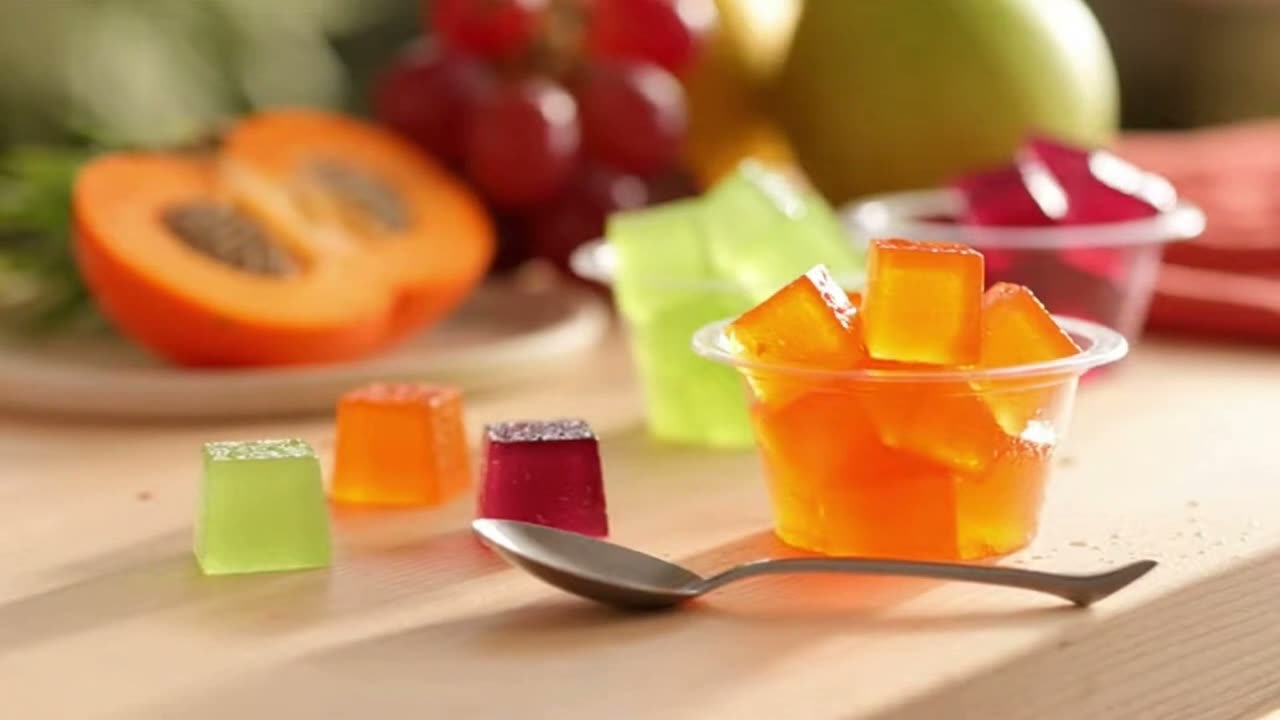
What are konjac snacks?
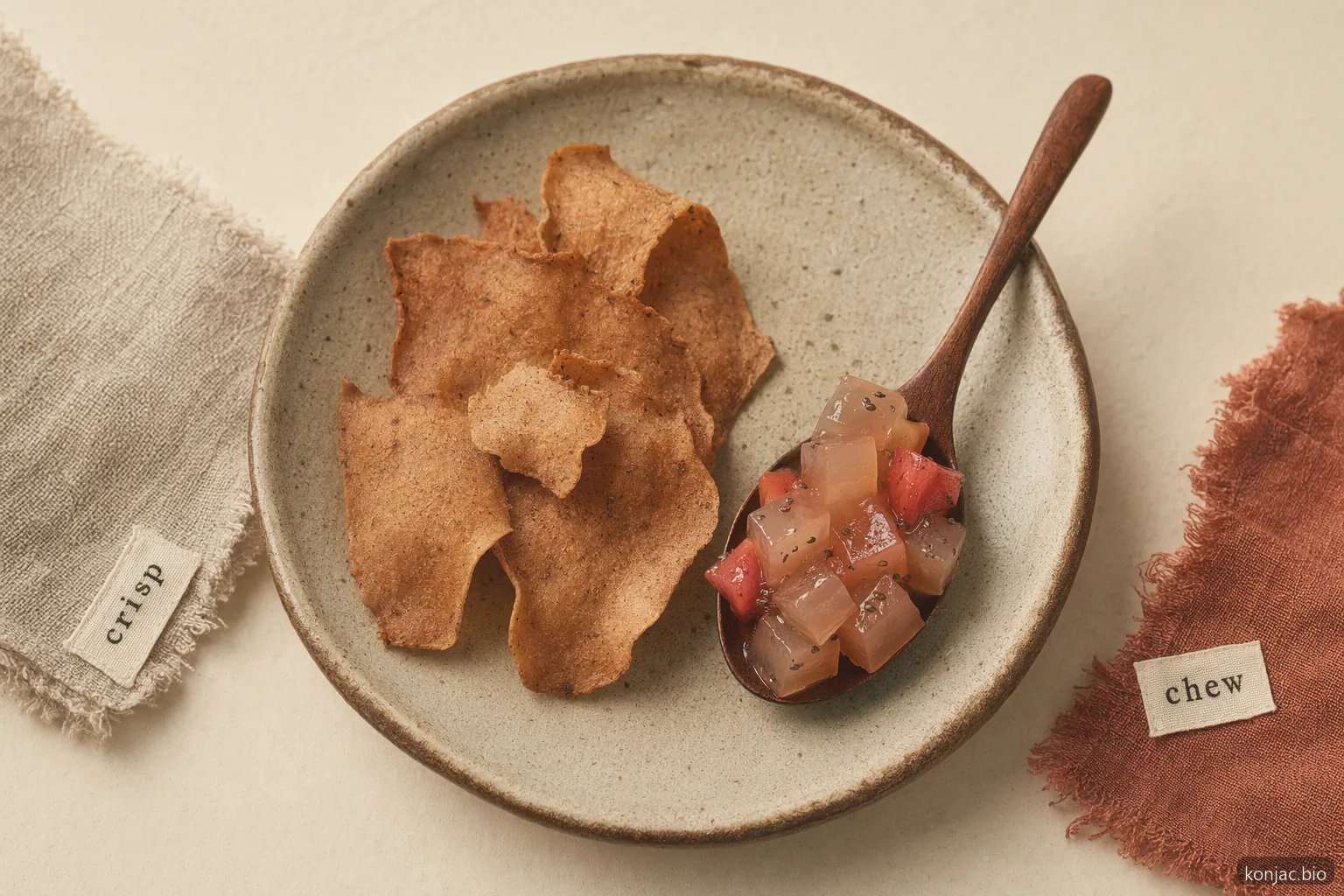
Konjac snacks are snack foods that use konjac flour, konjac gum, or purified glucomannan to create chewy gels, bouncy pearls, jelly cups, or crisp chip-style textures.
The ingredient comes from the corm of Amorphophallus konjac, a plant widely used in East Asian foods and now common in Western low-calorie and high-fiber product development. The same plant family supports konjac basics, shirataki noodles, konjac rice, and ingredient-grade konjac flour.
In snack formats, konjac is less about flavor and more about structure. It binds water, thickens liquids, and forms elastic gels when blended with alkaline salts, starches, carrageenan, agar, calcium systems, fruit juice, sweeteners, or seasoning powders.
| Snack format | Common konjac role | What shoppers notice |
|---|---|---|
| Konjac chips | Fiber and structure in baked or fried bases | Light crunch, seasoning, lower net carbs in some formulas |
| Konjac candy | Gel body and chew | Bouncy bite, fruit flavor, portioned packs |
| Konjac boba pearls | Chewy translucent gel | Pearl texture without tapioca-style starch density |
| Konjac crystal boba | Clear gel matrix | Jewel-like look, syrup absorption, steady chew |
| Konjac jelly cups | Firm gel in cup packaging | Fruit aroma, slippery texture, strong shape retention |
Food regulations also recognize konjac ingredients by function. In the United States, konjac flour is listed in 21 CFR 184.1437 for uses including gelling agent, thickener, stabilizer, formulation aid, and emulsifier under good manufacturing practice conditions in the eCFR listing.
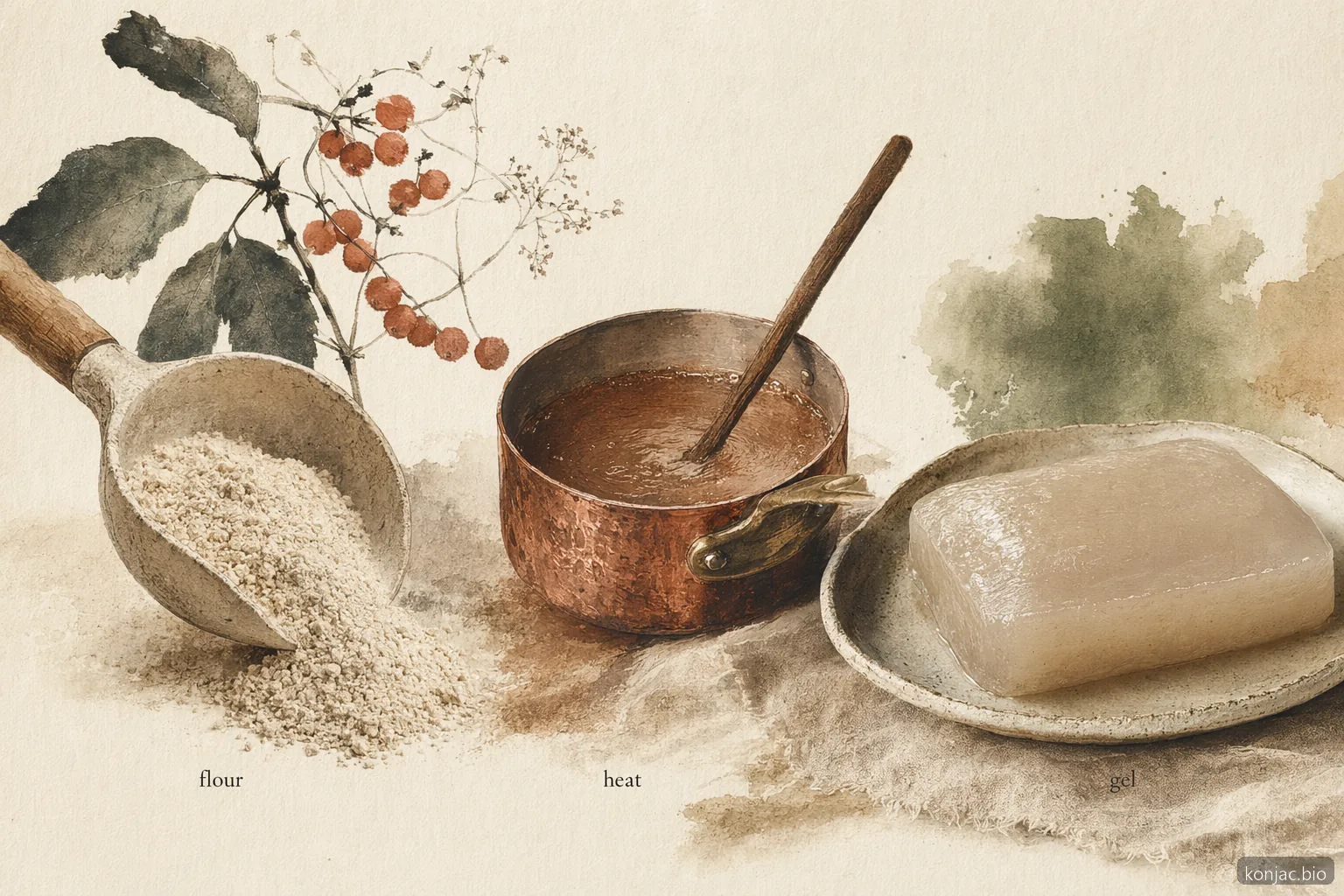
Texture science behind chewy konjac snacks
Konjac snacks feel chewy because glucomannan molecules absorb water and form dense, elastic networks when processed with heat, pH adjustment, and compatible hydrocolloids.
Glucomannan is the main polysaccharide in konjac. EFSA identifies konjac gum as E425 and describes glucomannan as the principal component in its safety re-evaluation of konjac gum. In practical snack manufacturing, that molecular water binding is what turns a thin fruit base into a jelly bite or a beverage inclusion into a bouncy pearl.
Texture depends on formulation, not just the word konjac on the label. A crystal boba pearl may combine konjac powder with carrageenan, agar, sugar syrup, calcium salts, acidity regulators, and flavor. A chip may use konjac flour with potato starch, rice flour, pea protein, tapioca starch, or seasoning oil.
Three variables shape the eating experience:
- Hydration: Konjac powder must disperse fully before gel setting. Poor hydration creates grainy or uneven gels.
- pH and alkalinity: Traditional konjac gels set more firmly under alkaline conditions, which is why calcium hydroxide or similar ingredients appear in some labels.
- Co-gelling agents: Carrageenan, agar, gellan gum, pectin, and starch can tune snap, elasticity, clarity, and melt resistance.
This is why two products with the same headline ingredient can feel very different. One konjac candy can bite like a firm gummy, while another can feel slippery and jelly-like. One konjac chip can be a light baked cracker, while another can be a deep-fried snack with konjac used mainly for positioning.
Konjac snacks in the Asian snack aisle
Konjac snacks grew from East Asian food traditions where firm plant gels, fruit jelly cups, and chewy inclusions are familiar everyday textures.
In Japan, China, Taiwan, Korea, and Southeast Asian markets, snack texture can be as important as sweetness. Consumers may look for bounce, slipperiness, firmness, or a clean bite. Konjac fits that preference because it creates gel structures that do not need the same starch load as tapioca pearls or wheat-based candies.
Western konjac snacks often borrow those formats and adjust the nutritional message. Packaging may highlight low sugar, low calories, keto-friendly positioning, vegan ingredients, fruit juice, or added fiber. Those claims should be checked against the nutrition panel because some products still contain sugar syrup, starch, frying oil, or high-sodium seasoning.
Common retail formats include:
- Single-serve jelly cups: Fruit-flavored gels sealed in plastic cups, often sold in multipacks.
- Squeeze jelly pouches: Drinkable or spoonable gel snacks positioned for convenience.
- Crystal boba tubs: Ready-to-use pearls packed in syrup for tea shops, dessert bars, and home bubble tea.
- Seasoned chips: Baked, popped, or fried snacks where konjac appears with starch, rice, potato, soy, or pea ingredients.
- Gummy-style candy: Chewy cubes, strips, or fruit pieces with a firmer bite than gelatin candies.
For shoppers, the key is to read the format first and the health message second. Konjac is a functional ingredient, not a guarantee that a snack is sugar-free, low sodium, or high in fiber.
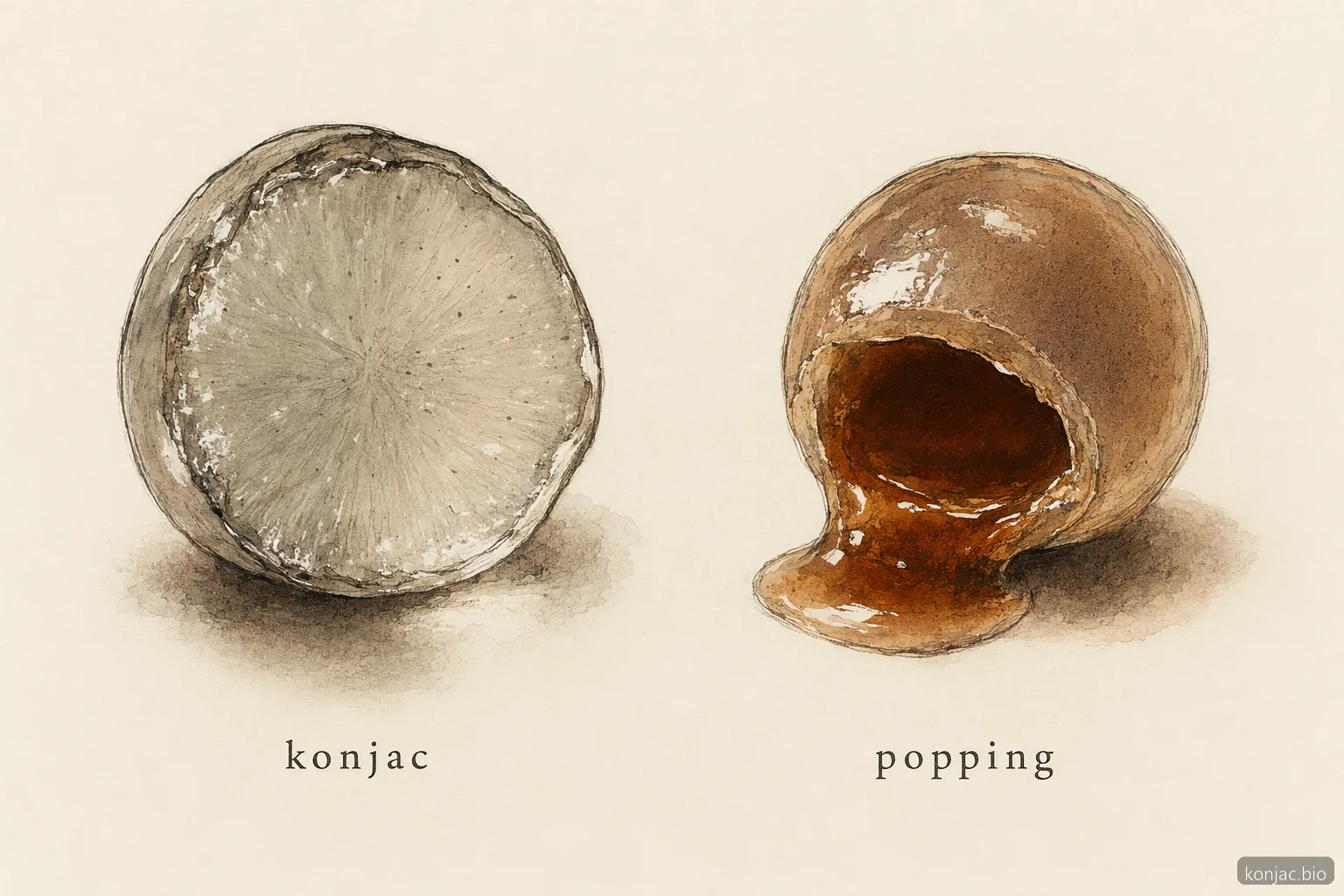
Are konjac chips actually lighter than potato chips?
Konjac chips can be lighter than potato chips when they are baked, air-popped, or formulated with high fiber and lower oil, but the label decides the answer.
The phrase konjac chips covers several product types. Some are true konjac-based crisps with glucomannan or konjac flour as a meaningful component. Others are rice, potato, cassava, or pea snacks with a small amount of konjac added for texture, binding, or marketing.
A practical comparison starts with four numbers per serving:
| Label item | Why it matters | What to check |
|---|---|---|
| Calories | Konjac does not erase energy from oil or starch | Compare per 28 g or per bag, not only per serving |
| Total fat | Fried formats can be calorie-dense | Look for grams of fat and oil type |
| Fiber | Meaningful konjac use may raise fiber | Check grams, not front-label wording alone |
| Sodium | Seasoning can be the main nutritional issue | Compare milligrams per serving |
Ingredient order also matters. In many countries, ingredients are listed by descending weight. If potato starch, rice flour, oil, and sugar appear before konjac, the product is probably a conventional snack with konjac added. If konjac flour, glucomannan, pea fiber, or resistant starch appear prominently, the formulation may be more fiber-forward.
Konjac chips usually win on novelty and texture rather than universal nutrition. A 100-calorie baked konjac crisp is different from a 240-calorie fried snack in a larger bag. Shoppers should compare equal weights, while product developers should specify target calories per 30 g, oil pickup, water activity, breakage rate, and seasoning adhesion.
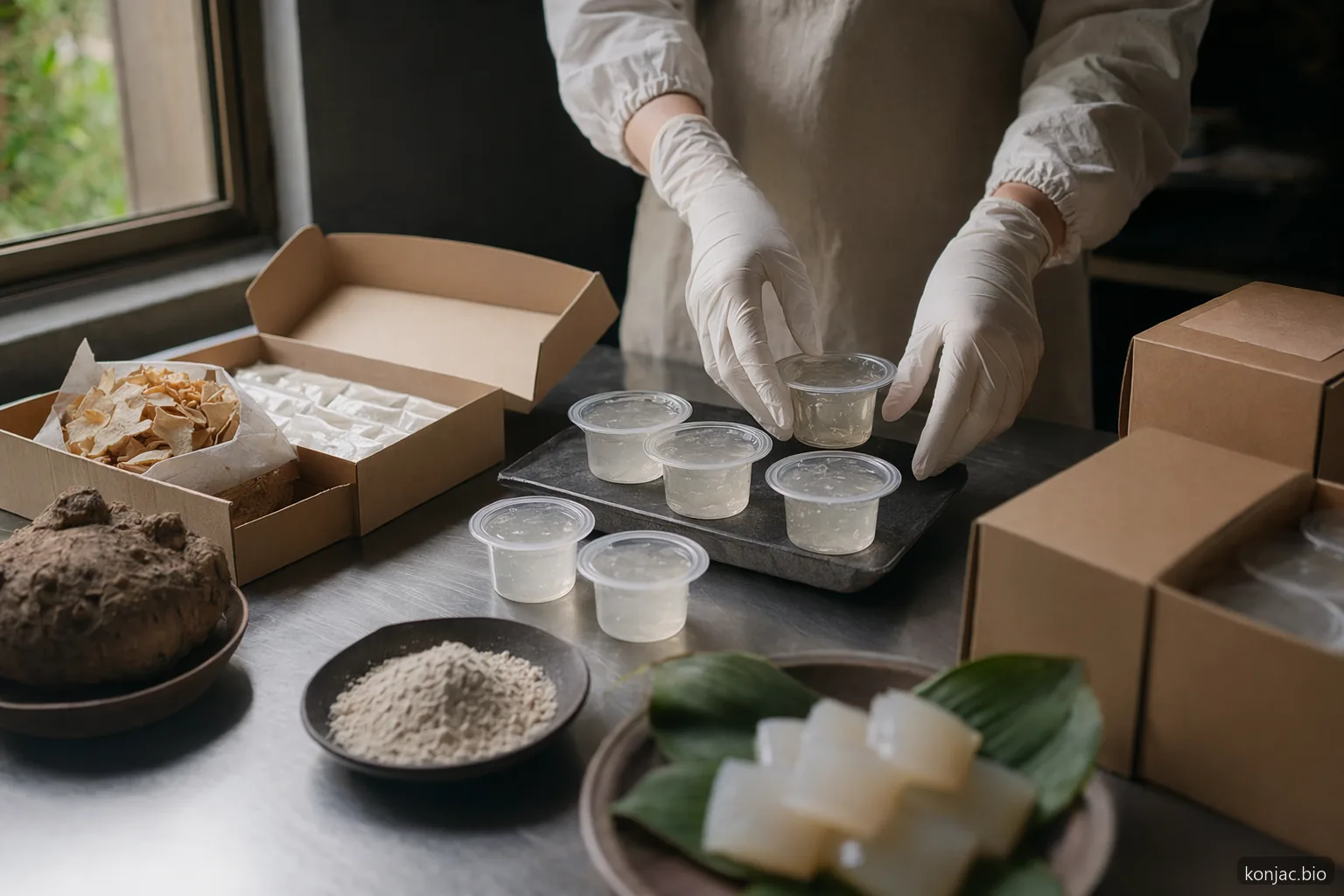
What is konjac boba, and how is it different from popping boba?
Konjac boba is a chewy pearl made with konjac gel, while popping boba usually has a thin alginate membrane around a liquid center.
The two products are often placed together in bubble tea menus, but they use different texture systems. Konjac boba pearls are usually solid or semi-solid throughout. Popping boba bursts because sodium alginate reacts with calcium in a spherification process, creating a skin around flavored liquid.
| Product | Typical structure | Eating texture | Common use |
|---|---|---|---|
| Konjac boba pearls | Chewy gel bead | Bouncy and consistent | Milk tea, fruit tea, desserts |
| Konjac crystal boba | Clear konjac-based gel | Firm, translucent, syrupy | Bubble tea toppings, shaved ice |
| Popping boba | Liquid center with alginate shell | Bursts in the mouth | Fruit tea, frozen yogurt, cocktails |
| Tapioca pearl | Cooked starch bead | Dense and elastic | Classic milk tea |
Konjac crystal boba usually arrives ready to serve, packed in syrup. That gives retailers a labor advantage because tapioca pearls often need cooking, rinsing, and holding under tight time windows. Konjac pearls also maintain texture in cold drinks, which makes them useful for bottled tea kits, dessert cups, and foodservice topping bars.
For consumers, the naming can be confusing. A package labeled boba may be tapioca, konjac, agar, alginate, or a blend. If the ingredient panel lists konjac powder, konjac gum, or glucomannan, the pearl is part of the konjac snack family. If it lists sodium alginate and calcium lactate or calcium chloride, it may be popping boba instead.
How does konjac candy compare with konjac jelly?
Konjac candy is usually a chewy, bite-sized sweet, while konjac jelly is a softer or firmer gel served in cups, pouches, strips, or dessert formats.
The difference is more about format than ingredient identity. Both can use konjac gum, glucomannan, fruit flavors, acidity regulators, sweeteners, and color. Candy formats focus on chew and portability. Jelly formats focus on spooning, sipping, squeezing, or single-cup snacking.
Konjac candy can be made as cubes, gummies, ropes, fruit pieces, or coated bites. Some products use sugar, while others use erythritol, stevia, allulose, sucralose, or monk fruit extract. A sugar-free claim does not mean calorie-free, and polyols can cause digestive discomfort for some people when eaten in large amounts.
Konjac jelly sits closer to the broader konjac jelly category. Fruit jelly cups are especially common, but they also need careful sizing and texture design. The U.S. Food and Drug Administration has warned about mini-cup gel candies because firm, slippery gels can pose a choking risk, especially when consumed by suction, as described in the FDA warning.
A shopper-friendly rule is simple: bite, chew, and supervise. Jelly cups should not be squeezed directly into the throat. For households with young children or older adults, larger spoonable formats, softer gels, or sliced portions are safer choices than small firm cups.
Safety, labels, and sensible portions
Konjac snack safety depends on format, serving behavior, hydration, and label clarity.
The main physical concern is choking in small, firm, slippery gels. Mini-cup jelly products are different from spoonable puddings because they can be swallowed whole or dislodged suddenly by suction. Regulators have focused on this shape and texture combination rather than konjac alone.
Label clarity also matters for digestive comfort. Glucomannan is a viscous soluble fiber, and high intakes of fiber-rich foods can cause gas, fullness, or bowel changes in some people. EFSA issued the approved claim that “Glucomannan in the context of an energy restricted diet contributes to weight loss” in its 2010 EFSA opinion, but that claim applies under specific conditions and should not be stretched to every candy, chip, or boba topping.
Use this checklist before buying or launching a konjac snack:
- Check the format: small firm cups need more caution than spoonable gels or chips.
- Read serving size: compare grams, not only pack count.
- Check sugars: fruit flavor does not always mean fruit-based nutrition.
- Check fiber: meaningful glucomannan content should appear in the nutrition panel.
- Check allergens: many chips include soy, milk powders, wheat, sesame, or seafood seasoning.
- Check use instructions: choking warnings, age guidance, and chewing directions should be visible.
Consumers looking for weight-management positioning should also compare snack products with dedicated glucomannan supplements and lower-calorie meal ingredients. A sweet jelly cup and a measured glucomannan powder serving are not nutritionally equivalent, even if both come from konjac.
How should brands source konjac snacks for private label?
Brands should source konjac snacks by specifying the finished format, target texture, nutrition panel, regulatory market, packaging, shelf life, and quality certifications before requesting samples.
For konjac chips, the sourcing brief should state whether the product is baked, fried, popped, or extruded. It should also define target calories per serving, fiber grams, protein source, starch base, flavor system, sodium ceiling, and breakage tolerance after shipping. A low-calorie claim will fail commercially if the chip breaks easily or carries seasoning unevenly.
For konjac boba pearls and konjac crystal boba, buyers should specify diameter, syrup concentration, clarity, chew level, color, heat stability, cold-drink stability, and foodservice pack size. Bubble tea operators often need 1 kg to 3 kg tubs, while retail kits may use smaller pouches with straws, cups, or sachets.
For konjac candy and jelly, the brief should cover gel firmness, cup geometry, warning text, sweetness system, fruit percentage, acidity, packaging material, and shelf-life target. Factories may offer ambient, chilled, or aseptic options depending on water activity, pH, heat process, and local rules.
konjac.bio helps buyers compare wholesale, private-label, and OEM konjac snack options with flexible MOQ discussions and supplier shortlisting through our contact page.
Useful certification and compliance questions include:
- Does the factory operate under HACCP, ISO 22000, BRCGS, FSSC 22000, or an equivalent food safety program?
- Can the supplier provide specifications for konjac flour, konjac gum, or glucomannan purity?
- Can labels be adapted for the United States, European Union, United Kingdom, Canada, Gulf markets, or Southeast Asia?
- Are choking warning statements, age guidance, and serving instructions reviewed for the target country?
- Can the supplier provide stability data, microbial limits, heavy metal testing, and allergen controls?
Brands also need to decide whether the product sits in the indulgent snack aisle, the better-for-you snack aisle, the bubble tea supply chain, or the diet-friendly category near konjac keto products. That positioning affects flavor, price point, claims, pack size, and retailer expectations.
Frequently asked questions
01 Are konjac snacks healthy?
02 What are konjac chips made from?
03 Is konjac boba the same as popping boba?
04 What is konjac crystal boba?
05 Is konjac candy the same as konjac jelly?
06 Why do some konjac jelly cups have choking warnings?
07 Do konjac snacks help with weight management?
08 Can children eat konjac snacks?
09 What should B2B buyers ask before ordering konjac snacks?
- Konjac: The Plant Behind Shirataki, Jelly, Flour, and Sponges
- Shirataki Noodles: The Complete Guide to Konjac Pasta
- Glucomannan Guide: Benefits, Dosage, Safety, and Forms
- Konjac Jelly: Pouches, Cups, Drinks, and Choking Safety
- Konjac Flour and Powder: The Food-Ingredient Guide
- Konjac for Keto and Weight Loss: Evidence and Practical Use
- Re-evaluation of konjac gum and konjac glucomannan as food additives · EFSA Journal · 2017
- Scientific Opinion on glucomannan and weight loss · EFSA Journal · 2010
- Import Alert 33-15: Detention Without Physical Examination of Gel Candies Containing Konjac · U.S. Food and Drug Administration · 2024
- General Standard for Food Additives, Codex STAN 192-1995 · Codex Alimentarius · 2024