What is a konjac sponge for body?
A konjac sponge for body is a larger konjac cleansing sponge designed for shower use on the arms, legs, torso, back, and shoulders.
Konjac sponges are made from the hydrated fiber of Amorphophallus konjac, a plant species listed in the NCBI taxonomy database as A. konjac. The key structural carbohydrate in konjac is glucomannan, a water-holding polysaccharide described by the U.S. National Library of Medicine as glucomannan.
For body cleansing, the value is physical texture, not nutrition. A hydrated konjac sponge becomes cushiony and porous, so it can spread body wash, lift surface buildup, and massage skin with less abrasion than many gritty scrubs.
A body sponge is usually wider and thicker than a facial sponge. That extra surface area helps cover larger zones quickly, especially shins, upper arms, back of shoulders, and chest.
For a broader overview of materials, skincare use, and sponge types, see the parent guide: konjac sponge.
How does a konjac sponge for body exfoliate skin?
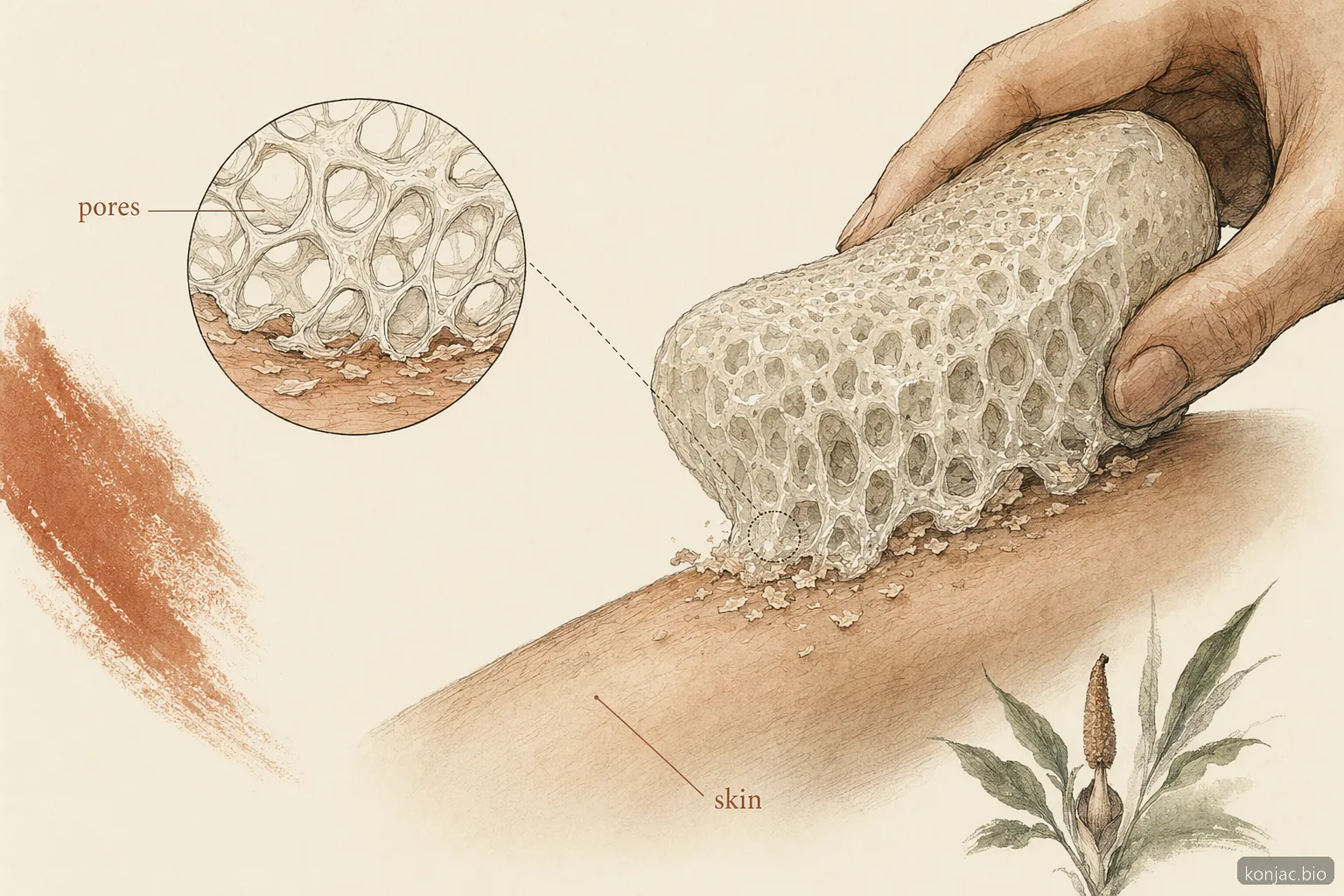
A konjac sponge for body exfoliates by soft mechanical polishing, removing loose surface cells through gentle friction rather than sharp particles.
The effect is mild because the sponge is water-swollen before use. When fully hydrated, the texture feels springy, not scratchy. That makes it different from walnut shell scrubs, sugar scrubs, dry brushes, or stiff plastic bath puffs.
The American Academy of Dermatology advises people to avoid irritating exfoliation methods and to be gentle with skin that is dry, sensitive, or acne-prone, especially when using mechanical exfoliation such as a sponge or brush AAD exfoliation. A konjac sponge fits best when the goal is light polishing rather than aggressive scrubbing.
Use pressure as the control dial. Light circular motion is enough for daily cleansing on resilient areas such as legs and arms. Sensitive zones, including chest, neck, underarms, and inner thighs, usually need shorter contact and less pressure.
| Body area | Suggested pressure | Use frequency |
|---|---|---|
| Arms and legs | Light to moderate | Daily or as tolerated |
| Back and shoulders | Moderate | 3 to 7 times weekly |
| Chest and neck | Very light | 1 to 3 times weekly |
| Freshly shaved areas | Skip or use very light pressure | Wait 24 hours if tender |
Konjac sponge for body vs loofah, washcloth, and scrub
A konjac sponge for body sits between a soft washcloth and a stronger exfoliating scrub. It gives more texture than hands alone, but it is usually gentler than a dry loofah or gritty polish.
Bath tools differ in three practical ways: texture, drying speed, and replacement rhythm. Any reusable shower tool can hold moisture after bathing, so drying and replacement matter. FDA cosmetic guidance notes that products used around water can be affected by contamination and storage conditions FDA shelf life.
| Tool | Texture | Best for | Watch-out |
|---|---|---|---|
| Konjac body sponge | Soft, springy, porous | Gentle daily cleansing | Needs complete drying between uses |
| Loofah | Coarser, fibrous | Stronger scrub feel | Can feel rough on sensitive skin |
| Washcloth | Soft woven fabric | Simple cleansing | Needs frequent laundering |
| Body scrub | Particle-based | Occasional polishing | Pressure and particle size can irritate |
Choose a konjac body sponge if your priority is a low-friction shower routine with a light massage feel. Choose a washcloth if you want machine washing after every use. Choose a scrub only when skin tolerates stronger exfoliation.
For face-specific sizing and pressure guidance, see the sibling guide on konjac sponge for face. Facial skin usually needs a smaller sponge, shorter contact time, and less pressure than body skin.
How should you use a konjac sponge for body safely?
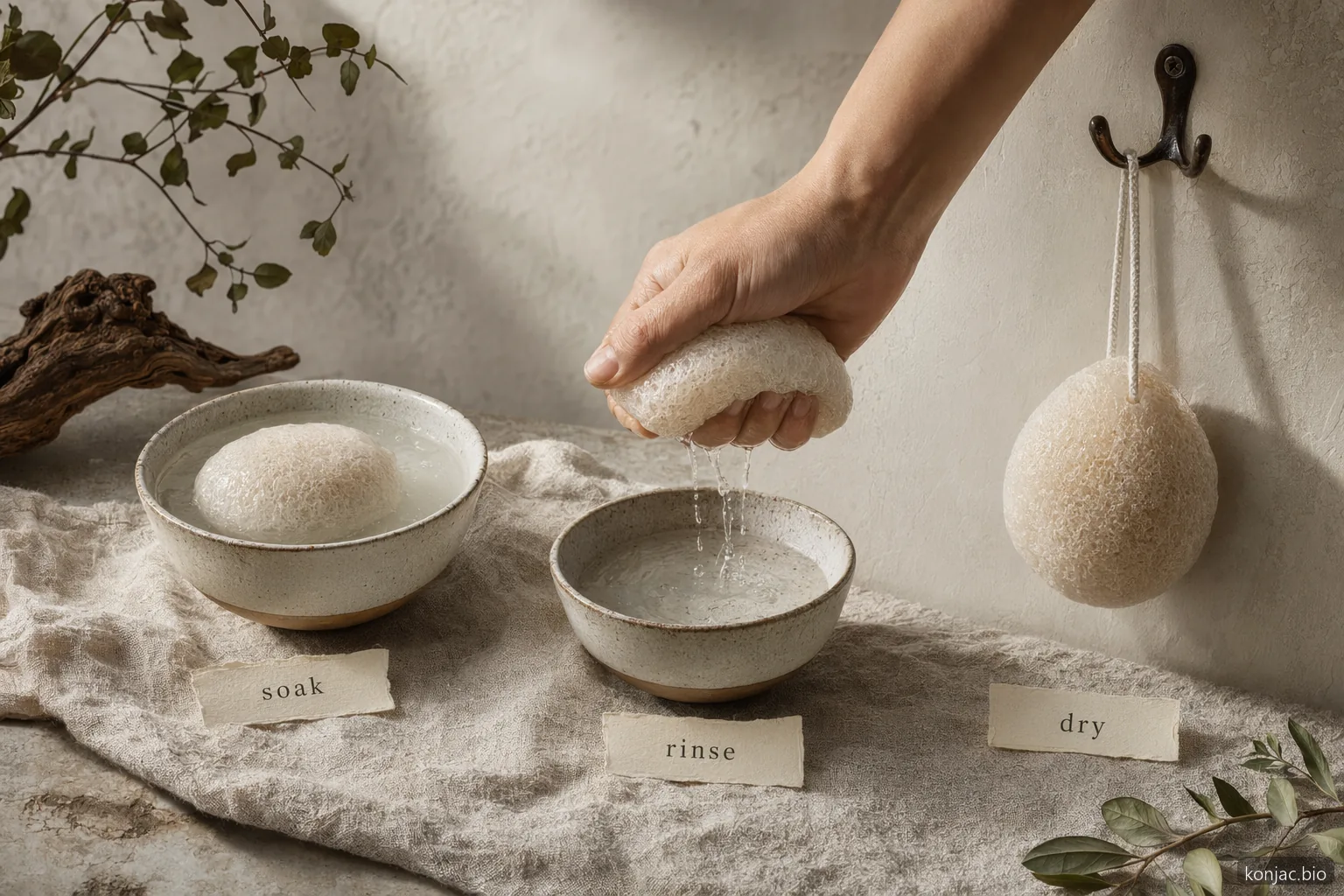
Use a konjac sponge for body by soaking it until fully soft, massaging with light pressure, rinsing it thoroughly, and drying it in open air.
Start with water, not pressure. A dry konjac sponge is hard and should not be rubbed on skin. Soak it in warm water for 1 to 3 minutes, then squeeze several times until the center feels soft.
- Soak: Hydrate until the sponge is fully pliable.
- Add cleanser: Use a small amount of body wash, or use water only.
- Massage: Move in light circles for 30 to 90 seconds per body zone.
- Rinse skin: Remove cleanser residue fully.
- Clean sponge: Rinse under running water until clear.
- Dry: Press out water, do not twist hard, then hang in moving air.
Skip the sponge on open cuts, sunburned areas, active irritation, or skin that stings when touched. The American Academy of Dermatology recommends stopping exfoliation if skin becomes red, burns, or stings AAD guidance.
Konjac.bio sources konjac raw materials and finished sponge formats for wholesale buyers, including body-sized options for skincare and bath lines. For specifications, packaging, and MOQ discussions, contact the team at wholesale konjac.
Care, replacement, and buying checklist
Good sponge care is simple: rinse clean, squeeze gently, hang dry, and replace before the texture breaks down. The goal is to reduce trapped cleanser, standing water, and residue inside the sponge pores.
Replace a konjac body sponge every 4 to 8 weeks under normal home shower use. Replace sooner if it smells unusual, changes color in patches, tears, becomes slimy, or no longer dries fully between showers.
Storage matters as much as usage. Do not leave the sponge sitting in a puddle, sealed soap dish, or closed travel pouch after bathing. A ventilated hook outside the direct shower stream is usually better than a wet shelf.
- Size: Choose palm-sized or larger for legs, arms, and back.
- Shape: Round and oval sponges suit general shower use, while handled formats help reach the back.
- Texture: Pick plain konjac for sensitive routines, charcoal or clay variants only if your formula preference supports it.
- Ingredients: Look for konjac fiber first, with minimal added colorants or fragrance.
- Packaging: For retail, request batch coding, storage instructions, and clear replacement guidance.
Konjac itself has been evaluated in food contexts because glucomannan is widely used as a soluble fiber. EFSA authorized the wording that “Glucomannan in the context of an energy restricted diet contributes to weight loss” for eligible food uses EFSA claim, but that statement does not apply to topical sponge use.
A body sponge is a cleansing accessory, not a health product. Judge it by tactile softness, durability, drying behavior, material transparency, and whether it helps your shower routine feel cleaner without over-scrubbing.
Frequently asked questions
01 Can I use a konjac sponge for body every day?
02 Is a konjac body sponge good for sensitive skin?
03 Do I need body wash with a konjac sponge?
04 How often should I replace a konjac sponge for body?
05 Can I use a body konjac sponge on my face?
06 What is the difference between a konjac sponge and a loofah?
- Amorphophallus konjac taxonomy · NCBI · 2024
- Glucomannan compound summary · PubChem, U.S. National Library of Medicine · 2024
- How to safely exfoliate at home · American Academy of Dermatology · 2024
- Cosmetics safety Q&A: Shelf life · U.S. Food and Drug Administration · 2022
- Scientific Opinion on konjac mannan health claims · EFSA Journal · 2010