
What is a black konjac sponge?
A black konjac sponge is a plant-fiber cleansing sponge made from konjac glucomannan and colored with bamboo charcoal or activated charcoal.
Konjac comes from Amorphophallus konjac, a tuber-forming plant used in food, hydrocolloids, and personal-care materials. The sponge form is created by hydrating konjac powder, shaping it, freezing or setting the structure, then drying it into a hard, lightweight pad that softens in water.
The black color usually comes from charcoal. Activated charcoal is a porous carbon material known for adsorption, meaning molecules can bind to its surface under certain conditions, as described in activated charcoal references from NCBI Bookshelf. In a facial sponge, that does not mean it pulls toxins from skin. It mainly gives the sponge its black color, marketing identity, and a small textural difference depending on the formula.
A black konjac sponge belongs to the wider konjac sponge category. Compared with a plain white sponge, it is usually positioned for oily, combination, or blemish-prone skin because charcoal is associated with oil control. The base cleansing action still comes from the hydrated konjac network, not from a strong active ingredient.
How does a black konjac sponge work on skin?
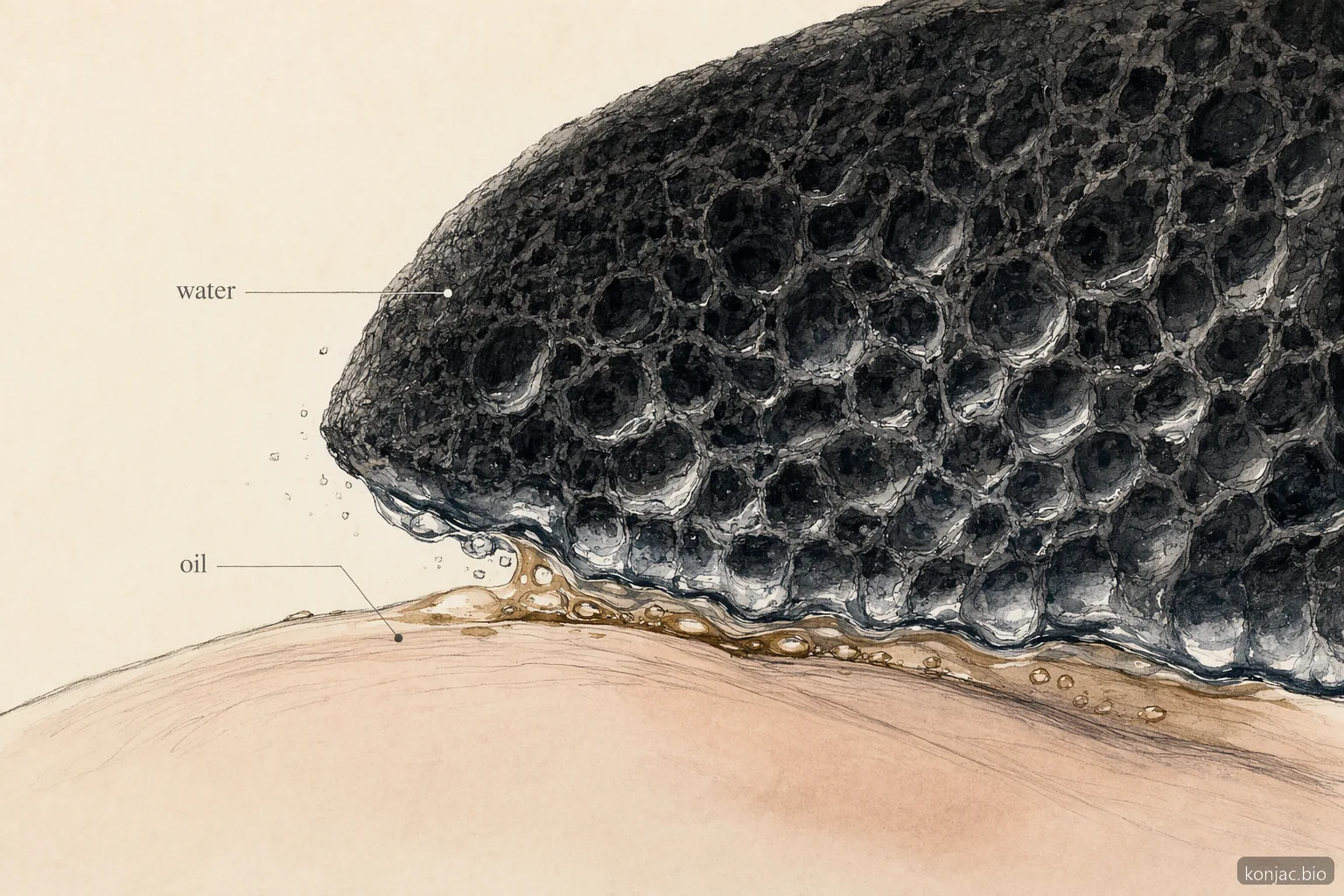
A black konjac sponge works by turning from a hard dried pad into a soft, water-rich cushion that loosens surface debris with light circular movement.
Fully soaked konjac has a springy hydrogel-like texture. That soft texture matters because facial skin is easily irritated by rough scrubs, stiff brushes, or aggressive rubbing. A well-hydrated sponge glides across the surface and gives mild mechanical cleansing without the sharp particles found in many old-style exfoliating scrubs.
The sponge can be used with water alone or with a small amount of low-foam cleanser. Cleansing has been studied as a core part of routine skin care because surfactants, water temperature, and friction can affect skin comfort and barrier feel, according to a PubMed review on normal skin cleansing.
The charcoal component should be understood carefully. Charcoal has adsorptive properties in controlled settings, but a rinse-off sponge has brief skin contact, heavy water dilution, and no standardized charcoal dose. A black konjac sponge can help remove visible oil and residue through cleansing, but it should not be described as detoxifying pores.
For brands developing facial tools, konjac.bio can source black konjac sponge formats at wholesale, including private-label specification discussions. Contact our team for pricing.
Black konjac sponge benefits and limitations
The practical benefit of a black konjac sponge is gentle cleansing with light exfoliation for skin that feels oily, dull, or congested after a long day. It can help lift sunscreen residue, sebum, and light makeup when paired with a suitable cleanser, but it is not a substitute for a complete cleansing routine when wearing heavy, water-resistant products.
Its biggest advantage is texture. Once soaked, the sponge becomes soft enough for frequent use by many people, especially those who dislike washcloths or bristle brushes. The rounded, porous surface gives feedback on the skin without feeling scratchy when pressure is kept light.
| Benefit | What it means | Limit |
|---|---|---|
| Light exfoliation | Helps remove loosened surface flakes | Not comparable to acids or professional procedures |
| Oily-skin fit | Works well with gel cleansers and rinse-off routines | Does not change how much oil skin produces |
| Soft texture | Less abrasive than many scrubs when soaked | Can still irritate if used with pressure |
| Simple format | No batteries, brush heads, or charging | Needs drying and replacement |
The limitation is hygiene. A wet sponge stored in a closed shower corner can stay damp for hours. The U.S. FDA notes that cosmetic shelf life and microbial risk depend on ingredients, preservatives, packaging, and storage conditions in its shelf life guidance. A konjac sponge should be rinsed thoroughly, squeezed gently, and hung somewhere airy after each use.
Cosmetic claims also need restraint. In the United States, cosmetic products and ingredients, except color additives, generally do not need FDA approval before market sale, but they still must be safe for consumers under labeled or customary use, according to FDA authority guidance. That makes accurate wording important: cleanse, refresh, soften, and lightly exfoliate are safer claims than detox or pore-purifying promises.
How should you use and replace a black konjac sponge?
You should use a black konjac sponge only after soaking it until fully soft, then replace it every 4-8 weeks or sooner if it smells, cracks, or breaks down.
Start by soaking the dry sponge in warm water for 3-5 minutes. It should feel soft all the way through, not firm in the center. Press it between your palms to release excess water, but do not twist hard because twisting can tear the konjac structure.
- Wet the face with lukewarm water.
- Use the sponge alone or add a pea-size amount of cleanser.
- Massage in small circles for 30-60 seconds.
- Use lighter pressure around the nose, mouth, and eye area.
- Rinse the sponge until water runs clear.
- Press out water gently and hang it in airflow.
Frequency depends on skin tolerance. Many users prefer once daily at night, especially when removing sunscreen and city residue. Very reactive or dry-feeling skin may do better with 2-3 uses per week rather than daily use.
Do not store a damp sponge in a sealed box between uses. A travel case is useful only after the sponge has dried. If the sponge develops odor, visible discoloration unrelated to charcoal, slippery residue, or crumbling edges, discard it rather than trying to sanitize it aggressively.
For a broader routine, pair this page with our how to use guide and sponge benefits guide. Those pages cover soaking, pressure, cleanser pairing, and skin-type matching in more detail.
Black versus white and green konjac sponges
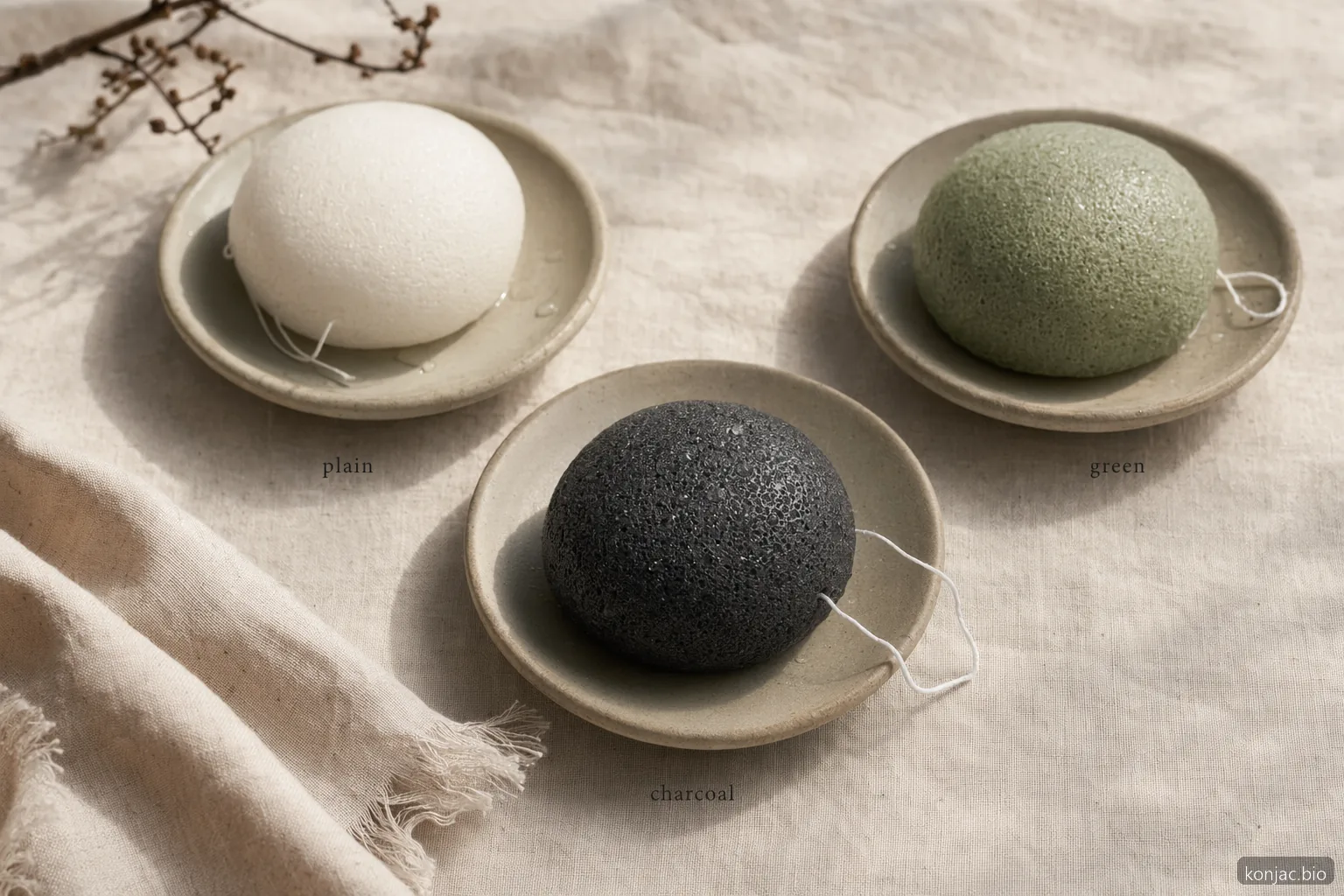
Black, white, and green konjac sponges share the same core material: hydrated konjac fiber. The main differences are added powders, color, marketing position, and the skin type each version is usually matched with.
A plain white konjac sponge is the simplest option. It is often recommended for first-time users, minimal routines, and people who want the fewest added ingredients. A green sponge may contain green clay, green tea, or botanical powder, depending on the supplier specification. A black konjac sponge usually contains bamboo charcoal or activated charcoal.
| Type | Typical add-in | Common fit | Best buyer question |
|---|---|---|---|
| White | No color powder or minimal additives | Simple daily cleansing | Do I want the most basic version? |
| Black | Bamboo charcoal or activated charcoal | Oily or combination routines | Do I want a sponge positioned for oil-prone skin? |
| Green | Green clay, tea, or botanical powder | Dull or combination routines | Do I want a botanical or clay story? |
Ingredient lists matter more than color names. Some black sponges contain only konjac and charcoal, while others add preservatives, colorants, or fragrance. People who prefer low-irritation routines should choose fragrance-free options and avoid using the sponge with strong exfoliating cleansers on the same wash.
The best choice is the one you will use gently and replace regularly. A black sponge is a strong fit when the goal is a soft, simple cleansing tool for oil-prone skin, while a white sponge is the safer default for a stripped-back routine.
Frequently asked questions
01 Is a black konjac sponge good for oily skin?
02 Can I use a black konjac sponge every day?
03 Does charcoal in a black konjac sponge detox pores?
04 How long does a black konjac sponge last?
05 Should I use cleanser with a black konjac sponge?
- Amorphophallus konjac K.Koch · Plants of the World Online, Royal Botanic Gardens Kew · 2024
- Activated Charcoal - StatPearls - NCBI Bookshelf · NCBI Bookshelf · 2024
- Cleansing without compromise: the impact of cleansers on the skin barrier and the technology of mild cleansing · Dermatologic Therapy (PubMed) · 2004
- FDA Authority Over Cosmetics · U.S. Food and Drug Administration · 2024
- Cosmetics Safety Q&A: Shelf Life · U.S. Food and Drug Administration · 2024