Is a konjac sponge sensitive skin routine safe?
A konjac sponge sensitive skin routine is generally safe when the sponge is soft, clean, and used without scrubbing. Sensitive skin commonly reacts to friction, fragrance, heat, and harsh surfactants, and population surveys have reported sensitive skin in a large share of adults sensitive skin.
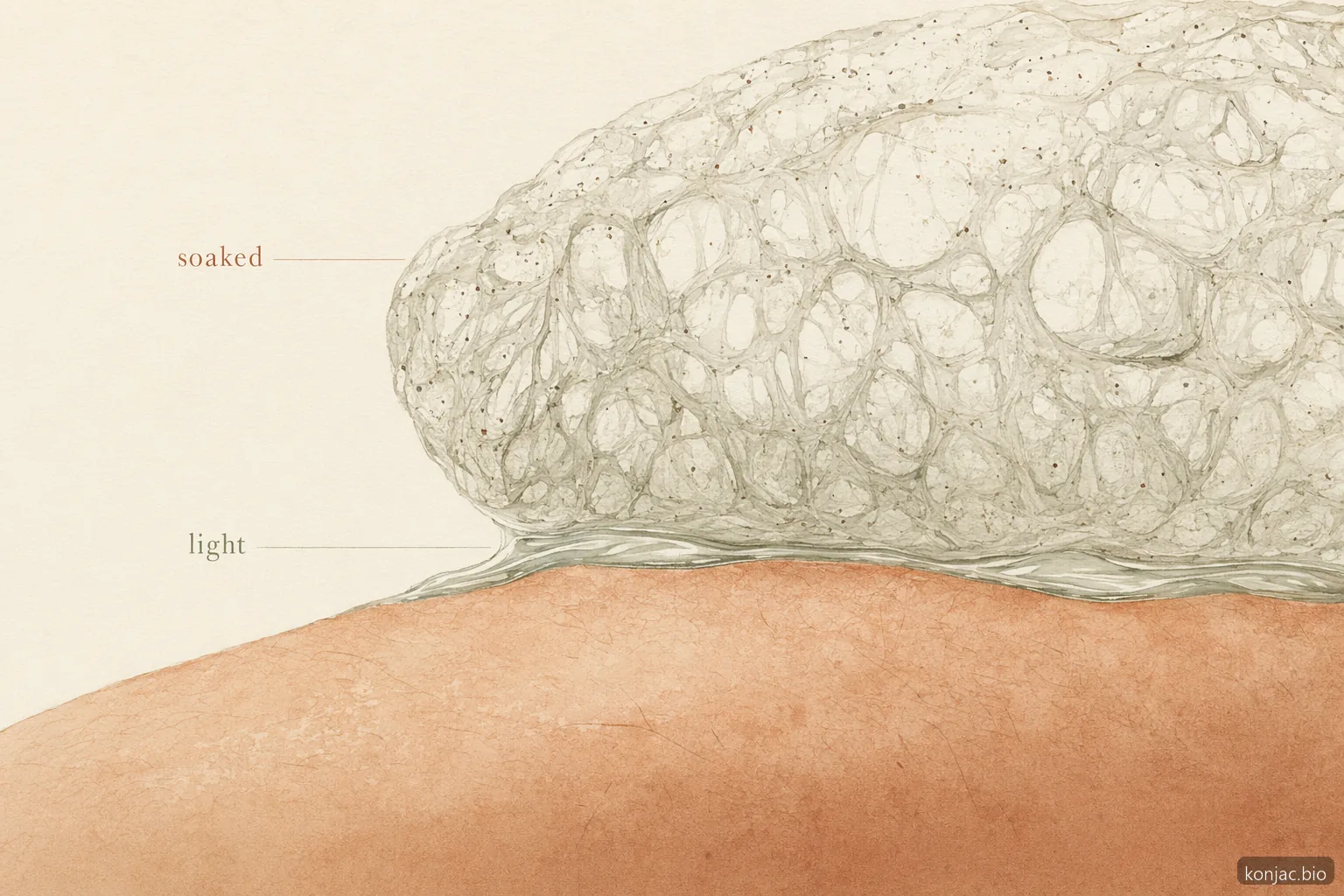
The key variable is pressure. A hydrated konjac sponge should feel cushiony, not scratchy, because konjac glucomannan forms a water-rich gel network konjac glucomannan. If the sponge feels firm after soaking for 3 to 5 minutes, do not use it on the face.
For sensitive skin, the goal is light contact cleansing, not aggressive exfoliation. Move the sponge in slow circles for 15 to 30 seconds per zone, then rinse with lukewarm water. Skip hot water, gritty scrubs, and strong foaming cleansers on the same day.
Use the konjac sponge guide for a broader overview of materials, drying, and replacement timing. Sensitive skin routines should stay simpler than general exfoliating routines, especially during seasonal dryness or after a new skincare product is introduced.
What type of konjac sponge sensitive skin users should choose?
Sensitive skin users should choose a plain white konjac sponge without fragrance, essential oils, charcoal, acids, or added exfoliating particles. The fewer add-ons in the sponge, the easier it is to identify whether your skin likes the tool itself.
Cosmetic labels can be confusing. The FDA states that the term hypoallergenic has no federal standard, so a hypoallergenic claim does not guarantee that a cosmetic product will avoid reactions in every user hypoallergenic. For sensitive skin, a short ingredient list matters more than a soft-sounding front label.
| Sponge type | Best fit | Sensitive skin note |
|---|---|---|
| Plain white konjac | First-time users | Best default choice |
| Charcoal konjac | Oilier routines | Skip if easily reactive |
| Clay konjac | Occasional deep cleanse | May feel drier |
| Fragranced konjac | Scent preference | Not ideal for sensitive skin |
Look for a sponge that is soft after soaking, has an even texture, and comes with clear drying instructions. Packaging should explain how to rinse, air-dry, and replace the sponge. If the product has a strong scent before use, choose another option.
For brands developing sensitive-skin-positioned tools, konjac.bio sources konjac materials at wholesale and can support specification requests through contact.
How should a konjac sponge sensitive skin routine work?
A konjac sponge sensitive skin routine should start slowly, use lukewarm water, and keep contact time short. The skin surface has a slightly acidic pH, and barrier-focused skincare often avoids repeated alkaline cleansing and excess friction skin pH.
- Soak fully: Place the dry sponge in warm water for 3 to 5 minutes until completely soft.
- Press out water: Squeeze between palms. Do not twist hard, because twisting can tear the fiber network.
- Cleanse lightly: Use the sponge alone or with a small amount of mild, fragrance-free cleanser.
- Use low pressure: Let the sponge glide. The pressure should feel lighter than towel drying.
- Rinse thoroughly: Rinse the face and the sponge until no cleanser remains.
- Dry properly: Hang in an airy place away from the shower floor or sealed containers.
Start with 2 uses weekly for 2 weeks. If skin feels comfortable, increase to 3 or 4 uses weekly. Daily use is too much for many sensitive routines, especially when combined with retinoids, exfoliating acids, or strong cleansing gels.
A konjac sponge should not replace sunscreen, moisturizer, or a cleanser chosen for your skin type. It is a cleansing tool. Its value is tactile: it can distribute cleanser evenly while reducing the urge to rub with fingernails, towels, or rough cloths.
When should sensitive skin skip a konjac sponge?
Sensitive skin should skip a konjac sponge whenever cleansing causes stinging, burning, new tightness, or visible irritation that lasts beyond normal flushing. Sensitive skin is often described as abnormal sensory response to common triggers, including cosmetics and environmental conditions skin overview.
Pause the sponge for 7 to 14 days after a strong cosmetic peel, sunburn, waxing, shaving irritation, or a new active product that already causes dryness. The skin does not need extra friction during a reactive period.
Also skip the sponge if it smells musty, has dark spots, feels slimy, or no longer softens after soaking. A damp sponge kept in a closed container can become unhygienic quickly. Rinse after every use, squeeze gently, and dry where air moves.
Replace timing depends on use frequency and drying conditions. A typical facial konjac sponge lasts 4 to 8 weeks. Heavy use, humid bathrooms, and poor airflow shorten that window.
Konjac sponge sensitive skin versus washcloths and brushes
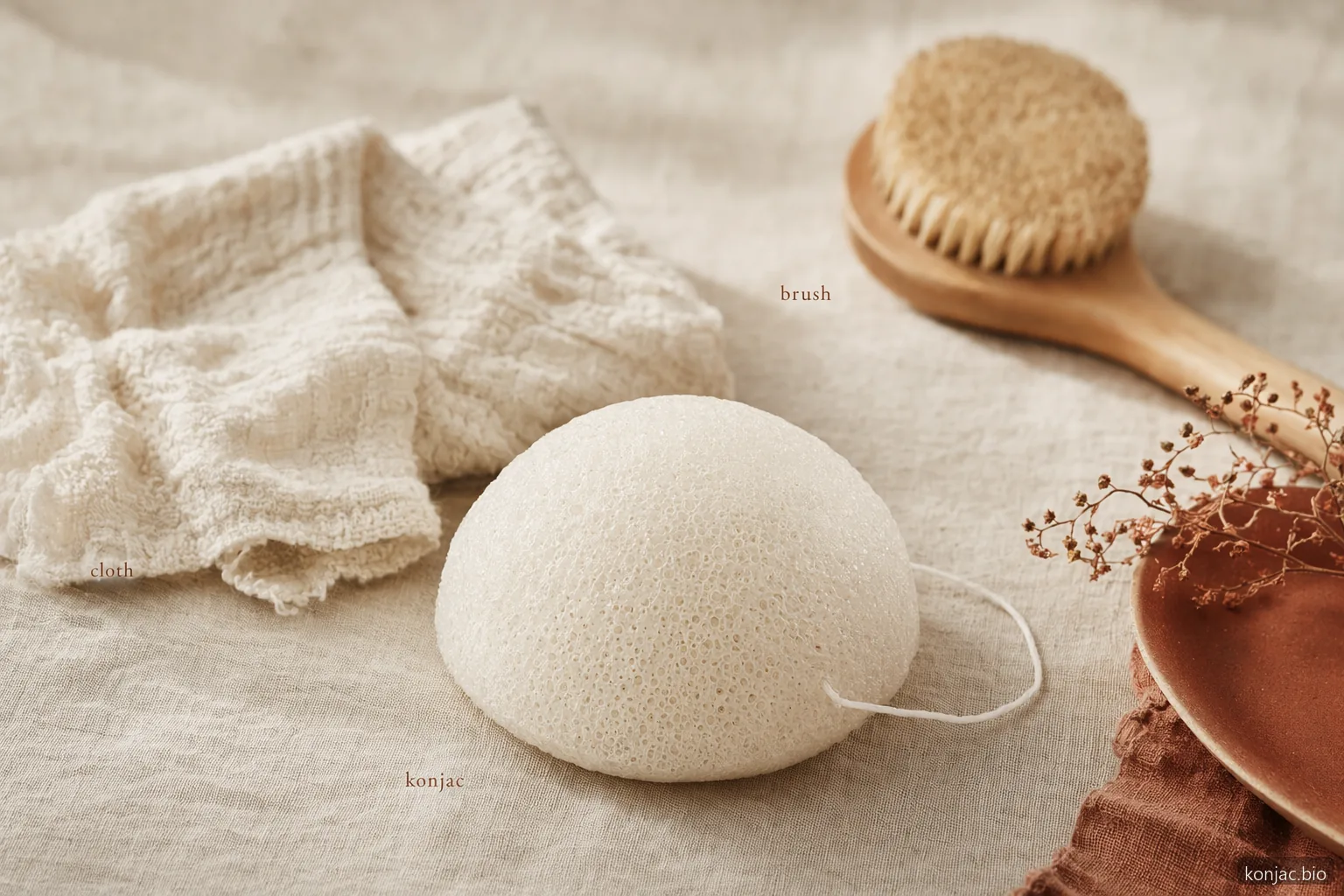
Konjac sponge sensitive skin routines are usually gentler than stiff brushes and often softer than textured washcloths when the sponge is fully hydrated. The advantage is the swollen, gel-like texture of konjac glucomannan, a soluble fiber derived from Amorphophallus konjac glucomannan.
| Tool | Texture | Best use | Sensitive skin caution |
|---|---|---|---|
| Konjac sponge | Soft and bouncy when wet | Low-friction cleansing | Must be fully soaked |
| Cotton washcloth | Varies by weave | Removing cleanser residue | Can be rough if rubbed |
| Silicone brush | Flexible bristles | Short cleansing sessions | Pressure can creep up |
| Bristle brush | Firm or abrasive | Not ideal for reactive routines | Higher friction risk |
A sponge is not automatically better for every face. People who dislike any physical tool may prefer hands-only cleansing with a mild cleanser. People who use a washcloth mainly for makeup removal may prefer a separate oil cleanser and reserve the sponge for occasional morning use.
For a practical technique walkthrough, see how to use a konjac sponge. For product selection details beyond sensitive skin, see konjac sponge benefits.
Frequently asked questions
01 Can I use a konjac sponge every day if I have sensitive skin?
02 Is charcoal konjac sponge good for sensitive skin?
03 Should I use cleanser with a konjac sponge?
04 How long should a konjac sponge touch sensitive skin?
05 How often should I replace a konjac sponge for sensitive skin?
- The Prevalence of Sensitive Skin · PubMed · 2011
- Sensitive Skin: An Overview · PubMed · 2016
- Hypoallergenic Cosmetics · U.S. Food and Drug Administration · 2022
- The pH of the Skin Surface and Its Impact on the Barrier Function · PubMed · 2008
- Konjac Glucomannan · ScienceDirect · 2024