What are the main konjac sponge benefits?
The main konjac sponge benefits are gentle exfoliation, more even cleansing pressure, and a softer cleansing feel than many scrubs. The sponge becomes soft and gel-like after soaking, so it glides across the face instead of dragging like a dry cloth.
A hydrated konjac sponge works through light physical contact. It can help lift sunscreen residue, excess oil, and dead surface flakes when paired with water or a mild cleanser. A PubMed-indexed review notes that cleansing choices can affect skin surface lipids and barrier comfort, especially when cleansing is too harsh skin cleansing.
For people who dislike gritty exfoliants, the appeal is texture control. The sponge surface is springy, not sharp. That makes it useful for daily or near-daily routines when pressure is light and the sponge is fully hydrated.
- Best for: light exfoliation, morning cleansing, post-sunscreen cleansing.
- Use with: water, low-foam cleanser, or cream cleanser.
- Avoid with: abrasive scrubs, strong acids in the same step, broken skin.
For a full primer on material, origin, and product types, see the parent guide: Konjac Sponge: The Natural Skincare Tool.
How do konjac sponge benefits compare with scrubs and brushes?
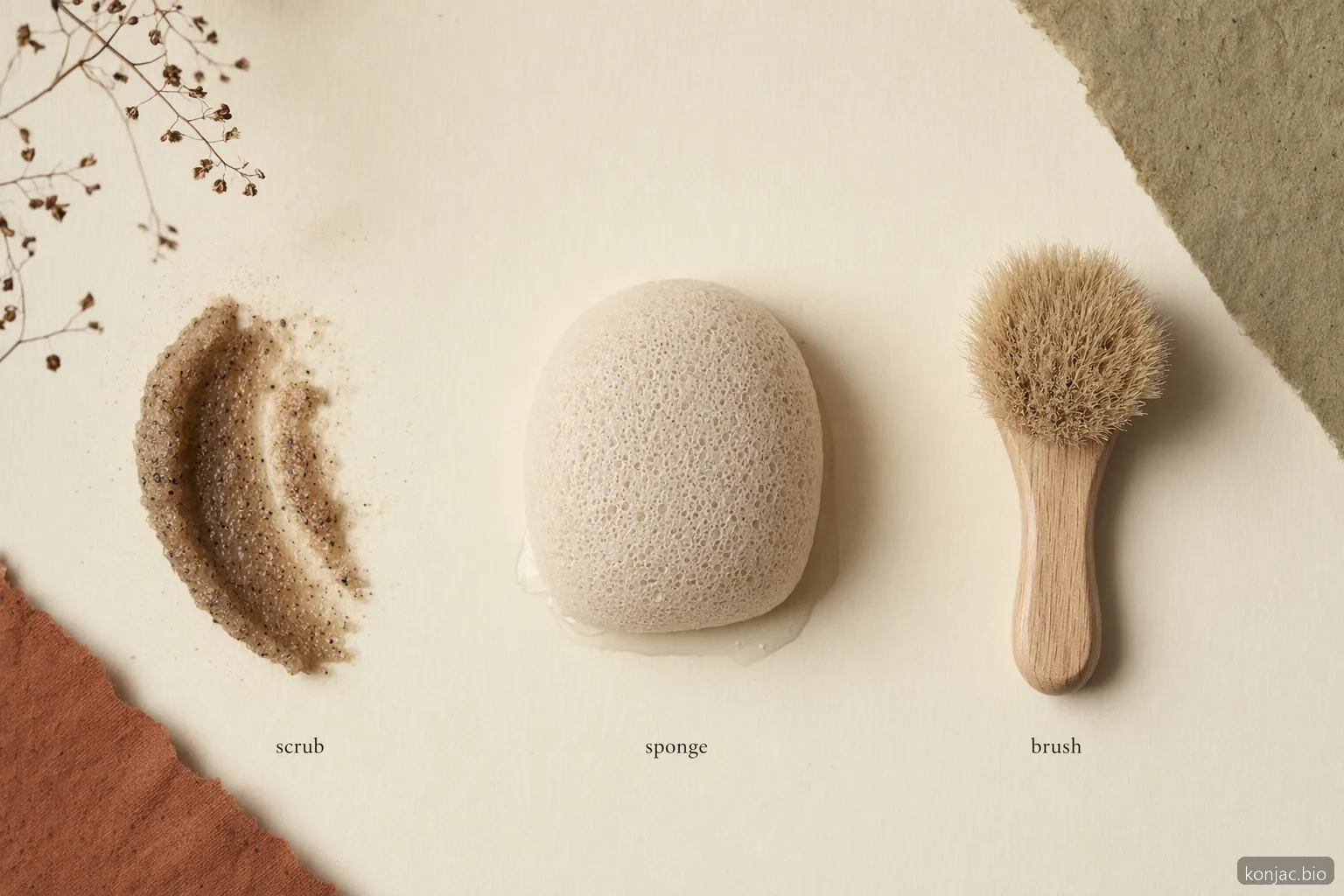
Konjac sponge benefits usually sit between fingertips and stronger exfoliating tools: more texture than fingers, less abrasion than many scrubs or powered brushes. That middle position is why konjac sponges are often chosen for simple daily cleansing rather than intensive exfoliation.
Scrubs use particles such as sugar, salt, nut shell powder, or synthetic beads to create friction. Brushes add repeated mechanical movement. A konjac sponge relies on a hydrated, porous network, so pressure is easier to moderate by hand.
| Tool | Main action | Typical feel | Best use |
|---|---|---|---|
| Fingertips | Manual cleansing | Lowest friction | Very sensitive routines |
| Konjac sponge | Soft physical exfoliation | Cushioned, springy | Daily face cleansing |
| Scrub | Particle exfoliation | Grainy | Occasional use if tolerated |
| Cleansing brush | Repeated bristle movement | Variable intensity | Oilier or resilient skin |
The FDA describes cosmetic cleansers as products intended to cleanse the body, and cleansing tools should be considered part of that cosmetic routine, not a health product FDA cleansers. A konjac sponge may improve the feel and consistency of cleansing, but pressure, frequency, and cleanser choice determine whether the routine feels comfortable.
For a direct tool-by-tool comparison, see konjac sponge vs loofah.
Why can a konjac sponge feel gentle on sensitive skin?
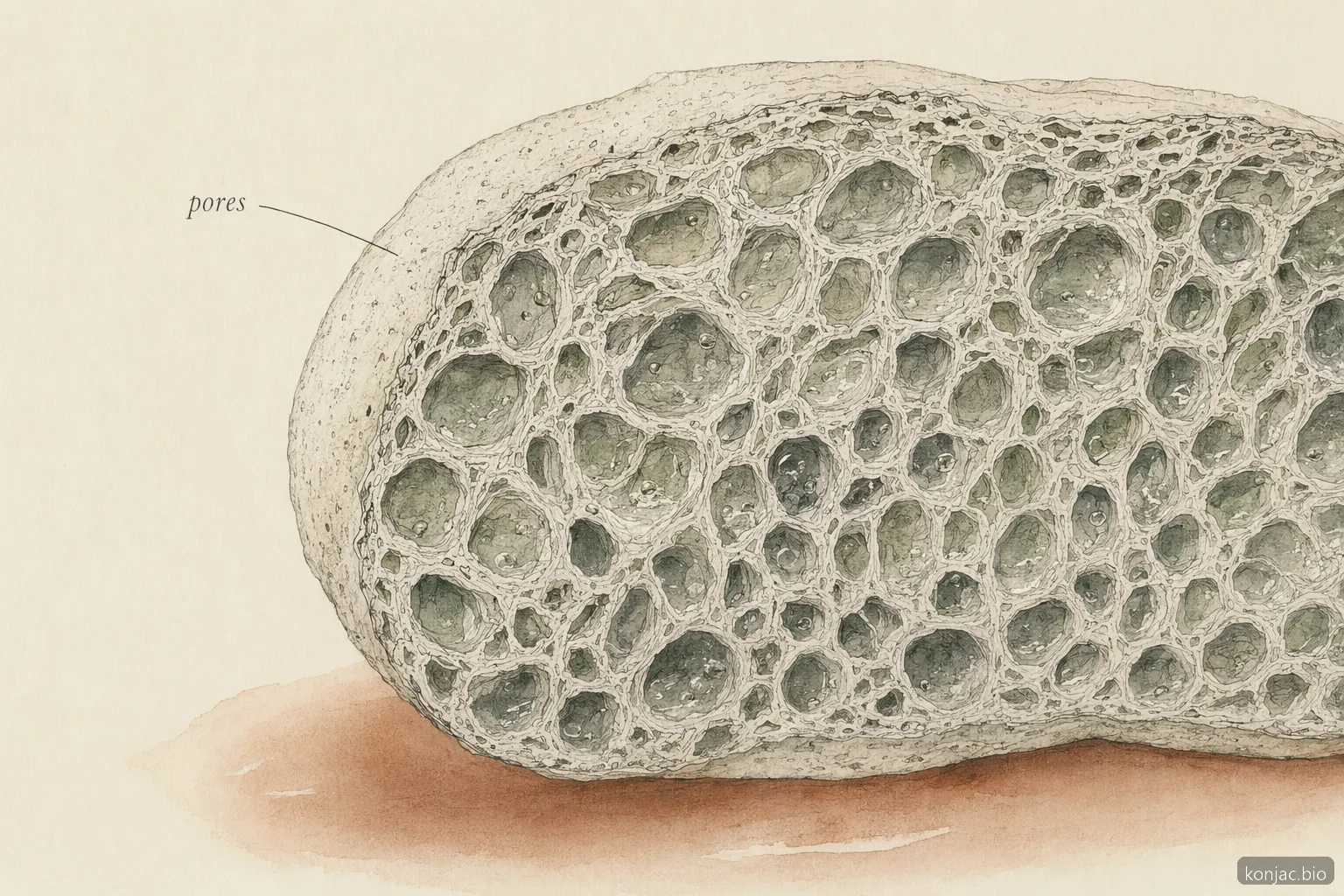
A konjac sponge can feel gentle on sensitive skin because it swells with water and forms a soft, flexible surface before touching the face. That water-filled texture reduces the scratchy feel associated with dry washcloths or gritty exfoliants.
The material comes from konjac glucomannan, a water-binding polysaccharide. In food and supplement contexts, glucomannan is studied as a soluble fiber, but a facial sponge works topically as a physical cleansing tool. EFSA’s authorised ingestion wording is specific: “Glucomannan in the context of an energy restricted diet contributes to weight loss” EFSA opinion. That wording does not apply to topical skincare sponges.
For sensitive-feeling skin, the practical benefit is control. A user can press very lightly, avoid long scrubbing sessions, and stop after 20 to 30 seconds per area. The sponge should feel slippery and cushiony, not squeaky or rough.
- Soak until completely soft, usually 3 to 5 minutes for a dry sponge.
- Squeeze out excess water without twisting hard.
- Move in small circles using light pressure.
- Rinse the face and sponge thoroughly.
- Hang in open air until fully dry.
How to use a konjac sponge for better daily cleansing
Good technique matters more than force. A konjac sponge should be fully hydrated before it touches skin, because the dry form is firm and not designed for direct facial use.
Start with warm water, not hot water. Soak the sponge until it expands and softens, then squeeze it several times to distribute water through the fiber network. Add cleanser only if your routine needs it. Many users prefer water in the morning and cleanser at night after sunscreen or makeup.
Use a simple sequence:
- Hydrate: soak until no hard center remains.
- Cleanse: glide for 30 to 60 seconds total on the face.
- Rinse: remove cleanser residue from both face and sponge.
- Dry: press water out, then hang in airflow.
- Replace: discard when odor, tears, or permanent softness loss appear.
Most routines do not need extra pressure. If skin looks red or feels tight after cleansing, reduce frequency, shorten contact time, or use fingertips for several days. A comfortable konjac routine should leave the skin feeling clean, not stripped.
For a step-by-step routine, see how to use a konjac sponge.
Konjac sponge benefits, limits, and safety checks
Konjac sponge benefits are practical and texture-based, but they have limits. A sponge can support cleansing and mild exfoliation, yet it cannot replace sunscreen, a balanced cleanser, or targeted cosmetic actives such as niacinamide, glycerin, or well-formulated exfoliating acids.
Clean storage is the main safety habit. Because a sponge is repeatedly wet, it should be rinsed thoroughly, squeezed clean, and dried in open air after every use. Do not store a damp sponge inside a sealed shower container.
Use extra caution around the eye area. The FDA warns that eye-area cosmetics can be higher risk if products or applicators are contaminated, so shared or poorly dried tools are a bad fit for eye-adjacent cleansing FDA safety. Keep the sponge for one user only.
- Replace sooner: if it smells musty, cracks, sheds, or stays slimy.
- Skip use: on sunburned, freshly shaved, or visibly irritated skin.
- Do not share: one sponge between faces or body areas.
- Store well: hang by a cotton string or use a ventilated rack.
B2B aside: konjac.bio sources konjac materials for wholesale and private-label product teams. For specifications, volume planning, and sampling, contact the team.
Frequently asked questions
01 Are konjac sponge benefits real or just marketing?
02 Can I use a konjac sponge every day?
03 Is a konjac sponge good for oily skin?
04 Is a konjac sponge good for sensitive skin?
05 How often should I replace a konjac sponge?
06 Do konjac sponge benefits come from glucomannan health claims?
- Glucomannan · PubChem, National Library of Medicine · 2024
- Amorphophallus konjac K.Koch · Plants of the World Online, Royal Botanic Gardens, Kew · 2024
- Scientific Opinion on the substantiation of health claims related to konjac mannan · European Food Safety Authority · 2010
- The role of skin cleansing in healthy skin · PubMed · 2004
- Cleansers · U.S. Food and Drug Administration · 2022