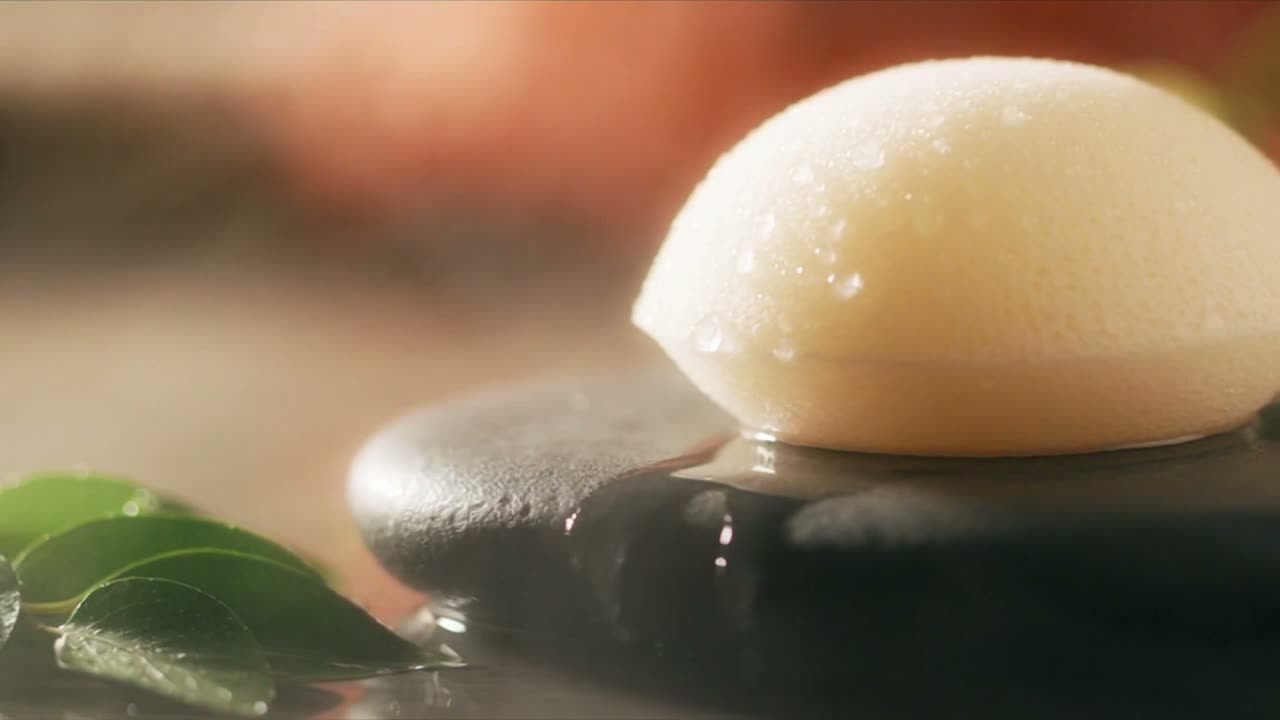
What is an exfoliating konjac sponge?
An exfoliating konjac sponge is a facial cleansing tool made from hydrated konjac glucomannan fiber that gently loosens surface buildup. Konjac glucomannan is a plant polysaccharide from the corm of Amorphophallus konjac, described in materials research as a water-absorbing, film-forming hydrocolloid konjac glucomannan.
The sponge begins as firm, dried plant fiber. After soaking, it expands into a cushiony, porous pad that glides across skin with less scratch than mineral particles, nutshell powders, or stiff cleansing brushes.
In cosmetic use, exfoliation means removing loose surface cells and cleanser-soluble residue from the outermost skin surface. The U.S. FDA describes cosmetics as products applied to the body for cleansing, beautifying, or altering appearance FDA cosmetics, which fits a konjac sponge when it is sold as a cleansing accessory.
For a broader overview of sponge types, materials, and skincare positioning, see the parent guide: konjac sponge. konjac.bio sources konjac materials at wholesale volumes for skincare teams, and formulation buyers can request specifications through contact.
How does an exfoliating konjac sponge polish skin?
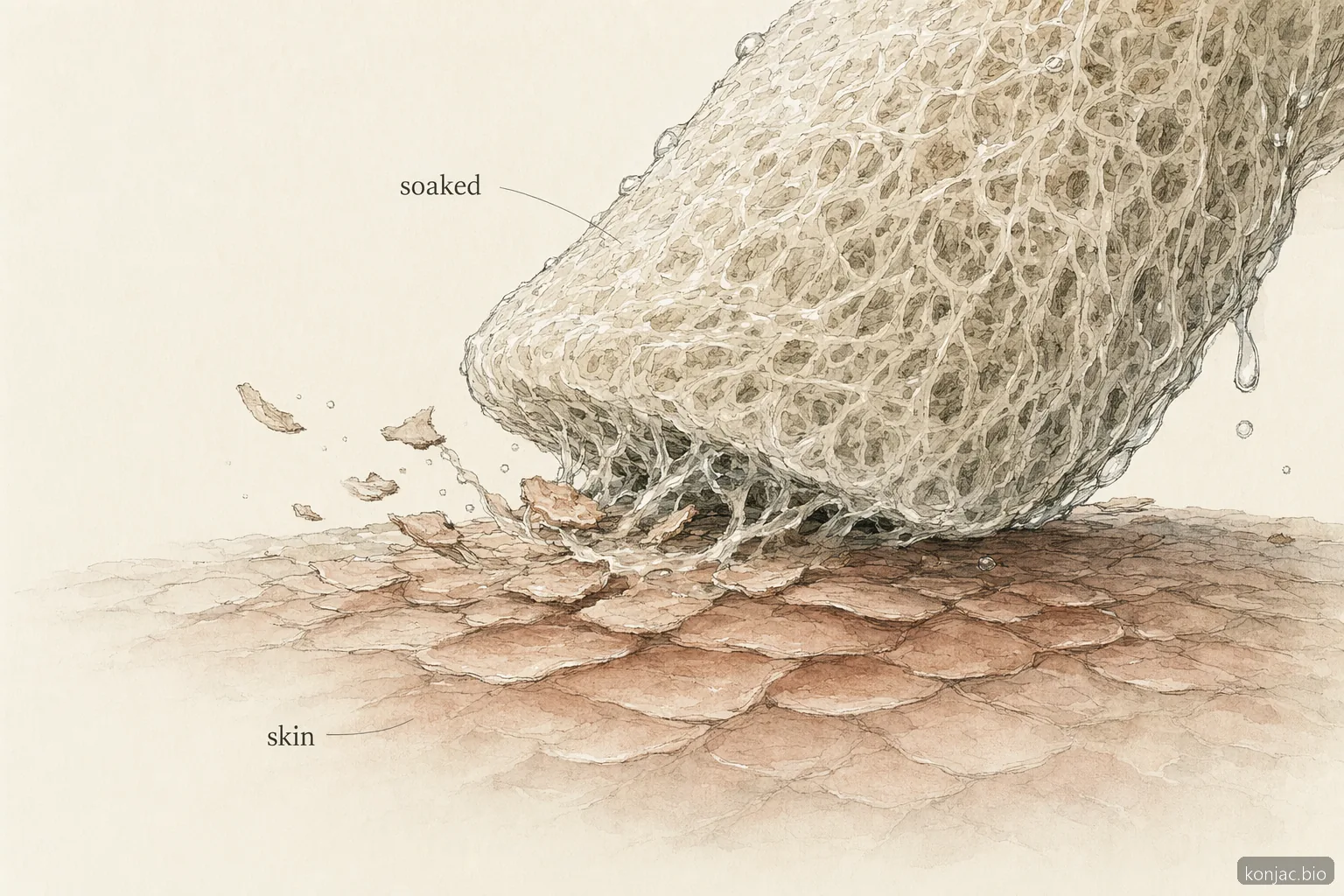
An exfoliating konjac sponge polishes skin through mild mechanical exfoliation from its hydrated, porous fiber surface. The sponge does not dissolve skin cells like acids do, and it does not abrade like coarse scrubs do.
The effect comes from 3 physical features:
- Water swelling: konjac fiber absorbs water, turning from hard to springy before use.
- Micro-texture: the porous surface creates light friction across uneven residue.
- Compression: the sponge flattens under fingertip pressure, which reduces scratch intensity.
Skin surface pH is naturally acidic, often reported near pH 4.1 to 5.8 in barrier research skin pH. A plain konjac sponge does not need a high-pH soap to work, so many users pair it with water only or a low-foam cleanser.
The American Academy of Dermatology advises choosing exfoliation methods based on skin type and using gentle technique because harsh exfoliation can cause visible irritation AAD exfoliation. With konjac, gentle means soaking until fully soft, moving in small circles, and stopping before skin looks flushed.
Exfoliating konjac sponge vs scrubs, brushes, and washcloths
An exfoliating konjac sponge sits between a washcloth and a powered brush: more structured than cloth, but usually softer than bristles or gritty particles. That middle position is why it is popular for daily cleansing routines, travel kits, and minimalist skincare.
| Tool | Main action | Typical feel | Best fit |
|---|---|---|---|
| Konjac sponge | Hydrated fiber friction | Soft, cushiony, mild | Light polish and gentle cleanse |
| Face scrub | Loose abrasive particles | Variable, sometimes scratchy | Occasional texture smoothing |
| Cleansing brush | Bristle movement | Moderate to strong | Users who like a deeper tool feel |
| Washcloth | Woven fabric friction | Depends on fabric and pressure | Simple cleansing and makeup removal |
The biggest practical difference is control. A konjac sponge spreads pressure across a damp, rounded surface, while a scrub concentrates friction in each particle and a brush concentrates it at each bristle tip.
For sensitive routines, fewer variables can be useful. A plain sponge with water has fewer ingredients than a scented scrub, though the sponge itself still needs good hygiene and timely replacement. For related use cases, compare konjac sponge benefits with your current cleanser, brush, or cloth routine.
Choosing konjac over a particle-based scrub also avoids plastic microbeads. Rinse-off cosmetic scrubs containing plastic microbeads were restricted for sale in the United States under the Microbead-Free Waters Act, and a konjac sponge relies on plant fiber rather than manufactured particles for its texture.
Best skin routines for gentle konjac exfoliation
Konjac exfoliation works best when it is treated as a light finishing step, not a forceful resurfacing step. A good routine uses water, time, and soft pressure rather than repeated scrubbing.
Most users start with 3 to 4 uses per week. If skin stays comfortable after 2 weeks, some people move to once daily. If skin looks shiny, tight, or red after use, reduce frequency and pressure.
A practical routine looks like this:
- Soak the dry sponge in warm water for 3 to 5 minutes, or until fully soft.
- Press out extra water between clean palms, without twisting the fiber.
- Use alone or with a pea-sized amount of gentle cleanser.
- Massage cheeks, forehead, nose, and chin for 30 to 60 seconds.
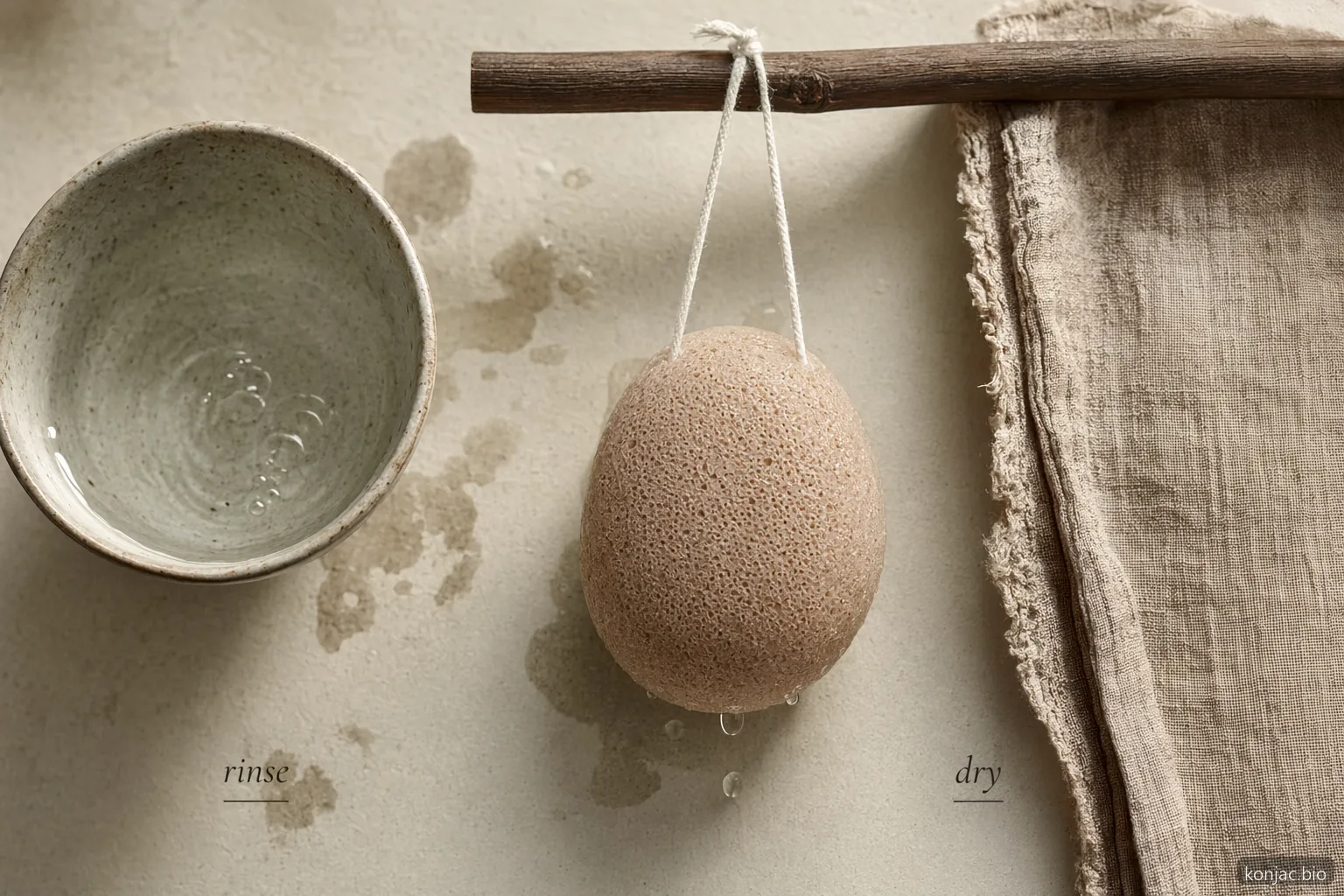
- Rinse the sponge thoroughly, squeeze flat, and hang in open air.
A konjac sponge should not be used on cracked, freshly shaved, sunburned, or visibly irritated skin. The outer skin layer, the stratum corneum, is part of the body barrier described in skin anatomy references skin anatomy, so over-polishing can make a routine feel uncomfortable.
How do you clean and replace an exfoliating konjac sponge?
You clean and replace an exfoliating konjac sponge by rinsing it after every use, drying it in airflow, and discarding it after 4 to 8 weeks. The exact replacement window depends on humidity, use frequency, and storage.
Follow these 5 hygiene rules:
- Rinse completely: remove cleanser, makeup residue, and loose debris under running water.
- Squeeze, do not wring: twisting can tear the hydrated fiber network.
- Dry hanging: use a cord or ventilated rack, not a sealed soap dish.
- Keep it personal: do not share one facial sponge across users.
- Replace early: discard if it smells, darkens unevenly, flakes, or loses bounce.
Bathroom humidity matters. A sponge stored in a closed shower corner dries slowly, while a sponge hung near airflow dries faster. Slow drying raises the chance of unwanted odor and visible spots.
For a step-by-step routine with soaking, cleanser pairing, and storage photos, use the sibling guide how to use a konjac sponge. A consistent routine usually matters more than buying the firmest or most textured sponge.
Frequently asked questions
01 Can I use an exfoliating konjac sponge every day?
02 Is a konjac sponge better than a face scrub?
03 Do I need cleanser with an exfoliating konjac sponge?
04 How long should a konjac sponge last?
05 Can sensitive skin use an exfoliating konjac sponge?
06 Does a konjac sponge exfoliate the body as well as the face?
07 Is an exfoliating konjac sponge safe for acne-prone skin?
- Konjac glucomannan, a promising polysaccharide for OCDDS · Carbohydrate Polymers (PubMed) · 2014
- Natural skin surface pH is on average below 5, which is beneficial for its resident flora · PubMed · 2006
- How to safely exfoliate at home · American Academy of Dermatology · 2024
- Cosmetics Labeling Guide · U.S. Food and Drug Administration · 2024
- Anatomy, Skin (Integument) - StatPearls - NCBI Bookshelf · NCBI Bookshelf · 2023
- Microbead-Free Waters Act: FAQs · U.S. Food and Drug Administration · 2023