Is a konjac sponge for sensitive skin a good choice?
Yes, a konjac sponge for sensitive skin can be a good choice when it is plain, fully hydrated, and used with very light pressure.
Sensitive skin is often described as stinging, burning, tightness, itching, or discomfort after exposure to products or environmental triggers, a pattern summarized in dermatology literature as sensitive skin. A konjac sponge is not a fix for sensitivity, but its soft gel-like texture can be less abrasive than walnut shell scrubs, stiff cleansing brushes, or rough washcloths.
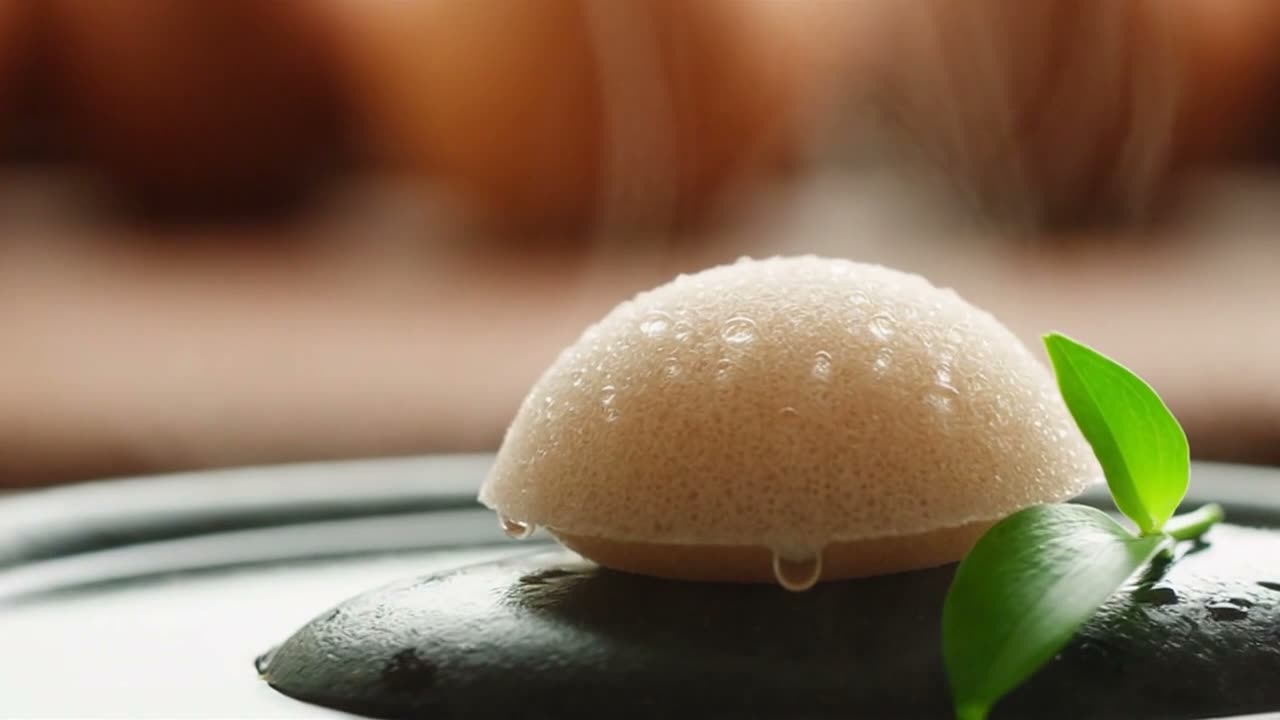
The key is hydration. A dry konjac sponge feels hard and compact, while a soaked sponge becomes cushiony and pliable. That water-swollen texture spreads pressure across the surface instead of concentrating it into scratchy points.
For a broader overview of konjac sponge materials, skincare uses, and care, see Konjac Sponge: The Natural Skincare Tool.
How should you use a konjac sponge for sensitive skin?
Use a konjac sponge for sensitive skin by soaking it until fully soft, gliding it with light circular motions for 30 to 60 seconds, then rinsing and air-drying it.
A simple routine works best:
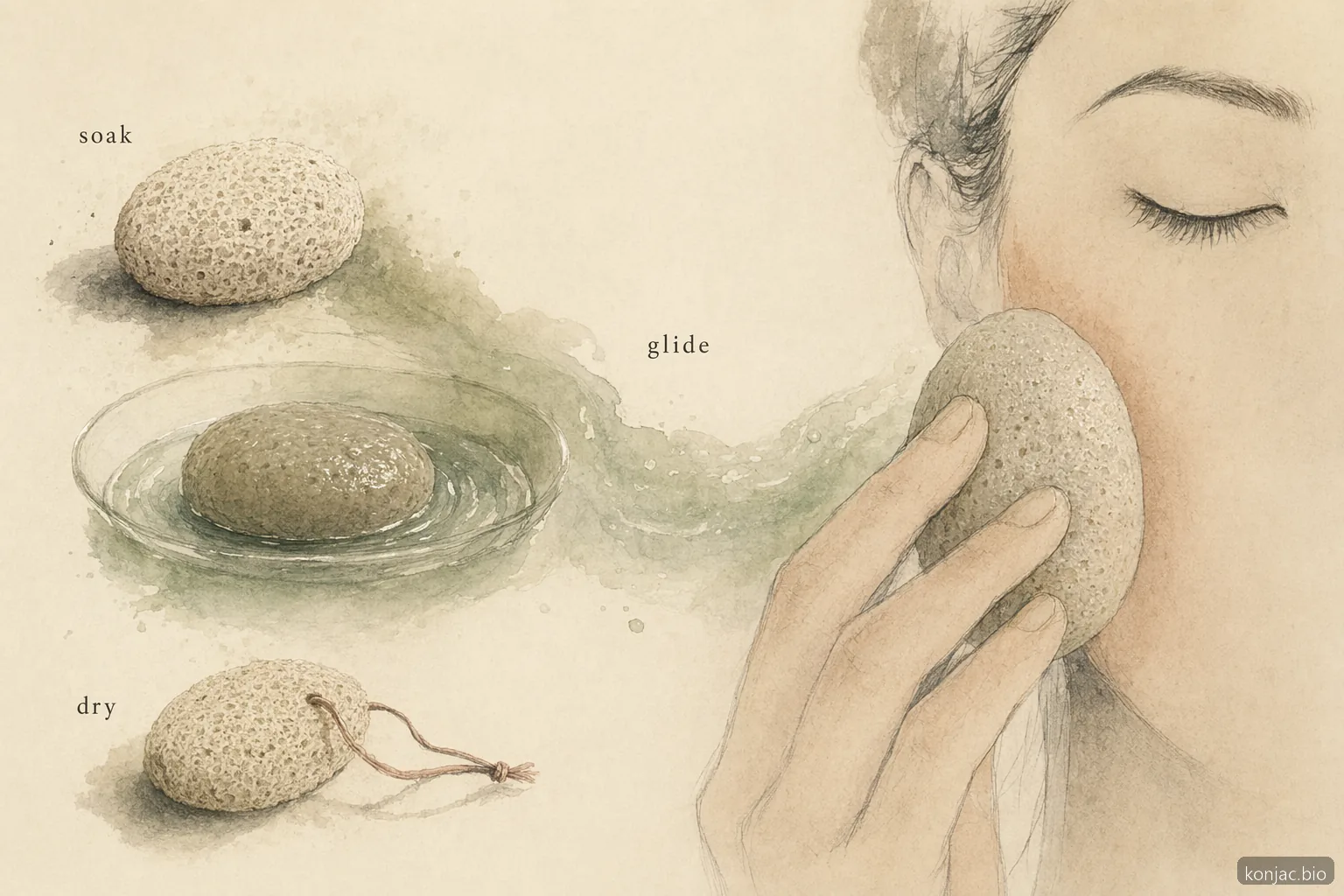
- Soak the sponge in warm water for 3 to 5 minutes, or until the hard core disappears.
- Press out excess water between clean palms, without twisting aggressively.
- Use alone, or add a small amount of fragrance-free cleanser.
- Glide over the face with minimal pressure for 30 to 60 seconds.
- Rinse the sponge thoroughly, squeeze gently, and hang it in open air.
Dermatology guidance commonly recommends gentle, fragrance-free skincare choices for people with sensitive skin concerns, including avoiding products that cause burning or stinging. Pairing a soft sponge with a mild cleanser fits that low-friction approach.
Limit use to once daily at first. If the skin feels tight, shiny, or warm afterward, reduce to 2 or 3 times per week.
What ingredients should a sensitive-skin konjac sponge avoid?
A sensitive-skin konjac sponge should avoid added fragrance, strong dyes, rough exfoliating particles, and unclear botanical additives.
Plain white konjac is usually the lowest-risk option because it keeps the ingredient list short. Colored sponges may contain charcoal, clay, green tea powder, turmeric, or other additives. Those additions can be useful for branding, but sensitive skin routines usually benefit from fewer variables.
| Feature | Better for sensitive skin | Use caution |
|---|---|---|
| Color | Plain white or undyed | Strongly dyed sponges |
| Scent | Fragrance-free | Perfumed or essential-oil scented |
| Texture | Soft and uniform | Gritty or scratchy surfaces |
| Claims | Simple cleansing language | Vague hypoallergenic promises |
The term hypoallergenic has no federal standard definition for cosmetics in the United States, and manufacturers are responsible for supporting their own claims FDA cosmetics. For sensitive skin, a short, transparent ingredient list matters more than a label slogan.
Konjac sponge for sensitive skin vs washcloths and scrubs
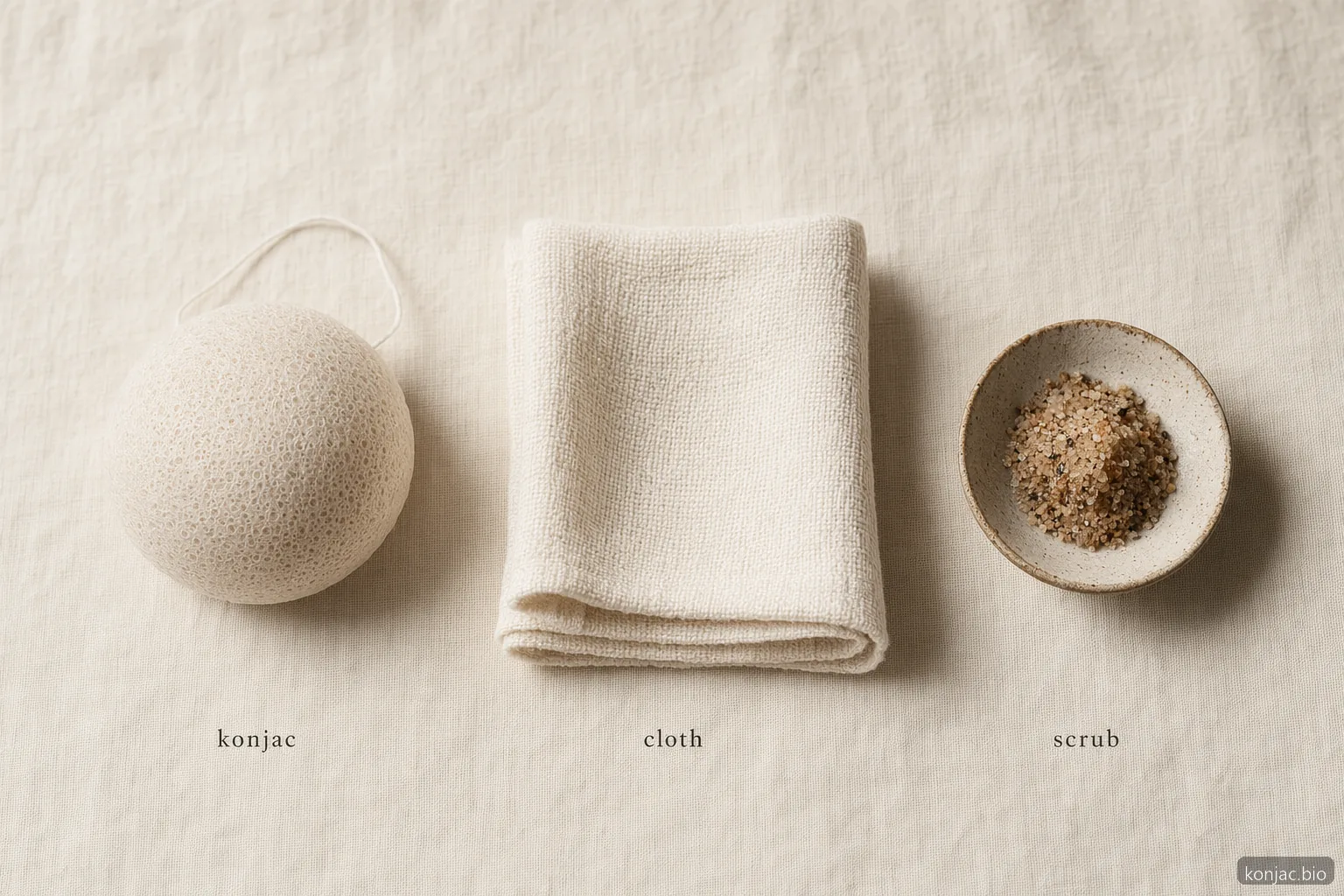
A konjac sponge for sensitive skin is usually gentler than a gritty scrub and often softer than a textured washcloth when fully soaked.
The outermost skin barrier includes the stratum corneum, a layer of flattened cells and lipids that helps reduce water loss and environmental entry NCBI Bookshelf. High-friction cleansing can make sensitive-feeling skin more uncomfortable, especially when paired with foaming cleansers, hot water, or long scrubbing sessions.
| Tool | Texture | Best use | Sensitive-skin note |
|---|---|---|---|
| Konjac sponge | Soft, water-swollen fiber | Daily or occasional gentle cleansing | Use light pressure only |
| Washcloth | Varies by fabric and weave | Removing cleanser or masks | Can feel rough if overused |
| Physical scrub | Particles or granules | Occasional exfoliation for tolerant skin | Often too harsh for reactive skin |
| Cleansing brush | Bristles or silicone points | Deep-feeling cleanse | Pressure is easy to overdo |
For sensitive skin, the goal is not a polished or squeaky feeling. The better target is clean, comfortable skin that does not sting after rinsing.
When should you skip a konjac sponge for sensitive skin?
Skip a konjac sponge when skin is actively stinging, cracked, sunburned, freshly shaved, or reacting to a new product.
A sponge is still a physical cleansing tool, even when it feels soft. If the skin barrier already feels uncomfortable, extra rubbing can add friction. In those moments, rinse with lukewarm water or use fingertips with a mild cleanser until the skin feels normal again.
Stop use if you notice immediate burning, persistent redness, increased flaking, or a tight glossy look after cleansing. Reactions can come from pressure, cleanser formula, water temperature, a sponge additive, or a combination of those factors.
Do not share a konjac sponge. Facial sponges stay damp after use, so personal use, thorough rinsing, open-air drying, and frequent replacement are practical hygiene steps.
Buying, care, and replacement checklist
A good sensitive-skin konjac sponge should be plain, soft after soaking, easy to rinse, and replaced before it breaks down.
Use this buying and care checklist:
- Choose plain white konjac if your routine is highly reactive.
- Look for fragrance-free and dye-free positioning.
- Check that the dry sponge has no chemical odor after rinsing.
- Hang it in a ventilated place, not inside a closed shower caddy.
- Replace every 4 to 6 weeks, or sooner if it smells, cracks, or crumbles.
Amorphophallus konjac is a plant species whose corm is used to make konjac-derived materials, including glucomannan-rich food and cosmetic substrates Kew Plants. In sponge manufacturing, konjac fiber is hydrated, shaped, and dried into a hard lightweight form that softens again in water.
For brands, spas, and private-label skincare teams, konjac.bio sources konjac sponge materials at wholesale scale with specification support. For samples, bulk pricing, or formulation fit, contact konjac.bio wholesale.
Frequently asked questions
01 Can I use a konjac sponge for sensitive skin every day?
02 Is charcoal konjac sponge good for sensitive skin?
03 Do I need cleanser with a konjac sponge?
04 How long should I soak a konjac sponge before using it?
05 How often should I replace a konjac sponge?
06 Can a konjac sponge exfoliate sensitive skin?
- Sensitive skin: an overview · International Journal of Cosmetic Science (PubMed) · 2013
- Hypoallergenic Cosmetics · U.S. Food and Drug Administration · 2022
- Histology, Stratum Corneum - StatPearls - NCBI Bookshelf · NCBI Bookshelf · 2023
- Amorphophallus konjac K.Koch · Plants of the World Online, Royal Botanic Gardens Kew · 2024