What are the best noodles that are low carb?
The best noodles that are low carb are shirataki noodles, because plain versions often contain 0 to 3 grams of net carbohydrates per serving.
Shirataki comes from Amorphophallus konjac, a corm crop used to make glucomannan fiber. The U.S. Food and Drug Administration classifies certain isolated or synthetic non-digestible carbohydrates as dietary fiber when they have beneficial physiological effects, and nutrition labels separate total carbohydrate from dietary fiber under FDA fiber guidance.
| Noodle type | Typical net carbs | Best use | Main tradeoff |
|---|---|---|---|
| Shirataki | 0 to 3 g per serving | Ramen, stir-fry, saucy pasta | Needs rinsing and drying |
| Zucchini noodles | About 2 to 4 g per 100 g | Fresh bowls, light sauces | Releases water quickly |
| Hearts of palm noodles | About 2 to 6 g per serving | Tomato sauces, casseroles | Briny flavor |
| Kelp noodles | About 1 to 4 g per serving | Cold salads, Asian sauces | Crunchy unless softened |
| Edamame noodles | About 6 to 11 g per serving | Higher-protein pasta swaps | More carbs than shirataki |
Exact numbers vary by brand, moisture level, and serving size. For raw produce comparisons, USDA’s FoodData Central is the standard U.S. database for calorie, carbohydrate, and fiber values.
Why are shirataki noodles that are low carb so different?
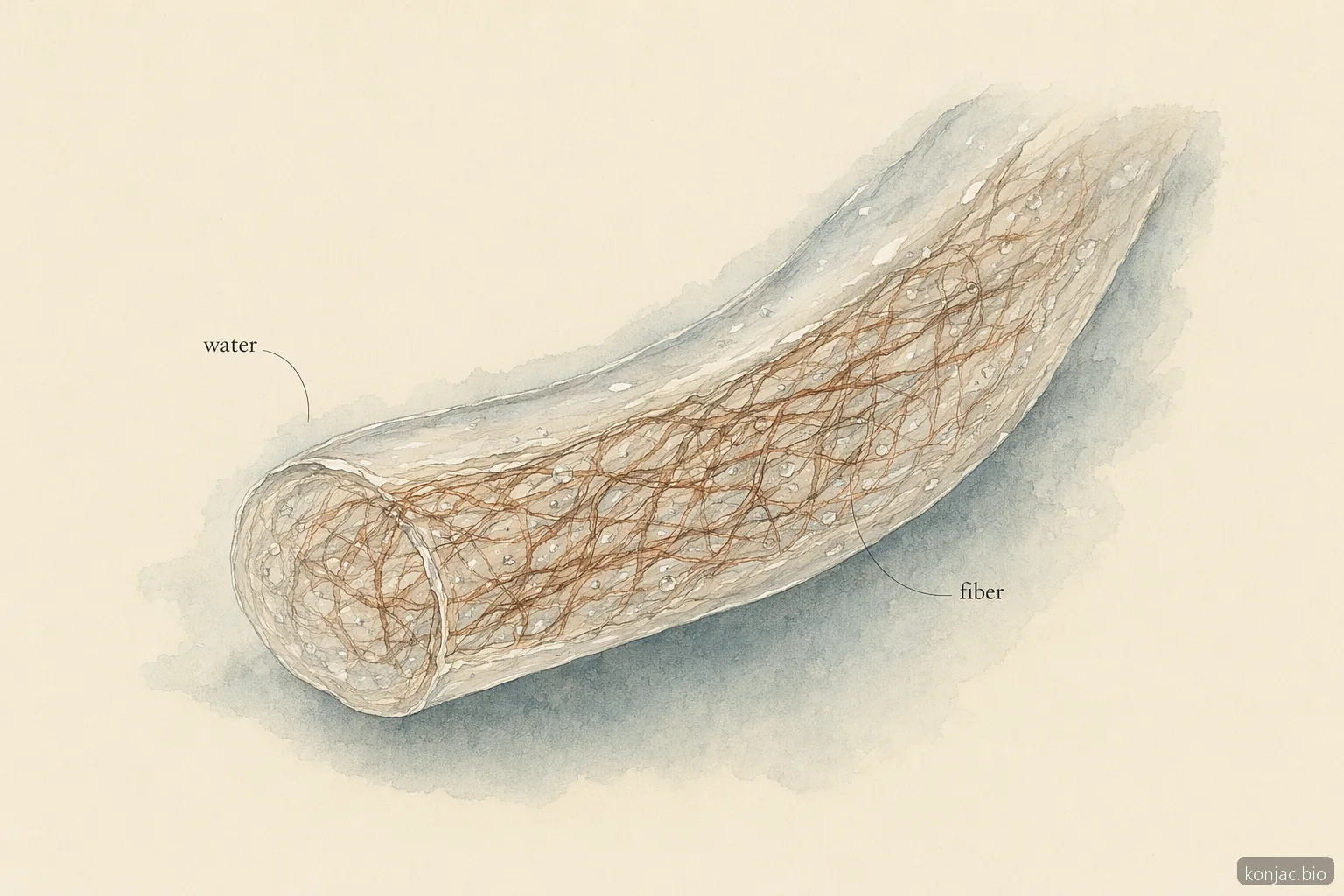
Shirataki noodles that are low carb are different because their structure comes from water and konjac glucomannan, not wheat starch.
Traditional pasta is built from wheat flour, so its carbohydrate content comes mainly from digestible starch. Shirataki is made by mixing konjac flour with water and a firming alkaline ingredient, then forming the gel into noodles. The result is a slippery, translucent noodle with very little digestible carbohydrate.
Glucomannan is a highly viscous soluble fiber studied for satiety, cholesterol maintenance, and weight-management outcomes. EFSA’s approved weight-management wording is: “Glucomannan in the context of an energy restricted diet contributes to weight loss,” with conditions described in the EFSA claim.
A review indexed on PubMed review evaluated glucomannan and body-weight research, while broader fiber intake guidance is summarized in the National Academies report hosted by NCBI fiber. For food shoppers, the practical takeaway is simpler: shirataki works because most of the noodle is water plus fiber, not grain flour.
A practical carb and texture comparison
Low-carb noodles are not interchangeable, even when the carb numbers look close. The right choice depends on whether the dish needs chew, snap, sauce absorption, or a neutral base.
Shirataki has the lowest calorie density and the most neutral macronutrient profile. It does not absorb sauce like wheat pasta, but it carries bold flavors well after rinsing and dry-pan heating. It works especially well with soy sauce, miso, sesame oil, garlic, chili, tomato paste, cream sauces, and broth.
Zucchini noodles taste fresh and familiar, but they soften quickly. Salt them for 10 minutes and pat dry if the recipe uses a thick sauce. Hearts of palm noodles have a mild vegetable acidity, so they pair well with tomato, lemon, capers, olive oil, and seafood-style seasonings.
Kelp noodles are best when crunch is welcome. To soften them, many cooks soak them in warm water with lemon juice or baking soda, then rinse thoroughly. Edamame noodles are more pasta-like and higher in protein, but their carbohydrate count is usually higher than shirataki, zucchini, kelp, or hearts of palm.
- Lowest carb: plain shirataki.
- Most fresh flavor: zucchini noodles.
- Best vegetable pasta feel: hearts of palm.
- Most crunch: kelp noodles.
- Most protein: edamame noodles.
How should you cook noodles that are low carb?
You should cook noodles that are low carb by removing excess water first, then matching the noodle to the sauce.
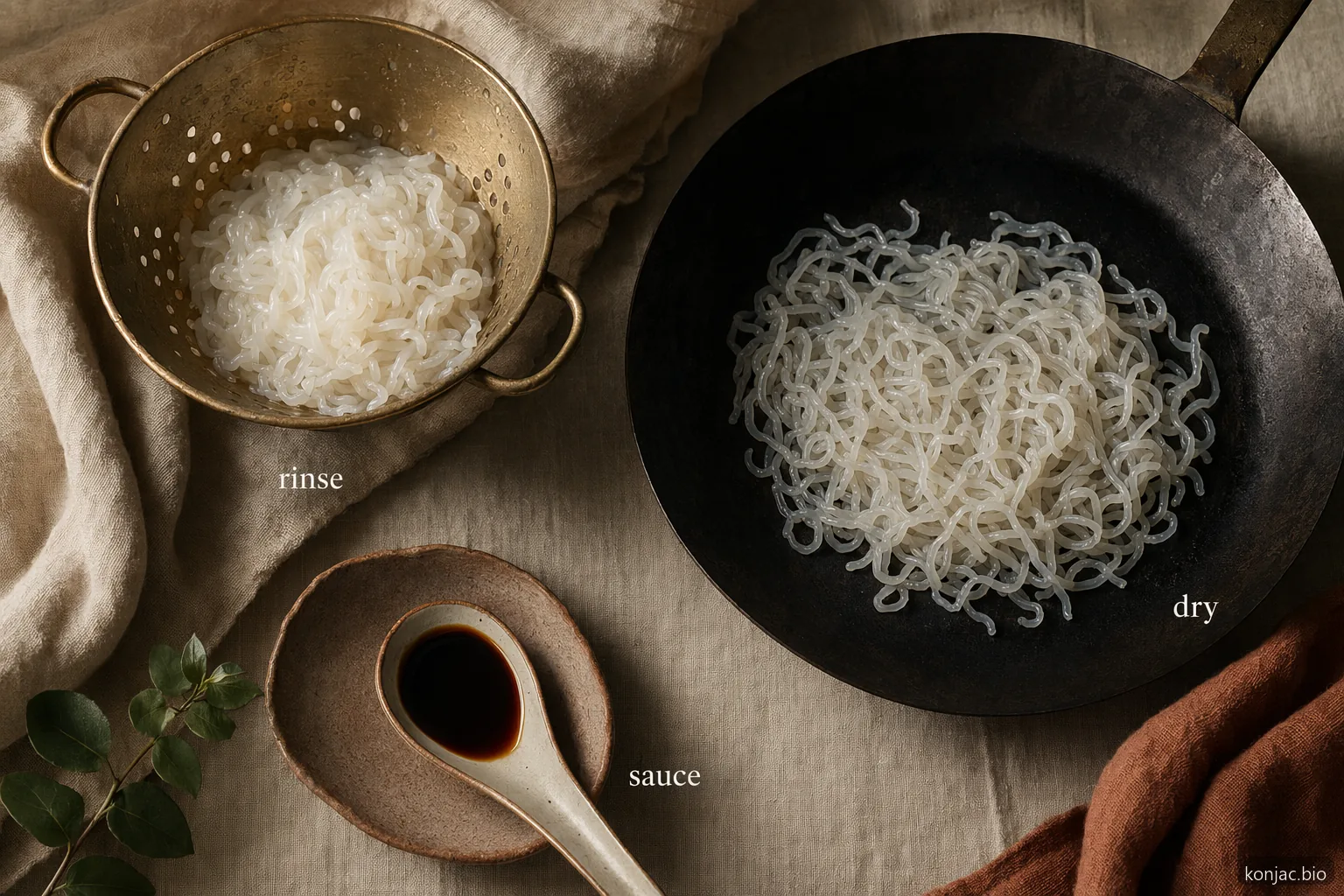
For shirataki, the best method is rinse, boil briefly, drain, and dry-pan. Rinsing removes the packaged liquid aroma. Boiling for 1 to 2 minutes warms the gel and improves texture. Dry-pan heating for 2 to 5 minutes drives off surface moisture so sauce clings better.
- Open and drain: pour away the storage liquid.
- Rinse well: use cold running water for 30 to 60 seconds.
- Boil briefly: simmer for 1 to 2 minutes, then drain.
- Dry-pan: heat in a skillet until steam slows.
- Sauce last: add concentrated sauce, fat, herbs, and protein.
Vegetable noodles need gentler handling. Zucchini should be cooked for 1 to 2 minutes or served raw to avoid watery sauce. Hearts of palm can simmer longer in tomato or cream sauces. Kelp noodles should be softened before saucing if a tender bite is preferred.
For a step-by-step kitchen method, use our cooking guide. For calorie-specific comparisons, see our calorie guide.
Buying checklist for labels, additives, and portions
The best low-carb noodle purchase starts with the nutrition panel, not the front label. A package can say low carb while still using tapioca starch, potato starch, rice flour, or pea starch for texture.
Check total carbohydrate, dietary fiber, serving size, and calories together. Net carbs are usually calculated as total carbohydrates minus fiber, but U.S. labels do not require a net-carb line. If a 200 g package contains two servings, double the per-serving numbers before comparing it with another package.
| Label item | What to look for | Why it matters |
|---|---|---|
| Ingredients | Konjac flour, water, calcium hydroxide | Plain shirataki base |
| Total carbohydrate | Low single digits per serving | Shows total carb load |
| Dietary fiber | Often 1 to 3 g per serving | Explains net-carb difference |
| Added starch | Tapioca, potato, rice, pea | Can raise carbs |
| Sodium | Varies by product | Matters for broth-packed foods |
For product developers, konjac.bio sources konjac ingredients at wholesale volumes for noodle, gel, and low-carb food applications. Contact the team through wholesale pricing for specifications and supply options.
Can noodles that are low carb fit keto, gluten-free, and high-fiber diets?
Noodles that are low carb can fit many keto, gluten-free, and higher-fiber eating patterns when the label matches the diet’s carbohydrate and ingredient limits.
Plain shirataki is usually compatible with keto-style meals because it contributes minimal digestible carbohydrate. It is also typically gluten-free because it is not made from wheat, barley, or rye. People with strict gluten restrictions should still check for facility statements and certification marks, because cross-contact controls depend on the manufacturer.
For higher-fiber meals, shirataki can add glucomannan fiber, but it should not be the only fiber source in a day. Beans, vegetables, berries, nuts, seeds, and intact whole grains provide different fibers, minerals, and phytochemicals. The National Academies’ Adequate Intake for total fiber is 38 g per day for men ages 19 to 50 and 25 g per day for women ages 19 to 50, summarized in NCBI fiber.
Pair low-carb noodles with protein and flavorful sauce for a complete plate. Good combinations include shirataki with chicken and sesame sauce, zucchini noodles with turkey meatballs, hearts of palm noodles with shrimp and tomato, or kelp noodles with tofu and peanut-lime dressing.
Frequently asked questions
01 What noodles have the lowest carbs?
02 Are shirataki noodles the same as zero-carb noodles?
03 Do low-carb noodles taste like regular pasta?
04 How do I remove the smell from shirataki noodles?
05 Are low-carb noodles good for weight management?
06 Which low-carb noodle is best for meal prep?
- Scientific Opinion on the substantiation of health claims related to konjac mannan (glucomannan) · European Food Safety Authority · 2010
- Dietary Fiber on the Nutrition Facts Label · U.S. Food and Drug Administration · 2024
- Dietary Reference Intakes for Energy, Carbohydrate, Fiber, Fat, Fatty Acids, Cholesterol, Protein, and Amino Acids · NCBI Bookshelf · 2005
- Health effects of glucomannan and obesity: a critical review · PubMed · 2005
- FoodData Central · U.S. Department of Agriculture · 2024