What is konjac powder?
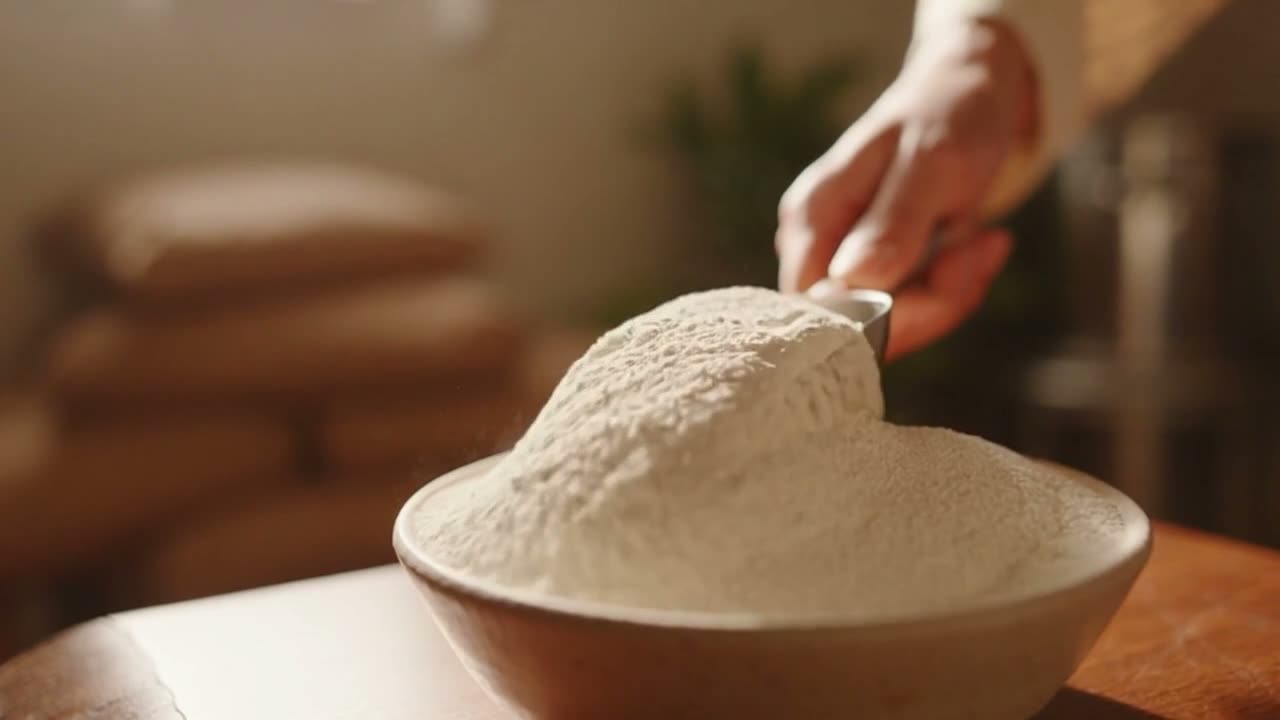
Konjac powder is a milled, purified powder from the corm of Amorphophallus konjac, a plant grown mainly in East and Southeast Asia. Its main functional fraction is glucomannan, a water-soluble polysaccharide that can bind large amounts of water and create high viscosity at low use levels.
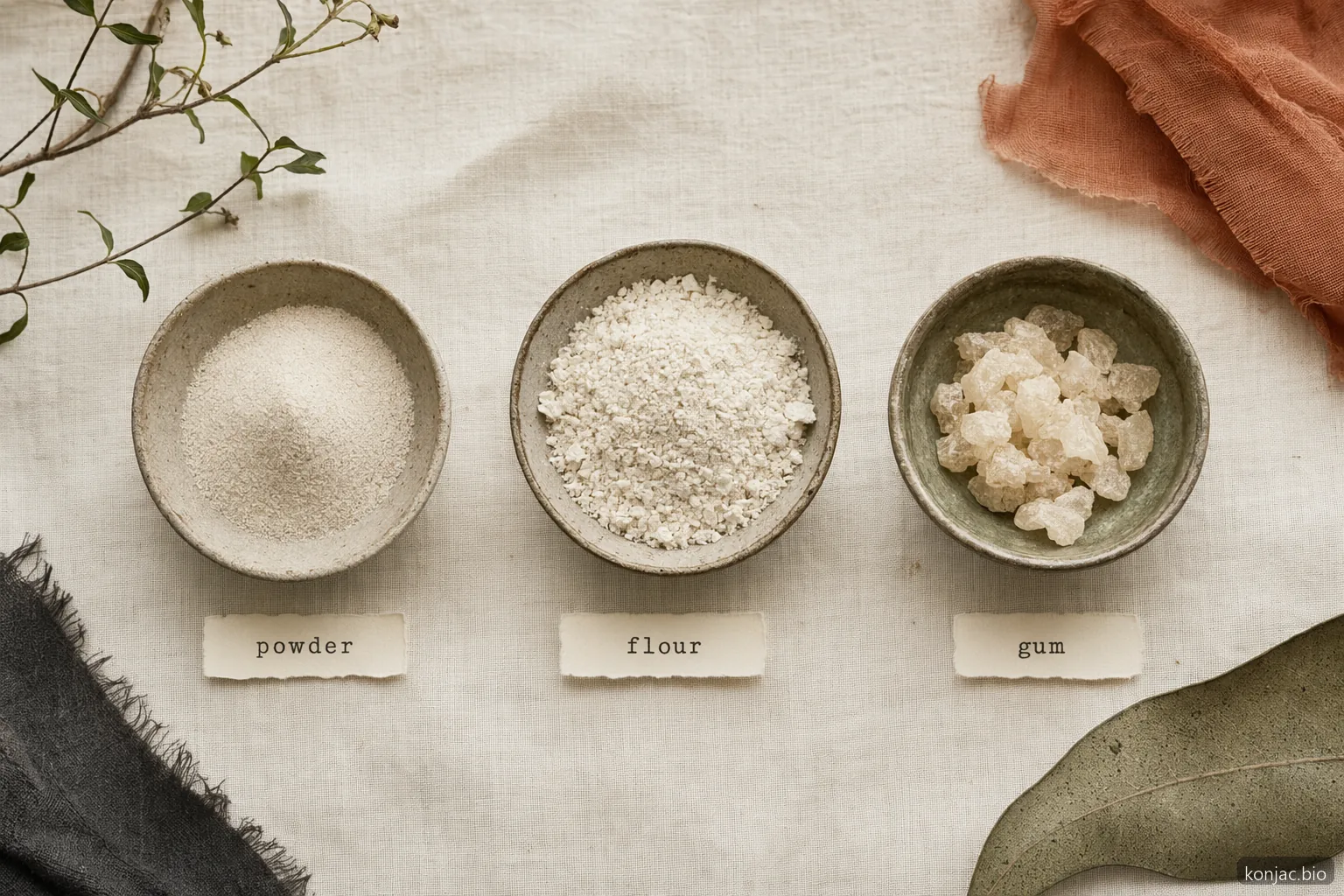
In food manufacturing, the term can overlap with konjac flour, konjac gum, and glucomannan powder. The difference is usually the degree of purification, viscosity grade, particle size, ash level, and intended application. A high-purity glucomannan powder is often chosen for clear beverages or supplements, while standard konjac powder can be used for noodles, gels, sauces, and texture systems.
The U.S. food additive regulation lists konjac flour as a gelling, thickening, texturizing, film-forming, and water-binding agent, with use not exceeding 1 percent of the finished food under specified conditions in 21 CFR. That regulatory language is one reason buyers often compare supplier documents carefully before choosing a grade.

How does konjac powder work in food?
Konjac powder works by hydrating in water, unfolding glucomannan chains, and forming viscosity or gel structure depending on pH, minerals, heat, and shear. Its water-binding capacity makes it useful when a formula needs body, suspension, chew, or moisture retention without adding much starch or sugar.
Food developers usually evaluate konjac by viscosity first. Commercial grades may be specified by a 1 percent solution viscosity, often measured in mPa·s under defined temperature and spindle conditions. The number only matters when the test method is named, because hydration time, water hardness, and mixing energy can shift readings.
| Application | What konjac powder does | Typical formulation goal |
|---|---|---|
| Shirataki and konjac noodles | Builds elastic gel structure | Low-calorie noodle texture |
| Sauces and dressings | Raises viscosity and suspension | Reduced starch or gum load |
| Gummies and gels | Adds chew and water binding | Clearer, firmer bite |
| Meat alternatives | Improves binding and juiciness | Better slice and bite |
| Bakery fillings | Controls water migration | Less syneresis during storage |
Konjac also interacts with other hydrocolloids. It is commonly paired with xanthan gum, carrageenan, agar, starch, or calcium salts to adjust elasticity, cut, and melt resistance. For noodle-specific formulation context, see our guide to shirataki noodles.
Konjac powder vs konjac flour, konjac gum, and glucomannan
Konjac powder, konjac flour, konjac gum, and glucomannan are related terms, but they are not always interchangeable on a specification sheet. The safest commercial approach is to define the intended label name, purity, viscosity, particle size, and regulatory market before ordering.
Konjac flour often refers to a functional food ingredient made from dried konjac corm. Konjac gum usually signals a purified hydrocolloid used for thickening and gelling. Glucomannan refers to the soluble fiber fraction and may be used when a brand is formulating around fiber content, viscosity, or an approved claim framework.
| Term | Common meaning | Buyer check |
|---|---|---|
| Konjac powder | General powdered konjac ingredient | Confirm purity and viscosity |
| Konjac flour | Food-grade flour from konjac corm | Check permitted use and label rules |
| Konjac gum | Hydrocolloid gum fraction | Confirm food additive status by market |
| Glucomannan | Soluble fiber polysaccharide | Confirm assay and claim requirements |
Health positioning needs careful wording. EFSA authorized the claim, “Glucomannan in the context of an energy restricted diet contributes to weight loss,” under specified intake conditions in its EFSA opinion. EFSA also evaluated glucomannan and maintenance of normal blood cholesterol concentrations, so brands should align exact claims with market-specific rules rather than using broad wellness language.
For deeper ingredient chemistry and fiber positioning, see our sibling guide to konjac glucomannan.
For glucomannan konjac powder used in weight-management positioning, EFSA ties its wording to a defined protocol: 3 g of glucomannan daily, taken as three 1 g doses with 1 to 2 glasses of water before meals, within an energy-restricted diet. Brands should quote the dose and conditions exactly rather than shortening the claim to a bare promise.
How much konjac powder is used safely?
Konjac powder use depends on the application, but U.S. food additive rules specify konjac flour use at levels not exceeding 1 percent of the finished food under the listed conditions. Formulators should also validate hydration, texture, choking risk, and serving size for each product format.
Use rates are often much lower than 1 percent in beverages, sauces, and emulsions because konjac builds viscosity quickly. Noodles, molded gels, and structured foods may use higher functional loads within applicable rules, especially when konjac is part of an alkaline or calcium-assisted gel system. Small changes of 0.05 to 0.20 percent can make a visible difference in pour, bite, or gel fracture.
Dry powder handling matters because konjac hydrates fast and can form clumps. Production teams often disperse it with sugar, oil, starch, or another dry carrier before adding water. High-shear mixing, controlled addition, and enough hydration time produce more consistent viscosity than dumping powder directly into water.
Digestive tolerance also depends on dose and water intake. Human studies of glucomannan have evaluated body weight and lipid endpoints, with mixed outcomes across designs in a PubMed review. Product labels should give clear preparation and serving instructions, especially for powders, gummies, and dry mixes that swell after hydration.
Format matters as much as dose. The FDA has warned that mini-cup gel candies made with konjac can pose a choking hazard because the firm, low-moisture gel does not dissolve readily in the mouth. Developers working with glucomannan konjac powder in jellies, gummies, or single-serve gel shots should validate piece size and gel strength directly, not just percent inclusion, before launch.
Konjac powder sourcing checklist for food brands
A good konjac powder sourcing brief starts with application, target texture, market, and label language. Price per kilogram matters, but failed hydration, microbial surprises, or the wrong viscosity grade can cost more than the ingredient itself during scale-up.
Ask suppliers for the same core documents every time: certificate of analysis, specification sheet, allergen statement, GMO statement, heavy metals data, microbiological limits, country of origin, process flow, and food safety certification such as ISO 22000, FSSC 22000, BRCGS, or HACCP. If the powder will be exported, confirm the destination market’s additive name, maximum use level, and claim wording before the first production run.
- Viscosity: request test method, concentration, temperature, and instrument details.
- Mesh size: choose finer powder for faster hydration and smoother beverages.
- Purity: compare glucomannan assay, starch, ash, and moisture.
- Microbiology: set limits for total plate count, yeast, mold, Salmonella, and E. coli.
- Sensory: check color, odor, clarity, and taste in the finished matrix.
- Documentation: align COA fields with your receiving and QA system.
konjac.bio sources konjac powder at wholesale volumes with specification matching for viscosity, mesh, microbiology, and intended use. For samples or current pricing, contact our team at konjac.bio/contact.
Peer-reviewed food science literature describes glucomannan as a high-molecular-weight soluble polysaccharide with strong water interaction and broad food use potential in an NIH review. That technical profile is why supplier consistency matters as much as botanical origin.
Frequently asked questions
01 Is konjac powder the same as konjac flour?
02 What is konjac powder used for in food manufacturing?
03 Does konjac powder contain glucomannan?
04 What is the U.S. use level for konjac flour in food?
05 How should konjac powder be mixed without clumps?
06 What specifications matter most when buying konjac powder wholesale?
07 What side effects can happen with konjac powder or glucomannan fiber?
08 What are the practical konjac powder benefits for a formulation?
- Scientific Opinion on the substantiation of health claims related to glucomannan · European Food Safety Authority · 2010
- The effect of glucomannan on body weight in overweight or obese children and adults: a systematic review of randomized controlled trials · Nutrition (PubMed) · 2015
- Konjac Glucomannan: From Molecular Architecture to Translational Applications. A Critical Review of Structure-Function Relationships, Emerging Biomedical Frontiers, and Industrial Challenges · Foods (PubMed) · 2026
- Food Additive Status List · U.S. Food and Drug Administration · 2024