How do recipes with shirataki noodles work best?
Recipes with shirataki noodles work best when the noodles are rinsed, boiled for 2 minutes, and dry-panned for 3 to 5 minutes before sauce is added.
Shirataki noodles are made from water and konjac glucomannan, a polysaccharide from the corm of Amorphophallus konjac described in food science literature as a highly water-binding fiber source konjac glucomannan. That high water content is why shirataki feels slippery straight from the pouch.
The goal is not to cook the noodle like wheat pasta. The goal is to remove excess water, then surround the noodle with flavor. For a broader cooking roadmap, use our parent guide to konjac recipes, or follow the focused technique guide for cooking shirataki.
- Best cooking fats: toasted sesame oil, olive oil, chili oil, garlic oil.
- Best acids: rice vinegar, lime juice, lemon juice, black vinegar.
- Best proteins: egg, tofu, chicken, shrimp, lean beef, edamame.
- Best vegetables: bok choy, cabbage, mushrooms, bell pepper, cucumber, spinach.
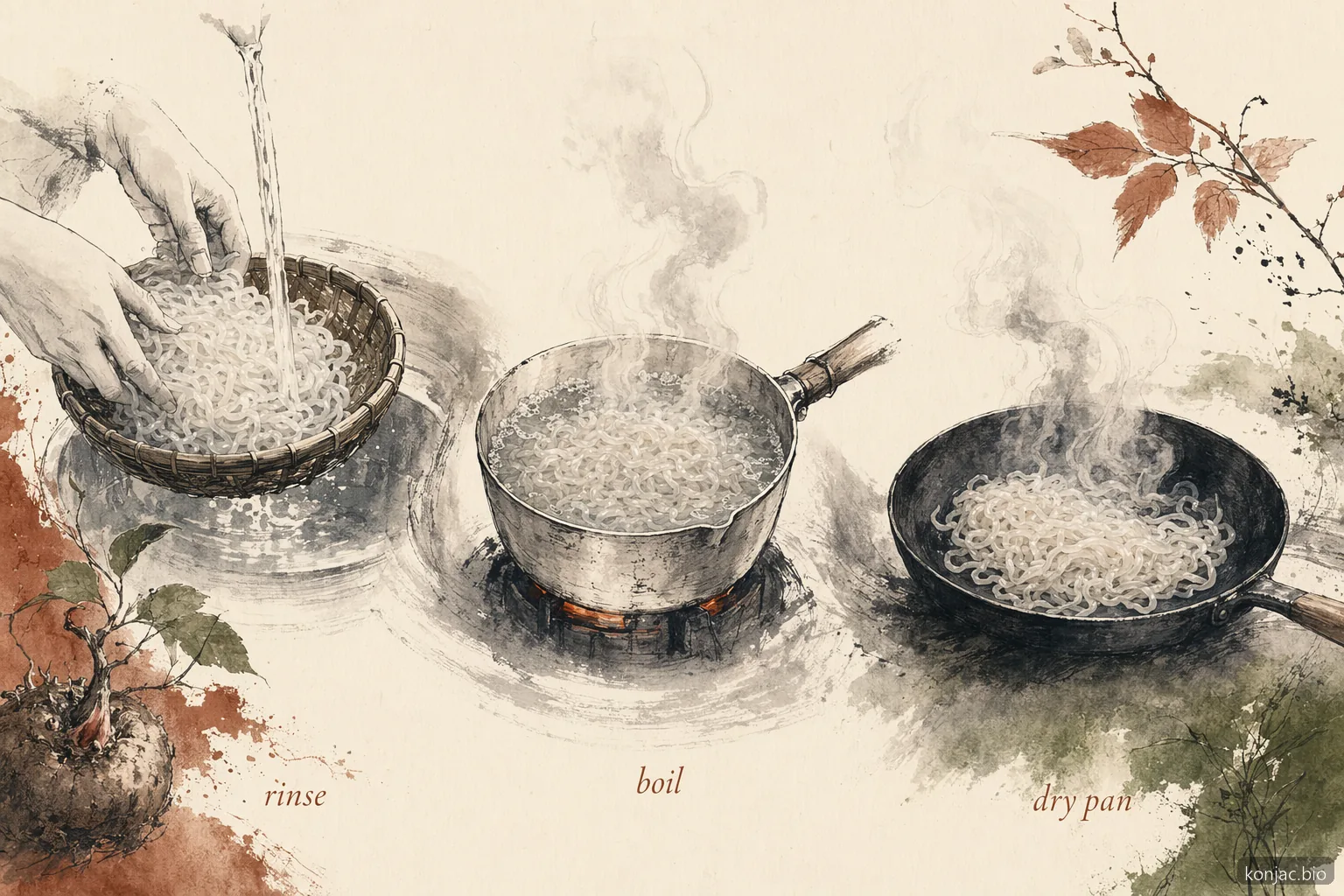
The rinse, boil, and dry-pan method
The reliable prep sequence is rinse, boil, drain, then dry-pan. This 8-minute method improves aroma, texture, and sauce adhesion.
Most shirataki is packed in alkaline water, which can smell briny or earthy when opened. Rinsing and boiling reduce that aroma. Dry-panning removes surface moisture, so sauce coats instead of sliding off.
| Step | Time | What it does |
|---|---|---|
| Drain and rinse | 30 to 60 seconds | Removes packing liquid and surface aroma |
| Boil | 2 minutes | Refreshes texture and warms the noodles evenly |
| Drain well | 1 minute | Prevents watery sauce |
| Dry-pan | 3 to 5 minutes | Evaporates surface moisture |
| Add sauce | 1 to 3 minutes | Coats noodles with concentrated flavor |
Use medium-high heat for dry-panning and stir often. When the pan looks dry and the noodles squeak slightly against the skillet, add sauce, aromatics, and cooked protein.
For meal development, think of shirataki as a texture carrier rather than a starch replacement with the same bite as wheat pasta. That mindset produces better bowls, because the sauce and toppings do the sensory work.
Which recipes with shirataki noodles are easiest for weeknights?
The easiest recipes with shirataki noodles are stir-fries, broth bowls, cold salads, and skillet meals with 5 to 8 strong-flavored ingredients.
Shirataki noodles are neutral, so choose sauces with salt, acid, aromatics, and heat. A good weeknight formula is 1 pouch shirataki, 1 protein, 2 vegetables, 1 sauce, and 1 crunchy topping.
| Recipe idea | Sauce profile | Add-ins |
|---|---|---|
| Garlic soy stir-fry | Soy sauce, garlic, ginger, sesame oil | Chicken, cabbage, scallion |
| Peanut lime noodles | Peanut butter, lime, tamari, chili crisp | Tofu, cucumber, carrot |
| Miso mushroom bowl | Miso, broth, rice vinegar | Shiitake, spinach, egg |
| Tomato basil skillet | Crushed tomato, garlic, olive oil | Turkey, zucchini, basil |
| Kimchi noodle pan | Kimchi juice, sesame oil, gochugaru | Egg, mushrooms, napa cabbage |
| Lemon pepper shrimp | Lemon, black pepper, butter or olive oil | Shrimp, spinach, parsley |
| Coconut curry bowl | Coconut milk, curry paste, lime | Chicken, bok choy, cilantro |
| Cold sesame salad | Tahini or sesame paste, vinegar, soy sauce | Cucumber, edamame, radish |
| Brothy ramen-style bowl | Stock, tamari, ginger, scallion | Egg, greens, mushrooms |
For lower-salt meals, dilute soy-based sauces with broth, citrus, or unsalted nut butter. For higher-protein meals, add 20 to 30 grams of cooked protein per serving from chicken, shrimp, tofu, eggs, or edamame.
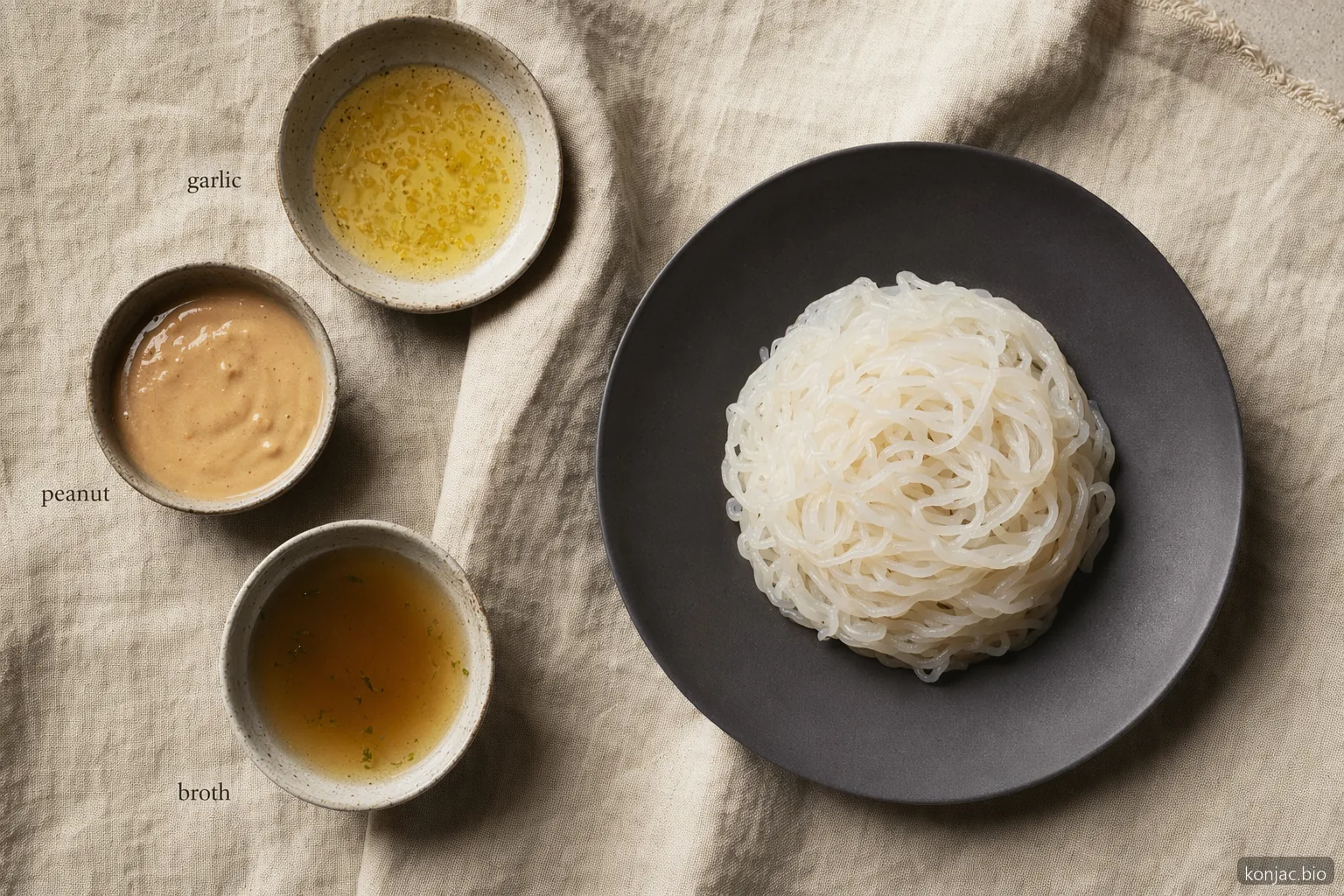
What sauces cling to shirataki noodles?
Thicker, emulsified, and reduced sauces cling to shirataki noodles better than thin watery sauces.
Because shirataki contains a large amount of water, sauce performance depends on concentration. Reduce pan sauces for 1 to 2 minutes, or use ingredients that naturally thicken, such as nut butter, tahini, tomato paste, miso, egg yolk, or a small slurry.
- Peanut lime: 1 tablespoon peanut butter, 1 teaspoon tamari, 1 teaspoon lime juice, chili to taste.
- Garlic sesame: 2 teaspoons soy sauce, 1 teaspoon sesame oil, garlic, ginger, scallion.
- Tomato basil: 3 tablespoons crushed tomato, 1 teaspoon olive oil, garlic, basil, black pepper.
- Miso broth: 1 teaspoon miso whisked into 120 ml hot broth, then added after dry-panning.
- Lemon herb: lemon juice, olive oil, parsley, garlic, cracked pepper, optional parmesan-style garnish.
Konjac glucomannan is recognized by the U.S. Food and Drug Administration as an isolated or synthetic non-digestible carbohydrate that meets the dietary fiber definition dietary fiber. The European Food Safety Authority also evaluated glucomannan and authorized the wording: “Glucomannan in the context of an energy restricted diet contributes to weight loss” EFSA opinion.
That nutrition context does not make shirataki a complete meal by itself. Pair it with vegetables, protein, and satisfying fat so the dish eats like dinner rather than a plain noodle swap.
Meal prep, storage, and texture fixes
Prepared shirataki dishes are best eaten fresh, but meal prep works if sauces and toppings are stored separately.
For hot bowls, prep the noodles through the dry-pan step and refrigerate them in a sealed container for up to 3 days. Add sauce during reheating so the noodles do not sit in liquid. For cold salads, chill dry-panned noodles first, then toss with dressing just before serving.
| Problem | Likely cause | Fix |
|---|---|---|
| Watery sauce | Noodles were not dry-panned long enough | Return to skillet for 2 minutes before saucing |
| Strong aroma | Packing liquid remained | Rinse longer and boil for 2 minutes |
| Sauce slides off | Sauce is too thin | Reduce sauce or add nut butter, miso, or tomato paste |
| Rubbery bite | Overcooked in a dry pan | Use medium-high heat and stop after moisture evaporates |
Do not freeze cooked shirataki noodles. Freezing changes the water structure and can make the texture spongier after thawing.
For product teams, konjac.bio sources konjac ingredients at wholesale volumes for noodle concepts, dry blends, and private-label development. Specifications and pricing are available through our contact page.
Frequently asked questions
01 Do shirataki noodles need to be boiled before cooking?
02 What are the best recipes with shirataki noodles for beginners?
03 Why do shirataki noodles smell when opened?
04 Can shirataki noodles replace pasta in every recipe?
05 How do I make shirataki noodles more filling?
- Konjac Glucomannan: A Promising Polysaccharide for OCDDS · PubMed · 2021
- Scientific Opinion on the substantiation of health claims related to konjac mannan · European Food Safety Authority · 2010
- Questions and Answers on Dietary Fiber · U.S. Food and Drug Administration · 2024