What does konjac japanese mean in Japan?
Konjac japanese means the Japanese food tradition built around konnyaku, a firm gel made from Amorphophallus konjac corms. In Japan, the ingredient appears most often as grey or white konnyaku blocks, shirataki noodles, and small cut shapes used in simmered dishes.
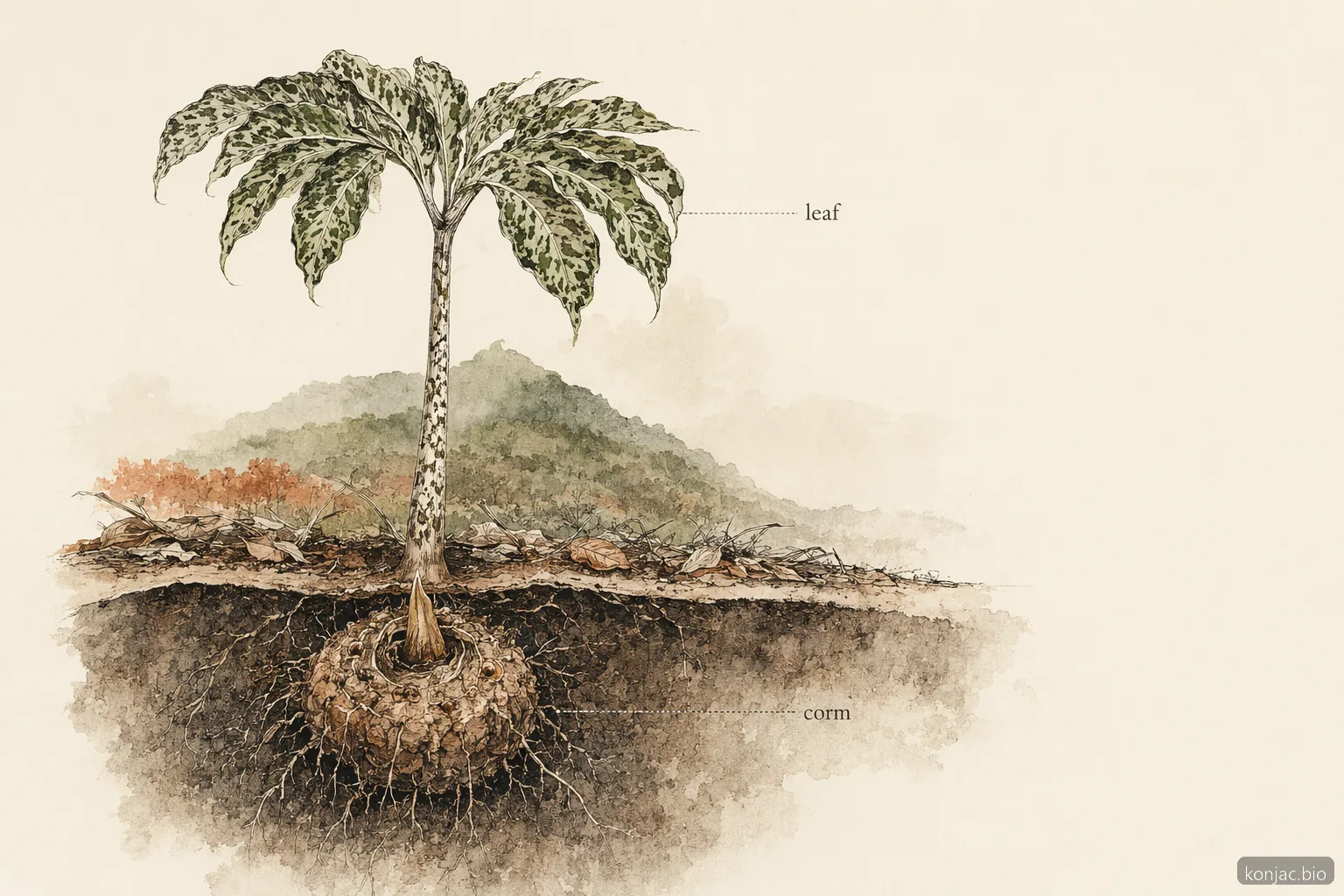
The plant behind the food is Amorphophallus konjac, an aroid grown for its underground corm rather than for leaves or fruit. The corm contains glucomannan, a water-binding polysaccharide that gives konnyaku its elastic texture and very high water content; a broad konjac glucomannan review describes it as a functional polysaccharide from konjac tubers PubMed review.
Japanese usage is different from a simple flour-to-noodle story. Konnyaku is commonly cut into triangles for oden, torn by hand for simmered nimono, sliced thin for sukiyaki-style dishes, or extruded into shirataki noodles. The same crop therefore supports retail packs, chilled deli items, restaurant ingredients, and export formats.
For broader botanical context, see the parent guide, The Konjac Plant: Cultivation, History, and Botany. For the plant species itself, the related cluster Amorphophallus konjac explains taxonomy, corm structure, and growth habit.
How did konjac japanese cultivation develop?
Konjac japanese cultivation developed as a corm crop system linked to mountain agriculture, starch processing, and long shelf-life foods. The crop’s value came from turning a seasonal underground corm into stable konjac flour and hydrated gel products.
Amorphophallus konjac is native to parts of China and has long been cultivated in East Asia for glucomannan-rich corms, with the accepted species record maintained by Kew taxonomy. In Japan, cultivation became associated with upland farms because the crop favors well-drained soils, careful seed-corm handling, and multi-year production cycles.
The agricultural logic is practical. A fresh konjac corm is bulky, perishable, and high in moisture, so growers and processors historically reduced it into dried chips or flour. That step separated cultivation from food preparation and allowed konnyaku makers to standardize texture across seasons.
A typical production chain has 5 stages:
- Plant seed corms or smaller propagules in prepared upland soil.
- Grow foliage during the warm season while the corm enlarges underground.
- Harvest mature corms after the aerial leaf senesces.
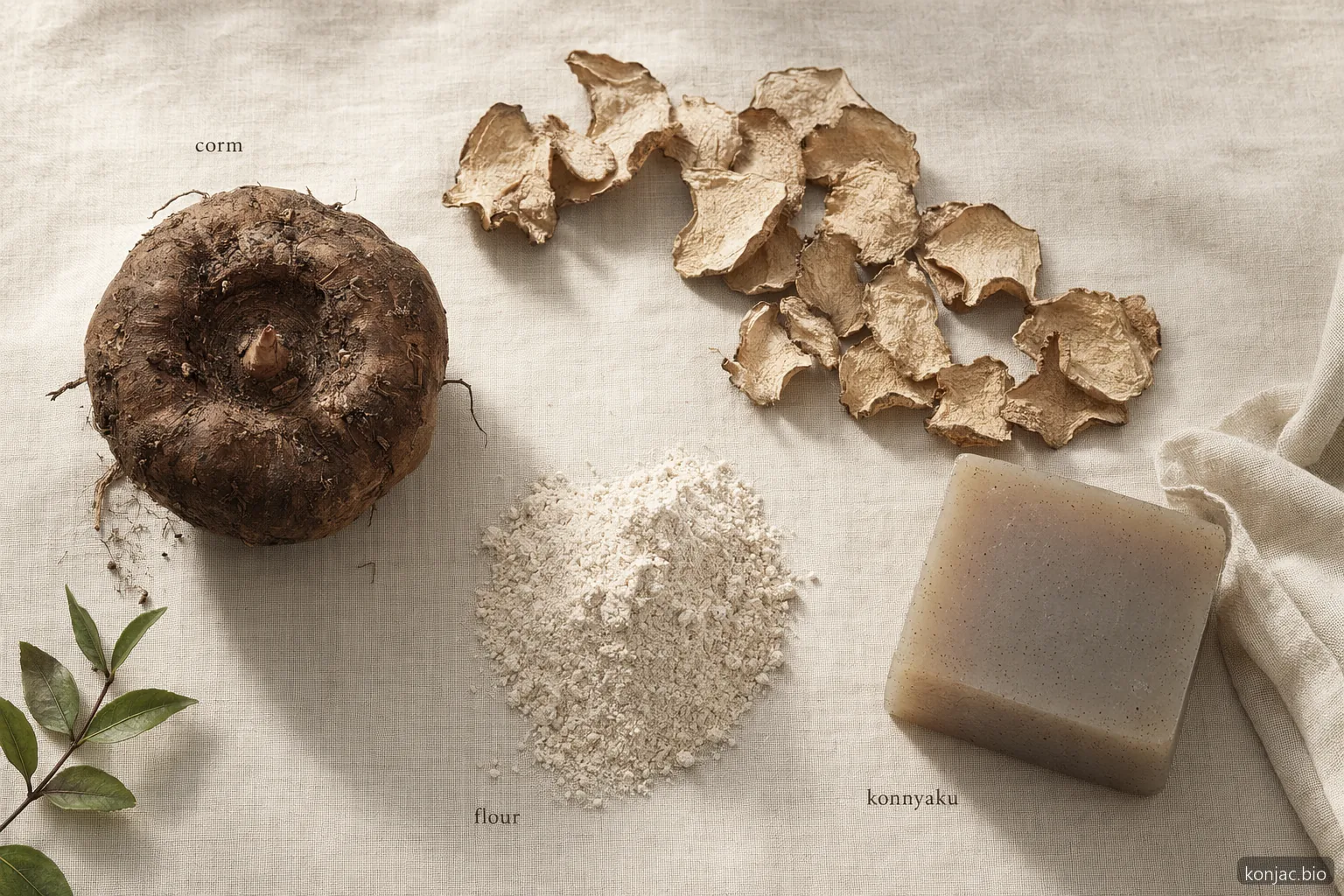
- Slice, dry, and mill corm material into konjac flour or purified powder.
- Hydrate the flour and set it with alkali into konnyaku or shirataki.
This crop-to-gel pathway is the reason Japanese konjac is both agricultural and culinary. It is not only a plant, and it is not only a noodle; it is a full value chain from corm genetics to finished texture.
Konnyaku and shirataki in Japanese kitchens
Konnyaku and shirataki serve different roles even when they come from the same corm-derived ingredient. Konnyaku blocks provide chew and structure, while shirataki noodles provide length, surface area, and fast absorption of broth or sauce.
The best-known block form is ita-konnyaku, a slab that may be grey from seaweed powder or white when made without dark inclusions. Cooks score, tear, blanch, or dry-pan the slab to improve surface grip before simmering it with soy sauce, dashi, miso, vegetables, or beef.
Shirataki means a noodle-like format rather than a separate species. The hydrated konjac mixture is extruded into thin strands before setting, creating a low-calorie noodle commonly used in hot pots, sukiyaki-style dishes, and packaged ready meals. The texture is springy, slippery, and resilient under reheating.
Three formats dominate Japanese-style applications:
| Format | Typical use | Texture goal |
|---|---|---|
| Konnyaku block | Oden, nimono, stir-fry | Firm chew |
| Shirataki | Hot pot, noodle bowls, sukiyaki | Elastic strands |
| Cut konnyaku | Retail meal kits, deli sides | Fast seasoning uptake |
Outside Japan, shirataki is often marketed as a low-carbohydrate noodle. In Japanese food culture, however, the older identity is broader: konnyaku is valued for texture, broth absorption, and its ability to make vegetable-heavy meals feel more substantial.
How is Japanese konjac processed into food?
Japanese konjac is processed by hydrating glucomannan-rich flour, adding an alkaline setting agent, heating or holding the mixture, and forming it into blocks, noodles, or cut shapes. The key transformation is gelation, not ordinary starch cooking.
Konjac glucomannan is a high-molecular-weight polysaccharide that hydrates strongly in water and forms heat-stable gels under alkaline conditions. Reviews of konjac glucomannan describe its viscosity, gel-forming behavior, and food uses in detail PubMed review.
A simplified factory process uses 6 control points:
- Flour selection: choose konjac flour by purity, particle size, viscosity, odor, and color.
- Hydration: disperse flour in water to avoid fish-eyes and unmixed lumps.
- Alkaline setting: add calcium hydroxide or a comparable food-grade alkali to trigger gel formation.
- Forming: cast as slabs, extrude as shirataki, or portion into shapes.
- Heat step: stabilize texture and reduce microbial load under controlled time and temperature.
- Packaging: pack in water or seasoning liquid, then verify pH, weight, and seal integrity.
The same gel strength that makes konnyaku appealing can create safety issues in unsuitable formats. The U.S. FDA has flagged mini-cup gel candies containing konjac because small, firm gel pieces can create a choking hazard, especially when designed to be sucked from small cups FDA alert.
Food brands should separate traditional konnyaku blocks and shirataki noodles from high-risk mini-cup jelly designs. A safe specification considers serving size, bite geometry, gel firmness, labeling, and the consumer group expected to eat the product.
Buyer checklist for konjac japanese supply
A buyer evaluating konjac japanese ingredients should check botanical source, glucomannan quality, processing grade, safety controls, and finished-product format. These checks matter because konjac can be sold as crude flour, purified powder, hydrated gel, shirataki, or private-label retail packs.
The first specification is identity. Ask whether the material is from Amorphophallus konjac, whether it is flour or purified glucomannan, and which analytical method supports viscosity or purity claims. EFSA’s scientific opinion on glucomannan focuses on the substance and its conditions of use, including the authorized wording: “Glucomannan in the context of an energy-restricted diet contributes to weight loss” EFSA opinion.
Buyers should not convert that claim into broad health language. In EU-style wording, the claim is tied to energy restriction and specific intake conditions; in other markets, label claims need local review. Neutral language such as “may support weight-management formulations” is safer than disease-related or exaggerated wording.
Use this practical checklist before issuing a purchase order:
- Species: Amorphophallus konjac confirmed by supplier documentation.
- Grade: food-grade flour, purified glucomannan, or finished konnyaku format.
- Viscosity: measured under stated concentration, temperature, and method.
- Microbiology: total plate count, yeast, mold, coliforms, and pathogen screening.
- Contaminants: heavy metals, pesticide residues, sulfites if relevant, and foreign matter.
- Process control: HACCP, ISO 22000, FSSC 22000, or equivalent food safety system.
- Format safety: no mini-cup jelly geometry unless reviewed against choking-risk guidance.
B2B aside: konjac.bio sources konjac flour and related ingredients at wholesale scale for food manufacturers, with specifications available through the contact page. Buyers developing noodles, gels, or fiber-positioned foods can request grade options, lead times, and documentation.
Frequently asked questions
01 Is konjac japanese the same as konnyaku?
02 What is Japanese konjac made from?
03 Why is Japanese konjac so low in calories?
04 Can Japanese konjac support weight-management products?
05 Are shirataki noodles traditional Japanese konjac?
06 What should manufacturers check before buying Japanese-style konjac?
- Amorphophallus konjac K.Koch · Plants of the World Online, Royal Botanic Gardens, Kew · 2024
- Scientific Opinion on the substantiation of health claims related to konjac mannan and weight loss · European Food Safety Authority · 2010
- Konjac glucomannan: a promising polysaccharide for food applications · PubMed · 2009
- Mini-Cup Gel Candy Import Alert · U.S. Food and Drug Administration · 2024