What is konjac flour?
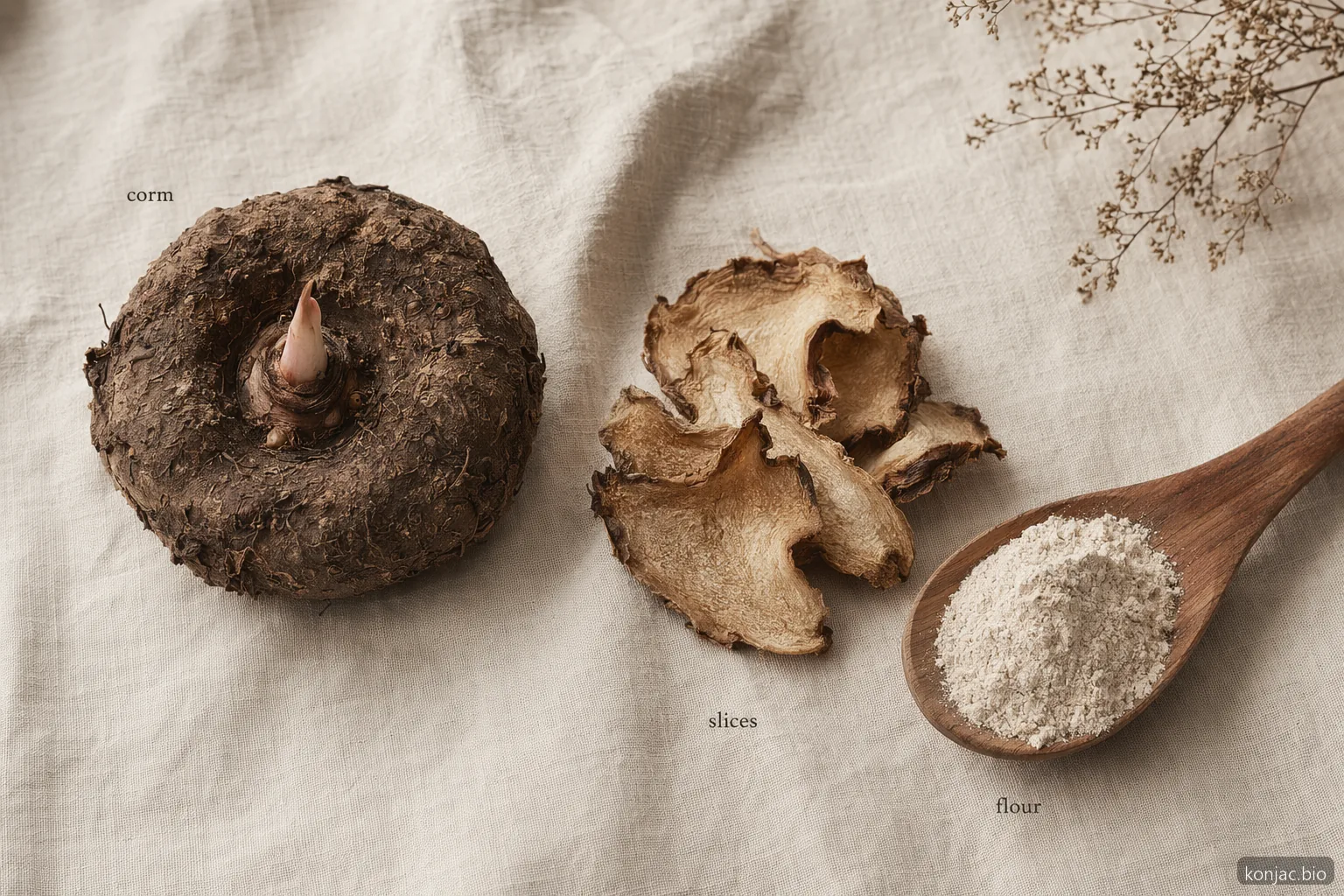
Konjac flour is a dried, milled powder from the underground corm of Amorphophallus konjac, valued because it contains the soluble fiber glucomannan.
The corm is the plant’s swollen storage organ, not a grain, seed, or cereal flour. In food manufacturing, konjac flour is used more like a hydrocolloid than a baking flour because it binds large amounts of water and builds viscosity at small dosages.
Konjac ingredients are commonly described as konjac flour, konjac powder, konjac gum, or konjac glucomannan. EFSA identifies konjac gum and konjac glucomannan under food additive E 425, with safety evaluation covering identity, specifications, and use levels in foods EFSA E425.
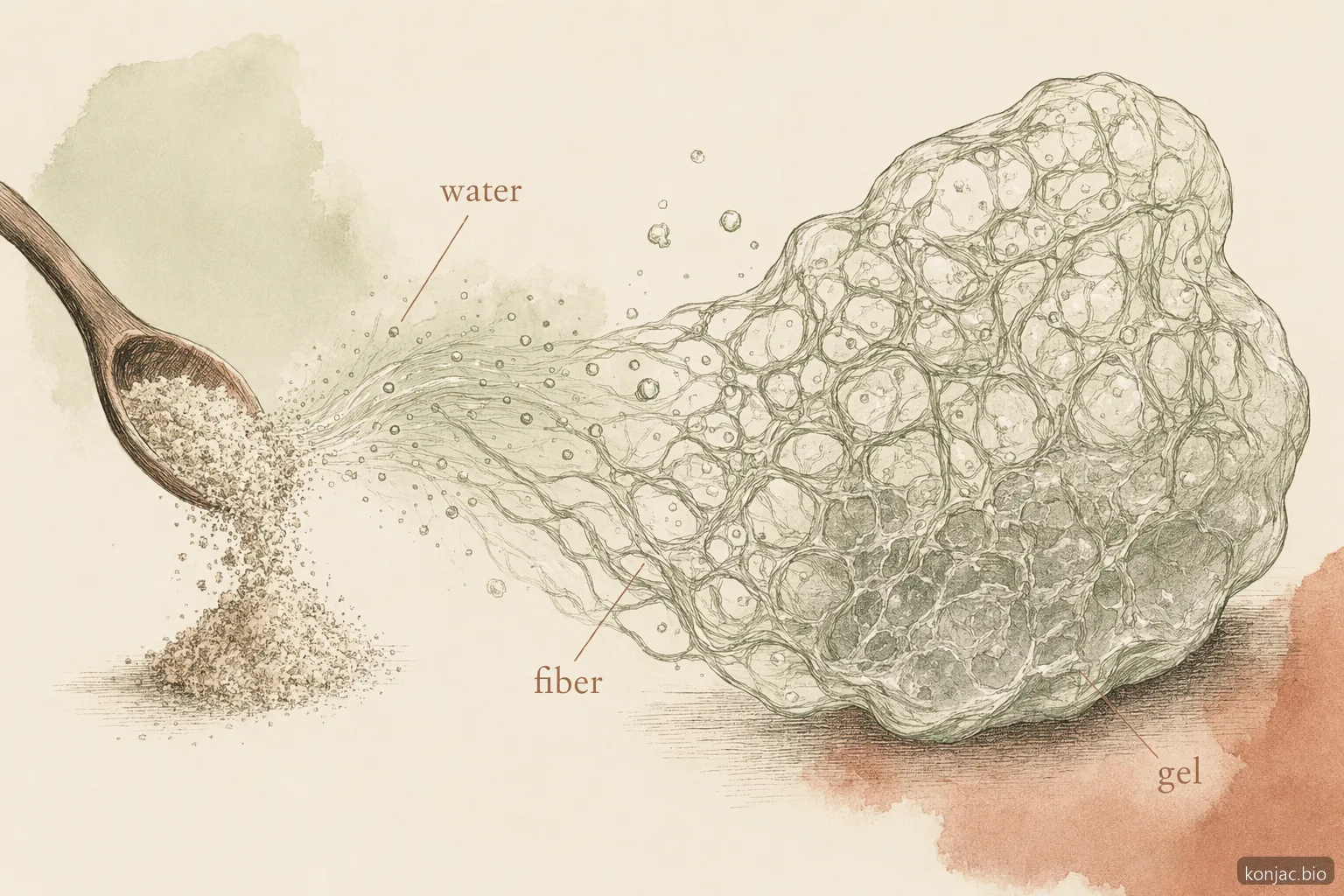
The key functional molecule is glucomannan, a polysaccharide made mainly from glucose and mannose units. When hydrated, it can produce high viscosity, which is why konjac flour appears in shirataki noodles, plant-based gels, sauces, beverages, and fiber blends.
How is konjac flour made?
Konjac flour is made by cleaning, slicing, drying, milling, and classifying the konjac corm into a fine powder with concentrated glucomannan.
A typical production flow uses physical processing rather than fermentation. The exact specification depends on the target market, such as food thickening, noodle production, dietary fiber blends, or capsule filling.
- Harvest: Mature konjac corms are lifted from soil, usually after multiple growing seasons.
- Cleaning: Soil and outer tissue are removed to reduce grit, peel residue, and microbial load.
- Slicing: Corms are cut into chips so water can leave evenly during drying.
- Drying: Chips are dried to a stable moisture level suitable for milling and storage.
- Milling: Dried chips are ground into flour, then sieved or air classified by particle size.
- Refining: Some grades are washed or purified to increase glucomannan content and improve color.
Food-grade konjac flour is usually specified by viscosity, moisture, ash, sulfur dioxide limit, particle size, and microbiological limits. Buyers often ask for ISO 22000, HACCP, allergen statements, heavy metal results, and a certificate of analysis for each lot.
For B2B teams, konjac.bio sources konjac flour and related konjac ingredients at wholesale scale, with specification support available through contact.
What is konjac flour used for?
Konjac flour is used as a high-viscosity fiber ingredient for thickening, gelling, stabilizing, and improving texture in foods.
Its most recognizable use is in shirataki noodles, where hydrated konjac and alkaline calcium create a firm, elastic gel. For a product-level walkthrough, see our guide to shirataki noodles.
Common food uses include:
- Noodles: Shirataki, konjac rice, and low-carbohydrate pasta alternatives.
- Sauces: Low-calorie dressings, gravies, and emulsified sauces that need body.
- Gels: Fruit gels, jelly-style desserts, and structured plant-based foods.
- Bakery systems: Gluten-free formulas where moisture retention and structure matter.
- Meat alternatives: Plant-based seafood, sausage analogs, and binders for juicy texture.
- Fiber blends: Sachets, drink mixes, capsules, and meal replacement formats.
Usage levels are usually low because konjac hydrates aggressively. A sauce formula may need only fractions of 1 percent, while noodles use a higher hydrated gel system with calcium hydroxide or another approved setting aid.
Konjac flour is also used where a neutral flavor and high water binding are useful. It can reduce syneresis in gels, help suspend particles in drinks, and improve bite in plant-based textures without adding starch-like calories.
Konjac flour vs konjac powder, glucomannan, and konjac gum
Konjac flour, konjac powder, glucomannan, and konjac gum overlap, but they are not always interchangeable in formulas or labels.
In everyday retail language, konjac flour and konjac powder are often used loosely for ground konjac corm. In technical procurement, konjac glucomannan usually means a more purified fraction with higher glucomannan content, while konjac gum often refers to the additive-grade hydrocolloid.
| Term | Practical meaning | Best use |
|---|---|---|
| Konjac flour | Milled dried konjac corm, often less refined than purified glucomannan | Noodles, gels, thickening, general food use |
| Konjac powder | Broad consumer term that may mean flour or refined powder | Retail recipes, supplements, fiber blends |
| Konjac glucomannan | Purified soluble fiber fraction from konjac | Fiber claims, capsules, high-viscosity systems |
| Konjac gum | Hydrocolloid food additive name, often linked with E 425 | Industrial thickening and stabilizing |
Specification sheets matter more than the name on a bag. Two products labeled konjac flour can differ sharply in viscosity, odor, whiteness, particle size, and hydration speed.
For benefits and label language tied specifically to the fiber molecule, see our sibling guide to konjac glucomannan. EFSA’s authorized wording is specific: "Glucomannan in the context of an energy restricted diet contributes to weight loss", with conditions for 3 g daily intake in three 1 g doses with water before meals EFSA claim.
Safety, labeling, and handling basics
Konjac flour is generally used safely in foods when hydrated correctly, labeled accurately, and formulated with attention to swelling and gel strength.
The main practical issue is rapid water absorption. Dry konjac powder can thicken quickly, so home users and manufacturers disperse it into liquid with strong mixing, often pre-blending it with sugar, salt, or another dry ingredient to reduce clumping.
Small gel candies made with konjac have a separate safety history because firm, slippery gels can pose a choking hazard. The FDA has published specific warnings on mini-cup jelly products containing konjac, especially when the gel does not dissolve readily in the mouth FDA jelly.
For fiber products, serving instructions usually stress adequate water intake. Highly viscous glucomannan has been studied for satiety, cholesterol, and glucose-related outcomes, but consumer-facing copy should stay within approved regional wording and avoid medical overstatement PubMed study.
Labeling depends on jurisdiction and product role. In some contexts it may appear as konjac flour, konjac gum, konjac glucomannan, dietary fiber, or food additive E 425. Finished product teams should verify local requirements before printing packaging or advertising claims.
Frequently asked questions
01 Is konjac flour the same as glucomannan?
02 Can konjac flour be used like wheat flour?
03 Why does konjac flour make noodles firm?
04 Does konjac flour have calories or carbohydrates?
05 How much konjac flour should be used in recipes?
- Re-evaluation of konjac gum and konjac glucomannan as food additives · European Food Safety Authority · 2017
- Scientific opinion on glucomannan and weight loss claim · European Food Safety Authority · 2010
- Jelly Cups Containing Konjac · U.S. Food and Drug Administration · 2024
- Glucomannan weight study · PubMed · 2008