What are konjac boba pearls?
Konjac boba pearls are soft, chewy gel beads made with konjac glucomannan, a soluble fiber extracted from the corm of Amorphophallus konjac.
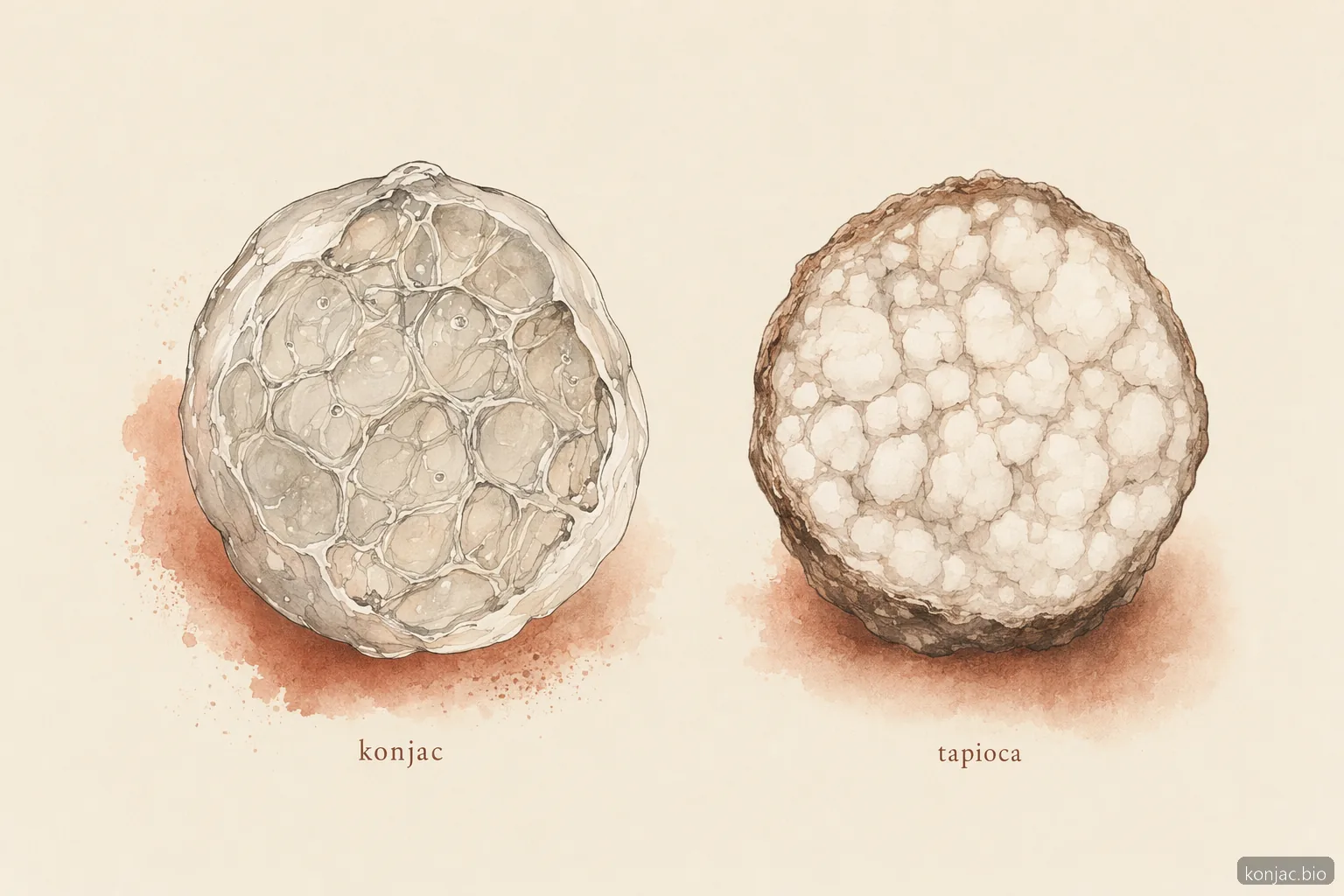
Unlike classic tapioca boba, which is built around cassava starch, konjac pearls rely on hydrocolloid gel structure. Konjac glucomannan has high water-binding capacity and is widely used as a thickener, stabilizer, and gelling ingredient in food systems, with EFSA describing glucomannan as a polysaccharide from konjac tubers in its EFSA opinion.
Most commercial konjac pearls are sold ready-to-eat in syrup or neutral packing liquid. Foodservice operators use them as inclusions in milk tea, fruit tea, lemonade, coffee drinks, yogurt drinks, smoothies, shaved ice, and plated desserts.
The main appeal is texture. Konjac pearls deliver a springy, clean bite with less starchiness than tapioca pearls. Depending on formulation, a 100 gram serving may contribute fewer calories than brown-sugar tapioca pearls because the gel matrix holds a high percentage of water.
How are konjac boba pearls different from tapioca pearls?
Konjac boba pearls are gel-based and fiber-led, while tapioca pearls are starch-based and usually denser, sweeter, and more calorie-heavy.
Tapioca pearls are made primarily from cassava starch, formed into balls, cooked, and often soaked in sugar syrup. Konjac pearls are formulated with konjac flour or purified glucomannan plus water, sweetener, acidulant, flavor, color, and gelling salts or complementary gums.
| Feature | Konjac boba pearls | Tapioca pearls |
|---|---|---|
| Main structure | Hydrated gel network | Cooked cassava starch |
| Typical bite | Springy, elastic, clean | Dense, chewy, starchy |
| Preparation | Often ready-to-eat | Usually boiled before service |
| Menu fit | Fruit tea, yogurt drinks, lighter desserts | Milk tea, brown sugar drinks, classic bubble tea |
| Storage style | Packed in syrup or liquid | Dry, frozen, or cooked fresh |
For operators, the biggest practical difference is labor. Ready-to-eat konjac pearls can shorten prep time because they do not require the 20 to 40 minute boil-and-hold workflow common with tapioca pearls.
The tradeoff is flavor absorption. Tapioca carries caramel, brown sugar, and tea flavors well because of its starch matrix. Konjac pearls usually taste cleaner and lighter, so syrup, juice, or acid-balanced flavor systems matter more.
What are konjac boba pearls made from?
Konjac boba pearls are made from water, konjac glucomannan, sweetener, acidulant, flavor, color, and one or more gelling or texture-supporting ingredients.
The base ingredient is konjac flour or purified konjac glucomannan. Glucomannan is a soluble dietary fiber that forms viscous solutions in water, a property documented in human nutrition and food science literature indexed by PubMed review.
A typical formula may include:
- Water: usually the largest component by weight.
- Konjac glucomannan: the primary texture builder.
- Sweetener: cane sugar, fructose syrup, erythritol, allulose, or blended systems.
- Acidulant: citric acid or malic acid for fruit-style drinks.
- Calcium salts: used in some gel systems for firmness and shape retention.
- Flavor and color: fruit, brown sugar, tea, coffee, or neutral profiles.
- Preservation system: selected based on pH, water activity, packaging, and local rules.
Manufacturing usually follows a controlled hydration and forming process. The dry hydrocolloids must be dispersed evenly to avoid clumps, hydrated under controlled shear, formed into pearls, set into a stable gel, rinsed, packed, and sealed.
B2B aside: konjac.bio sources konjac ingredients and konjac snack inputs at wholesale scale for beverage, dessert, and snack manufacturers. For specifications, volumes, and lead times, contact the team.
Are konjac boba pearls healthy?
Konjac boba pearls can support lower-calorie menu design, but their nutrition depends on serving size, syrup, sugar, and the percentage of actual glucomannan.
Konjac glucomannan has been evaluated for specific authorized health claims in Europe. EFSA’s approved wording for weight management is: “Glucomannan in the context of an energy restricted diet contributes to weight loss,” with conditions that include 3 grams daily in three 1 gram doses with water before meals in an energy-restricted diet, stated in the EFSA claim.
A beverage topping does not automatically meet those conditions. A cup of fruit tea with konjac pearls may contain much less than 3 grams of glucomannan, and added syrup can raise total sugars quickly.
For consumers, the useful comparison is the full drink, not the pearl alone. A 500 milliliter tea with unsweetened tea, 50 grams of lightly sweetened konjac pearls, and 25 percent sugar syrup is very different from a cream-based brown sugar drink with sweet syrup and toppings.
For labels, formulators should verify local definitions for dietary fiber. In the United States, FDA guidance covers which non-digestible carbohydrates can be counted as dietary fiber on Nutrition Facts labels, including recognized fibers and evidence requirements in its fiber guidance.
Texture, safety, and labeling for beverage menus
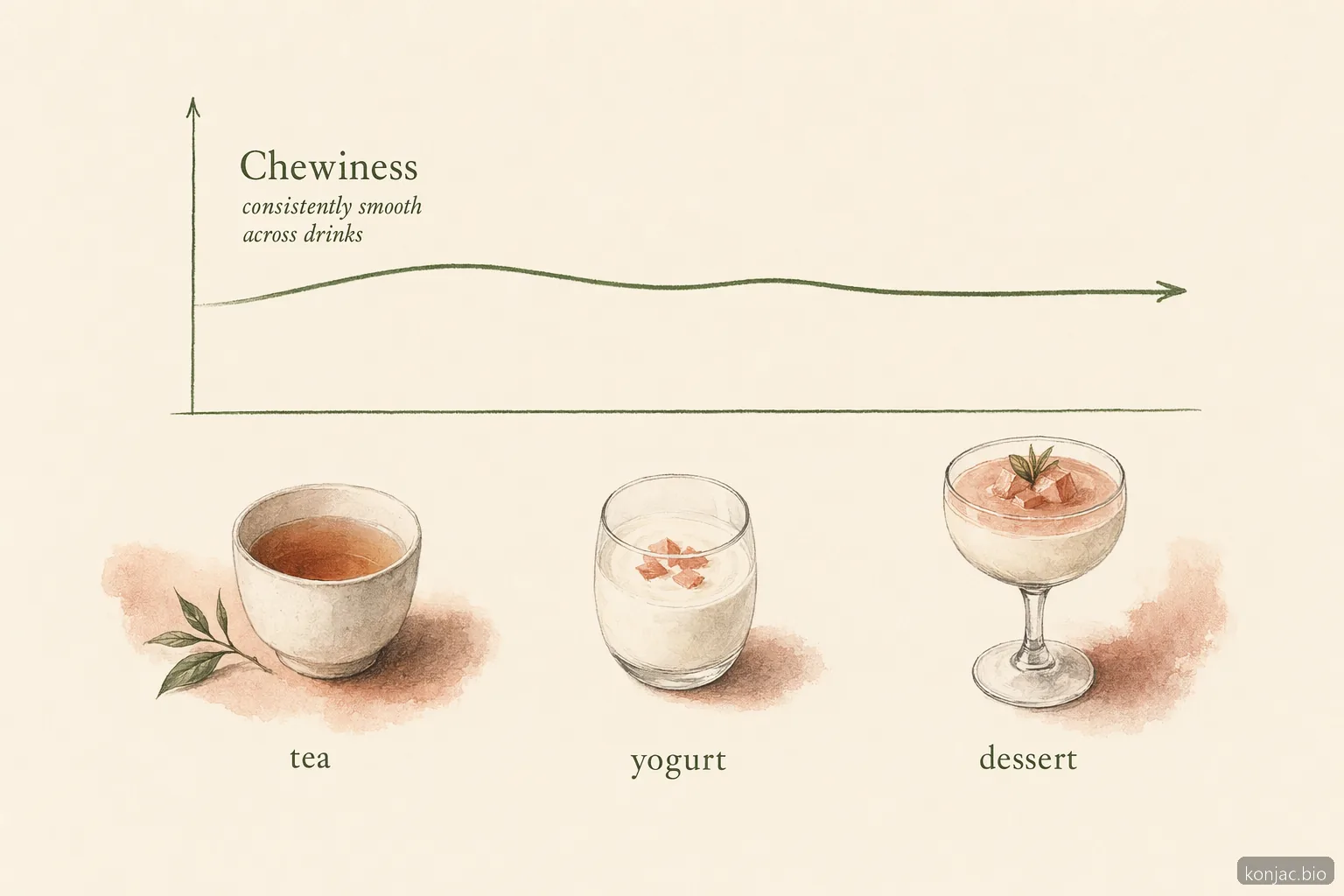
Texture is the product promise, but safety and labeling determine whether konjac pearls work in a real menu. Pearls should be small enough to chew easily, soft enough to break under bite pressure, and labeled clearly as chewy inclusions.
Konjac gels can be slippery and resilient. That is valuable in bubble tea, but it also means pearl size, firmness, serving format, straw diameter, and consumer age matter. Oversized, firm gel pieces can create a higher choking concern than smaller, softer pearls.
FDA has flagged konjac mini-cup jelly candy as a choking hazard in an FDA alert. Konjac boba pearls are a different format than mini-cup jellies, yet the warning is relevant for product developers because gel strength, size, and consumption style affect risk.
Practical menu controls include:
- Use pearl sizes appropriate for beverage straws and spoon service.
- Keep children’s portions small and clearly supervised.
- Add “chew before swallowing” guidance on menu boards or labels.
- Avoid serving firm gel pearls to very young children.
- Validate texture after refrigeration, transport, and shelf-life testing.
Foodservice teams should also disclose allergens, sweeteners, color sources, and caffeine from the base drink. Konjac itself is not one of the nine major U.S. food allergens, but finished products may include dairy, soy, coconut, or color additives depending on the recipe.
Serving ideas for konjac boba pearls
Konjac boba pearls work best when the drink or dessert has enough flavor intensity to carry a clean gel topping. Fruit acids, tea tannins, dairy creaminess, and syrup concentration all change how the pearls taste.
Strong pairings include green tea with lychee pearls, black tea with brown sugar konjac pearls, mango yogurt drinks with neutral pearls, lemonade with citrus pearls, and coconut milk desserts with coffee-flavored pearls. For dessert counters, they can also be layered into parfaits, shaved ice, panna cotta, and jelly cups.
Konjac pearls also sit naturally beside other konjac snack formats. Operators building a broader menu can pair them with konjac jelly cups for grab-and-go sets or compare them with konjac candy for texture-led snack assortments.
For beverage R&D, test pearls in the finished drink, not plain water. Measure texture after 0, 4, 24, and 72 hours because acid, sugar, refrigeration, and tea solids can shift firmness over time.
A simple testing grid is enough for early screening:
| Test | What to check | Target outcome |
|---|---|---|
| pH hold | Fruit tea or lemonade | No surface breakdown |
| Cold hold | 2 to 5°C storage | No hardening or syneresis |
| Hot fill exposure | Warm tea contact | No melting or clumping |
| Straw test | Service straw diameter | Smooth pickup, easy chew |
Frequently asked questions
01 Do konjac boba pearls taste like tapioca pearls?
02 Are konjac boba pearls low calorie?
03 Can konjac boba pearls be used in hot drinks?
04 Are konjac boba pearls safe for children?
05 Do konjac boba pearls contain dietary fiber?
06 How should foodservice teams store konjac boba pearls?
- Scientific Opinion on the substantiation of health claims related to konjac mannan (glucomannan) · European Food Safety Authority · 2010
- Dietary fibre in foods: a review · PubMed · 2015
- Questions and Answers on Dietary Fiber · U.S. Food and Drug Administration · 2024
- Import Alert 33-15: Detention Without Physical Examination of Konjac Candy · U.S. Food and Drug Administration · 2024