Do glucomannan supplements for weight loss work?
Glucomannan supplements for weight loss may help some adults eat less when used before meals with water and an energy-restricted diet.
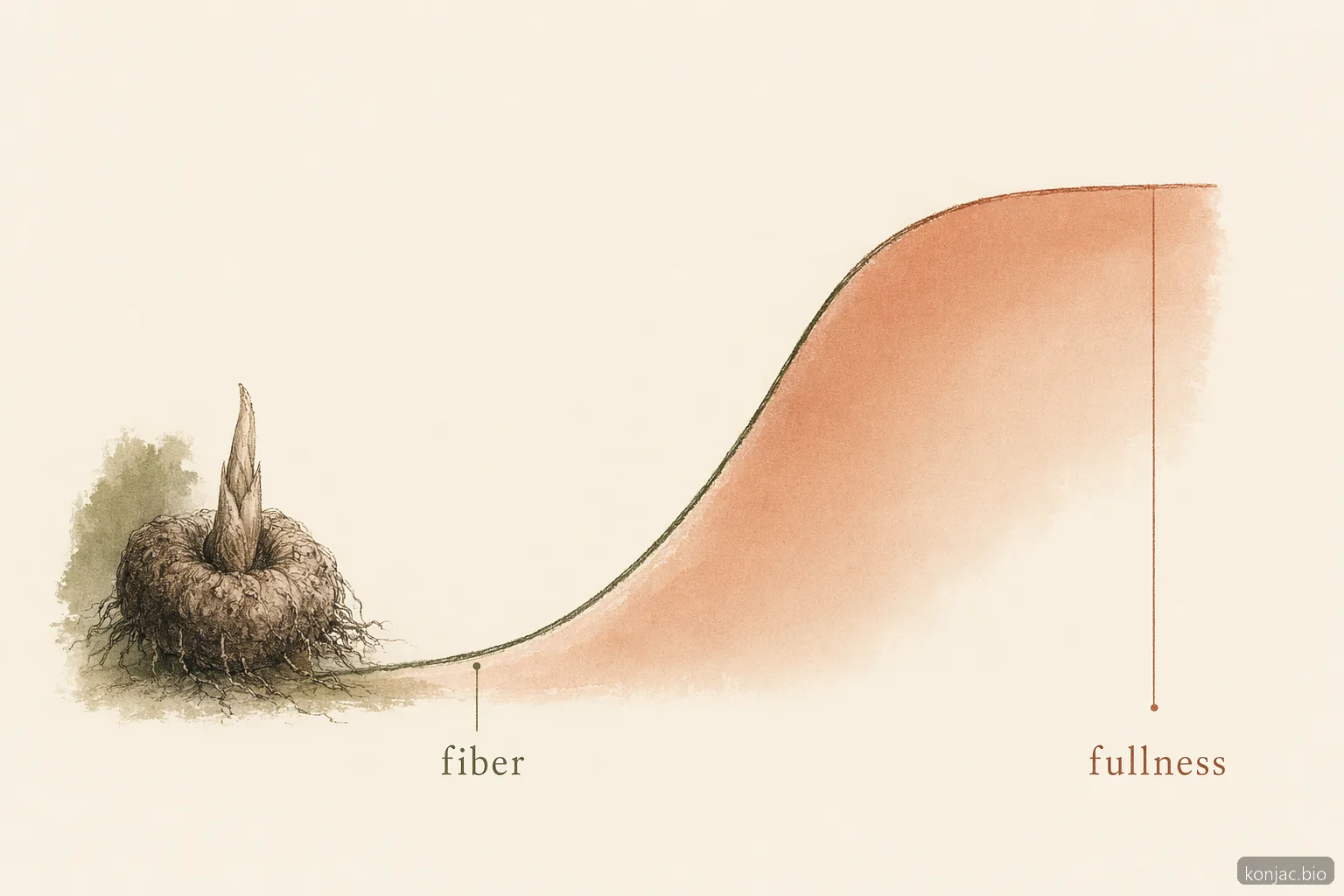
The key mechanism is physical, not stimulant-based. Glucomannan is a highly viscous soluble fiber from Amorphophallus konjac, and EFSA links its effect to swelling in the stomach, delayed gastric emptying, and increased fullness EFSA opinion.
The EU-approved wording is: "Glucomannan in the context of an energy restricted diet contributes to weight loss." EFSA states that the claim applies to 3 g of glucomannan daily, taken in three 1 g portions with 1 to 2 glasses of water before meals EFSA opinion.
Human evidence is mixed. A randomized trial in overweight and moderately obese adults found that 3.99 g daily for 8 weeks did not significantly change body weight compared with placebo PubMed trial. A systematic review also reported that available trials were small and varied in quality PubMed review.
The practical reading is narrow and realistic: glucomannan is a fiber tool, not a standalone weight-loss plan. For a full ingredient overview, see the parent glucomannan guide.

How should you take glucomannan supplements for weight loss?
Take glucomannan supplements for weight loss before meals with a full glass of water, using the dose stated on a product that clearly lists grams of glucomannan.
A simple schedule follows the EFSA condition: 1 g before breakfast, 1 g before lunch, and 1 g before dinner, each with 1 to 2 glasses of water EFSA opinion. Many capsules contain 500 mg to 1,000 mg, so the number of capsules depends on the label.
- Check the serving size: confirm actual glucomannan grams, not only capsule weight.
- Take with water: use at least one full glass per portion.
- Time before meals: take it 15 to 30 minutes before eating if tolerated.
- Start low: begin with one daily portion for several days if fiber intake is usually low.
- Keep meals structured: pair fiber with protein, vegetables, and measured portions.
Do not take dry powder or capsules without liquid. EFSA specifically notes a choking risk for people with swallowing difficulties or when glucomannan is consumed with inadequate fluid EFSA opinion.
For formulation teams, konjac.bio sources konjac glucomannan ingredients at wholesale scale for supplement, capsule, and functional food applications. Request specifications and bulk pricing through contact.
What dose of glucomannan is used for weight management?
The best-known weight-management dose is 3 g per day, divided into three 1 g servings before meals with water.
That dose is not arbitrary. It is the condition attached to the EFSA-2010 weight-management claim for glucomannan, which specifies 3 g daily in three portions of 1 g each, together with 1 to 2 glasses of water, before meals, and in the context of an energy-restricted diet EFSA opinion.
| Use pattern | Typical amount | Notes |
|---|---|---|
| Single pre-meal serving | 1 g glucomannan | Often equals 1 to 2 capsules, depending on label strength. |
| Daily EFSA pattern | 3 g total | Split before three meals with water. |
| Low-start approach | 500 mg to 1 g daily | Used by some people to assess digestive tolerance. |
Capsule labels can be confusing. A 1,000 mg capsule may contain 1 g of powder, but the active glucomannan content depends on the ingredient grade and added excipients. Look for labels that state "glucomannan" in grams or milligrams per serving.
Powder can be more flexible than capsules, but it thickens quickly in liquid. Mix immediately, drink promptly, and avoid allowing a gel to form before swallowing.
Benefits, limits, and realistic expectations
Glucomannan can be useful when the goal is meal structure, fullness, and added soluble fiber. It is less useful when expectations depend on rapid scale changes without calorie awareness.
Its main benefit is satiety support. A viscous fiber can increase meal volume and slow stomach emptying, which may make a calorie-reduced diet easier to maintain EFSA opinion. That does not mean every user will lose weight, and published trials do not show uniform results PubMed review.
Weight outcomes depend on four controllable factors:
- Dose: the studied EFSA condition is 3 g daily, not a token sprinkle.
- Timing: pre-meal use is different from taking fiber randomly at night.
- Water: glucomannan needs liquid to expand safely.
- Diet pattern: fiber works best inside a measured energy intake.
Glucomannan also has an EFSA-authorized claim for cholesterol: "Glucomannan contributes to the maintenance of normal blood cholesterol levels," when 4 g daily is consumed EFSA opinion. That is a separate claim from weight management and uses a different daily amount.
People comparing formats can review glucomannan dosage and glucomannan side effects for more focused decisions.
Safety, choking risk, and product quality
Glucomannan supplement safety depends on hydration, swallowing ability, sensible dosing, and transparent manufacturing standards.
The biggest practical risk is swelling before the fiber reaches the stomach. EFSA notes choking risk when glucomannan is consumed with insufficient liquid, especially for people with swallowing difficulties EFSA opinion. The FDA has also flagged konjac gel candies because their texture and shape created choking concerns FDA alert.
Use these safety checks before buying:
- Clear identity: the label should name glucomannan or konjac glucomannan.
- Measured serving: grams per serving should be visible, not hidden in a blend.
- Third-party testing: look for heavy metal and microbiology testing where available.
- Manufacturing controls: supplement makers should follow applicable dietary supplement rules FDA supplements.
- Swallowing fit: avoid large tablets if swallowing is uncomfortable.
Digestive changes can occur when fiber intake rises quickly. Gas, bloating, loose stool, or fullness are more likely when someone jumps from a low-fiber diet to multiple grams per day. Starting with a lower amount and increasing gradually may improve tolerance.
Stop using the product and seek urgent help if a capsule feels stuck, breathing is affected, or chest discomfort appears after swallowing. Those are safety situations, not normal fiber sensations.
Frequently asked questions
01 How much glucomannan should I take for weight loss?
02 When is the best time to take glucomannan capsules?
03 Are glucomannan supplements for weight loss proven?
04 Can glucomannan be taken every day?
05 What should I look for on a glucomannan label?
06 Is powder better than capsules for weight management?
- Scientific Opinion on glucomannan health claims · EFSA Journal · 2010
- Glucomannan randomized weight-loss trial · PubMed · 2013
- Glucomannan body weight systematic review · PubMed · 2015
- Dietary supplements overview · U.S. Food and Drug Administration · 2024
- Konjac gel candy import alert · U.S. Food and Drug Administration · 2024