
What is konjac shuang?
Konjac shuang is a seasoned snack format made from konjac gel, usually sold as strips, knots, ribbons, or small bites in a chili-forward sauce.
The base ingredient comes from Amorphophallus konjac, a plant listed by NCBI as a distinct taxonomic species NCBI Taxonomy. The gel is valued because it can hold a firm, springy bite while carrying oil, vinegar, soy sauce, garlic, Sichuan pepper, and other seasonings.
Konjac shuang is not the same thing as plain shirataki noodles. Shirataki is usually rinsed, cooked, and paired with a sauce, while konjac shuang is usually eaten directly from a sealed retail pack after opening. For the broader plant, powder, and food category, see our konjac guide.
The word 'shuang' appears on many Chinese snack labels because the eating experience is meant to feel bouncy, slippery, and refreshing despite heavy seasoning. For shoppers, the practical meaning is simple: this is a convenience snack, not a plain cooking ingredient.
How is konjac shuang made?
Konjac shuang is made by turning konjac flour or purified glucomannan into an alkaline gel, shaping it, cooking it, and packing it with seasonings.
The process begins with konjac powder dispersed in water. Konjac glucomannan is the key polysaccharide in the corm and has been studied as a viscous soluble fiber PubMed review. Hydration matters because dry powder can clump if added too quickly or mixed without enough shear.
- Hydration: Konjac powder is mixed into water until the gum fully swells.
- Gel setting: A food-grade alkaline ingredient helps the hydrated konjac form a heat-stable gel.
- Shaping: The gel is cut into strips, knots, blocks, or ribbons.
- Cooking: The shaped pieces are cooked, rinsed, and cooled to set texture.
- Seasoning: Chili oil, vinegar, soy sauce, sugar, salt, spices, and aroma ingredients are added.
- Packing: The snack is sealed in small pouches or cups with storage instructions.
The same basic gel technology sits behind several konjac foods, but the final product depends on cut size, water content, seasoning load, and packaging method. Plain gel tastes neutral, so the flavor of konjac shuang comes mostly from the sauce system.
What ingredients are in konjac shuang?
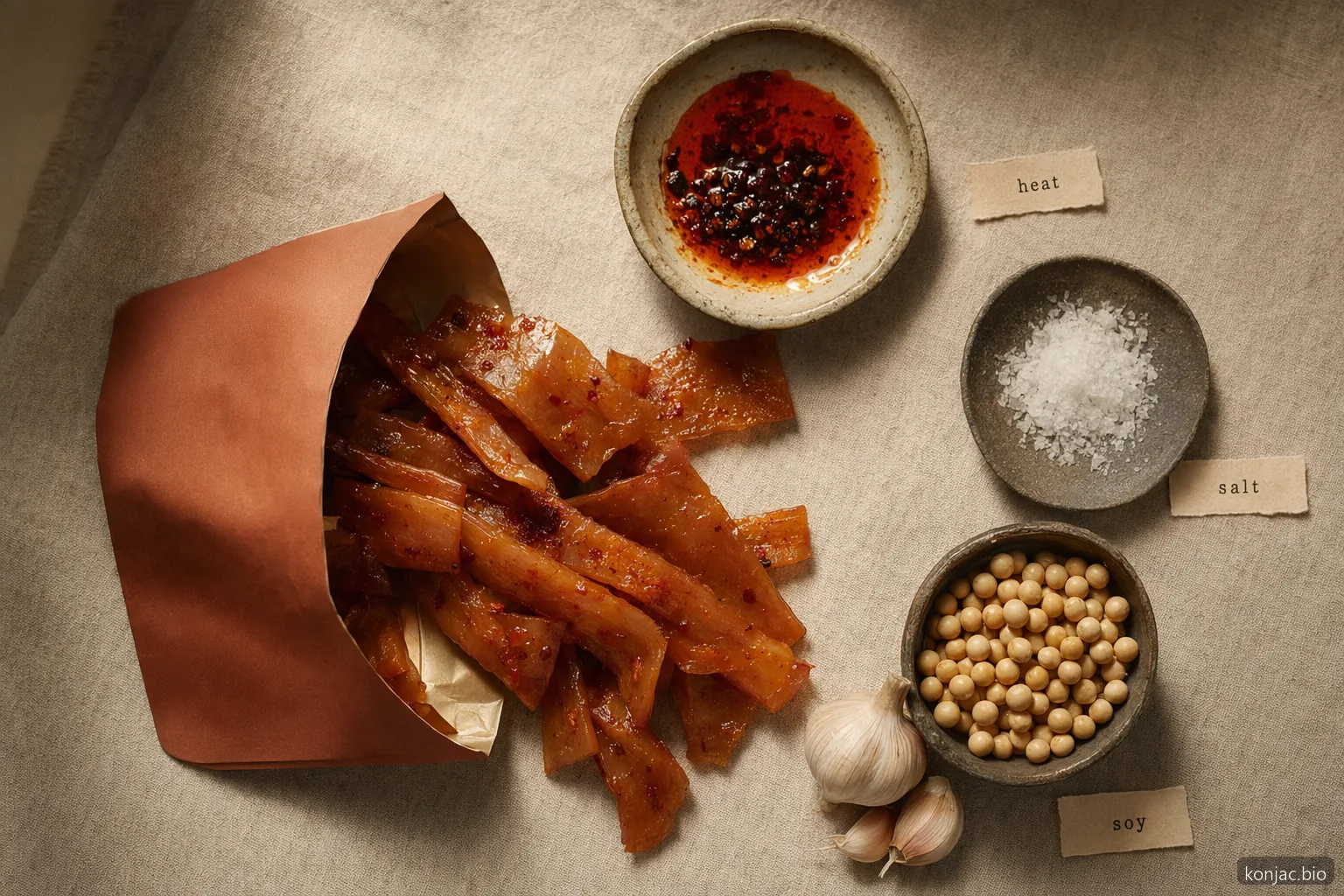
Konjac shuang usually contains konjac gel, chili oil or chili paste, salt, vinegar, soy sauce, sugar, garlic, spices, and acidity regulators.
Labels vary by manufacturer, so the ingredient list matters more than the front-of-pack name. In the United States, soy, wheat, sesame, fish, crustacean shellfish, milk, egg, peanuts, tree nuts, and sesame are major allergens that require clear labeling when present FDA allergens.
| Ingredient type | What it does | What to check |
|---|---|---|
| Konjac gel | Creates the chewy, bouncy bite | Konjac powder, konjac flour, or glucomannan wording |
| Chili oil | Adds heat, aroma, and red color | Oil type and spice intensity |
| Soy sauce | Adds salt and umami | Soy and possible wheat allergens |
| Vinegar or acid | Balances oil and supports bright flavor | Acidity and sourness level |
| Sugar or sweetener | Rounds out chili and vinegar | Added sugars per serving |
| Preservative or acidity regulator | Supports shelf stability when allowed by regulation | Local compliance and storage wording |
Consumers who avoid gluten should not assume konjac shuang is gluten-free. The konjac gel itself is not wheat, but soy sauce or seasoning blends can contain wheat-derived ingredients.
Nutrition and label checks for everyday snacking
Konjac shuang is usually chosen for texture and flavor, not for a high-protein or micronutrient profile. Its nutrition panel often centers on calories, sodium, added sugars, and serving size.
The konjac base is linked to glucomannan, a soluble fiber. EFSA evaluated konjac mannan and approved the wording 'konjac mannan contributes to the maintenance of normal blood cholesterol levels' under defined use conditions EFSA opinion. That claim should not be read as a blanket statement for every spicy snack pouch, because a finished snack may contain a smaller amount of glucomannan and a meaningful amount of sodium.
Use this quick label check before buying a new pack:
- Serving size: Some packs look single-serve but list 2 servings.
- Sodium: Chili snacks can rely heavily on salt and soy sauce.
- Added sugars: Sweetness is often used to balance vinegar and chili.
- Oil: Chili oil improves flavor but changes calorie density.
- Allergens: Soy, wheat, sesame, fish sauce, or shellfish flavoring may appear.
For food brands, konjac.bio sources konjac ingredients at wholesale volumes and can support specification-led sourcing through contact. Buyers should request a certificate of analysis, allergen statement, microbiological specification, and packaging shelf-life data for any commercial konjac shuang program.
Safety, storage, and serving ideas
Konjac shuang should be eaten according to the package directions, with extra attention to choking risk, seal integrity, and storage temperature.
Konjac gel has a firm, slippery texture. The FDA has flagged certain mini-cup gel candies containing konjac for choking concerns because they can be difficult to dislodge once swallowed whole FDA alert. Konjac shuang is a different food format, but the same practical rule helps: chew thoroughly, avoid swallowing large pieces whole, and use caution with young children.
Storage instructions depend on how the snack is packed. Some pouches are shelf-stable until opened, while others require refrigeration. A swollen pouch, broken seal, sour off-odor, or leaking sauce is a reason to discard the pack.
Serving ideas are simple because the product is already seasoned:
- Serve chilled with cucumber, scallion, and sesame seeds.
- Add to cold noodle bowls for heat and chew.
- Pair with rice, tofu, or steamed vegetables to balance salt.
- Use small portions as a spicy side, not the whole meal.
For lower-sodium eating patterns, drain excess sauce or use konjac shuang as a garnish. The flavor is concentrated, so a small amount can still change the texture and heat level of a bowl.
How does konjac shuang compare with shirataki and konjac flour?
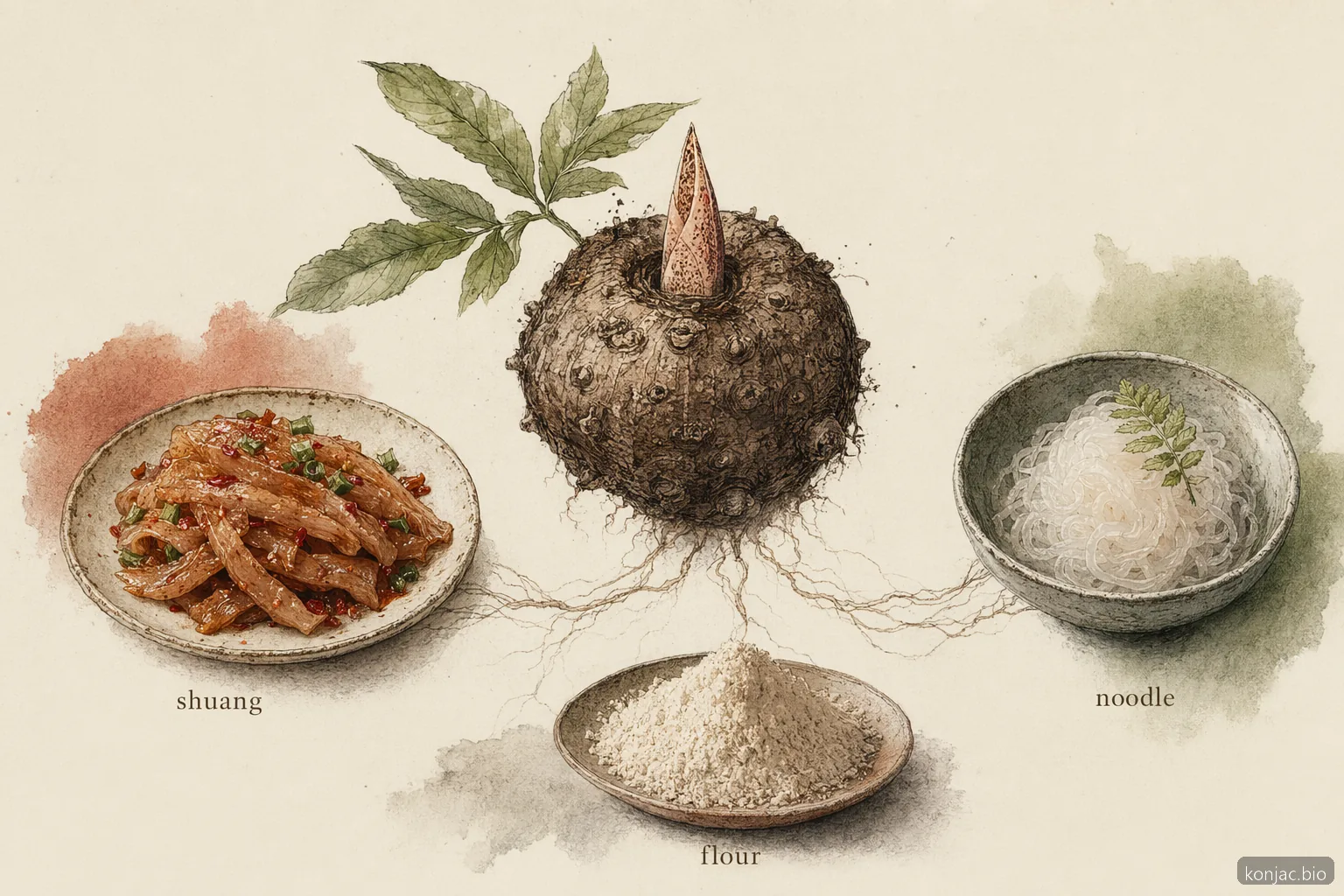
Konjac shuang is the seasoned snack format, shirataki is the plain noodle format, and konjac flour is the dry ingredient used to build gels, thicken systems, or formulate foods.
Shirataki noodles are usually packed in water and need rinsing, draining, and pairing with sauce. Konjac shuang is already flavored, so it behaves more like a spicy side dish or snack. For meal-style konjac formats, compare our konjac noodles guide.
Konjac flour is upstream of both snack and noodle products. It gives formulators control over viscosity, gel strength, water binding, and final texture. For dry ingredient selection, see our konjac flour guide.
| Product | Main use | Flavor | Best buyer check |
|---|---|---|---|
| Konjac shuang | Ready-to-eat snack | Spicy, sour, savory | Sodium, allergens, seal quality |
| Shirataki | Noodle substitute | Neutral until seasoned | Odor, texture, cooking use |
| Konjac flour | Ingredient and gelling agent | Neutral | Purity, viscosity, particle size |
The best choice depends on use case. Pick konjac shuang for instant heat and chew, shirataki for low-calorie noodle bowls, and konjac flour for product development.
Frequently asked questions
01 Is konjac shuang the same as shirataki noodles?
02 Is konjac shuang gluten-free?
03 Is konjac shuang low in calories?
04 Can children eat konjac shuang?
05 Does konjac shuang have the same benefits as glucomannan powder?
06 How should konjac shuang be stored after opening?
- Amorphophallus konjac K.Koch · Plants of the World Online, Royal Botanic Gardens Kew · 2024
- Scientific Opinion on health claims related to konjac mannan · European Food Safety Authority · 2010
- Food Allergies · U.S. Food and Drug Administration · 2024
- Import Alert 33-15: Detention Without Physical Examination of Gel Candies Containing Konjac · U.S. Food and Drug Administration · 2024
- Glucomannan and obesity: a critical review · Alternative Therapies in Health and Medicine (PubMed) · 2005