What is the konjac plant root?
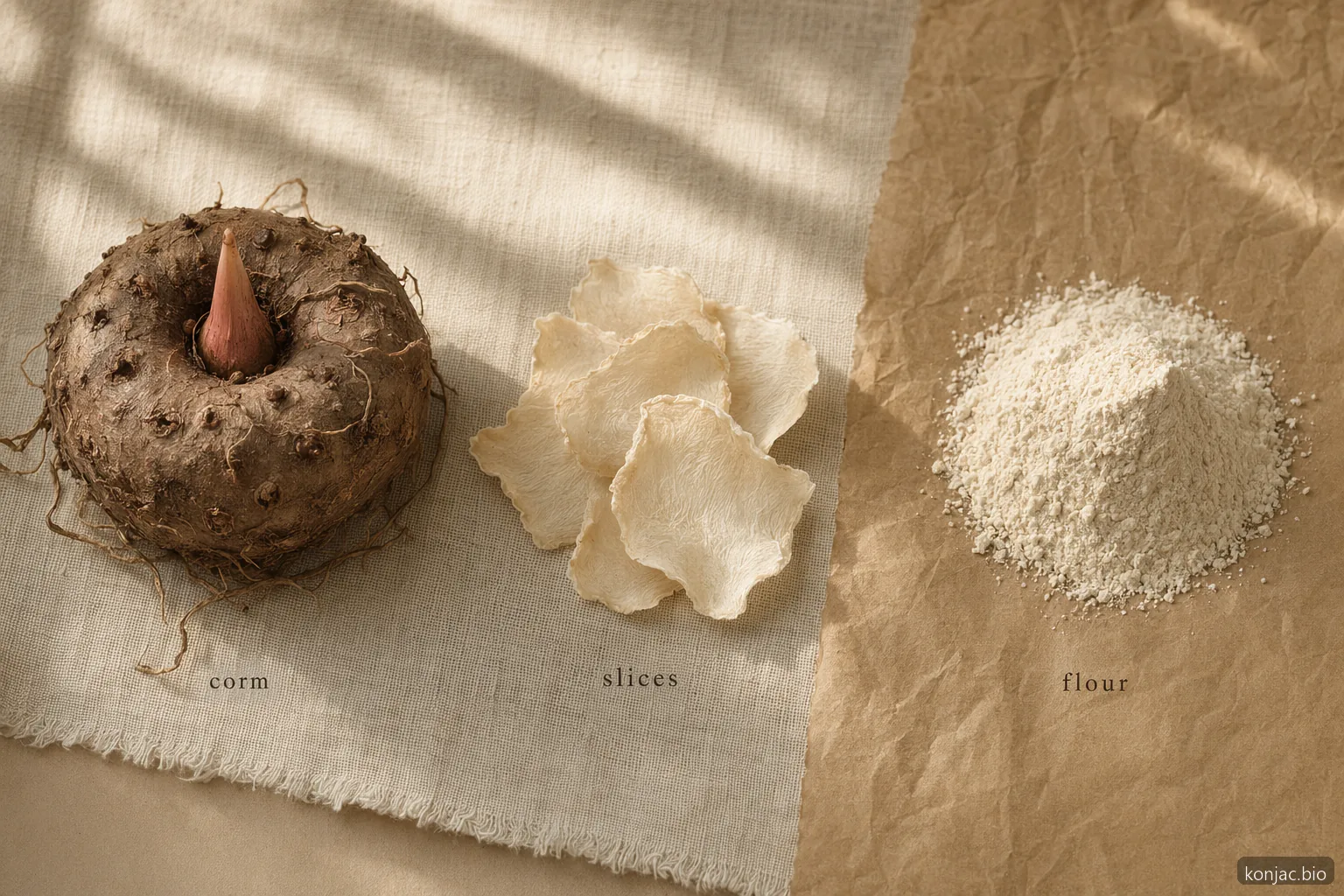
The konjac plant root is the common name for the starchy corm of Amorphophallus konjac, a perennial aroid plant cultivated for its glucomannan-rich storage organ. Botanically, the edible part is a corm rather than a true root, and the species is listed by Kew under Amorphophallus konjac Kew taxonomy.
A corm is a swollen underground stem base that stores carbohydrate for the plant. In konjac, that storage tissue is valued because it contains konjac glucomannan, a soluble fiber known for forming thick, elastic gels in water.
Consumers often meet konjac through products rather than the plant itself. The same corm can become konjac flour, refined glucomannan powder, shirataki noodles, konjac jelly, or a gelling aid in formulated foods. For a broader map of plant, powder, and finished products, see the parent guide: Konjac.
The plant is also known by names such as konnyaku potato, elephant yam, and devil's tongue, although common names vary by market. In Japan, processed konjac cake is called konnyaku, while translucent low-calorie noodles are widely called shirataki.
Where does Amorphophallus konjac grow?
Amorphophallus konjac grows best in warm, humid regions with well-drained soil, seasonal rainfall, and a frost-free growing period. The species is associated with East and Southeast Asia, and Kew records its native range in parts of China and nearby Asian regions Kew taxonomy.
Commercial cultivation focuses on producing large, clean corms with consistent glucomannan content. Farmers typically plant seed corms or corm pieces, then harvest after one or more growing cycles once the underground storage organ has accumulated enough dry matter.
The visible plant looks very different from the processed ingredient. A mature konjac plant may produce a single large leaf structure above ground, while the harvestable corm develops below the soil surface. When the plant enters dormancy, the corm can be lifted, cleaned, and graded.
Growing region matters because soil, rainfall, drying conditions, and post-harvest handling influence color, odor, microbial load, and viscosity. Food manufacturers usually evaluate the finished ingredient rather than relying on geography alone, because milling, refining, and storage can change performance.
How is konjac plant root turned into flour and foods?
Konjac plant root becomes flour through washing, peeling or trimming, slicing, drying, milling, and often purification to concentrate glucomannan. The refined powder is then hydrated, alkalized, heated, or blended depending on whether the target is noodles, gels, capsules, or a food-thickening ingredient.
The basic process has five practical stages:
- Cleaning: soil and field debris are removed from the harvested corm.
- Slicing: the corm is cut into chips to speed drying.
- Drying: moisture is reduced to improve shelf stability.
- Milling: dried chips are ground into konjac flour.
- Refining: starch, odor compounds, and impurities may be reduced to raise glucomannan purity.
Konjac flour hydrates rapidly and can create very high viscosity at low usage levels. That water-holding behavior is why it appears in noodles, vegan gels, meat alternatives, beverages, sauces, and fiber blends.
| Ingredient form | Typical use | Key function |
|---|---|---|
| Konjac flour | Noodles, gels, thickened foods | Viscosity and gel structure |
| Purified glucomannan | Fiber blends, capsules, beverages | Soluble fiber and water binding |
| Konjac cake | Konnyaku-style foods | Firm elastic bite |
| Shirataki | Low-calorie noodles | Springy texture and low digestible carbohydrate |
Konjac.bio sources konjac ingredients at wholesale for brands and manufacturers that need specifications, documentation, and scalable supply. Product teams can request pricing and technical details through the contact page.
Glucomannan, nutrition, and functional behavior
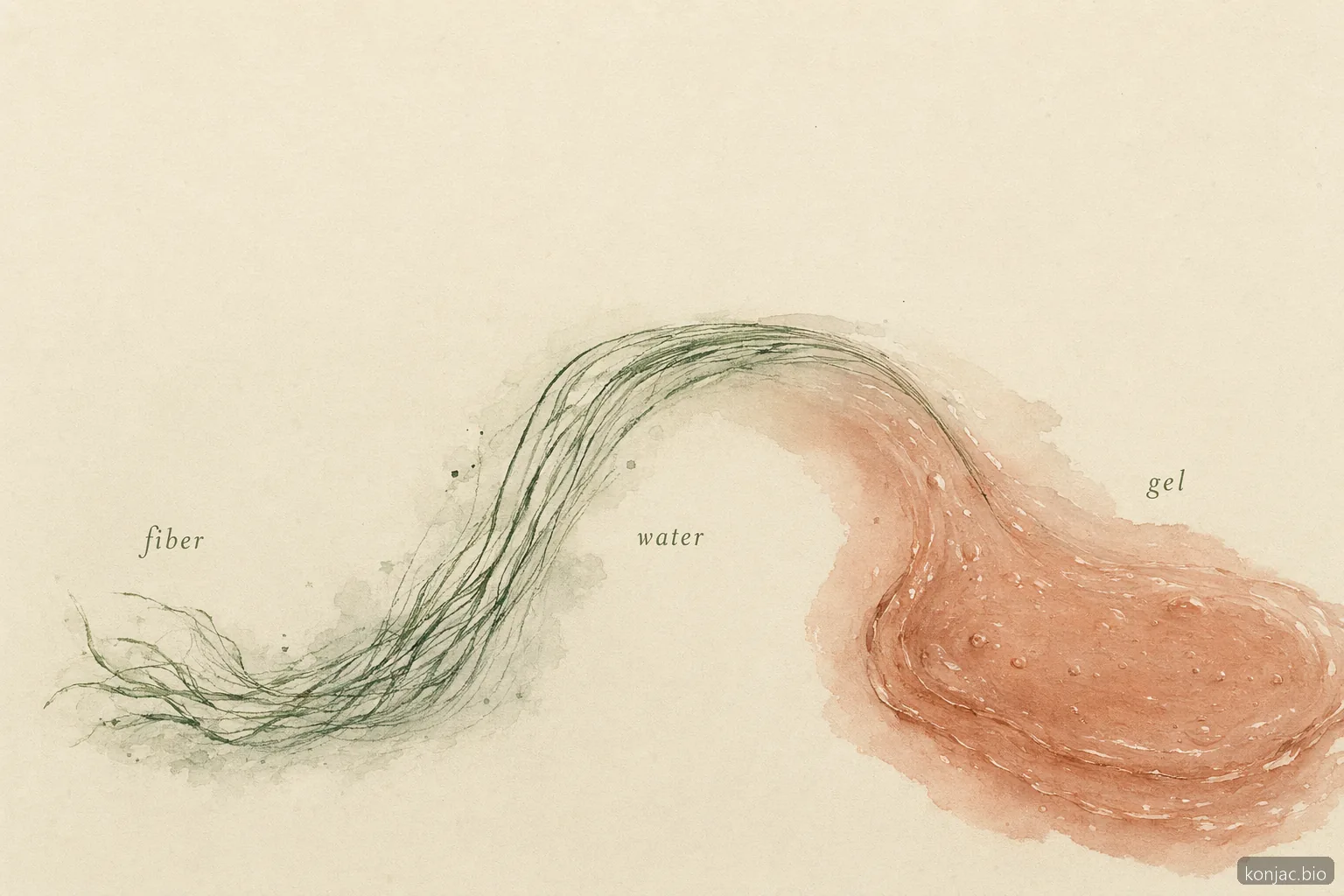
The defining component of konjac is glucomannan, a viscous soluble dietary fiber built from glucose and mannose units. EFSA evaluated konjac mannan, also called glucomannan, for health claims related to body weight and blood cholesterol EFSA opinion.
For weight management language in the European Union, the approved claim is specific: “Glucomannan in the context of an energy restricted diet contributes to weight loss.” EFSA noted conditions of use of 3 g daily in three 1 g doses with 1 to 2 glasses of water before meals, within an energy-restricted diet EFSA opinion.
EFSA also supports the claim that “Glucomannan contributes to the maintenance of normal blood cholesterol concentrations,” with a stated condition of 4 g daily intake EFSA opinion. Outside approved-label contexts, careful wording matters: glucomannan may support satiety and is associated with cholesterol-related markers, but product labels must follow local regulations.
In food formulation, glucomannan behaves more like a hydrocolloid than a typical flour. It absorbs water, increases viscosity, and can form heat-stable gels when used with suitable processing conditions. For deeper ingredient detail, see konjac glucomannan.
Konjac foods are often low in calories because hydrated products contain a high proportion of water. Shirataki noodles, for example, are usually made from water, konjac flour, and a setting agent, which gives them a firm texture without the starch load of wheat or rice noodles. For culinary use, see shirataki noodles.
Safety, labeling, and buying criteria for konjac plant root
Konjac plant root products should be evaluated by format, particle size, hydration instructions, and supplier documentation. The main safety issue is not the raw corm itself, but how concentrated konjac fiber or firm gels behave when swallowed.
Dry glucomannan powder absorbs water quickly, so supplement and beverage formats should give clear directions for adequate fluid intake. EFSA's conditions for the weight-management claim specify taking each 1 g dose with 1 to 2 glasses of water before meals EFSA opinion.
Konjac mini-cup jelly has drawn regulatory attention because firm gels can create choking hazards, especially when the gel does not dissolve easily in the mouth. The U.S. FDA import alert covers detention of certain konjac candy products in small cups because of choking risk FDA alert.
For ingredient buying, the strongest specifications are measurable. A practical konjac purchasing checklist includes:
- Glucomannan content or purity target
- Viscosity range under a stated test method
- Particle size distribution
- Moisture and ash limits
- Microbiological limits
- Odor and color standard
- Allergen, non-GMO, halal, kosher, or organic documents if required
- Food safety certification such as ISO 22000, BRCGS, or FSSC 22000
Finished foods also need market-specific labeling review. Terms such as fiber source, low calorie, keto-friendly, vegan, or gluten-free depend on the complete formula and local rules, not just the presence of konjac.
Frequently asked questions
01 Is konjac plant root really a root?
02 What is the main fiber in konjac plant root?
03 What foods are made from konjac plant root?
04 Is konjac plant root safe to eat?
05 Does konjac plant root help with weight management?
06 How should manufacturers choose konjac ingredients?
- Amorphophallus konjac in Plants of the World Online · Royal Botanic Gardens, Kew · 2024
- Scientific Opinion on the substantiation of health claims related to konjac mannan (glucomannan) · European Food Safety Authority · 2010
- Import Alert 33-15: Detention Without Physical Examination of Konjac Candy · U.S. Food and Drug Administration · 2024