How many carbs are in shirataki noodle keto meals?
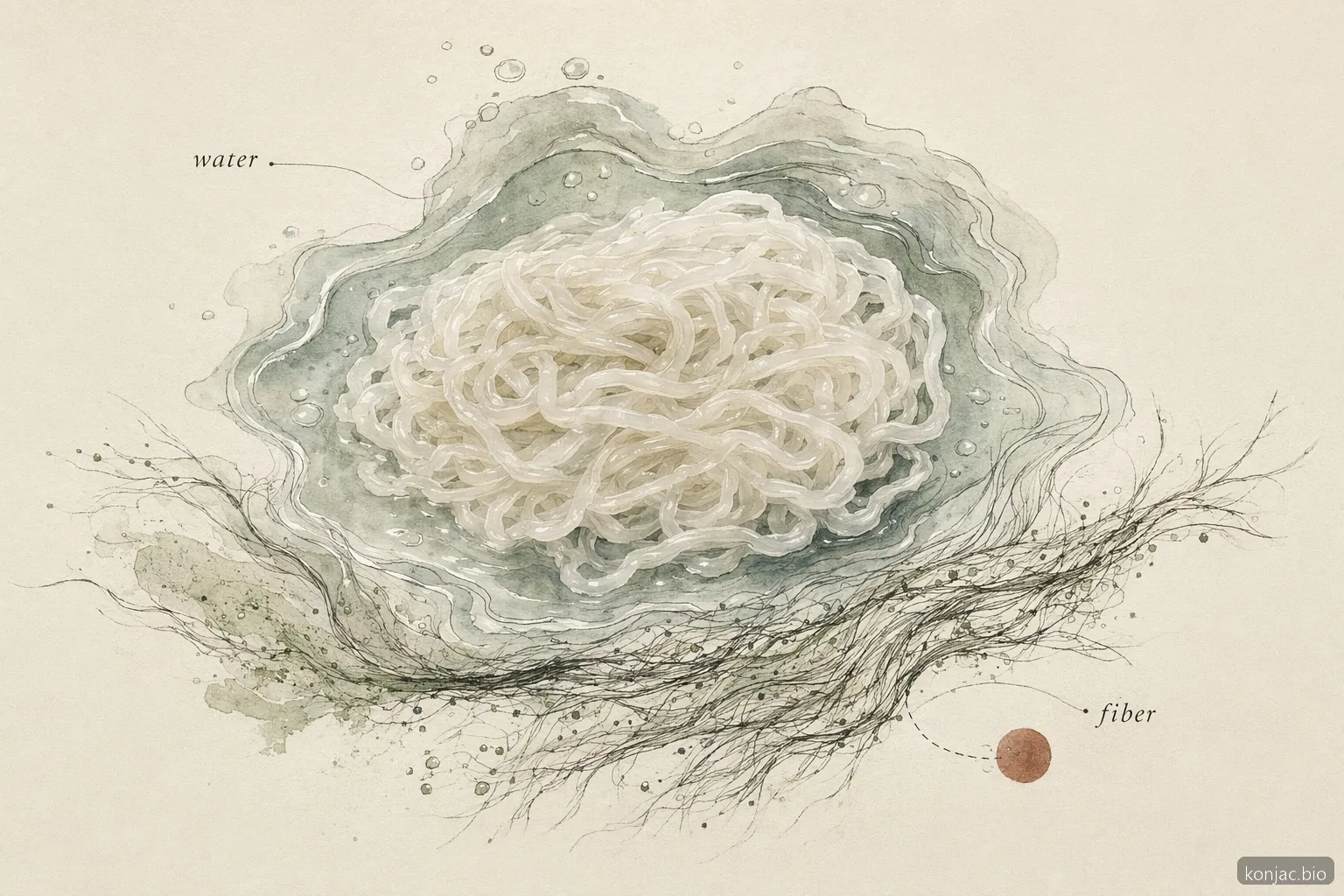
Shirataki noodle keto meals are typically very low in net carbs because shirataki noodles are made mostly from water and konjac glucomannan fiber.
Konjac glucomannan is a soluble fiber from the corm of Amorphophallus konjac, a plant used to make shirataki noodles, konjac rice, and konjac flour. Glucomannan is described as a water-soluble polysaccharide in human nutrition studies indexed by PubMed.
Net carbs depend on the label and country. In the United States, many low-carb eaters estimate net carbs by subtracting fiber from total carbohydrate, while the FDA defines dietary fiber for Nutrition Facts labeling through specific criteria on the fiber label.
| Food | Typical keto role | Carb impact |
|---|---|---|
| Shirataki noodles | Pasta-style volume | Usually very low net carbs |
| Wheat pasta | Traditional pasta base | High starch load |
| Zucchini noodles | Vegetable noodle swap | Low carb, more vegetable flavor |
| Konjac rice | Rice-style volume | Usually very low net carbs |
For keto planning, read the actual package and weigh the drained serving. A common serving is 100 to 200 grams after draining, but sauce, added vegetables, cream, and sweeteners can add more carbs than the noodles themselves.
Why does shirataki noodle keto cooking help with meal volume?
Shirataki noodle keto cooking helps meal volume because the noodles add bulk, chew, and sauce-carrying texture with minimal digestible carbohydrate.
This makes shirataki useful for keto meals where the main calories come from eggs, meat, fish, tofu, olive oil, butter, cream, cheese, or avocado. The noodles are not the protein source, and they are not a complete meal by themselves.
Glucomannan has been studied for satiety, body weight, and blood lipid markers. EFSA’s authorized wording is specific: “Glucomannan contributes to the reduction of body weight in the context of an energy-restricted diet,” with conditions tied to 3 grams per day in 3 doses with water before meals, as stated in the EFSA opinion.
That claim does not mean a bowl of noodles automatically changes body weight. For keto and weight-management use, shirataki works best as part of a planned plate:
- 150 to 200 grams drained shirataki noodles
- 25 to 40 grams protein from meat, seafood, eggs, tofu, or tempeh
- 1 to 2 tablespoons fat from olive oil, butter, cream, or sesame oil
- Low-carb vegetables such as bok choy, spinach, mushrooms, or cabbage
- Salt, acid, herbs, chili, garlic, or ginger for flavor
For the broader evidence context, see Konjac for Keto and Weight Loss.
Shirataki noodle keto cooking: the best method
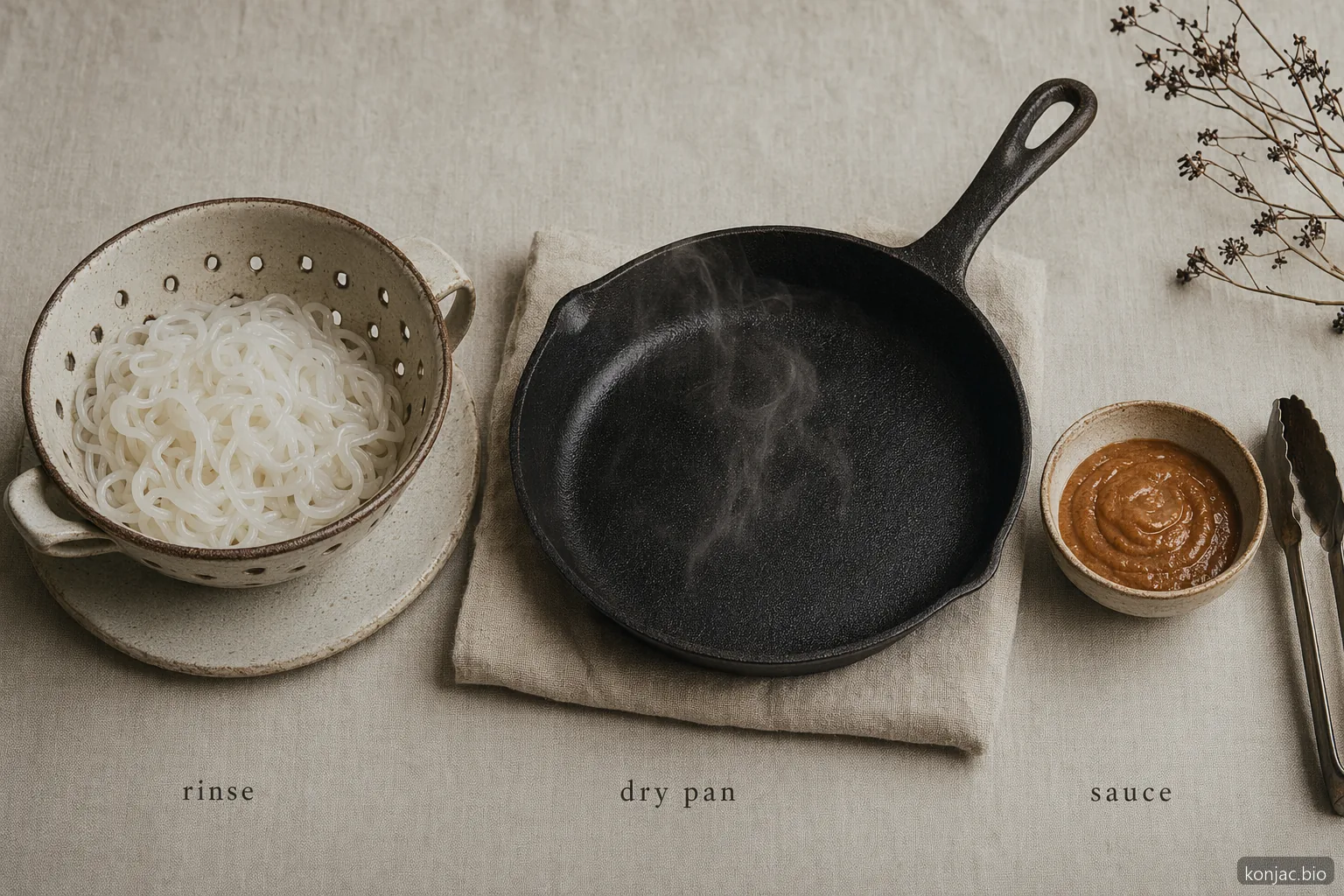
The best shirataki noodle keto method is rinse, drain, dry-pan cook, then sauce hard. This removes packing liquid aroma and gives the noodles a firmer bite.
- Drain fully. Empty the pouch into a strainer and discard the liquid.
- Rinse for 30 to 60 seconds. Use cold running water to reduce the typical konjac aroma.
- Boil for 1 to 2 minutes if desired. This step is optional, but it can further neutralize smell.
- Dry-pan cook for 3 to 6 minutes. Use a nonstick or stainless pan with no oil at first. Stir until steam drops and noodles squeak slightly.
- Add fat and sauce. Finish with butter, olive oil, sesame oil, cream sauce, pesto, curry, or broth reduction.
Shirataki noodles do not absorb sauce like wheat pasta because they lack starch. Concentrated sauces work better than watery sauces. A thin tomato sauce often slides off, while a reduced cream sauce, egg yolk sauce, peanut-style sauce without sugar, or miso-butter sauce clings better.
Three keto combinations are especially reliable:
- Carbonara style: egg yolk, parmesan, black pepper, pancetta, and dry-cooked noodles.
- Sesame chicken: shredded chicken, sesame oil, tamari, scallion, ginger, and cabbage.
- Seafood curry: shrimp, coconut milk, curry paste, spinach, and lime.
B2B aside: konjac.bio sources konjac ingredients at wholesale for brands building low-carb noodles, rice, pasta, and functional food lines. For specifications and pricing, contact the team at wholesale konjac.
Are shirataki noodle keto foods safe?
Shirataki noodle keto foods are generally used as ordinary foods, but texture, water intake, serving size, and choking-risk formats matter.
Konjac mini-cup gel candies are the major safety caution, not drained noodle strands eaten as a meal. The FDA warned that konjac mini-cup gel candies can pose a choking risk because their firm gel may not dissolve easily in the mouth, especially for children and older adults, in a FDA advisory.
For shirataki noodles, practical safety is straightforward:
- Chew thoroughly because the texture is elastic.
- Cut long noodles for children or anyone who struggles with chewy foods.
- Start with a small serving, such as 100 grams drained.
- Drink fluids with high-fiber meals.
- Stop increasing serving size if gas, bloating, or cramping occurs.
Glucomannan supplements are different from ready-to-eat noodles because powders and capsules can swell with water. Anyone with swallowing difficulty should be cautious with concentrated dry fiber formats and follow product directions. Noodle products are already hydrated, which changes the practical risk profile.
Shirataki noodle keto versus konjac rice and other swaps
Shirataki noodles are best when the meal should feel like pasta, ramen, pad Thai, or stir-fried noodles. Konjac rice is better when the meal needs a rice-style base for curry, fried rice, burrito bowls, or poke-style bowls.
Both foods usually rely on the same core ingredient, konjac glucomannan, but the cut changes the eating experience. Long strands hold noodle sauces and broths. Rice-shaped pieces distribute through saucy bowls and skillet meals.
| Swap | Best use | Texture note |
|---|---|---|
| Shirataki noodles | Ramen, pasta, stir-fry | Elastic and slippery |
| Konjac rice | Fried rice, curry bowls | Small grains, neutral flavor |
| Zucchini noodles | Fresh vegetable plates | Softens quickly |
| Spaghetti squash | Baked casseroles | Sweet vegetable flavor |
| Hearts of palm pasta | Quick pasta bowls | Tender and slightly tangy |
For a rice-style comparison, read the sibling guide to konjac rice keto. For fiber-focused weight-management context, see glucomannan weight loss.
The practical rule is simple: use shirataki noodles when shape matters, use konjac rice when distribution matters, and use vegetables when flavor and micronutrient variety are the priority.
Frequently asked questions
01 Are shirataki noodles keto friendly?
02 Do shirataki noodles have zero carbs?
03 Why do shirataki noodles smell fishy?
04 Can I eat shirataki noodles every day on keto?
05 Are shirataki noodles the same as miracle noodles?
- Scientific Opinion on the substantiation of health claims related to konjac mannan · EFSA Journal · 2010
- Dietary Fiber on the Nutrition Facts Label · U.S. Food and Drug Administration · 2024
- Consumer Advisory: Konjac Mini-Cup Gel Candies · U.S. Food and Drug Administration · 2001
- Effect of glucomannan on plasma lipid and glucose concentrations, body weight, and blood pressure · PubMed · 2008