What is the difference in shirataki vs kelp noodles?
Shirataki vs kelp noodles is mainly a choice between konjac glucomannan gel and seaweed alginate gel. Shirataki noodles are made from water, konjac flour, and a setting aid, while kelp noodles are usually made from water, kelp, and sodium alginate.
Konjac flour comes from the corm of Amorphophallus konjac, a plant valued for glucomannan, a highly viscous soluble fiber recognized in European health-claim reviews by EFSA claim. Kelp noodles use seaweed components, and sodium alginate is a salt of alginic acid associated with brown algae, as described by PubChem alginate.
| Feature | Shirataki noodles | Kelp noodles |
|---|---|---|
| Main source | Konjac corm | Kelp or seaweed-derived ingredients |
| Key structure builder | Glucomannan | Alginate |
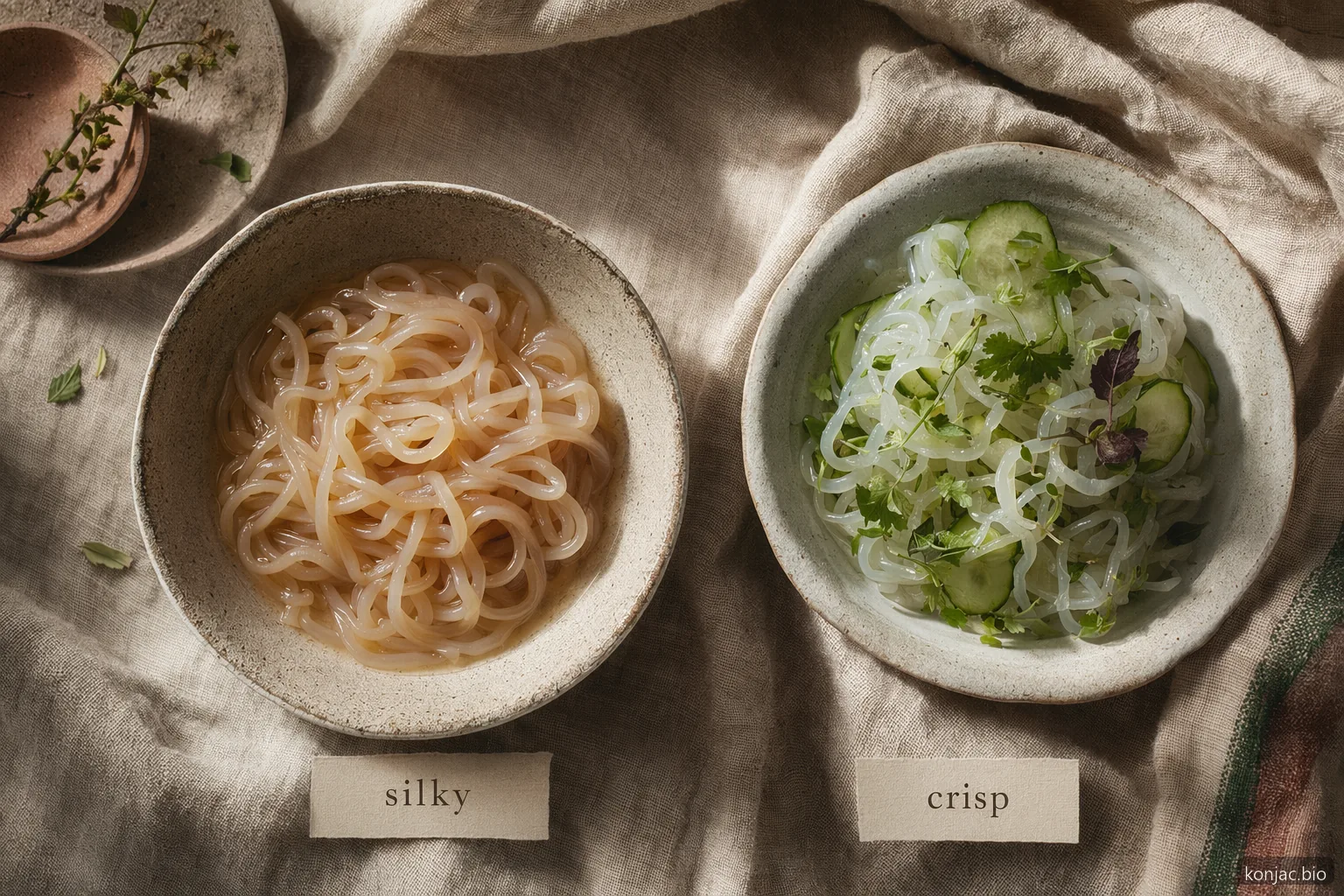
| Default texture | Soft, elastic, slippery | Crunchy, glassy, firm |
| Best prep | Rinse, drain, dry-pan, sauce | Rinse, soak, soften if desired |
| Best dishes | Ramen, hot pot, stir-fry, pasta swaps | Salads, cold bowls, raw-style dishes |
The practical difference is not just the ingredient list. Shirataki behaves like a hydrated fiber gel that absorbs surrounding flavors slowly, while kelp noodles behave more like a crisp vegetable noodle until acid, salt, or heat softens them.

How do shirataki vs kelp noodles compare nutritionally?
Shirataki usually wins for soluble fiber, while kelp noodles are more relevant for seaweed minerals such as iodine. Both are commonly positioned as low-calorie, low-carbohydrate noodle alternatives, but their nutrient strengths are different.
Konjac glucomannan has approved European wording for weight management: “Glucomannan in the context of an energy restricted diet contributes to weight loss,” with conditions tied to 3 g per day in three 1 g doses with water before meals in the EFSA opinion. EFSA also recognizes glucomannan for maintenance of normal blood cholesterol concentrations when intake reaches 4 g per day, under specified conditions.
Kelp noodles can contribute iodine depending on the kelp source and processing. Iodine is an essential mineral, but the adult tolerable upper intake level is 1,100 mcg per day in U.S. guidance summarized by the NIH iodine fact sheet.
| Nutrition factor | Shirataki | Kelp noodles |
|---|---|---|
| Calories | Typically very low | Typically very low |
| Digestible carbs | Typically very low | Typically very low |
| Main fiber type | Soluble glucomannan | Alginate and seaweed polysaccharides |
| Mineral focus | Not usually mineral-led | Iodine may vary by source |
| Diet fit | Keto-style, calorie-controlled, high-fiber formats | Raw-style, plant-based, seaweed-forward formats |
For packaged foods, the nutrition panel matters more than the category name. Sodium, serving size, and added sauces can change the finished meal more than the noodle base itself.
Texture and cooking: where each noodle works best
Shirataki works best when it is rinsed thoroughly, drained, and dry-heated before sauce is added. This reduces the packed aroma, removes excess water, and gives the sauce more surface contact with the noodle.
- Rinse: Use cold water for 30 to 60 seconds.
- Drain: Press gently or use a sieve.
- Dry-pan: Heat for 2 to 4 minutes without oil.
- Sauce: Add broth, curry, tomato sauce, sesame dressing, or stir-fry sauce.
Kelp noodles are usually eaten cold or lightly warmed. To soften them, many cooks rinse them, then soak briefly with warm water plus lemon juice or another mild acid, followed by a quick rinse. The result moves from crunchy to more noodle-like, though it rarely becomes as soft as wheat pasta.
Dish choice is the simplest decision point. Use shirataki for ramen-style broth, sukiyaki-style hot pot, pad thai-inspired stir-fries, or low-calorie pasta bowls. Use kelp noodles for sesame salads, vegetable bowls, peanut-lime dressings, and crisp lunch preparations.
For manufacturers and foodservice teams, konjac.bio sources konjac ingredients at wholesale scale for noodle, gel, and fiber applications. Contact the team for specification-led sourcing and pricing.
Are shirataki vs kelp noodles safe for everyday meals?
Shirataki vs kelp noodles are generally used as ordinary foods, but each has a different caution point: shirataki needs enough fluid because of glucomannan viscosity, and kelp noodles may contribute variable iodine. Serving size and product label review matter more than the noodle category alone.
Konjac safety questions often get confused with a separate product type: mini-cup gel candies. The U.S. FDA import alert targets gel candies containing konjac because small, firm cups can pose a choking hazard, not because ordinary wet shirataki noodles are the same format, as shown in the FDA import alert.
Glucomannan expands in water, so dry powders and tablets require more caution than hydrated noodles. Wet shirataki is already water-rich, but consumers should still chew normally and avoid swallowing large clumps.
Kelp noodles raise a different label question: iodine. Kelp iodine can vary widely by species, harvest area, and processing, so people following iodine limits should compare labels and use the NIH iodine upper intake guidance as context.
Choice guide for shirataki and kelp noodles
Choose shirataki if the goal is a hot, sauced, high-moisture noodle with konjac glucomannan as the defining ingredient. Choose kelp noodles if the goal is crunch, a seaweed-based ingredient story, or a cold bowl that needs texture without heavy starch.
| Use case | Better choice | Why |
|---|---|---|
| Ramen or broth | Shirataki | Soft texture fits soups and hot liquid |
| Cold sesame salad | Kelp noodles | Crisp bite holds up well |
| Low-calorie pasta swap | Shirataki | Neutral base accepts sauce |
| Raw-style bowl | Kelp noodles | No full cooking step needed |
| Fiber-led formulation | Shirataki | Glucomannan is the core ingredient |
For a broader ingredient map, see Konjac vs. Everything. If the decision is more about fiber functionality than noodles, related comparisons such as konjac vs psyllium and konjac vs xanthan gum can help frame viscosity, hydration, and label strategy.
The simplest household rule is direct: shirataki is better when the sauce should carry the dish, and kelp noodles are better when texture should carry the dish.
Frequently asked questions
01 Are shirataki noodles the same as kelp noodles?
02 Which is better for keto-style meals, shirataki or kelp noodles?
03 Do kelp noodles taste like seaweed?
04 Why do shirataki noodles smell when opened?
05 Can kelp noodles contain too much iodine?
06 Which noodle is better for product development?
- Scientific Opinion on health claims related to konjac mannan (glucomannan) · European Food Safety Authority · 2010
- Iodine Fact Sheet for Health Professionals · National Institutes of Health Office of Dietary Supplements · 2024
- Import Alert 33-15: Gel Candies Containing Konjac · U.S. Food and Drug Administration · 2024
- Sodium Alginate Compound Summary · National Library of Medicine PubChem · 2024