What does konjac vs shirataki noodles actually mean?
Konjac vs shirataki noodles means comparing a plant-derived ingredient with a ready-to-eat food made from that ingredient.
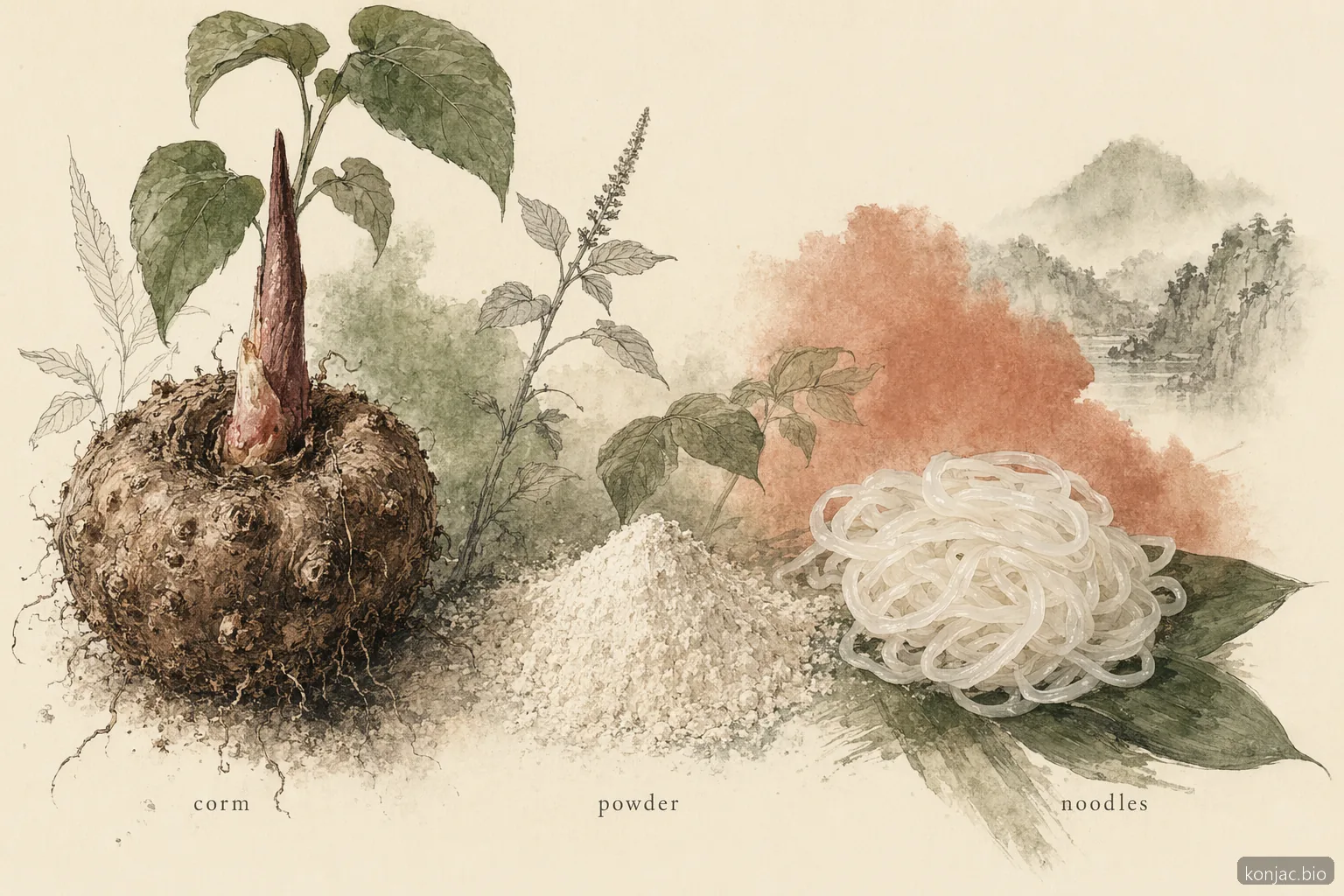
Konjac usually refers to the corm of Amorphophallus konjac, which is processed into konjac flour or konjac glucomannan. Shirataki noodles are made when konjac glucomannan is hydrated, gelled, shaped into noodles, and packed in water.
| Item | What it is | Best use |
|---|---|---|
| Konjac | Plant corm, flour, or purified glucomannan | Thickening, gelling, fiber enrichment, product development |
| Shirataki noodles | Hydrated konjac noodle gel | Low-calorie noodle swaps, stir-fries, soups, meal kits |
The key molecule is glucomannan, a water-soluble polysaccharide studied for high viscosity and gel-forming behavior in food systems, including noodles and gels KGM review. That is why konjac can appear as powder in a formulation lab and as translucent noodles in a grocery chiller.
How are shirataki noodles made from konjac?
Shirataki noodles are made by hydrating konjac glucomannan, adding an alkaline setting agent, forming strands, and heat-setting the gel.
The process is simple in concept but sensitive in execution. Hydration level, shear, pH, heating time, and strand diameter all change the bite, elasticity, and water release of the finished noodle.
- Hydrate konjac glucomannan: Powder is dispersed in water until it thickens.
- Add a setting agent: Calcium hydroxide is commonly used to help the konjac gel set.
- Extrude or cut strands: The gel is shaped into noodle form.
- Heat-set: Heat firms the noodle and stabilizes texture.
- Pack in water: Finished noodles are usually sealed with water to maintain hydration.
The result is a noodle that carries texture more than flavor. Plain shirataki is best when rinsed, briefly boiled or dry-heated, then paired with sauces that provide salt, acid, fat, or umami.
konjac vs shirataki noodles: nutrition and use cases
The nutrition difference between konjac and shirataki noodles is concentration: konjac powder is concentrated glucomannan, while shirataki noodles are diluted, hydrated gel.
For shoppers, that means shirataki is the practical food choice. For manufacturers, konjac powder is the functional input used to build viscosity, bite, suspension, and gel structure.
| Factor | Konjac powder | Shirataki noodles |
|---|---|---|
| Water level | Low, dry ingredient | High, packed in water |
| Fiber role | Concentrated glucomannan source | Small serving-based contribution |
| Kitchen use | Needs formulation skill | Ready after rinsing and heating |
| Texture | Depends on formula | Springy, slippery, gel-like |
| Label variability | Supplier specification driven | Varies by product formula and serving size |
Commercial shirataki noodle entries vary in calories, carbohydrate, and fiber because formulas may include tofu, oat fiber, seaweed, or other ingredients in addition to konjac; USDA FoodData Central shows that packaged noodle nutrition depends on the specific product record. FDA also recognizes certain isolated or synthetic non-digestible carbohydrates, including glucomannan, within its dietary fiber policy discussion FDA fiber.
For adjacent hydrocolloid decisions, compare konjac with other fibers in konjac vs psyllium husk and texture systems in konjac vs xanthan gum.
Are konjac vs shirataki noodles good for low-carb diets?
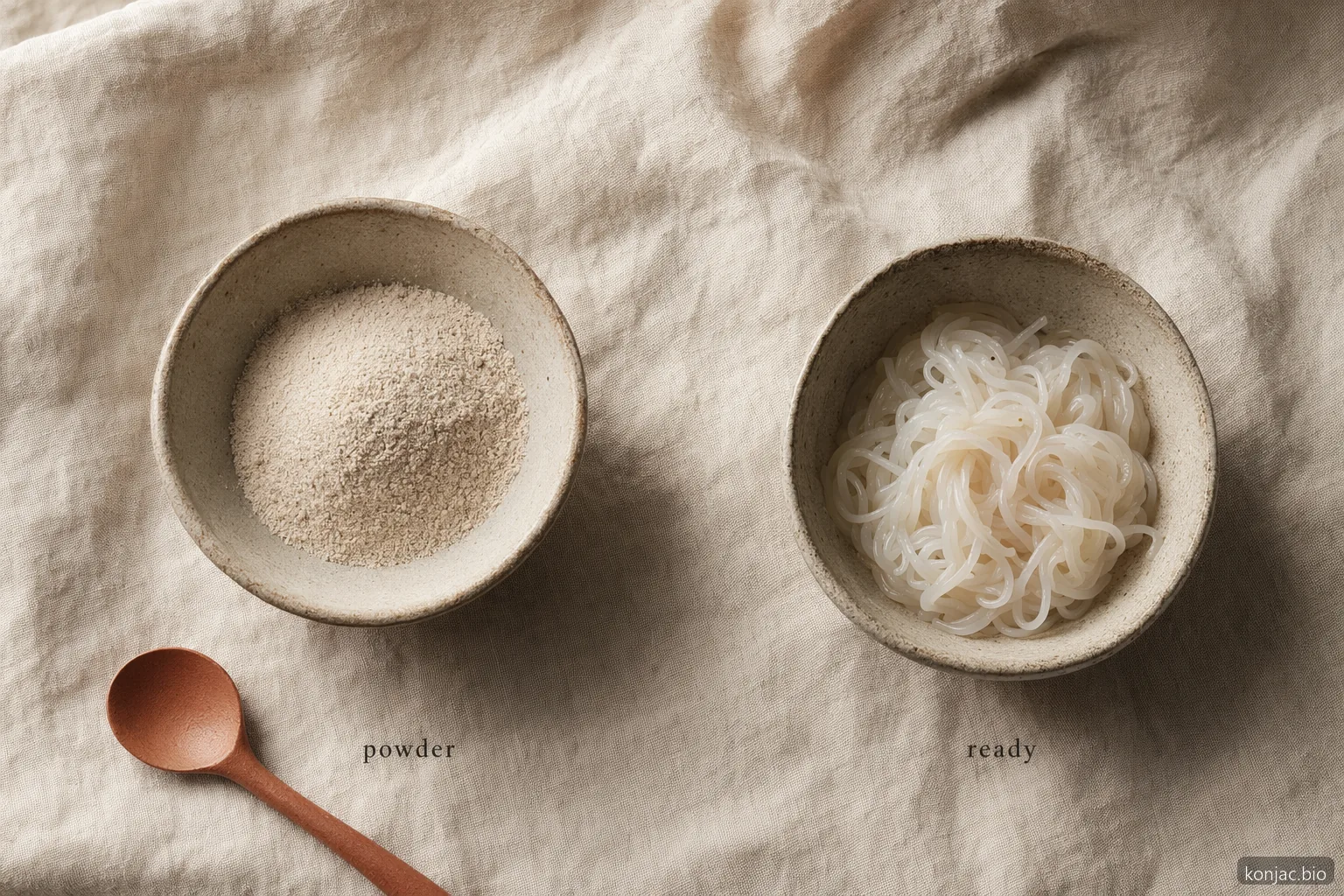
Shirataki noodles are usually the better low-carb eating choice, while konjac powder is better for low-carb product formulation.
Plain shirataki noodles are popular in low-carb meals because the noodle structure is mostly hydrated gel rather than starch. The best culinary results come from treating shirataki as a texture carrier, not as a wheat pasta replica.
For example, shirataki works well in brothy ramen-style bowls, spicy sesame stir-fries, hot pots, and chilled cucumber salads. It performs less well in dishes where wheat pasta starch is expected to thicken the sauce, such as classic carbonara or cacio e pepe.
For health-claim language, the European Food Safety Authority adopted the wording: “Glucomannan contributes to weight loss in the context of an energy restricted diet” under specified conditions EFSA opinion. That claim applies to defined glucomannan intake conditions, not automatically to every bowl of shirataki noodles.
Buying, storage, and formulation notes
Buy shirataki noodles by ingredient list, texture goal, and pack format, not by the broad word “konjac” alone.
For home kitchens, choose plain water-packed noodles when you want the lowest flavor interference. Rinse thoroughly, simmer for 1 to 2 minutes, then dry-pan until surface moisture drops. This reduces the typical package aroma and helps sauces cling.
For product developers, confirm viscosity grade, particle size, hydration behavior, microbial specification, and country of origin for konjac powder. Konjac.bio sources konjac ingredients at wholesale scale for food, beverage, supplement, and pet applications; contact konjac.bio for specification-led wholesale pricing.
Safety format matters. FDA has warned consumers about imported mini-cup jelly products containing konjac because small slippery gels can pose a choking risk, especially when swallowed whole FDA warning. That warning is about mini-cup jelly format, not ordinary fork-eaten shirataki noodles, but it is relevant for anyone designing firm konjac gels.
Frequently asked questions
01 Are konjac and shirataki noodles the same thing?
02 Do shirataki noodles contain konjac?
03 Why do shirataki noodles smell when opened?
04 Can konjac powder replace shirataki noodles in a recipe?
05 Are shirataki noodles the same as miracle noodles?
06 What is the main practical difference for brands?
- Konjac glucomannan: A review of structure, physicochemical properties and applications · PubMed · 2017
- Scientific Opinion on health claims related to konjac mannan (glucomannan) · European Food Safety Authority · 2010
- Questions and Answers on Dietary Fiber · U.S. Food and Drug Administration · 2024
- FoodData Central · U.S. Department of Agriculture · 2024
- FDA Warns Consumers About Imported Mini-Cup Jelly Products Containing Konjac · U.S. Food and Drug Administration · 2002