What is the main difference in kelp noodles vs konjac noodles?
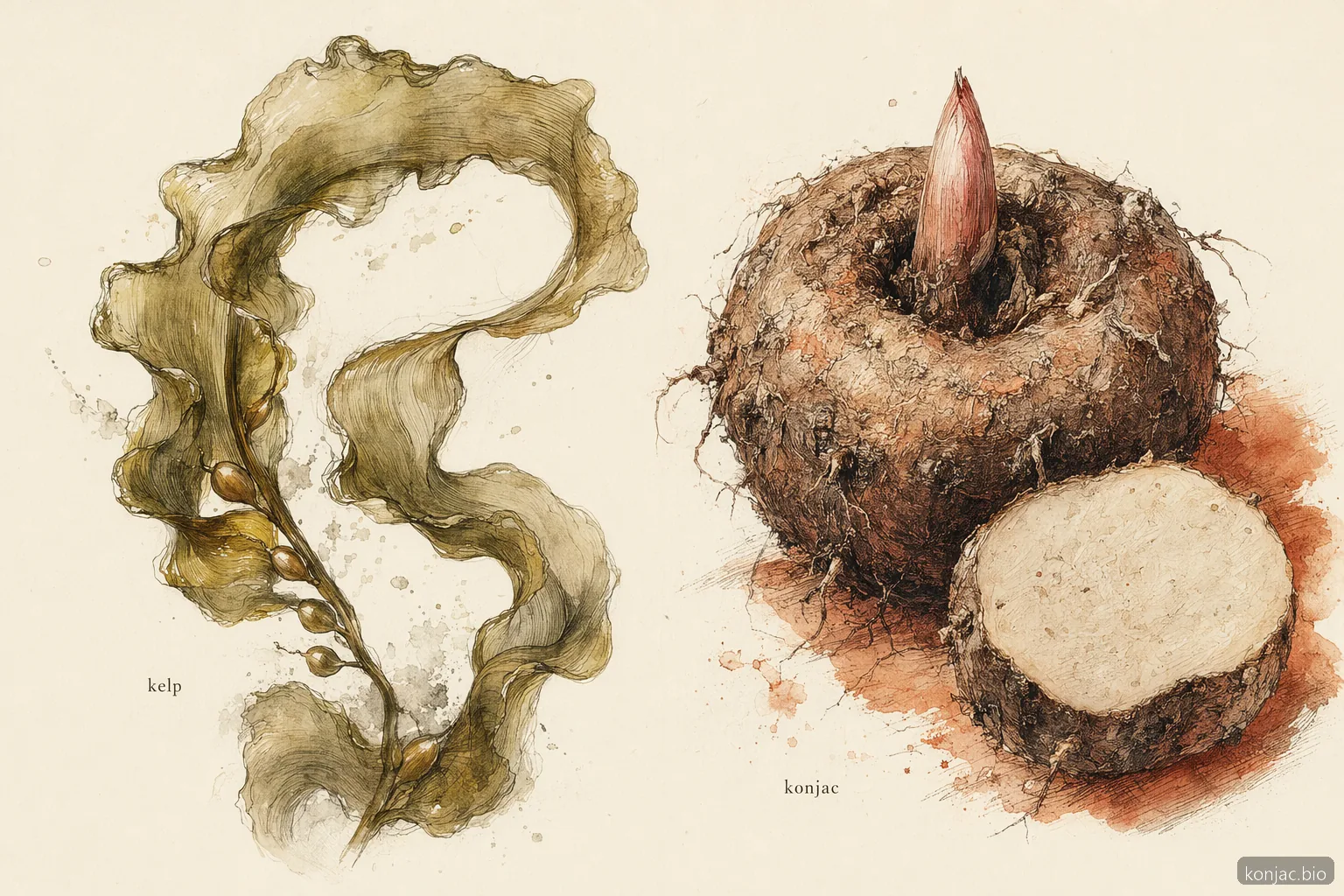
Kelp noodles come from seaweed alginate, while konjac noodles come from glucomannan-rich konjac corm.
Kelp noodles are usually made from water, kelp-derived ingredients, and sodium alginate. The US eCFR describes sodium alginate as a substance produced from brown algae and permitted for food use under specified conditions in sodium alginate.
Konjac noodles are usually shirataki-style noodles made from water, konjac flour or purified glucomannan, and an alkaline setting agent. Amorphophallus konjac is the plant species behind konjac corm material, listed by Kew under Amorphophallus konjac.
The practical difference is simple: kelp noodles behave like crisp, translucent vegetable noodles, while konjac noodles behave like elastic, gelatinized fiber noodles. That difference affects rinsing, sauces, cooking temperature, and product development.
How do kelp noodles vs konjac noodles compare nutritionally?
Kelp noodles and konjac noodles are both low-energy noodle alternatives, but konjac is defined by glucomannan fiber and kelp is defined by seaweed origin and possible iodine content.
For konjac, the best-known nutritional entity is glucomannan. EFSA evaluated health claims for konjac mannan and approved the wording: "Glucomannan in the context of an energy restricted diet contributes to weight loss" in its EFSA opinion. The conditions include 3 g glucomannan daily in three 1 g doses with 1 to 2 glasses of water before meals, within an energy-restricted diet.
Kelp noodles raise a different label question: iodine. The NIH Office of Dietary Supplements lists the adult iodine Recommended Dietary Allowance at 150 micrograms and the adult tolerable upper intake level at 1,100 micrograms in its iodine factsheet. Because seaweed iodine varies by species, origin, and processing, iodine disclosure matters more for kelp noodles than for konjac noodles.
| Nutrition factor | Kelp noodles | Konjac noodles |
|---|---|---|
| Main source | Brown seaweed-derived alginate | Amorphophallus konjac corm glucomannan |
| Key nutrient issue | Possible iodine contribution | Soluble fiber from glucomannan |
| Best label checks | Sodium, iodine, serving size | Fiber grams, serving size, water instructions |
| Diet fit | Low-energy crunch for salads and bowls | Low-carb, low-energy noodle swap for hot or sauced dishes |
Texture, prep, and cooking behavior
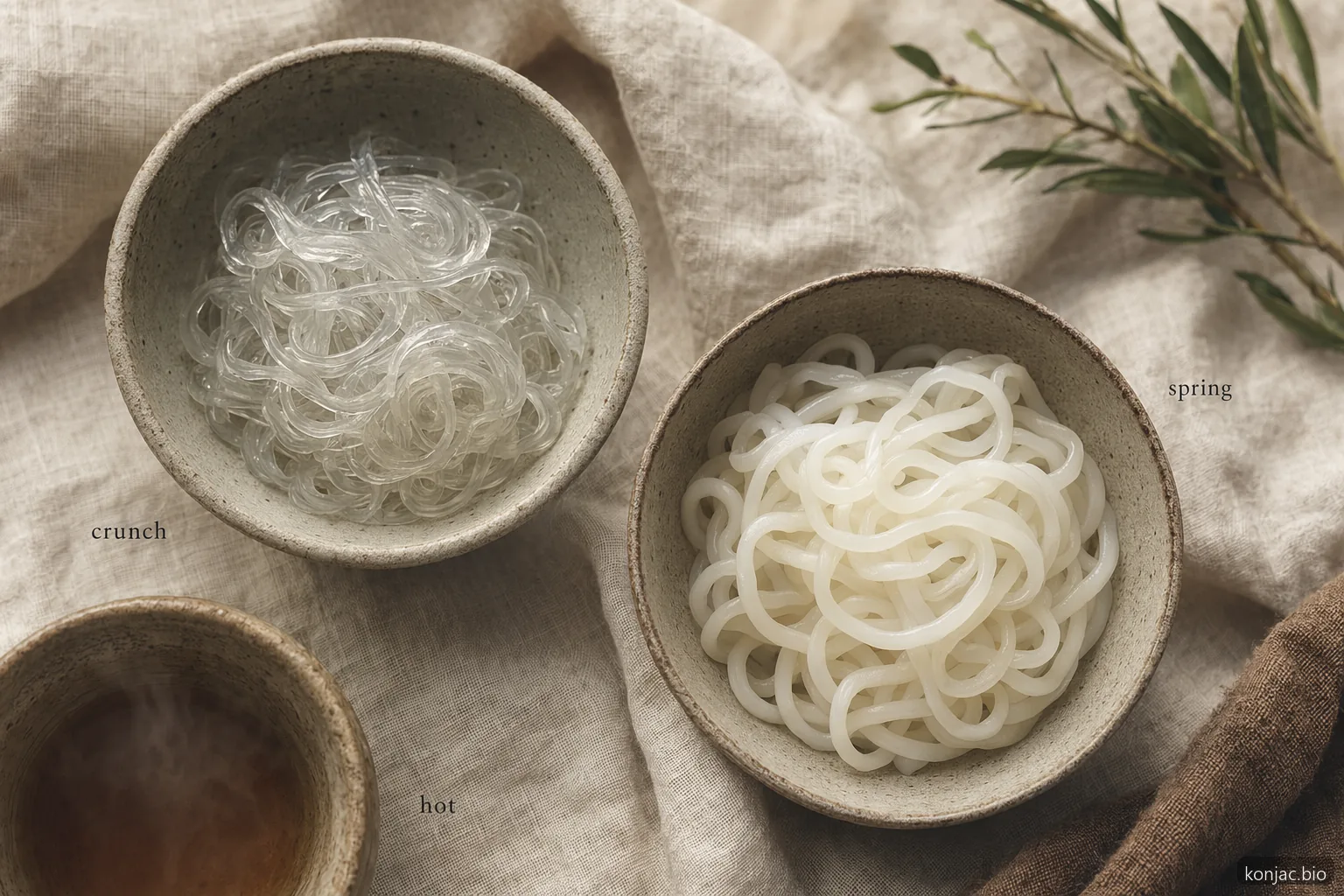
Kelp noodles are naturally crisp and slightly glassy. They shine in cold sesame salads, slaws, raw vegetable bowls, and dishes where crunch is part of the eating experience.
Konjac noodles are springy, slippery, and neutral. They do not absorb sauce like wheat pasta, but they carry strong sauces well after rinsing, draining, and brief dry-pan heating.
- For kelp noodles: rinse, drain, and soften for 10 to 20 minutes with warm water plus an acidic ingredient such as lemon juice if a softer bite is desired.
- For konjac noodles: rinse for 30 to 60 seconds, drain well, then heat in a dry pan for 2 to 3 minutes before adding sauce.
- For cold dishes: kelp noodles keep more crunch, while konjac noodles give more bounce.
- For hot broths: konjac noodles hold shape better, while kelp noodles can lose their signature snap if heated too long.
For broader noodle comparisons, see the parent guide Konjac vs. Everything, plus related comparisons on shirataki vs pasta and konjac vs rice noodles.
Are kelp noodles vs konjac noodles safe for daily menus?
Both can fit adult menus, but kelp noodles require iodine awareness and konjac noodles require hydration and texture awareness.
Kelp is a seaweed ingredient, so iodine variability is the main practical concern. The NIH iodine factsheet gives adults an RDA of 150 micrograms and an upper intake level of 1,100 micrograms, which makes label review useful for frequent seaweed consumers using iodine guidance.
Konjac glucomannan is a water-binding fiber. EFSA’s approved claim conditions specify taking glucomannan with 1 to 2 glasses of water before meals in its claim opinion, which is relevant because dry or concentrated fiber products need adequate fluid.
Konjac safety conversations sometimes mention mini-cup gel candies. FDA identified choking concerns for mini-cup gel candies containing konjac gel in a specific candy format, not standard noodles, on its konjac gel page. For noodles, the practical control points are clear serving instructions, adequate liquid, and age-appropriate texture.
Choosing between kelp noodles vs konjac noodles for products
Choose kelp noodles when the product concept needs visible crunch, seaweed positioning, and raw or lightly dressed applications. Choose konjac noodles when the concept needs neutral flavor, gluten-free noodle structure, and reliable performance in soups, stir-fries, meal kits, and low-carb bowls.
For foodservice, konjac noodles usually give more predictable hot-hold behavior. Kelp noodles are better when the chef wants a cold, crisp texture that feels closer to a vegetable component than a pasta substitute.
| Use case | Better fit | Reason |
|---|---|---|
| Cold sesame salad | Kelp noodles | Crunch stays central to the dish |
| Ramen-style broth | Konjac noodles | Springy texture holds in hot liquid |
| Low-carb pasta bowl | Konjac noodles | Neutral flavor supports sauce |
| Seaweed-forward positioning | Kelp noodles | Ingredient origin is part of the appeal |
| Meal prep or heat-and-eat meals | Konjac noodles | Rinsing and heating steps are consistent |
B2B aside: konjac.bio sources konjac ingredients at wholesale for brands, manufacturers, and foodservice teams. For specifications and pricing, contact the team.
Frequently asked questions
01 Are kelp noodles healthier than konjac noodles?
02 Do kelp noodles and konjac noodles taste the same?
03 Are konjac noodles the same as shirataki noodles?
04 Do kelp noodles contain iodine?
05 Which is better for hot dishes, kelp noodles or konjac noodles?
06 Can brands use konjac noodles instead of kelp noodles in low-carb products?
- Scientific Opinion on the substantiation of health claims related to konjac mannan (glucomannan) · European Food Safety Authority · 2010
- Iodine Fact Sheet for Health Professionals · NIH Office of Dietary Supplements · 2024
- Mini-Cup Gel Candies Containing Konjac Gel · US Food and Drug Administration · 2024
- 21 CFR 184.1724 Sodium alginate · Electronic Code of Federal Regulations · 2025
- Amorphophallus konjac K. Koch · Plants of the World Online, Royal Botanic Gardens Kew · 2025