What is a shirataki noodles noodle?
A shirataki noodles noodle is a Japanese-style konjac noodle made from water, glucomannan-rich konjac flour, and a food-grade alkaline coagulant.
The key plant is Amorphophallus konjac, a corm crop used across Japan, China, and Southeast Asia. Its main functional fiber is glucomannan, a highly water-binding polysaccharide reviewed in human nutrition literature for satiety, lipids, and glucose response markers in controlled settings on PubMed review.
Most retail shirataki noodles are packed wet. The liquid protects texture, but it can carry a mineral or sea-like aroma that disappears after rinsing and heating. The noodle itself is translucent, slippery, and elastic, with very little flavor of its own.
For shoppers, the simplest definition is practical: shirataki is not wheat pasta. It is a konjac gel cut into noodle shapes, built to carry sauce while adding bulk with minimal digestible carbohydrate.
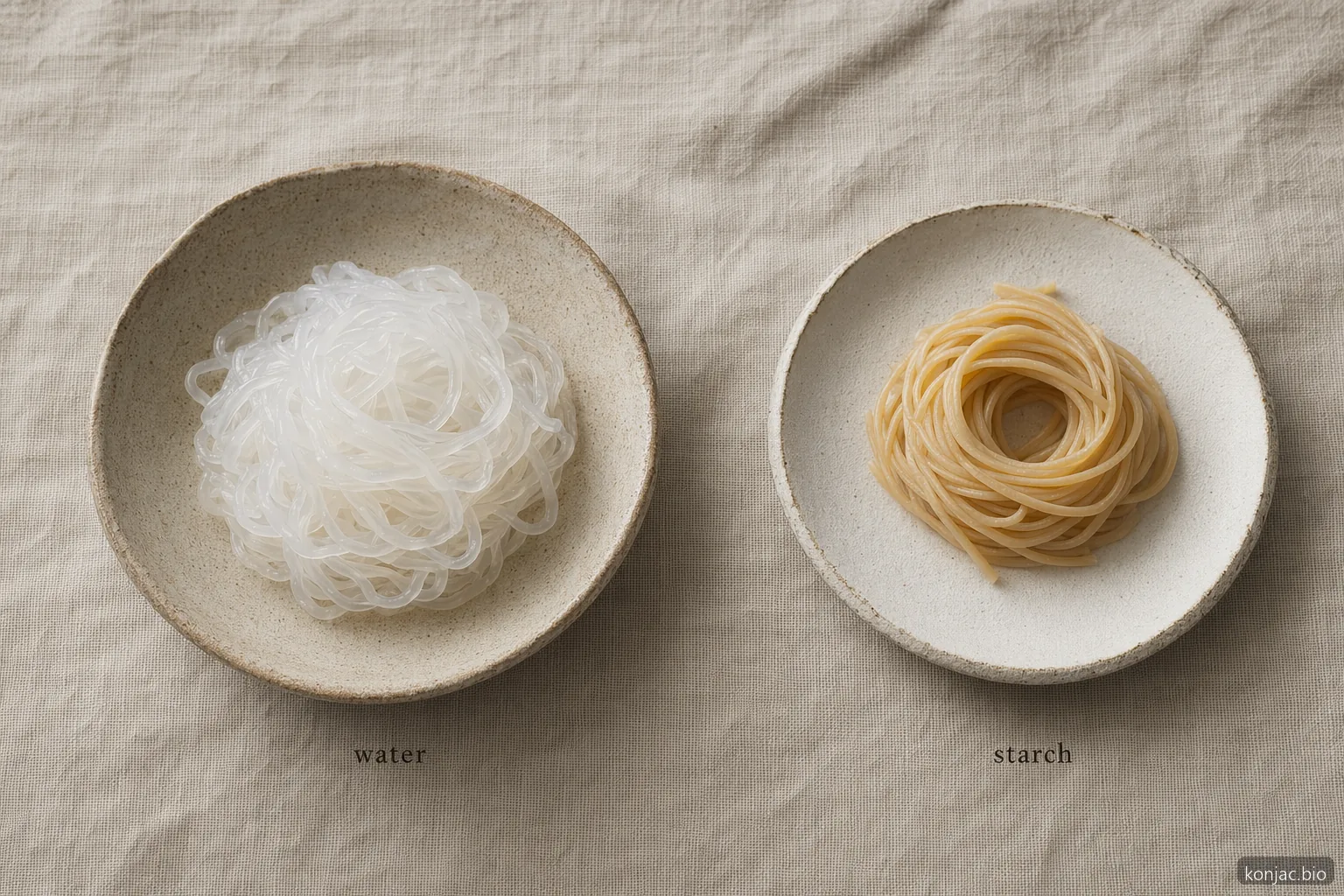
How does a shirataki noodles noodle differ from wheat pasta?
A shirataki noodles noodle differs from wheat pasta because it is a hydrated konjac gel, while wheat pasta is a starch and gluten dough that cooks by absorbing water.
This difference explains nearly every kitchen result. Wheat spaghetti softens, releases starch, and binds sauce. Shirataki stays springy, releases water, and needs surface drying before sauce clings well.
| Feature | Shirataki noodle | Wheat pasta |
|---|---|---|
| Main structure | Konjac glucomannan gel | Wheat starch and gluten |
| Flavor | Neutral after rinsing | Wheaty, slightly sweet |
| Sauce behavior | Needs dry-pan step | Starch helps sauce bind |
| Best textures | Bouncy, slippery, firm | Tender, chewy, starchy |
| Best dishes | Broths, stir-fries, salads | Pasta bowls, baked dishes |
The best substitution strategy is to match shirataki to dishes that already welcome slippery noodles: ramen-style bowls, sukiyaki, pad Thai-inspired stir-fries, sesame cucumber salad, and hot pot. For cream sauces, dry-pan the noodles first, then reduce the sauce until it coats the surface.
If you want broader nutrition context, our shirataki nutrition guide explains labels, fiber, calories, and serving size in more detail.
How do you cook a shirataki noodles noodle well?
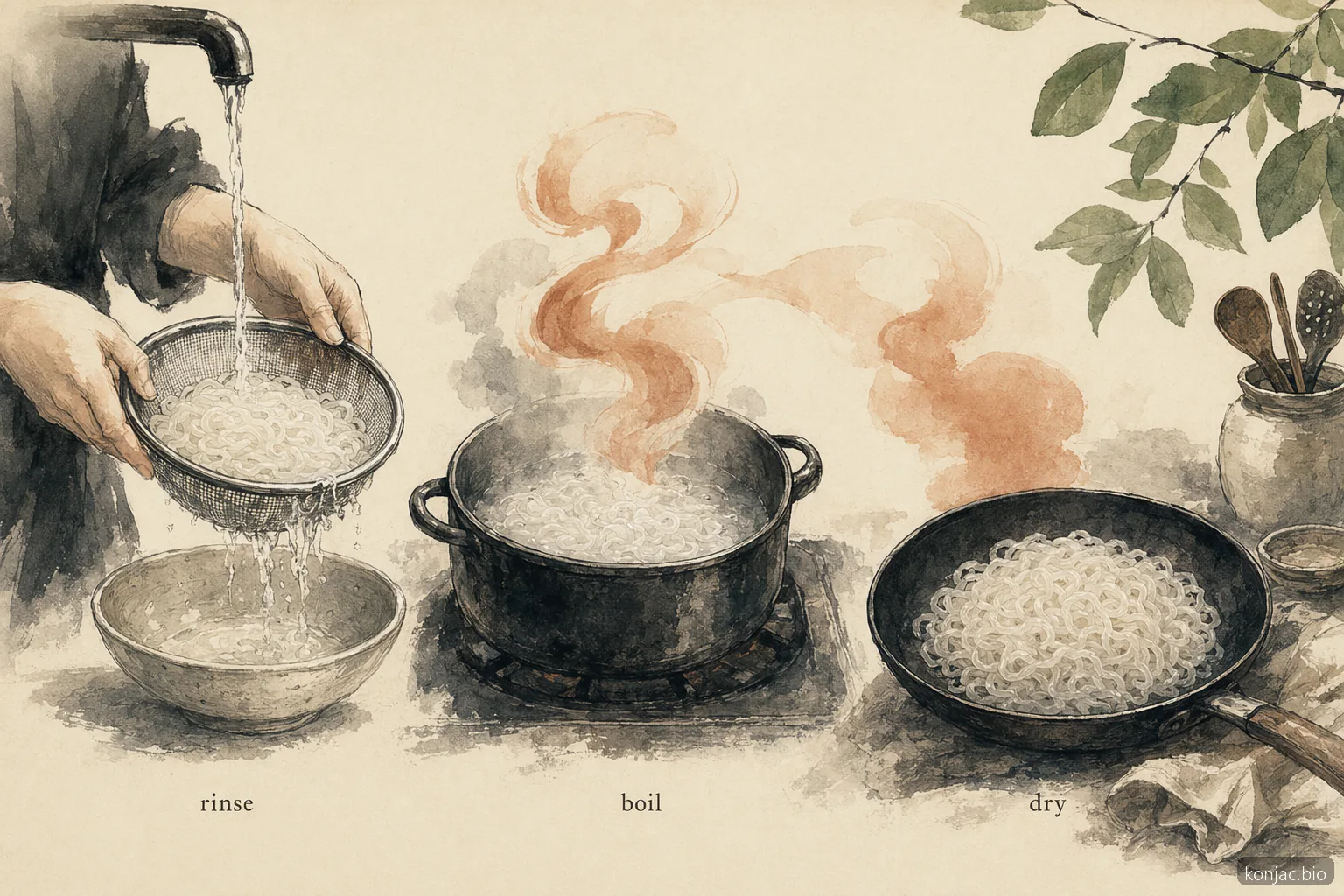
You cook a shirataki noodles noodle well by rinsing it, briefly boiling it, then dry-panning it before adding sauce.
This 3-step method removes packing liquid, tightens texture, and drives off excess surface moisture. It also makes the noodle less slippery, so sauces cling instead of sliding to the bottom of the bowl.
- Drain and rinse for 30 to 60 seconds. Use cold running water and move the noodles with your fingers or tongs.
- Boil for 2 to 3 minutes. This refreshes the gel and reduces aroma from the packing liquid.
- Dry-pan for 3 to 5 minutes. Use a nonstick or stainless pan over medium heat until steam slows and the noodles squeak slightly.
- Add sauce last. Toss with a reduced sauce, broth concentrate, chili crisp, soy-ginger glaze, or pan juices.
Do not overcook shirataki expecting it to soften like semolina pasta. It will not turn al dente because it has no gluten network or wheat starch matrix.
For a step-by-step kitchen walkthrough with timing, sauce ratios, and common mistakes, see our cooking shirataki guide.
Nutrition and safety facts for shirataki noodles
Shirataki noodles are used mainly for low-calorie meal volume, not for protein, micronutrients, or wheat-pasta flavor.
The core functional ingredient, glucomannan, is a viscous soluble fiber. EFSA evaluated glucomannan and authorized the claim: "Glucomannan in the context of an energy restricted diet contributes to weight loss" under defined conditions, including 3 g per day in three 1 g doses with 1 to 2 glasses of water before meals, cited in the EFSA opinion.
A meta-analysis of randomized controlled trials found glucomannan was associated with favorable changes in total cholesterol, LDL cholesterol, triglycerides, body weight, and fasting blood glucose markers, but the authors also noted variation in study design and dose in the PubMed meta-analysis. For food writing and product claims, the safest phrasing is that glucomannan may support satiety and weight-management goals when used as directed with enough water.
Konjac foods also need sensible texture safety. The FDA has acted against konjac-containing mini-cup jelly candies because firm gels can lodge in the throat, described in an FDA alert. Shirataki noodles are a different format, but they should still be chewed well and cut shorter for children, older adults, or anyone who struggles with chewy foods.
For manufacturers, retailers, and foodservice teams: konjac.bio sources konjac ingredients at wholesale scale for noodles, gels, and fiber-forward formulations. Contact our team through wholesale pricing for specification and sourcing support.
Where does a shirataki noodles noodle fit best in meals?
A shirataki noodles noodle fits best in meals with strong sauce, broth, aromatics, and contrasting texture.
Because the noodle is neutral, the dish should supply salt, acid, fat, heat, or umami. Soy sauce, miso, sesame oil, rice vinegar, chili paste, garlic, ginger, mushroom broth, tomato paste, and reduced pan sauces all work well.
- Broth bowls: miso broth, chicken broth, mushroom stock, ramen-style toppings.
- Stir-fries: cabbage, egg, tofu, shrimp, garlic, ginger, scallion.
- Cold dishes: sesame dressing, cucumber, edamame, chili oil, rice vinegar.
- Low-carb pasta plates: tomato sauce, pesto, browned butter, pan-roasted vegetables.
- Hot pot: add near the end, just long enough to heat through.
The most common mistake is using a watery sauce on wet noodles. Reduce the sauce first, dry-pan the noodles, then combine over heat for 60 to 90 seconds.
Shirataki is also useful for mixed bowls. Combining half shirataki and half rice noodles, soba, or spaghetti gives more familiar chew while lowering the total starch load per serving.
Frequently asked questions
01 Is a shirataki noodles noodle the same as konjac pasta?
02 Why do shirataki noodles smell fishy when opened?
03 Are shirataki noodles zero calorie?
04 Can shirataki noodles replace pasta in every recipe?
05 How much glucomannan is needed for the EFSA weight-management claim?
06 Are shirataki noodles safe to eat?
- Scientific Opinion on the substantiation of health claims related to glucomannan and reduction of body weight · European Food Safety Authority · 2010
- Import Alert 33-15: Detention Without Physical Examination of Gel Candy Containing Konjac · U.S. Food and Drug Administration · 2024
- Glucomannan and obesity: a critical review · PubMed · 2005
- Effect of glucomannan on plasma lipid and glucose concentrations, body weight, and blood pressure: systematic review and meta-analysis · PubMed · 2008