What are shirataki noodles and rice?
Shirataki noodles and rice are two konjac-based shapes made mostly from water and glucomannan fiber, not wheat flour or rice grain. Both come from Amorphophallus konjac, a corm crop whose glucomannan has been reviewed by the European Food Safety Authority in a formal EFSA opinion.
The word shirataki is often used for translucent konjac noodles, but the same gel can be cut into short rice-like pieces. That is why shirataki rice behaves more like a small, bouncy pasta than steamed jasmine, basmati, or short-grain rice.
Plain versions usually contain three core inputs:
- Water, often the largest ingredient by weight
- Konjac flour or purified glucomannan
- A setting ingredient such as calcium hydroxide
The format changes the meal. Long strands carry broth, tomato sauce, sesame dressing, or curry. Rice-shaped pieces scatter through bowls, stir-fries, omelets, and lettuce cups without dominating the plate.
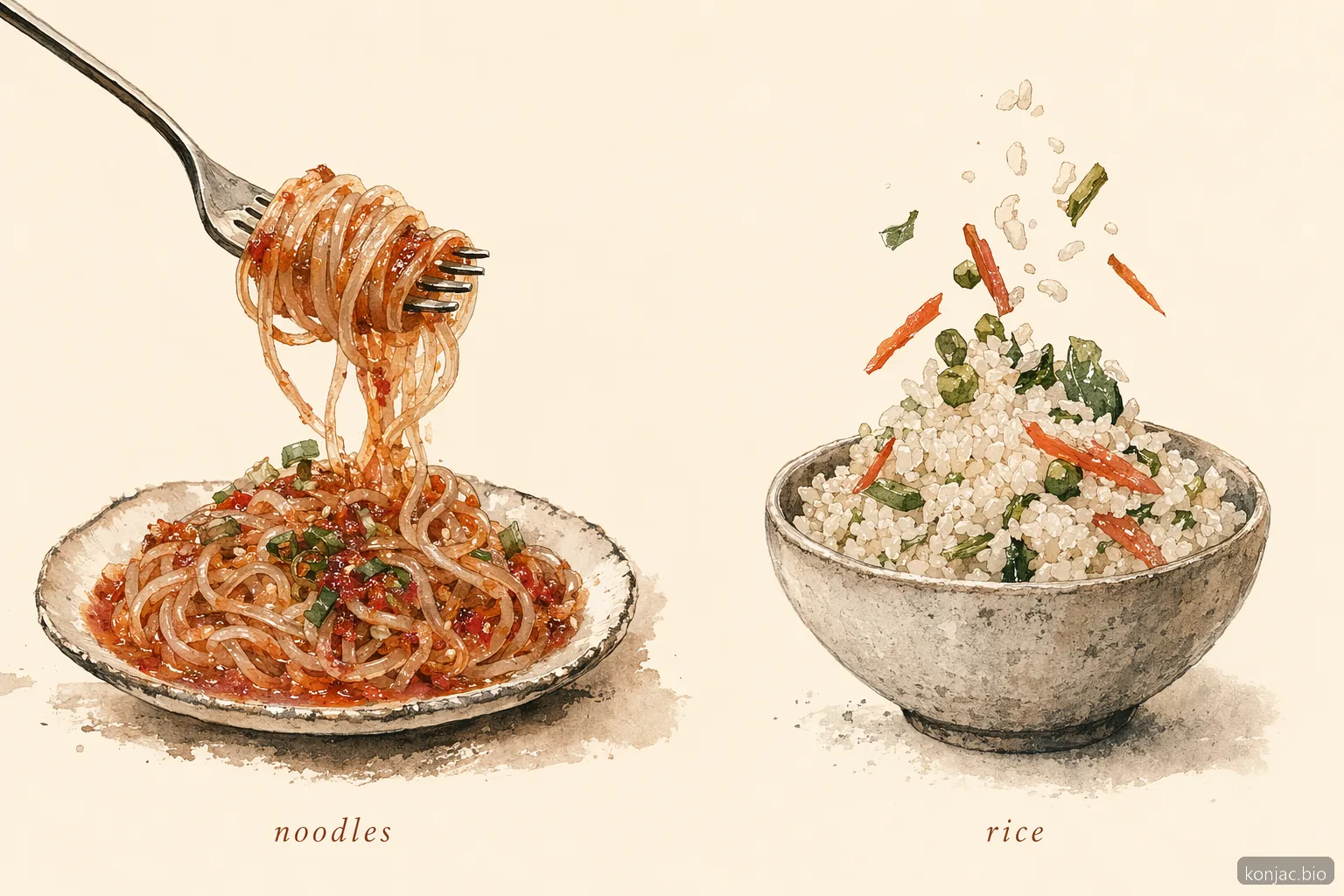
How do shirataki noodles and rice compare with regular pasta and rice?
Shirataki noodles and rice are much lower in calories and digestible carbohydrate than regular pasta or cooked white rice, but they also provide less protein and starch. Cooked white rice is listed by USDA FoodData Central at about 130 calories and 28 grams of carbohydrate per 100 grams, depending on the entry and preparation method shown in FoodData Central.
Plain shirataki products often list very low calories because the gel is mostly water. The tradeoff is texture: konjac is springy, slippery, and chewy, while rice and pasta are starchy, soft, and absorbent.
| Food | Typical role | Texture | Main nutrition point |
|---|---|---|---|
| Shirataki noodles | Ramen, pasta, soups, stir-fries | Springy strands | Very low calorie, mostly water and fiber |
| Shirataki rice | Bowls, fried rice, grain blends | Small chewy grains | Very low calorie, low digestible carbohydrate |
| Regular pasta | Sauced meals, baked dishes | Starchy bite | Higher carbohydrate, some protein |
| Cooked rice | Bowls, sides, sushi, curries | Soft grains | Higher carbohydrate, neutral flavor |
Shirataki is not a one-for-one nutrition substitute for whole grains. A balanced plate still needs protein, vegetables, fat, and minerals. For a deeper label walkthrough, use the shirataki nutrition guide.
Best uses for noodles, rice, and mixed bowls
The best use depends on shape, moisture, and sauce weight. Noodles suit meals where strands are expected, while rice-shaped konjac works best when small pieces can mix evenly with other ingredients.
Use shirataki noodles when the dish has strong seasoning, broth, or a glossy sauce. Good examples include miso broth, peanut-lime dressing, garlic butter, tomato sauce, sesame soy stir-fry, and coconut curry.
Use shirataki rice when the dish is built by spoon, not fork. It works in egg fried rice, burrito bowls, cauliflower rice blends, poke-style bowls, stuffed peppers, and quick skillet meals.
- For pasta: choose fettuccine or spaghetti-style shirataki, then dry-pan before saucing.
- For ramen: choose thin noodles, rinse well, then warm directly in broth.
- For fried rice: choose shirataki rice, dry-pan first, then add egg, scallion, and vegetables.
- For meal prep: keep sauce separate so the konjac texture stays clean and not watery.
A 50:50 blend is often the easiest transition. Mix shirataki rice with cooked brown rice, quinoa, lentils, or cauliflower rice to lower meal calories while keeping a familiar chew.
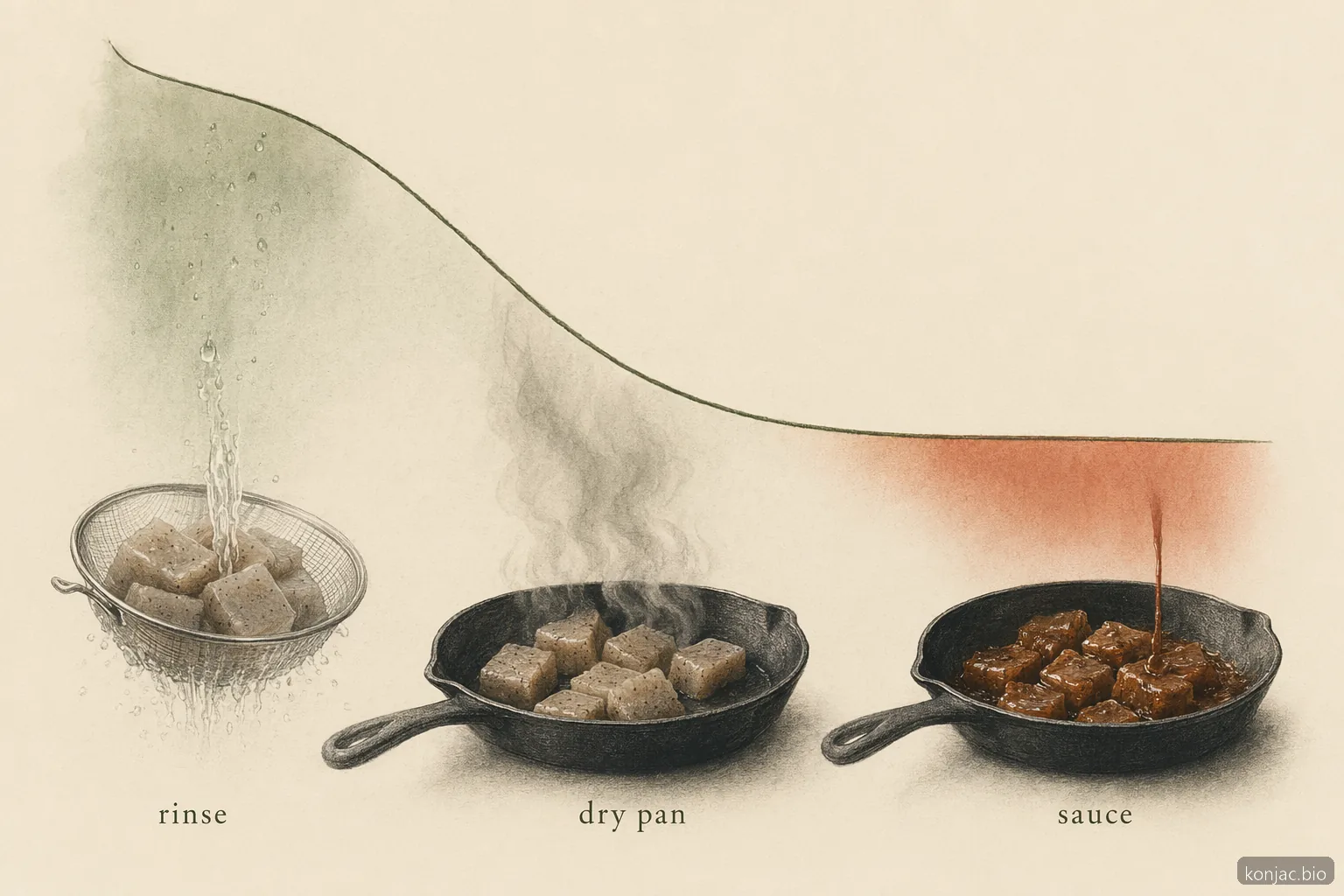
How should you cook shirataki noodles and rice?
Cook shirataki noodles and rice by rinsing, briefly boiling, then dry-pan heating until the surface water is gone. This three-step method reduces the packaged aroma and helps sauces cling.
Most shelf-stable shirataki is packed in liquid. The aroma comes from the alkaline water, not spoilage, when the product is within date and the package is intact.
- Drain: pour off the packing liquid.
- Rinse: rinse under cold running water for 30 to 60 seconds.
- Boil: simmer for 2 to 3 minutes.
- Dry-pan: heat in a skillet with no oil for 3 to 5 minutes.
- Season: add sauce, broth, vegetables, protein, or aromatics.
For noodles, dry-pan until they squeak slightly when stirred. For rice, spread the pieces into a thin layer so steam escapes quickly. Overcrowding leaves excess water in the pan and weakens the final flavor.
Avoid relying on plain shirataki for flavor. Garlic, ginger, miso, chili crisp, tomato paste, soy sauce, lemon, toasted sesame oil, and parmesan all help konjac taste like a finished meal. For a full method guide, see how to cook shirataki.
Nutrition, satiety, and label checks
Konjac foods are best understood as low-energy meal components, not complete meals. Plain shirataki noodles and rice are useful when paired with eggs, tofu, fish, chicken, beans, vegetables, or a sauce that contributes flavor and nutrients.
Glucomannan is a viscous soluble fiber. EFSA approved the claim "Glucomannan in the context of an energy restricted diet contributes to weight loss" for foods that provide 1 gram of glucomannan per portion, with 3 grams daily taken in three doses with water before meals, as stated in the EFSA claim.
Fiber targets matter for the whole day, not just one product. The U.S. Food and Drug Administration lists 28 grams as the Daily Value for fiber on a 2,000 calorie diet in its Daily Value table.
Check labels for these details:
- Serving size: some bags contain one serving, others contain two.
- Calories: plain konjac is low, but sauces can change the meal quickly.
- Sodium: seasoned cups and ready meals may add salt.
- Fiber amount: glucomannan grams vary by formula.
- Added starch: some products include oat fiber, soy, tapioca, or other binders.
B2B aside: konjac.bio sources konjac ingredients at wholesale scale for food brands, manufacturers, and product developers. For specifications, bulk formats, and pricing, contact the team.
Frequently asked questions
01 Are shirataki noodles and rice the same food?
02 Do shirataki noodles and rice taste like regular pasta or rice?
03 Why do shirataki noodles and rice smell when opened?
04 Can shirataki rice replace all rice in a bowl?
05 Are shirataki noodles and rice good for weight management?
06 Which is better, shirataki noodles or shirataki rice?
- Scientific Opinion on health claims related to konjac mannan · European Food Safety Authority · 2010
- Daily Value on the Nutrition and Supplement Facts Labels · U.S. Food and Drug Administration · 2022
- FoodData Central · U.S. Department of Agriculture · 2024
- Glucomannan and obesity: a critical review · PubMed · 2005