What is shirataki noodle rice?
Shirataki noodle rice is konjac-based rice made by shaping konjac gel into small granules instead of long noodles.
The core ingredient is glucomannan, a water-soluble polysaccharide from the corm of Amorphophallus konjac, a plant used across East Asian food traditions. Konjac glucomannan is widely studied as a viscous dietary fiber, with PubMed-indexed reviews describing its high water-binding and gel-forming behavior konjac glucomannan.
Most rice-style products use three basic inputs: purified water, konjac flour or glucomannan, and a food-grade alkaline coagulant such as calcium hydroxide. Some products add oat fiber, tapioca starch, soy fiber, or seaweed powder to change bite, color, and aroma.
Shirataki noodle rice belongs to the same konjac family as shirataki noodles, but the eating job is different. Long strands replace pasta in broths and stir-fries, while rice-shaped granules replace a spoonable base in bowls, curries, burrito fillings, and meal prep containers. For the broader category, see Shirataki Noodles: The Complete Guide to Konjac Pasta.
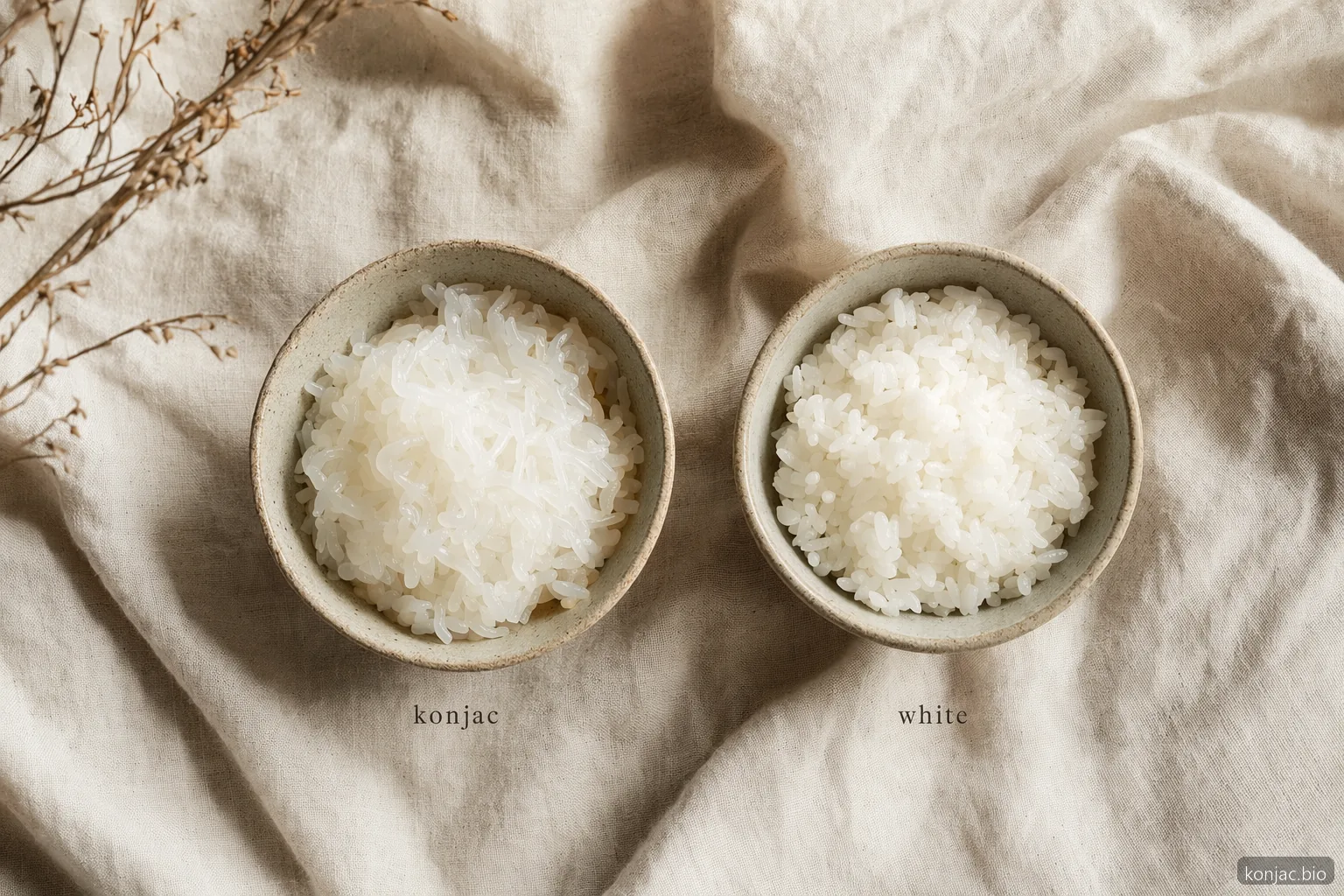
How does shirataki noodle rice compare with white rice?
Shirataki noodle rice has far fewer calories and carbohydrates than cooked white rice, but it also has less starch, less chew, and less natural rice flavor.
Cooked long-grain white rice provides about 130 calories and 28.2 g carbohydrate per 100 g in USDA FoodData Central white rice. Typical shirataki rice labels often list about 5 to 20 calories per serving, with values varying by brand, added fibers, and drained weight. The FDA explains that Nutrition Facts panels are the product-specific source for calories, carbohydrates, and serving size food labels.
| Feature | Shirataki noodle rice | Cooked white rice |
|---|---|---|
| Main material | Konjac glucomannan gel | Rice grain starch |
| Calories | Usually very low | About 130 kcal per 100 g |
| Carbohydrate | Usually very low | About 28.2 g per 100 g |
| Texture | Springy, slippery, separate grains | Soft, starchy, cohesive |
| Best role | Light base for saucy meals | Energy-dense starch and texture |
The key tradeoff is starch. White rice absorbs sauces, sticks together, and gives the familiar chew of cooked grain. Shirataki rice stays more separate and bouncy because glucomannan gel does not behave like gelatinized rice starch.
EFSA has authorized specific wording for glucomannan and weight management: “Glucomannan in the context of an energy restricted diet contributes to weight loss.” The stated condition is 3 g glucomannan daily in three 1 g doses with 1 to 2 glasses of water before meals EFSA opinion. A small serving of shirataki rice may not provide that amount, so label math matters.
How do you cook shirataki noodle rice so it tastes neutral?
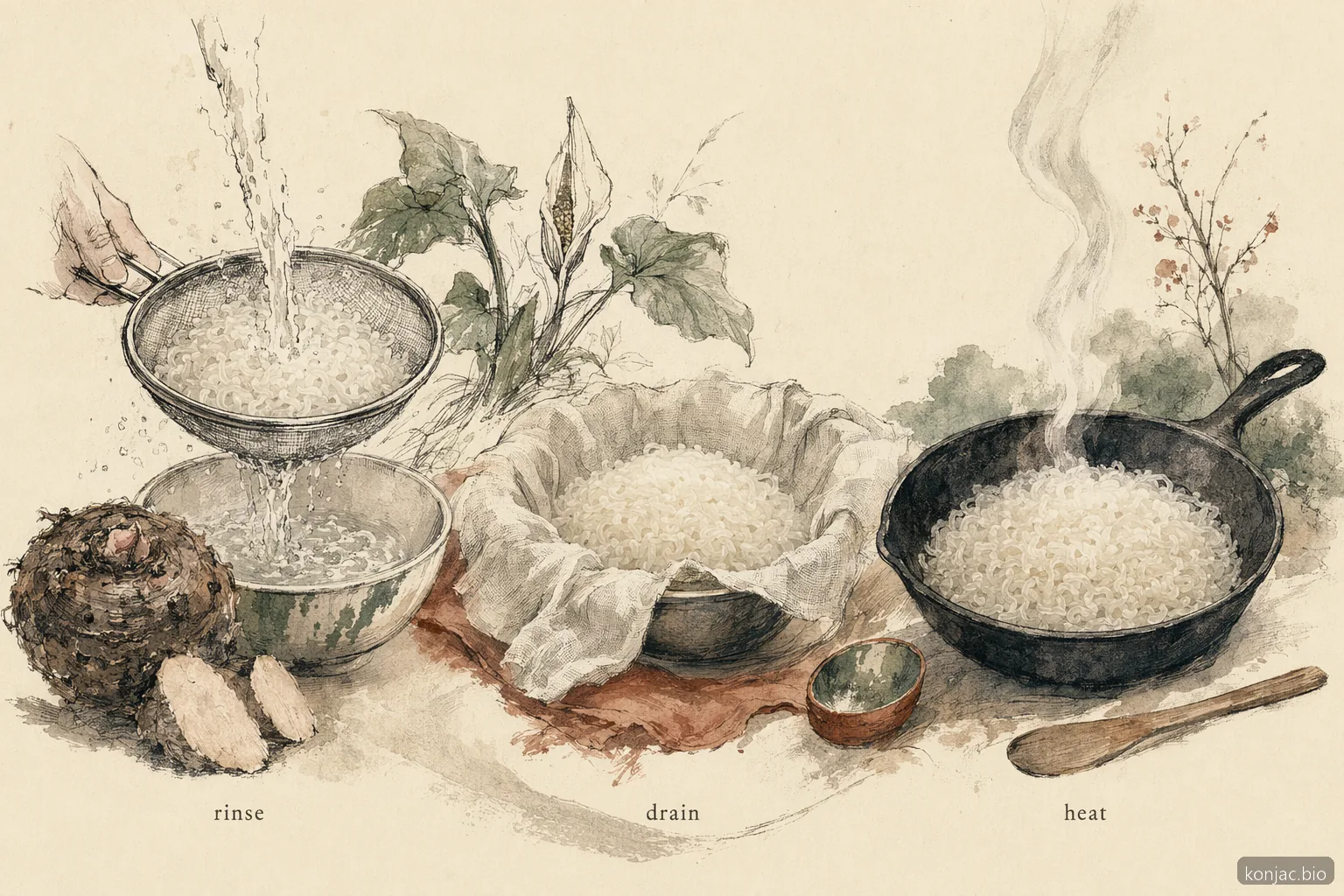
You cook shirataki noodle rice best by rinsing it well, draining it hard, then heating it in a dry pan before adding fat, sauce, or seasoning.
Many konjac foods have a packaged aroma from the alkaline liquid used to stabilize the gel. That smell usually fades after rinsing under cold water for 30 to 60 seconds and heating until surface moisture evaporates.
- Drain: Empty the pouch into a fine strainer.
- Rinse: Run cold water over the grains for 30 to 60 seconds.
- Boil briefly: Simmer for 2 minutes if the aroma is strong.
- Dry-pan heat: Stir in a nonstick skillet for 3 to 5 minutes.
- Season late: Add oil, soy sauce, curry, salsa, or broth after the grains steam off.
Dry-pan heating is the step most people skip. It reduces surface water, which helps sauces cling instead of sliding off. The grains will not brown like rice because they contain little starch or sugar, so flavor comes from what you add.
For fried rice, cook egg, tofu, chicken, shrimp, or vegetables first, then fold in the dry-heated konjac rice at the end. For soups, add it near the end so it warms through without diluting the broth. For detailed strand-based technique that also applies to konjac rice, see how to cook shirataki noodles.
Best uses for shirataki noodle rice
Shirataki noodle rice works best when it is not expected to act exactly like white rice. It is a neutral, low-calorie carrier for bold flavors, high-protein toppings, and sauces with body.
Good uses include:
- Fried rice: Use sesame oil, egg, scallions, peas, carrots, and soy sauce.
- Curry bowls: Pair with Thai curry, Japanese curry, dal, or coconut stews.
- Burrito bowls: Add beans, salsa, grilled vegetables, avocado, and lime.
- Poke-style bowls: Use chilled grains with fish, tofu, cucumber, seaweed, and tamari.
- Soup add-ins: Stir into miso soup, chicken broth, or hot pot near serving.
Less ideal uses include sushi, rice pudding, risotto, congee, and sticky rice desserts. Those dishes depend on rice starch for creaminess, cohesion, or stickiness. Konjac rice can lighten the dish, but it will not create the same structure by itself.
A practical blend is half cooked white rice and half shirataki rice. That keeps some starch, aroma, and chew while reducing calorie density. For people tracking intake, compare drained konjac rice labels with cooked rice entries in USDA FoodData Central rather than guessing from package photos FoodData Central.
Texture improves when the rest of the bowl has contrast. Crunchy cucumber, roasted broccoli, peanuts, sesame seeds, kimchi, grilled mushrooms, and crisp tofu make konjac rice feel intentional rather than like a one-for-one rice substitute.
Buying, storage, and formulation notes for shirataki noodle rice
Buy shirataki noodle rice by checking the ingredient list, drained weight, serving size, and whether the product is shelf-stable or refrigerated.
The cleanest labels usually contain water, konjac flour or glucomannan, and calcium hydroxide. Added fibers and starches are not automatically bad, but they can raise calories, change chew, and make the product more grain-like. If you need very low carbohydrate intake, verify total carbohydrate and dietary fiber on the Nutrition Facts panel.
Unopened shelf-stable pouches are convenient for pantry storage, while refrigerated tubs can have a softer bite. After opening, store unused rice in fresh water in a sealed container, refrigerate it, and use it within the time stated on the label. Do not freeze konjac rice unless the label allows it, because freeze-thaw cycles can make gel textures tougher and more watery.
Safety is mostly about form and use. The FDA has warned about choking risk from certain mini-cup gel candies containing konjac because firm gels can lodge in the throat FDA warning. Rice-shaped konjac granules are a different format, but normal chewing and adequate fluids are still sensible for high-fiber foods.
For food teams, konjac.bio sources konjac ingredients at wholesale volumes and can support specification-driven product development; use contact for pricing and documentation.
If your main concern is calorie math, compare this page with shirataki noodles calories. If your main concern is texture, prioritize cooking method, sauce thickness, and whether the product contains only konjac or a blend of konjac plus other fibers.
Frequently asked questions
01 Is shirataki noodle rice the same as konjac rice?
02 Does shirataki noodle rice taste like white rice?
03 How many calories are in shirataki noodle rice?
04 Why does shirataki noodle rice smell fishy or alkaline?
05 Can shirataki noodle rice replace rice in every recipe?
06 Is glucomannan in shirataki noodle rice linked to weight management?
- Scientific Opinion on the substantiation of health claims related to konjac mannan (glucomannan) · European Food Safety Authority · 2010
- Rice, white, long-grain, regular, cooked, unenriched · USDA FoodData Central · 2019
- How to Understand and Use the Nutrition Facts Label · U.S. Food and Drug Administration · 2024
- Konjac glucomannan: A promising polysaccharide for food applications · PubMed · 2015
- FDA Warns Consumers About Potential Choking Hazard With Mini-Cup Gel Candies · U.S. Food and Drug Administration · 2001