What are noodles konjac?
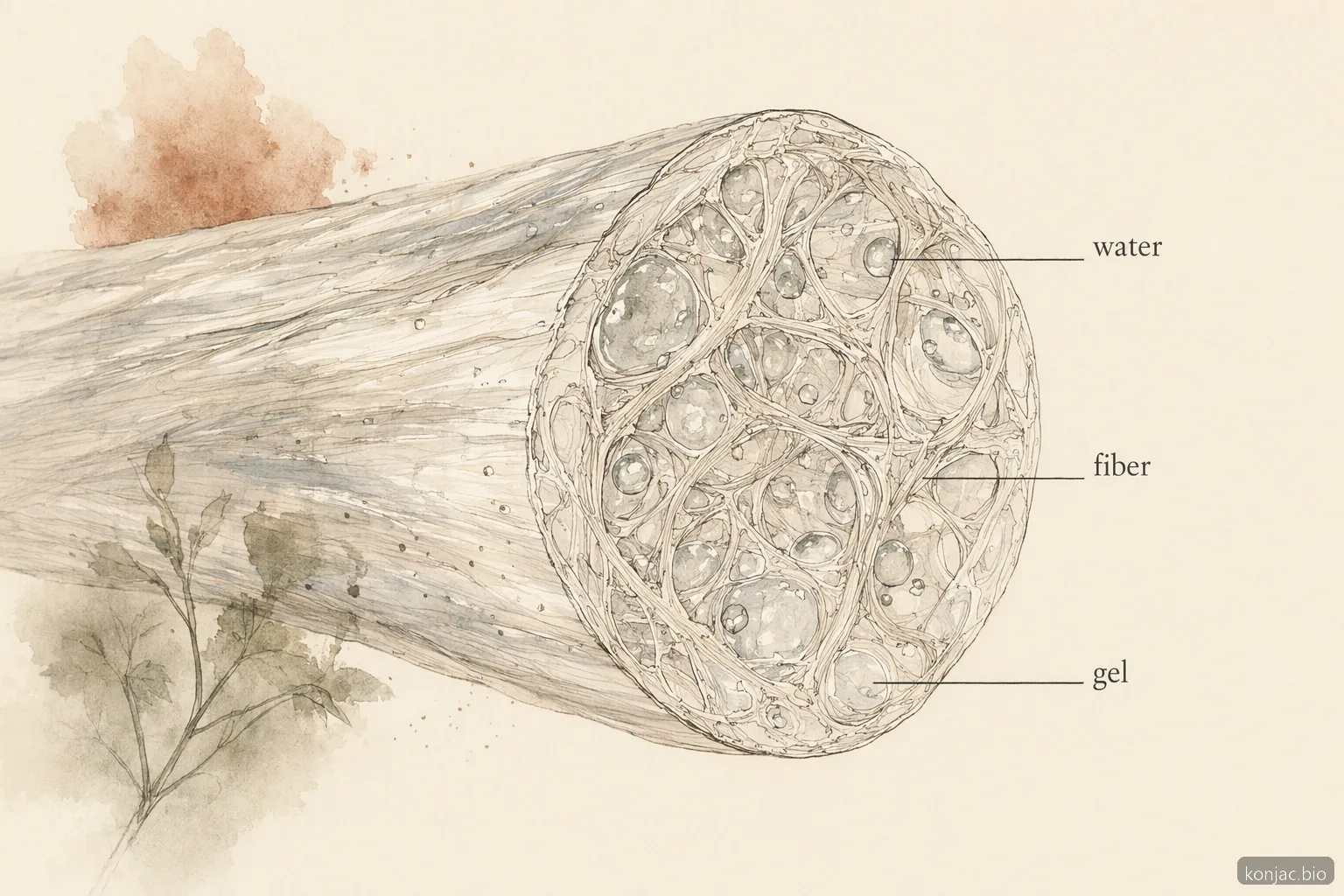
Noodles konjac are translucent shirataki-style noodles made with konjac glucomannan, water, and a food-grade setting agent. Glucomannan is a soluble, water-holding polysaccharide from the corm of Amorphophallus konjac, a plant used widely in Asian foods and evaluated by EFSA for authorized nutrition-related claims EFSA opinion.
The name sounds unusual because shoppers use several overlapping terms. In English grocery aisles, you may see shirataki noodles, konjac noodles, konnyaku noodles, yam noodles, or lowercase miracle noodles. They usually describe the same core food: a gelled konjac product cut into noodle shapes.
Plain konjac noodles are valued for three practical reasons:
- Neutral flavor: they take on broth, soy, chili, sesame, curry, tomato, or miso sauces.
- Springy texture: the gel network gives a chewy bite that differs from wheat pasta.
- Low energy density: most of the product is water, so calories are far lower than wheat or rice noodles.
For a full category overview, ingredient definitions, and buying checklist, see our parent guide: Shirataki Noodles: The Complete Guide to Konjac Pasta.
How are noodles konjac made?
Noodles konjac are made by hydrating konjac flour in water, setting the mixture into a firm gel, then extruding or cutting it into noodle shapes. The finished texture comes from glucomannan’s ability to bind water and form a stable gel under alkaline conditions, a property described in food science literature on konjac glucomannan ScienceDirect review.
A typical commercial process has 5 steps:
- Flour hydration: konjac flour is dispersed in water until the glucomannan swells.
- Alkaline setting: calcium hydroxide or a similar food-grade alkali helps form the gel structure.
- Shaping: the gel is extruded into spaghetti, fettuccine, rice-style pieces, or sheets.
- Heat setting: heating stabilizes the noodle so it holds shape in soups and stir-fries.
- Packing: noodles are sealed in water, brine, or shelf-stable liquid, depending on the product.
That packing liquid is the reason many bags smell earthy or slightly ocean-like when opened. The smell is not usually the noodle itself. Rinsing under cold water for 30 to 60 seconds removes much of the aroma before cooking.
For formulators and retailers, konjac.bio sources konjac ingredients at wholesale scale and can support product-line planning through wholesale inquiries. Specifications, mesh size, viscosity, and food safety documentation matter more than marketing names when building a reliable noodle product.
Noodles konjac nutrition: calories, carbs, and fiber
Noodles konjac are mainly a high-water food with glucomannan fiber, which explains their low calorie and low digestible carbohydrate profile. Nutrition varies by brand, water content, and whether tofu, oat fiber, seaweed, or other ingredients are added, so the package Nutrition Facts panel is the final authority.
Plain konjac noodles usually compare with wheat pasta in a clear way:
| Food, cooked | Typical role | Calories | Texture |
|---|---|---|---|
| Konjac noodles | Low-calorie noodle base | Very low, often 5 to 20 per serving | Springy, slippery, chewy |
| Wheat pasta | Starchy main carbohydrate | About 200 per cooked cup | Soft, elastic, wheat-like |
| Rice noodles | Gluten-free starchy noodle | Usually similar to other starch noodles | Soft, tender, mild |
Glucomannan has been studied for weight-management and cholesterol-related outcomes, but wording matters. EFSA authorized the claim: “Glucomannan in the context of an energy restricted diet contributes to weight loss,” with use conditions of 3 g glucomannan daily in 3 doses of 1 g before meals with 1 to 2 glasses of water EFSA claim. EFSA also evaluated glucomannan for the maintenance of normal blood cholesterol concentrations EFSA opinion.
A meta-analysis of randomized controlled trials found glucomannan was associated with reductions in total cholesterol, LDL cholesterol, triglycerides, body weight, and fasting blood glucose, while noting differences across study designs and doses PubMed review. For meal planning, that means konjac noodles can be useful as a lower-calorie swap, not as a stand-alone health strategy.
For a more detailed calorie breakdown, see shirataki noodles calories.
How do you cook konjac noodles well?
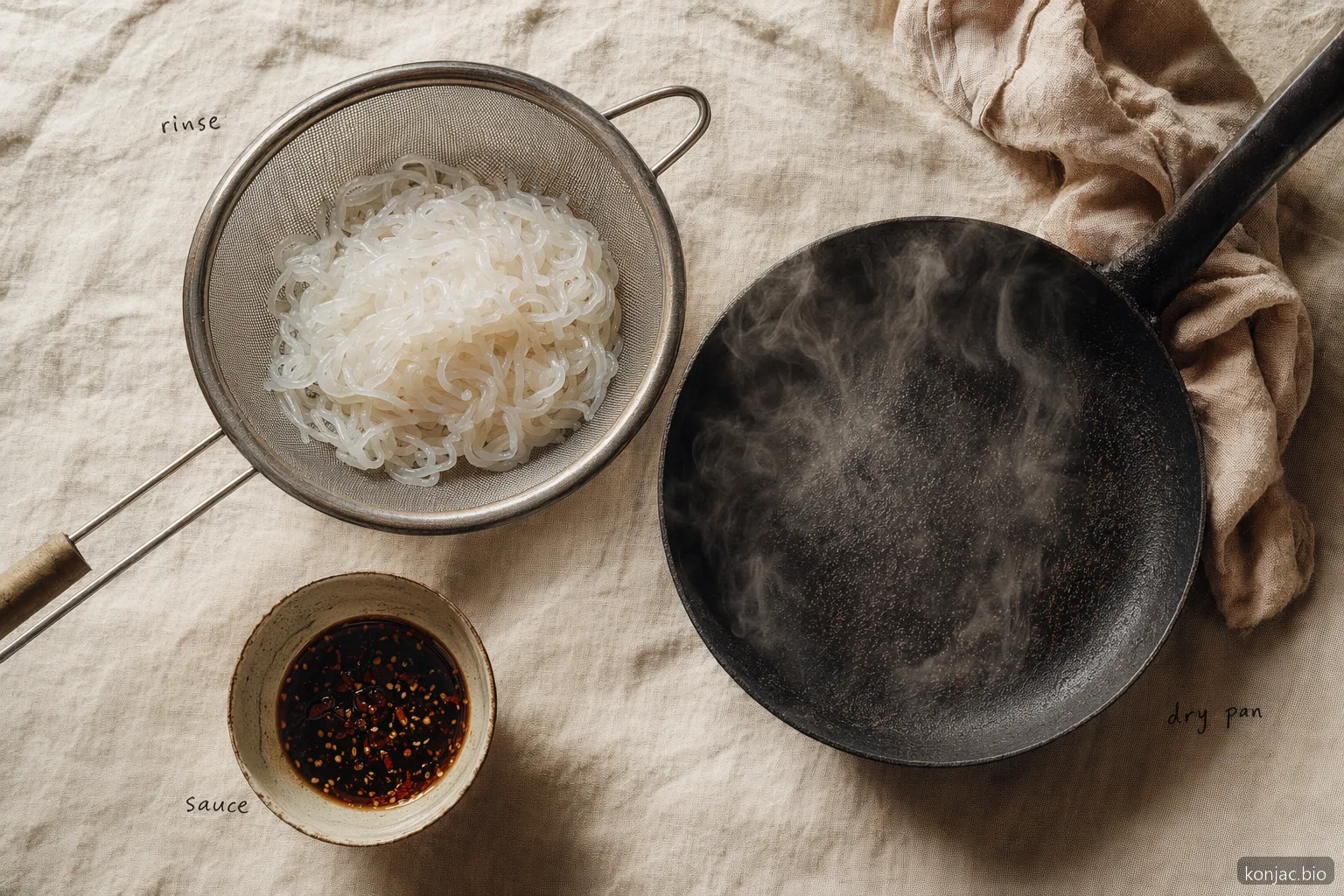
You cook konjac noodles well by rinsing them thoroughly, heating them in a dry pan, then adding sauce after excess water evaporates. This 3-step method improves smell, texture, and sauce cling without adding complicated prep.
Use this basic method for most bags:
- Drain: pour off the packing liquid completely.
- Rinse: rinse under cold running water for 30 to 60 seconds.
- Boil, optional: boil for 2 minutes if you want a cleaner aroma.
- Dry-pan heat: add noodles to a nonstick skillet for 3 to 5 minutes until steam fades.
- Sauce last: add sauce, oil, broth reduction, or stir-fry vegetables after drying.
Konjac noodles do not absorb sauce like wheat pasta because the gel is already water-rich. Thick sauces work better than thin sauces: peanut-lime, sesame-soy, curry coconut, tomato paste-based sauces, chili crisp, or miso butter-style sauces cling more effectively.
They also work well in soups, but timing matters. Add noodles near the end so they warm through without diluting the broth. In hot pot, ramen-style bowls, or pho-style bowls, season the broth strongly before the noodles go in.
For step-by-step kitchen variations, including stir-fry and soup methods, see how to cook shirataki noodles.
Are noodles konjac safe to eat?
Noodles konjac are safe for most adults when eaten as a normal food, chewed well, and consumed with enough fluid. The main practical cautions are digestive comfort, choking risk in certain gel formats, and individual tolerance to high-fiber foods.
Konjac noodles are different from mini-cup konjac jelly candies. FDA import alerts have focused on gel candies containing konjac because small, firm gel cups can present a choking hazard, especially for children and older adults FDA alert. Noodle strands in meals are a different format, but the same common-sense advice applies: chew thoroughly and do not swallow large clumps.
Some people notice bloating or fullness when increasing soluble fiber quickly. NIH notes that dietary fiber can affect digestive function and that higher intakes are best approached with adequate fluids NIH fiber. Start with a half serving if you are new to konjac noodles, especially when pairing them with other high-fiber foods such as beans, lentils, or cruciferous vegetables.
Quality also matters. For B2B purchasing, ask suppliers about ingredient identity, heavy metal testing, microbiology, viscosity, and food safety systems. ISO 22000 is one recognized framework for food safety management systems in the food chain ISO 22000.
Frequently asked questions
01 Are noodles konjac the same as shirataki noodles?
02 Do noodles konjac taste like pasta?
03 Are noodles konjac good for low-carb meals?
04 Why do noodles konjac smell odd when opened?
05 Can you eat noodles konjac every day?
06 What is the best sauce for noodles konjac?
- Scientific Opinion on the substantiation of health claims related to konjac mannan · European Food Safety Authority · 2010
- Effect of glucomannan on plasma lipid and glucose concentrations, body weight, and blood pressure · PubMed · 2008
- Import Alert 33-15: Gel Candies Containing Konjac · U.S. Food and Drug Administration · 2024
- Fiber Fact Sheet for Health Professionals · National Institutes of Health · 2022
- ISO 22000 Food safety management · International Organization for Standardization · 2018