What are miracle noodles?
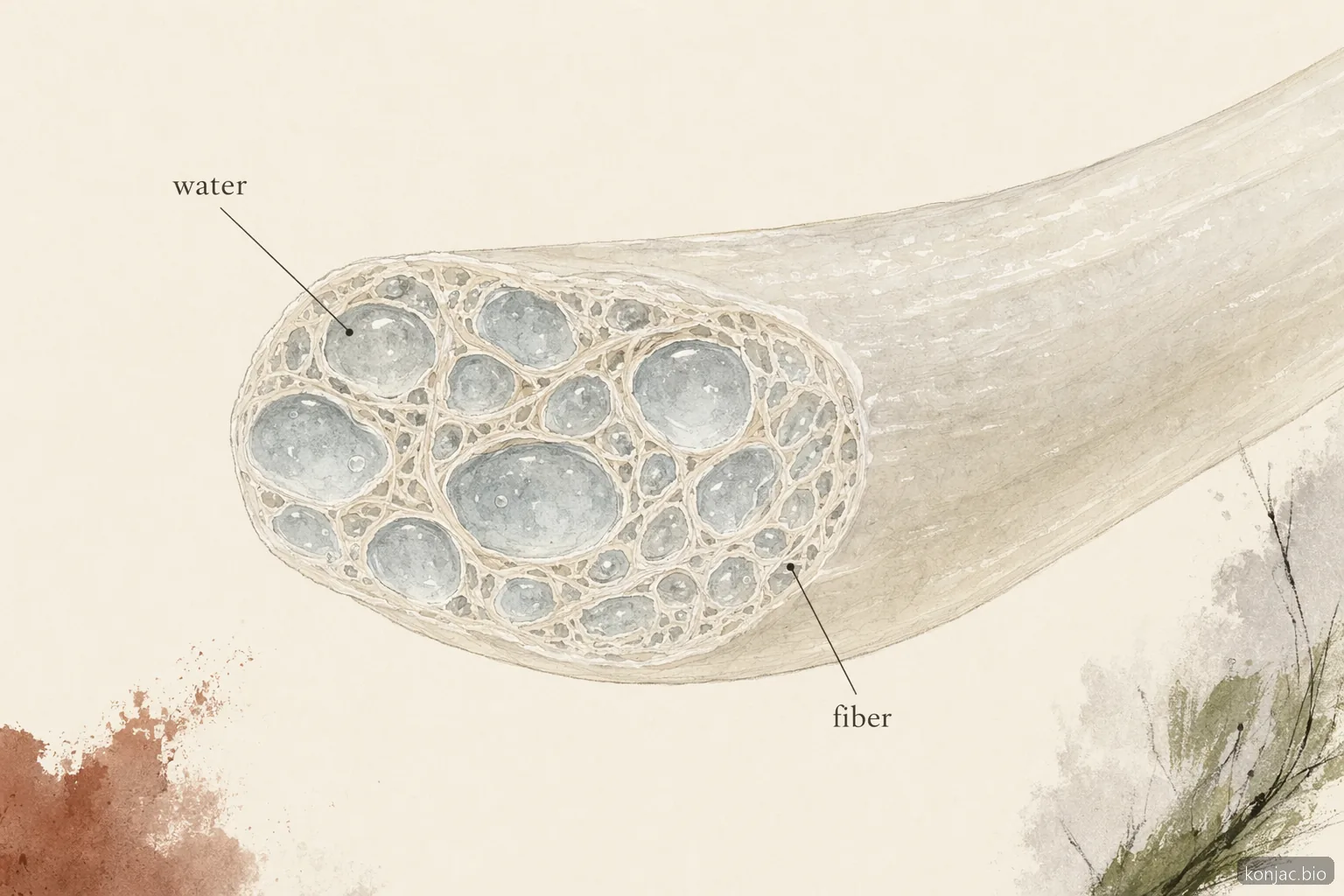
Miracle noodles are shirataki noodles made by gelling konjac glucomannan with water and food-grade calcium hydroxide.
The ingredient behind the texture is glucomannan, a soluble polysaccharide found in the corm of Amorphophallus konjac. The European Food Safety Authority describes glucomannan as a water-soluble fiber from konjac that can form highly viscous solutions in water in its EFSA opinion.
In grocery packaging, the names overlap. “Shirataki” is the traditional Japanese term, while “miracle noodles” is the common English phrase used for the same low-calorie konjac noodle format. Most packs contain water, konjac flour or glucomannan, and a calcium setting agent.
For a full category overview, including shapes, ingredients, and meal ideas, see our parent guide to shirataki noodles.
Why are miracle noodles so low in calories?
Miracle noodles are low in calories because they are mostly water and fiber, with very little digestible starch, fat, or protein.
A typical 200 g drained serving of plain shirataki noodles provides about 10 to 30 calories, depending on the brand, added ingredients, and labeling method. That is far below cooked wheat pasta or white rice, which contain substantial starch per serving.
The fiber is the main functional ingredient. The U.S. Food and Drug Administration lists 28 g as the Daily Value for dietary fiber on updated Nutrition Facts labels, which gives consumers a reference point for comparing packaged foods using the Daily Value.
Low calorie does not mean nutritionally complete. Miracle noodles are best used as a base for protein, vegetables, sauce, and fat rather than as the whole meal. A balanced bowl might include 200 g shirataki, 120 g tofu or chicken, 150 g vegetables, and 1 to 2 tablespoons of sauce.
How do you cook miracle noodles so they taste better?
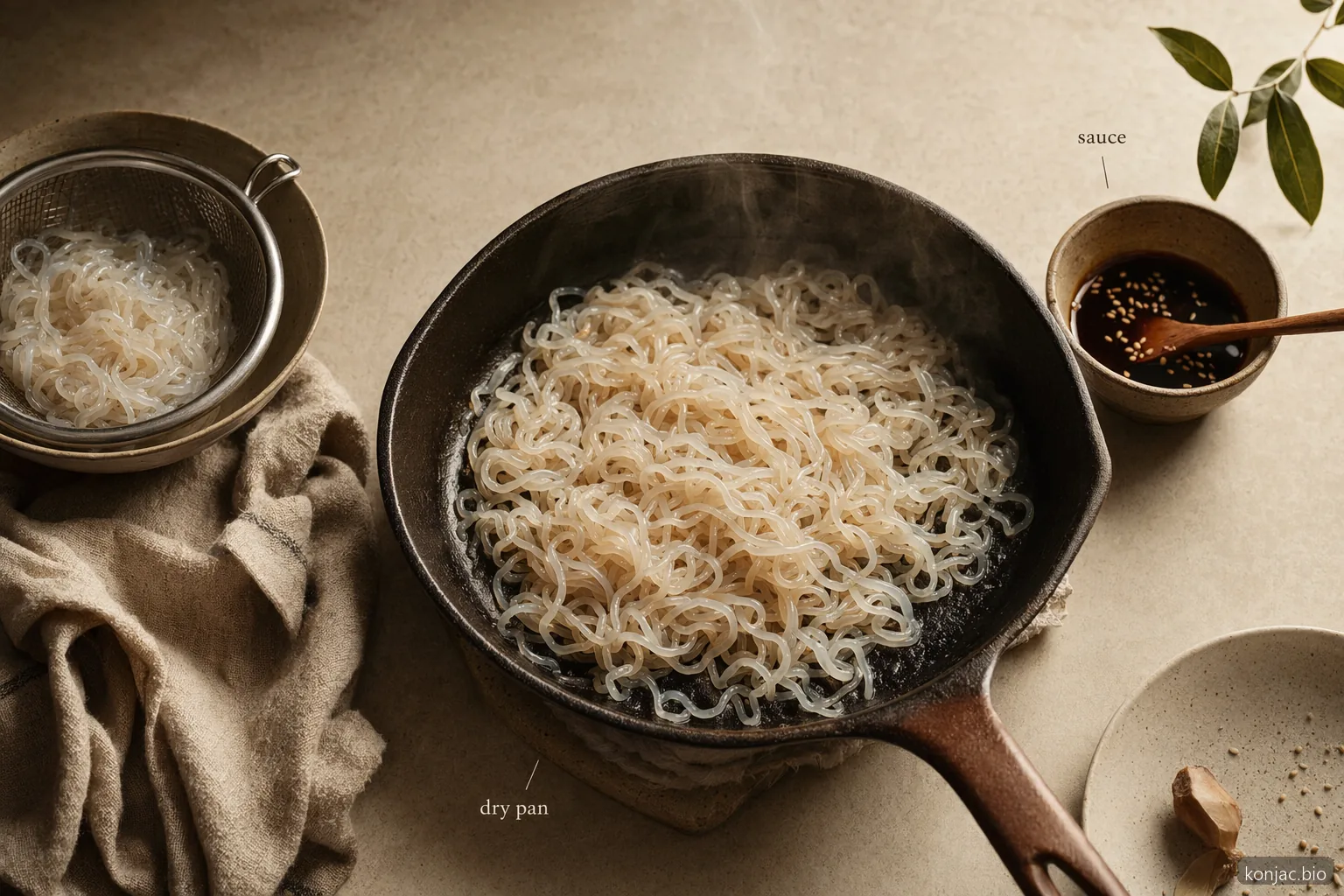
You cook miracle noodles best by rinsing them, boiling them briefly, then heating them in a dry pan before adding sauce.
The liquid in the pouch can smell briny or slightly alkaline. That aroma is normal for many konjac noodles, but it should be rinsed away before cooking.
- Drain: Pour the pouch into a strainer and discard the packing liquid.
- Rinse: Rinse under cold water for 30 to 60 seconds.
- Boil: Simmer for 2 to 3 minutes to refresh the texture.
- Dry-pan heat: Heat in a skillet for 3 to 5 minutes until excess surface water evaporates.
- Sauce last: Add sauce after the noodles are hot and dry enough to grip flavor.
Dry-pan heating is the step many home cooks skip. It tightens the surface, reduces slipperiness, and helps thicker sauces cling. For a deeper cooking walkthrough, see our guide to cooking shirataki noodles.
Miracle noodles vs pasta and rice
Miracle noodles work like a neutral noodle base, but they are not nutritionally equivalent to wheat pasta or rice.
The biggest difference is starch. Cooked pasta and rice are staple carbohydrate foods, while shirataki is a high-water konjac gel. USDA FoodData Central provides standard nutrient data for common foods, including cooked pasta and rice, through FoodData Central.
| Food, cooked or drained | Typical serving | Main calorie source | Best use |
|---|---|---|---|
| Miracle noodles | 200 g | Konjac fiber, minimal starch | Low-calorie noodle bowls, stir-fries, soups |
| Wheat pasta | 140 g cooked | Wheat starch and protein | Higher-energy meals, sauces needing bite |
| White rice | 158 g cooked | Rice starch | Grain bowls, curries, sushi-style meals |
Texture is also different. Wheat pasta has chew from gluten and starch gelatinization. Rice is soft and granular. Miracle noodles are springy, slippery, and resistant to overcooking because the gel structure does not soften like wheat dough.
The best swap depends on the meal. Use miracle noodles when the sauce, broth, vegetables, and protein carry the dish. Keep pasta or rice when the grain flavor and starch structure are central to the recipe.
What benefits of miracle noodles are supported by evidence?
Miracle noodles may support lower-calorie meals, and their glucomannan fiber has authorized EFSA health claims when specific intake conditions are met.
The EFSA-approved weight-management wording is: “Glucomannan in the context of an energy restricted diet contributes to weight loss.” EFSA states the claim may be used only for foods providing 1 g glucomannan per quantified portion, with consumers told to take 3 g daily in three 1 g doses with 1 to 2 glasses of water before meals, in the context of an energy-restricted diet, in the EFSA opinion.
EFSA also assessed the claim “Glucomannan contributes to the maintenance of normal blood cholesterol levels” with a condition of 4 g glucomannan daily. These claims are about glucomannan intake under defined conditions, not about any single meal or brand.
Human studies on konjac glucomannan have examined body weight, satiety, lipids, and bowel habits. A clinical review indexed by the U.S. National Library of Medicine summarizes controlled trials and notes that effects vary by dose, study design, and diet context in PubMed data.
For everyday eating, the most practical benefit is meal design. Replacing part of a starch-heavy noodle portion with 200 g shirataki can reduce meal calories while leaving room for vegetables, lean protein, and flavorful sauces.
Buying, storage, and manufacturing notes
Plain miracle noodles should have a short ingredient list, a sealed pouch, clear storage instructions, and a texture that matches the intended recipe.
Most shelf-stable pouches use water and an alkaline setting system to keep the konjac gel intact. Refrigerated formats may have a softer bite, while shelf-stable formats can be firmer and more elastic. Check whether the serving size is listed as drained weight or total pouch weight because nutrition panels can differ.
Safety context matters. FDA import controls have focused on konjac-containing mini-cup gel candies because small, firm gels can create a choking risk, especially when swallowed whole, as described in the FDA alert. That concern is different from properly chewed noodles, but it explains why shape, gel strength, and usage instructions matter in konjac product design.
Store unopened pouches according to the label. After opening, refrigerate leftovers in fresh water and use them quickly, usually within 1 to 2 days if the product label does not state a different timeframe.
B2B aside: konjac.bio sources konjac ingredients and shirataki formats at wholesale for food brands, retailers, and manufacturers. For specifications, volumes, and pricing, contact us.
Frequently asked questions
01 Are miracle noodles the same as shirataki noodles?
02 Do miracle noodles have carbs?
03 Why do miracle noodles smell fishy or briny?
04 Can miracle noodles help with weight management?
05 Are miracle noodles safe to eat?
06 What dishes work best with miracle noodles?
- Scientific Opinion on the substantiation of health claims related to konjac mannan glucomannan · European Food Safety Authority · 2010
- Import Alert 33-15: Detention Without Physical Examination of Gel Candies Containing Konjac · U.S. Food and Drug Administration · 2024
- Daily Value on the Nutrition and Supplement Facts Labels · U.S. Food and Drug Administration · 2024
- FoodData Central · U.S. Department of Agriculture · 2024
- A systematic review of the effect of glucomannan on body weight · PubMed · 2005