What is a miracle noodle shirataki noodle?
A miracle noodle shirataki noodle is a low-calorie konjac noodle made from water, konjac flour, and a setting alkaline ingredient such as calcium hydroxide.
The key plant is Amorphophallus konjac, a corm crop used in East Asian foods such as shirataki, konnyaku blocks, and konjac jelly. Konjac flour is rich in glucomannan, a water-soluble polysaccharide that forms strong gels and viscous solutions, a property described in food science reviews of konjac glucomannan.
The phrase “miracle noodles” usually means plain shirataki noodles rather than a special noodle category. Most products are packed in water, sold in spaghetti, fettuccine, rice, or angel-hair shapes, and designed to absorb sauces rather than contribute much flavor of their own.
For a broader overview of formats, ingredients, and buying criteria, see the parent guide: shirataki noodles.
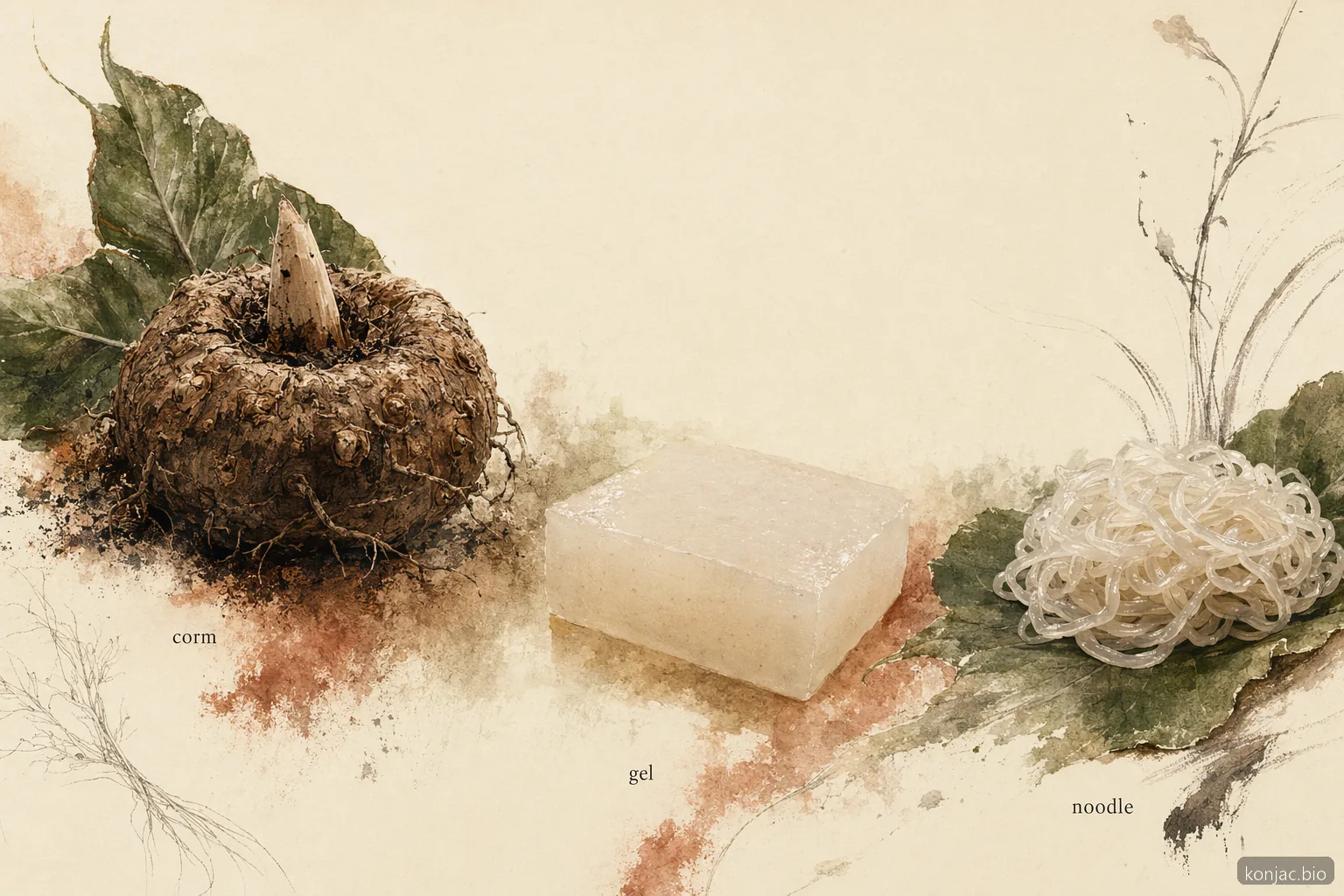
How is a miracle noodle shirataki noodle made?
A miracle noodle shirataki noodle is made by hydrating konjac flour, setting the glucomannan gel, shaping it into strands, and packing the noodles in water.
The basic process has 5 steps:
- Hydrate konjac flour: Konjac powder is dispersed in water so glucomannan can thicken.
- Add alkaline coagulant: Calcium hydroxide or a similar food-grade alkali helps create the firm gel texture.
- Extrude or cut: The gel is shaped into noodle strands, rice shapes, or wider ribbons.
- Heat set: Heat stabilizes the gel and gives shirataki its springy bite.
- Pack in water: Finished noodles are sealed in liquid to maintain texture and shelf stability.
That “fishy” or earthy aroma in some packs comes from the storage liquid and konjac raw material, not from seafood. Rinsing and briefly boiling the noodles removes much of the odor before cooking.
For manufacturers, konjac.bio sources food-grade konjac ingredients at wholesale volumes for noodles, gels, and fiber-rich formulations. Request specs and pricing through the contact page.
Nutrition: miracle noodles vs wheat pasta
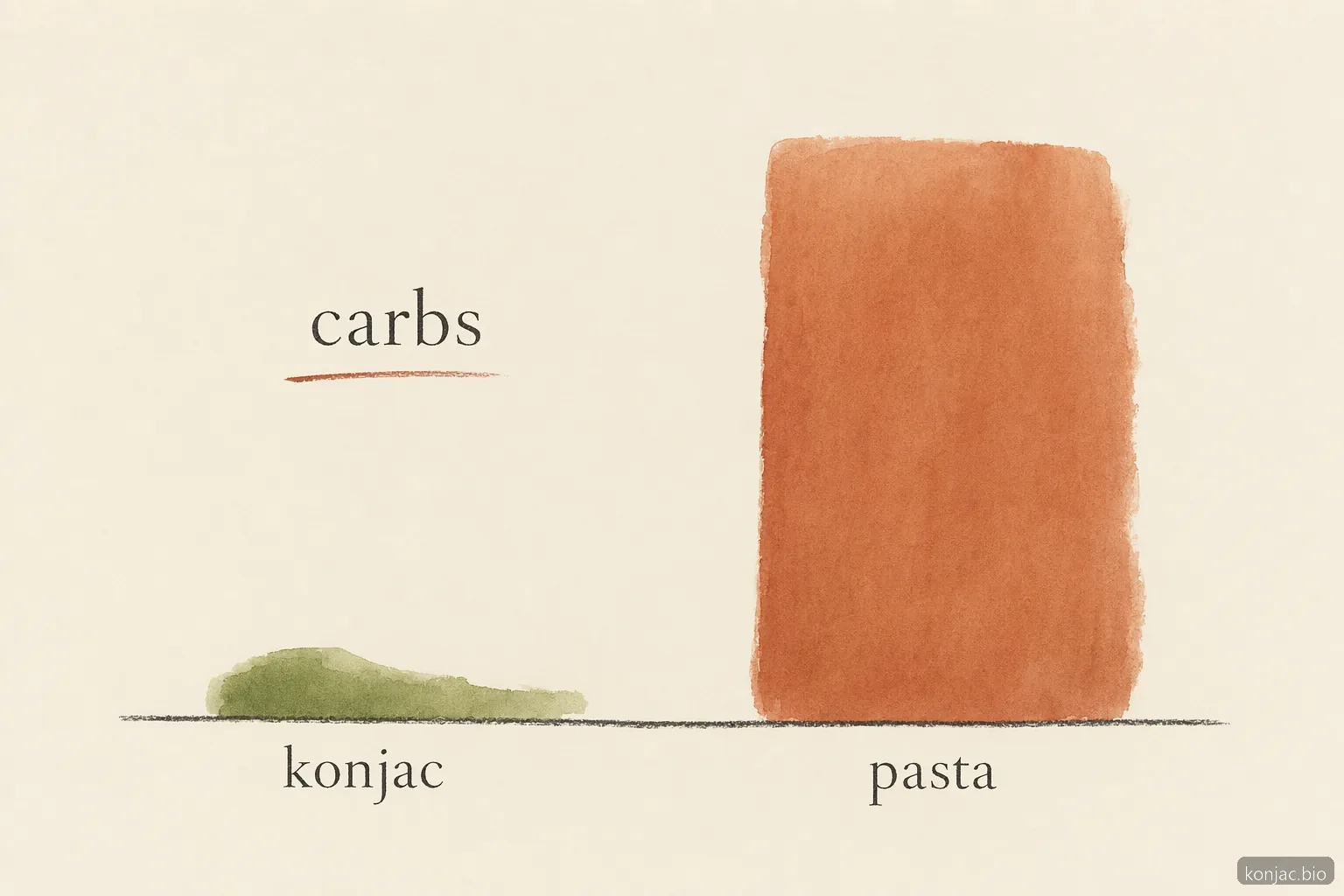
Plain shirataki is usually chosen because it contributes far fewer calories and digestible carbohydrates than wheat pasta. Standard cooked spaghetti contains about 158 calories and 30.9 grams of carbohydrate per 100 grams in USDA FoodData Central, while plain konjac noodles are mostly water and fiber USDA pasta.
Exact nutrition varies by maker because some products include tofu, oat fiber, seaweed powder, or added starch. Always compare the nutrition panel by 100 grams, not only by serving size, because noodle serving sizes can range from 85 to 200 grams.
| Food | Main ingredient | Typical role | Texture |
|---|---|---|---|
| Plain shirataki | Konjac glucomannan | Low-calorie pasta swap | Springy, slippery |
| Wheat pasta | Durum wheat semolina | Carbohydrate base | Firm, starchy |
| Rice noodles | Rice flour | Gluten-free noodle base | Soft, elastic |
| Zucchini noodles | Fresh zucchini | Vegetable noodle substitute | Watery, tender |
Shirataki is not nutritionally identical to pasta because it provides little protein, little starch, and usually limited micronutrients. It works best when paired with protein, vegetables, and a flavorful sauce rather than eaten as a full meal by itself.
If you are comparing labels for calories, net carbs, fiber, and sodium, the sibling guide shirataki noodles nutrition gives a more detailed label-reading framework.
How do you cook shirataki so it tastes less rubbery?
You cook shirataki best by rinsing it well, boiling it for 2 to 3 minutes, then dry-pan heating it before adding sauce.
This 4-step method improves both aroma and texture:
- Drain: Pour off the packing liquid completely.
- Rinse: Rinse under cold running water for 30 to 60 seconds.
- Boil: Simmer for 2 to 3 minutes, then drain again.
- Dry-pan heat: Cook in a hot, ungreased skillet for 3 to 5 minutes until steam drops and squeaking starts.
Dry-pan heating matters because shirataki releases water. If sauce is added too early, the sauce dilutes and slides off the noodle surface. After dry heating, add concentrated sauces such as sesame-garlic, tomato paste-based marinara, curry paste, miso broth, or soy-ginger glaze.
Cut long strands with kitchen scissors before saucing if you want easier mixing. Shirataki does not soften like wheat pasta, so the goal is to remove excess water and coat the surface, not to cook it to al dente.
For recipe-level timing and sauce ratios, see how to cook shirataki noodles.
Safety, claims, and label language for miracle noodles
Plain shirataki noodles are foods, and their label claims should stay within food regulations and the evidence for konjac glucomannan. The European Food Safety Authority authorized the wording: “Glucomannan in the context of an energy restricted diet contributes to weight loss,” with conditions including 3 grams daily in 3 doses of 1 gram taken with 1 to 2 glasses of water before meals EFSA weight.
EFSA also authorized the claim “Glucomannan contributes to the maintenance of normal blood cholesterol levels,” with a condition of 4 grams of glucomannan per day EFSA cholesterol. Those claims apply to specified glucomannan intake, not automatically to every bowl of shirataki noodles.
Choking risk is context-specific. The U.S. Food and Drug Administration has flagged konjac mini-cup gel candies because small gel cups can be difficult to dislodge if swallowed whole FDA konjac. Shirataki noodles are a different food format, but careful chewing and appropriate serving sizes still matter, especially for children and older adults.
Label wording should be conservative: low-calorie, low-carbohydrate, source of fiber if the nutrition panel qualifies, and made with konjac glucomannan. Avoid medical-style claims, and keep serving suggestions practical: pair shirataki with protein, vegetables, fat, and seasoning for a complete dish.
Frequently asked questions
01 Is a miracle noodle shirataki noodle the same as shirataki?
02 Why do shirataki noodles smell odd when opened?
03 Are shirataki noodles keto-friendly?
04 Can shirataki noodles replace pasta in every recipe?
05 What health claims are allowed for glucomannan?
06 How should shirataki noodles be stored?
- Scientific Opinion on glucomannan and weight loss · European Food Safety Authority · 2010
- Scientific Opinion on glucomannan and blood cholesterol · European Food Safety Authority · 2010
- Konjac glucomannan: A promising polysaccharide · PubMed · 2019
- Konjac Mini-Cup Gel Candies · U.S. Food and Drug Administration · 2024
- FoodData Central: Spaghetti, cooked · U.S. Department of Agriculture · 2019