What konjac root side effects are most common?
The most common konjac root side effects are gas, bloating, abdominal fullness, nausea, loose stools, and constipation.
Konjac root comes from the corm of Amorphophallus konjac and is concentrated into glucomannan, a highly viscous soluble fiber studied in human nutrition trials. A systematic review of glucomannan trials reported mostly gastrointestinal complaints rather than severe events, with tolerability varying by dose and product form PubMed review.
| Side effect | Why it may happen | Practical response |
|---|---|---|
| Gas or bloating | Gut bacteria ferment some fiber | Reduce serving size for several days |
| Fullness or nausea | Glucomannan thickens after hydration | Use more water and avoid oversized servings |
| Loose stools | Fiber intake rises too quickly | Increase more gradually |
| Constipation | Dry fiber plus low fluid intake | Drink water with each serving |
Most digestive effects are dose-related. A person who jumps from almost no supplemental fiber to multiple servings of konjac powder in one day is more likely to notice discomfort than a person who increases slowly.
For a broader safety map, see Konjac Safety, which covers side effects, choking risk, and cautions across noodles, powders, capsules, and jelly products.
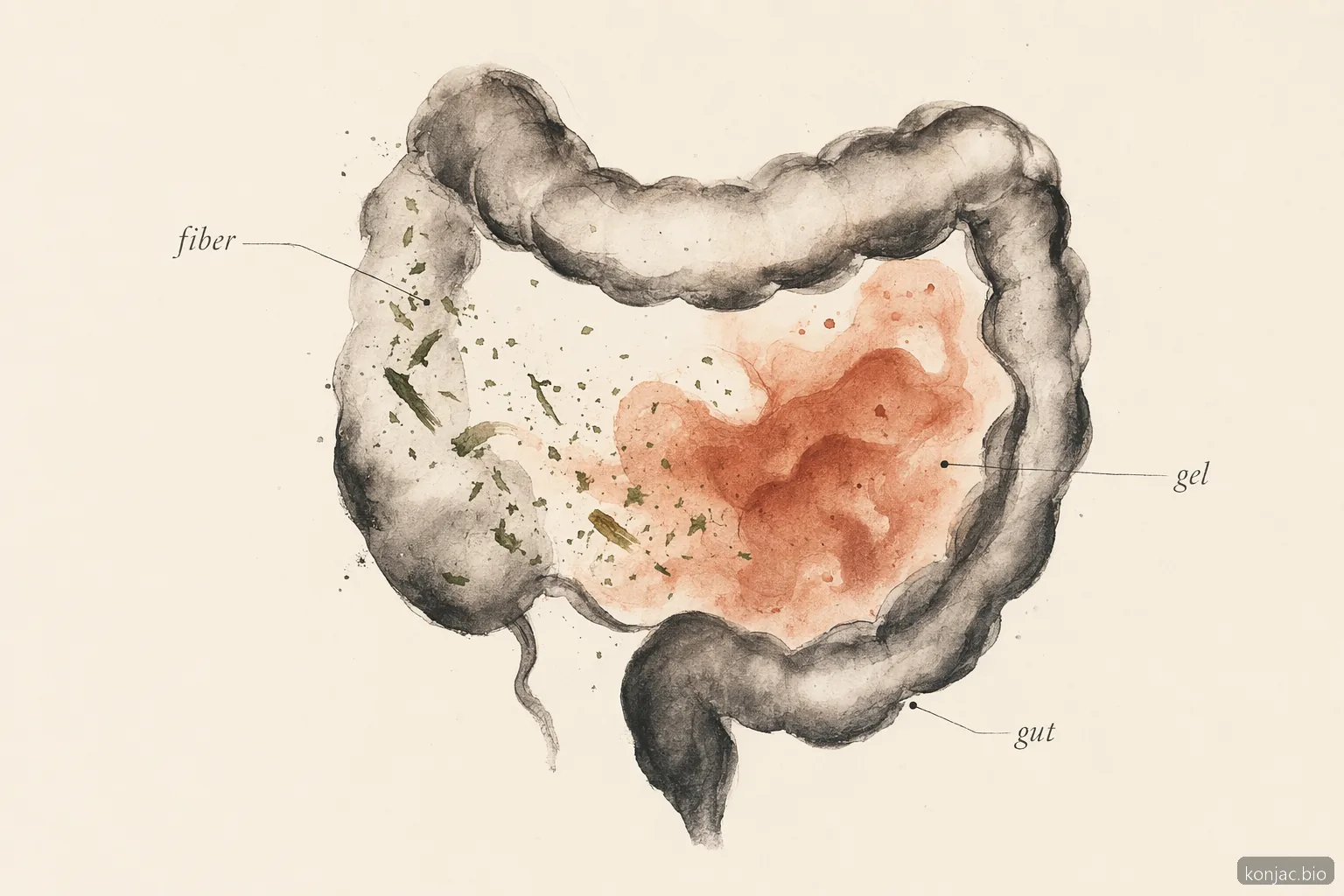
Why do konjac root side effects happen?
Konjac root side effects happen because glucomannan absorbs water, thickens into a gel, and increases total soluble fiber intake quickly.
Soluble fiber dissolves in water and can change stool texture, fullness, and gut comfort. MedlinePlus describes soluble fiber as fiber that dissolves in water and helps form a gel-like material in the digestive tract MedlinePlus fiber.
Glucomannan is especially viscous compared with many common fibers. That viscosity is why konjac powder can thicken foods, why shirataki noodles feel springy, and why dry powder or tablets should never be swallowed without enough fluid.
The same water-binding property also explains why some people feel full quickly. EFSA evaluated glucomannan and body weight claims, and the EU-authorized wording is: "Glucomannan in the context of an energy restricted diet contributes to weight loss" EU register. That claim has conditions of use, including 3 g daily in three 1 g doses with 1 to 2 glasses of water before meals and within an energy-restricted diet.
Side effects are more likely when the gel forms before swallowing or before enough water is present. That is why dry scoops, dry capsules, and firm konjac jelly deserve more caution than cooked noodles served in a meal.
Konjac root side effects by product form
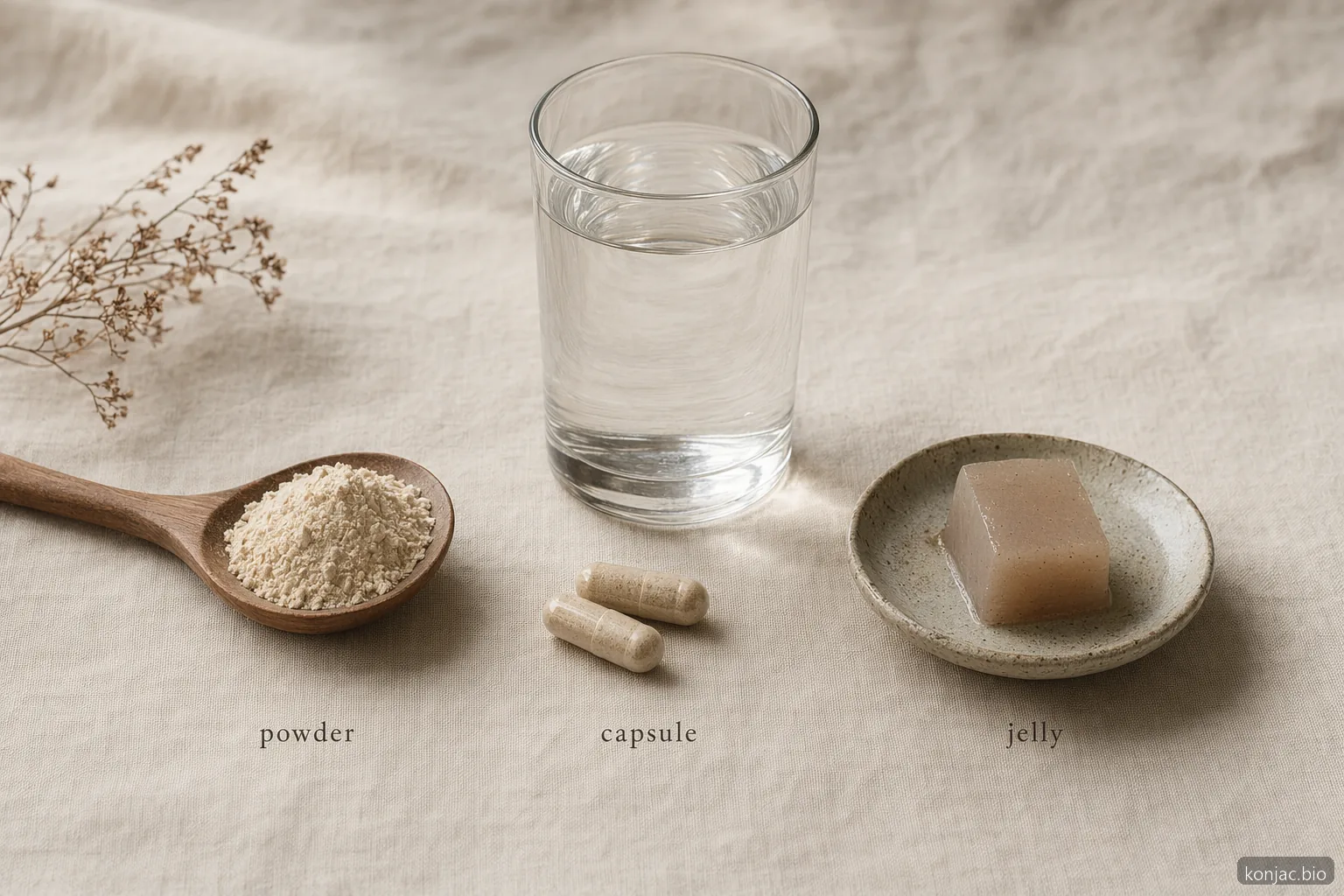
Konjac side effects depend heavily on product form, water content, serving size, and how the food is swallowed. A cooked noodle bowl and a dry glucomannan capsule are not the same safety situation.
| Product form | Main concern | Lower-risk habit |
|---|---|---|
| Shirataki noodles | Fullness, gas, bloating | Start with a half serving and chew well |
| Konjac powder | Rapid thickening if under-hydrated | Mix fully into water or food before swallowing |
| Capsules or tablets | Choking if taken dry or with too little water | Use a full glass of water and follow the label |
| Mini-cup konjac jelly | Choking, especially due to firmness and shape | Avoid for young children and anyone with swallowing difficulty |
| Konjac gummies or snacks | Overeating fiber in a small serving format | Track total grams of fiber per day |
The FDA has specifically warned that mini-cup gel candies containing konjac can pose a choking hazard because they may not dissolve easily in the mouth and can lodge in the throat FDA advisory. Case literature has also described choking events involving konjac jelly candies case reports.
Shirataki noodles usually contain far more water than powders or tablets, so their main issues are digestive comfort and portion size. Powder and capsule formats require more attention because glucomannan expands after contact with liquid.
For product-form detail, see the related guide on konjac choking risk, especially if developing snacks, jelly cups, capsules, or powdered drink mixes.
Who should be cautious with konjac root side effects?
People with swallowing difficulty, a history of choking, narrow esophagus, young children, and anyone taking oral medicines should be more cautious with konjac root.
The EU conditions for glucomannan claims require a warning about choking for people with swallowing difficulties or when glucomannan is taken with inadequate fluid intake EU register. That warning is most relevant for dry powder, capsules, tablets, and compressed formats.
- Children: Avoid firm mini-cup konjac jelly and any format that is difficult to chew thoroughly.
- Older adults with swallowing issues: Choose soft, well-hydrated foods or avoid supplemental forms.
- People using oral medicines: Separate konjac by 1 to 2 hours unless a health professional gives different guidance, since viscous fiber can affect absorption timing for some oral products fiber timing.
- Pregnant or breastfeeding adults: Use food amounts conservatively and ask a health professional before concentrated supplements.
- People on glucose-lowering or cholesterol-lowering prescriptions: Ask a health professional before adding large supplemental fiber doses.
Caution does not mean every person in these groups must avoid all konjac foods. It means format, serving size, hydration, and supervision matter more than they do for a healthy adult eating a small serving of cooked noodles.
Safer use checklist for konjac root
Safer use starts with water, small servings, and product forms that are easy to swallow. The goal is to let glucomannan hydrate before it becomes a swallowing hazard.
- Start small: Use a half serving of noodles or the lowest labeled powder serving for several days.
- Add water: Take powders, capsules, or tablets with a full glass of water, not a sip.
- Hydrate powder first: Stir powder completely into water, soup, yogurt, or sauce before swallowing.
- Chew noodles and jelly carefully: Do not swallow large pieces whole.
- Separate from oral medicines: Use a 1 to 2 hour gap unless a health professional recommends a different schedule.
- Stop after warning signs: Difficulty swallowing, chest discomfort, repeated vomiting, or severe abdominal pain warrants urgent medical help.
People using konjac for weight-management positioning should keep claims precise. EFSA evaluated glucomannan and the EU-authorized wording is tied to an energy-restricted diet, 3 g daily, and three 1 g doses with water before meals EFSA opinion.
For serving-size planning, see the related guide on glucomannan dosage. For manufacturers, konjac.bio sources konjac powder and glucomannan at wholesale volumes with specification review, and teams can use contact for pricing and supply questions.
Frequently asked questions
01 Are konjac root side effects usually serious?
02 Can konjac root cause choking?
03 Why does konjac root make me bloated?
04 Can I take konjac root every day?
05 Should I avoid konjac root if I take oral medicines?
06 Do shirataki noodles have the same side effects as konjac powder?
- Scientific Opinion on the substantiation of health claims related to konjac mannan and reduction of body weight · EFSA · 2010
- Commission Regulation (EU) No 432/2012 establishing permitted health claims made on foods · European Commission · 2012
- Consumer Advisory: Mini-Cup Gel Candy Imported from Asia Poses Potential Choking Hazard · FDA · 2002
- Effect of glucomannan on body weight in overweight or obese children and adults: a systematic review · PubMed · 2010
- Dietary fiber · MedlinePlus · 2023