
What are the most common konjac flour side effects?
The most common konjac flour side effects are bloating, gas, abdominal fullness, loose stools, and constipation.
Konjac flour is rich in glucomannan, a viscous soluble fiber from Amorphophallus konjac. Soluble fibers can increase intestinal gas when gut bacteria ferment them, and the NIH notes that adding fiber too quickly can cause gas, bloating, and cramps NIH fiber.
For most adults, side effects are dose related. A quarter teaspoon in soup behaves differently from several grams stirred into water. Konjac thickens quickly, so a small measuring error can change texture, speed of fullness, and gut comfort.
- Gas and bloating: more likely when intake increases suddenly.
- Fullness: linked to glucomannan’s high water-binding capacity.
- Loose stools: possible when large amounts are used with other fibers.
- Constipation: possible when konjac is taken with too little water.
Food use is different from concentrated supplement use. A sauce stabilized with konjac flour usually provides less glucomannan per serving than capsules or drink mixes designed to deliver grams of fiber.
Why do konjac flour side effects happen?
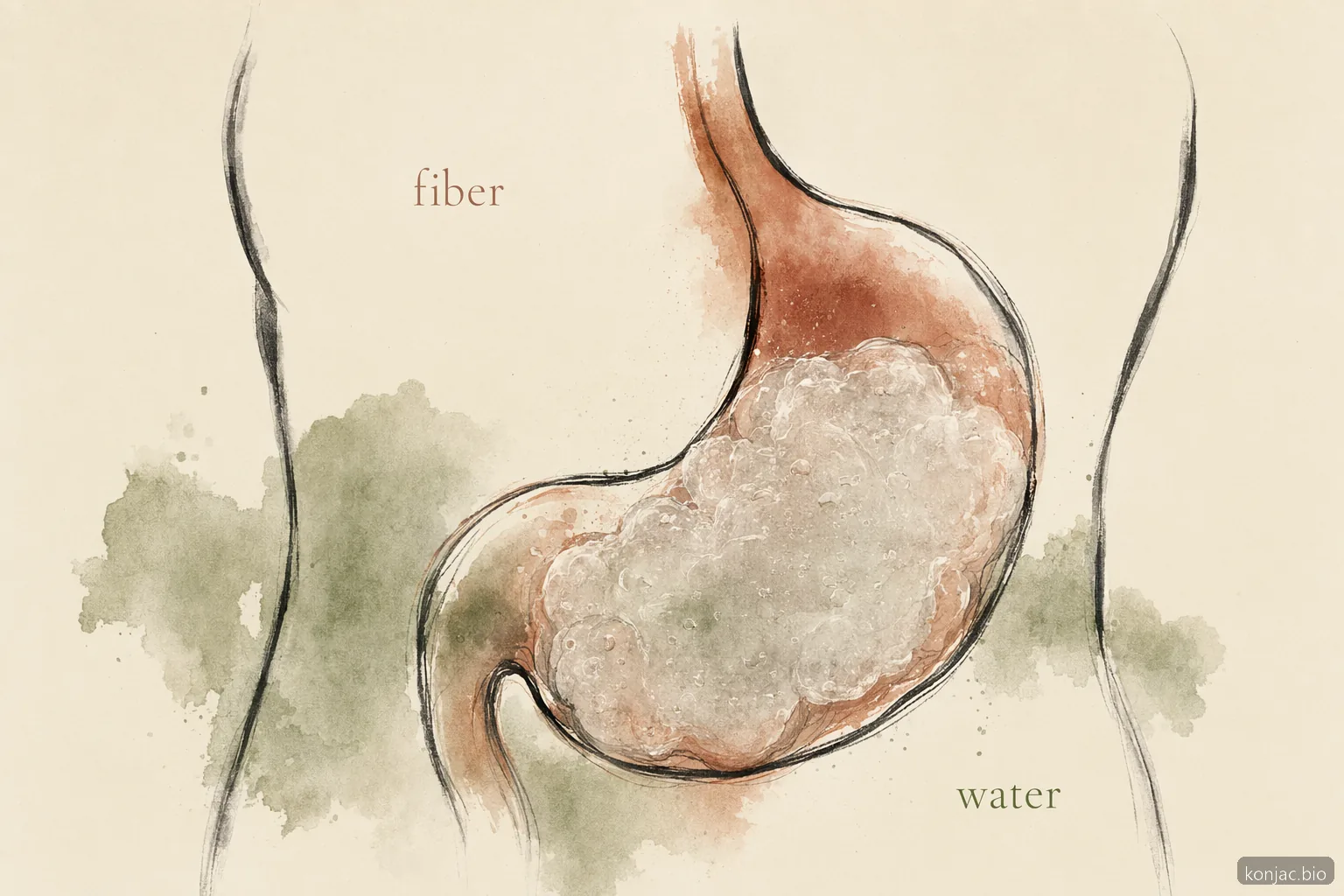
Konjac flour side effects happen because glucomannan absorbs water, increases viscosity, and changes how quickly food moves through the digestive tract.
EFSA describes konjac mannan, also called glucomannan, as a soluble dietary fiber with a high viscosity in water EFSA opinion. That gel-forming behavior is useful in noodles, gummies, sauces, and bakery systems, but it also explains many side effects.
Three mechanisms matter most:
- Water binding: dry powder expands after contact with liquid, so it should not be swallowed dry.
- Gel viscosity: thicker stomach contents can create early fullness and slower emptying.
- Fermentation: gut bacteria can ferment soluble fibers, creating gas in sensitive users.
EFSA’s approved weight-management wording is precise: “Glucomannan in the context of an energy restricted diet contributes to weight loss” EFSA claim. That claim applies at specified intakes and conditions, not to unlimited flour use in food.
A practical rule is simple: the thicker the konjac preparation, the more attention it needs. Thin soups, sauces, and hydrated noodles are lower concern than dry spoonfuls, thick drink gels, or capsules taken without enough water.
Which konjac flour formats carry the highest caution?
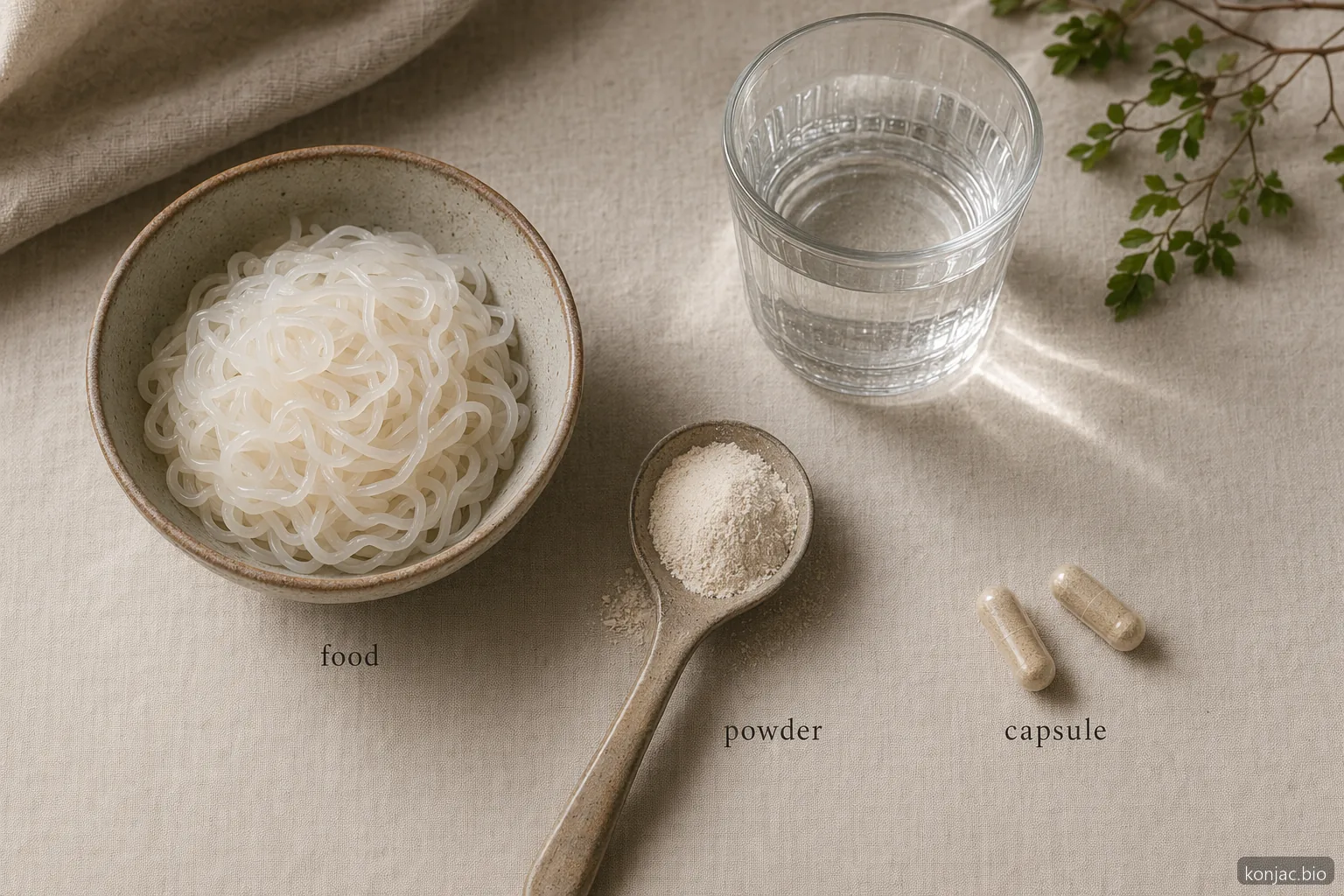
Dry powders, capsules, tablets, and firm gel cups carry more caution than fully hydrated foods such as shirataki noodles or sauces.
The key risk is not the botanical source alone. It is the combination of dry or firm format, rapid swelling, and limited fluid. The FDA has flagged gel candy containing konjac because small, firm gel cups may create a choking hazard, especially for children and older adults FDA alert.
| Format | Main concern | Lower-risk use pattern |
|---|---|---|
| Dry flour | Rapid thickening if swallowed dry | Disperse into liquid before eating |
| Capsules or tablets | Swelling before reaching the stomach | Use only with a full glass of water |
| Thick drink gels | Texture can become difficult to swallow | Keep viscosity moderate and drink promptly |
| Hydrated noodles | Digestive discomfort from portion size | Rinse, heat, and eat normal portions |
| Firm mini gels | Choking hazard in small cup formats | Avoid for children and high-risk groups |
People with swallowing difficulty, a history of narrowing in the throat or digestive tract, or difficulty drinking adequate fluids should be especially cautious with concentrated formats. For a deeper look at format-specific risk, see our guide to konjac choking risk.
Dose, hydration, and timing reduce konjac flour side effects
Small servings, gradual increases, and adequate water are the most practical ways to reduce side effects from konjac flour.
Many side effects come from moving too quickly. A recipe developer may add konjac for texture, while a consumer may add it for fiber. Those are different use cases, and the gram amount per serving can differ several-fold.
A conservative starting approach for adults is:
- Start small: use the lowest functional amount in food, often below 1 gram per serving in sauces or batters.
- Hydrate first: disperse powder into the recipe liquid before eating.
- Increase slowly: allow several days before raising fiber intake.
- Separate from medicines: take medicines at a different time because viscous fiber can affect contact time in the gut.
- Watch texture: avoid mixtures that become rubbery, dense, or hard to swallow.
Clinical reviews have studied glucomannan in gram-level intakes, but supplement-style amounts are not the same as incidental food thickening clinical review. Anyone using concentrated fiber products should follow the product label and seek professional guidance when unsure.
For broader safety context, including choking, digestive comfort, and label cautions, read the parent guide: Konjac Safety.
Where konjac flour side effects fit in food formulation
Konjac flour side effects are easiest to manage when formulators control serving size, hydration, viscosity, and consumer instructions.
In commercial foods, konjac flour is usually used as a hydrocolloid. It can improve viscosity, water retention, gel structure, and mouthfeel in noodles, sauces, plant-based foods, bakery fillings, and low-calorie formulations.
Safety-first formulation focuses on four controls:
- Use level: keep the amount per serving aligned with texture goals, not maximum thickening.
- Hydration step: ensure the powder is fully dispersed before final packaging or consumption.
- Texture testing: check viscosity after shelf life, heating, cooling, and acid exposure.
- Label clarity: give plain instructions for water, serving size, and intended use.
konjac.bio sources konjac flour for wholesale buyers who need consistent viscosity, documentation, and formulation support. For specifications or pricing, contact the team.
Konjac flour should be positioned accurately. It is a functional fiber and texture system, not a shortcut for exaggerated health claims. EFSA allows specific glucomannan wording under defined conditions, while general food products should use careful language such as “may support fullness” or “source of soluble fiber” when compliant with local rules.
Frequently asked questions
01 Can konjac flour cause bloating or gas?
02 Is konjac flour safe to take dry?
03 Who should use extra caution with konjac flour?
04 Does konjac flour interact with medicines?
05 Are shirataki noodles safer than konjac flour powder?
- Scientific Opinion on the substantiation of health claims related to konjac mannan · European Food Safety Authority · 2010
- Questions and Answers on Dietary Fiber · U.S. Food and Drug Administration · 2024
- Glucomannan and obesity: a critical review · Alternative Therapies in Health and Medicine (PubMed) · 2005
- Import Alert 33-15: Detention Without Physical Examination of Gel Candies Containing Konjac · U.S. Food and Drug Administration · 2024