What is miracle rice shirataki rice?
Miracle rice shirataki rice is a rice-shaped konjac food made from water, konjac flour, and glucomannan fiber. It is part of the broader konjac rice category, which uses the corm of Amorphophallus konjac as its functional ingredient.
Glucomannan is a viscous, water-soluble polysaccharide studied for its water-binding and satiety-related properties in human nutrition literature, including a PubMed meta-analysis. In rice-style products, the fiber is hydrated and formed into small grains rather than long noodles.
The ingredient list is usually short:
- Purified water
- Konjac flour or konjac glucomannan
- Calcium hydroxide, used to help set the gel texture
- Sometimes oat fiber, rice flour, or vegetable fiber for a softer bite
The phrase miracle rice is a common retail nickname, while shirataki refers to the Japanese konjac gel format. In practical cooking, miracle rice shirataki rice behaves less like raw rice and more like a ready-to-heat hydrated fiber gel.
How does miracle rice shirataki rice compare with white rice?
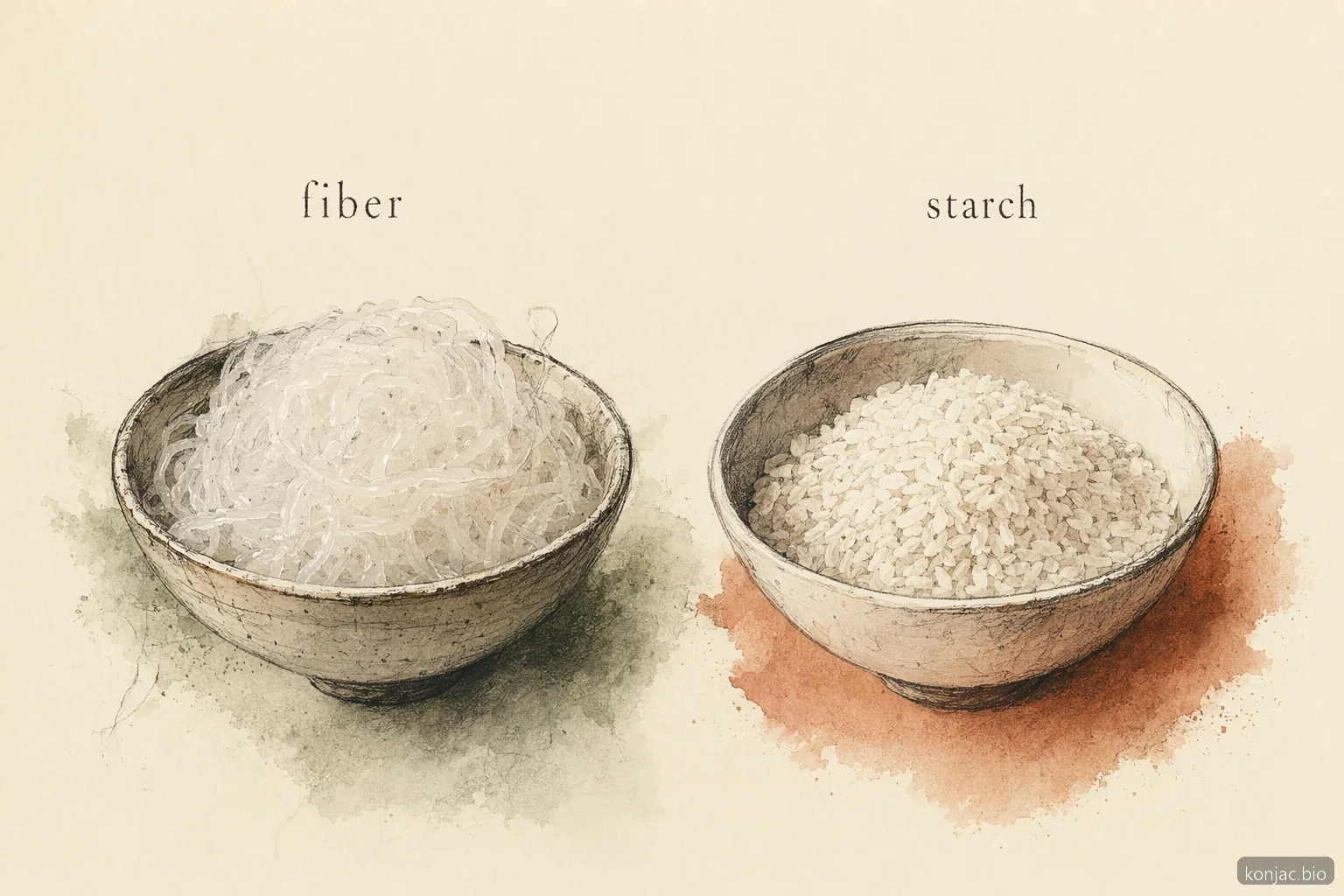
Miracle rice shirataki rice has dramatically fewer calories and carbohydrates than cooked white rice, but it also has less starch, less protein, and a different mouthfeel. It is a volume swap, not a one-for-one nutrition match.
Cooked long-grain white rice provides about 130 calories and 28.2 grams of carbohydrate per 100 grams in USDA FoodData Central, using the cooked, unenriched entry from USDA data. Many konjac rice labels list 5-15 calories and 0-2 grams of net carbohydrates per serving, although exact numbers depend on serving size and added ingredients.
| Per 100g or typical serving | Miracle rice shirataki rice | Cooked white rice |
|---|---|---|
| Calories | Usually 5-15 per serving | About 130 per 100g |
| Main carbohydrate | Glucomannan fiber | Digestible starch |
| Texture | Bouncy, gel-like grains | Soft, starchy grains |
| Flavor | Neutral after rinsing | Mild grain flavor |
| Best role | Low-carb volume base | Staple starch base |
Choose konjac rice when carbohydrate reduction is the main goal. Choose white rice when you want starch energy, traditional rice aroma, or a grain that absorbs sauce deeply. For another low-carb comparison, see the cauliflower rice comparison.
Cooking walkthrough for better texture
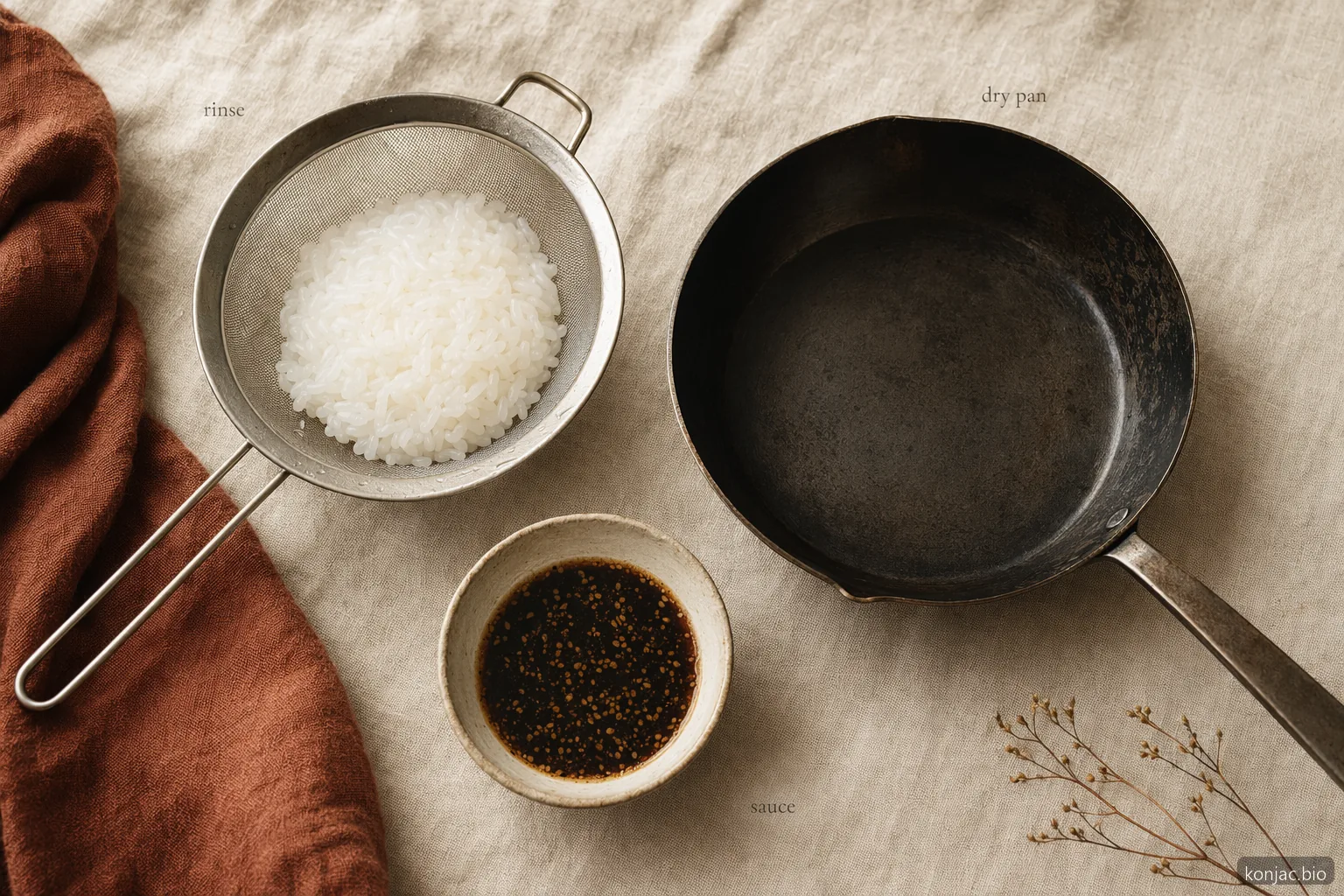
The best way to cook konjac rice is to rinse it, drain it well, dry-heat it, then season it after surface moisture evaporates. That sequence removes the packed-water aroma and gives the grains a firmer bite.
- Open and drain: Pour the pouch into a fine-mesh strainer and discard the packing liquid.
- Rinse for 30-60 seconds: Use cool running water and shake the strainer to expose all grains.
- Dry-heat for 3-5 minutes: Add the drained rice to a nonstick pan over medium heat with no oil at first.
- Add fat and aromatics: Use 1-2 teaspoons of sesame oil, olive oil, butter, garlic, ginger, scallion, or chili crisp.
- Finish with sauce: Add soy sauce, coconut aminos, curry paste, tomato sauce, or broth after the grains are hot.
Dry-heating matters because shirataki rice is already hydrated. If it goes straight into a wet sauce, it can taste slippery and dilute the seasoning.
For fried rice, cook egg, chicken, tofu, shrimp, or edamame separately, then fold in the dry-heated konjac rice. For soups, add it during the final 2-3 minutes so the grains warm through without becoming overly soft. For batch cooking, keep sauce separate until serving to protect texture.
B2B aside: konjac.bio sources konjac rice inputs at wholesale scale for food brands, meal-prep companies, and private-label teams. For specifications, packing options, and pricing, use contact.
Is miracle rice shirataki rice safe to eat?
Miracle rice shirataki rice is generally safe for most adults when eaten as hydrated rice-like grains and chewed normally. The main practical cautions are portion size, hydration, and product form.
Konjac glucomannan holds water, which is why it creates a firm gel texture. People new to high-fiber foods may prefer a small first serving, such as 1/2 cup, then increase gradually based on comfort. The NIH notes that dietary fiber can change stool bulk and gastrointestinal comfort depending on intake and fluid patterns in its NIH fiber overview.
Safety discussions around konjac often mention mini-cup gel candies. The FDA has an import alert for certain konjac-containing gel candies because small, firm gels can pose a choking risk, especially for children, as described in the FDA alert. That alert is about gel candy format, not ordinary rice-shaped konjac grains served as food.
People with swallowing difficulty should be cautious with any slippery or gelled food. Dry glucomannan powder is also different from ready-to-eat konjac rice because dry powder expands quickly when mixed with water.
Nutrition fit: weight management, carbs, and satiety
Konjac rice fits best when a meal needs rice-like volume with fewer digestible carbohydrates. It is commonly used in low-carb, calorie-aware, and high-vegetable meal plans because it adds bulk without adding much starch.
The European Food Safety Authority has reviewed glucomannan for weight management and approved the claim: “Glucomannan in the context of an energy restricted diet contributes to weight loss,” in its EFSA opinion. That wording matters because glucomannan is not a stand-alone shortcut, and the approved claim depends on an energy-restricted diet.
The FDA also evaluates which isolated or synthetic non-digestible carbohydrates can be counted as dietary fiber on labels, with criteria described in its FDA fiber guidance. For shoppers, the simplest habit is to read the Nutrition Facts panel and ingredient list, since some rice-style products add oat fiber, soy, starch, or flavoring.
Use konjac rice as the base of a complete plate, not as the entire meal. A balanced bowl might include 1 pouch of rinsed konjac rice, 4-6 ounces of chicken or tofu, 1-2 cups of vegetables, and a measured sauce. For more technique options, see the guide to cooking konjac rice.
Frequently asked questions
01 Is miracle rice shirataki rice the same as konjac rice?
02 Does miracle rice shirataki rice taste like regular rice?
03 Can I use miracle rice shirataki rice for fried rice?
04 How much miracle rice shirataki rice should I eat?
05 Is miracle rice shirataki rice keto-friendly?
06 Why does shirataki rice smell fishy when opened?
- Scientific Opinion on the substantiation of health claims related to konjac mannan · European Food Safety Authority · 2010
- Questions and Answers on Dietary Fiber · U.S. Food and Drug Administration · 2024
- Import Alert 33-15: Gel Candies Containing Konjac · U.S. Food and Drug Administration · 2024
- Effect of glucomannan on plasma lipid and glucose concentrations, body weight, and blood pressure · PubMed · 2008
- Dietary Fiber Fact Sheet for Health Professionals · National Institutes of Health · 2024
- FoodData Central · U.S. Department of Agriculture · 2024