How do you make a shirataki recipe taste good?
A shirataki recipe tastes good when you remove excess packing liquid, dry the noodles, and coat them with a concentrated sauce.
Shirataki noodles are made from konjac glucomannan, a water-soluble polysaccharide associated with the corm of Amorphophallus konjac konjac glucomannan. Their neutral flavor is useful, but the texture can feel slippery if the noodles go straight from package to pan.
Use this simple method before adding sauce:
- Drain: pour off the packing liquid completely.
- Rinse: rinse under cold running water for 60 seconds.
- Boil, optional: simmer for 2 minutes if the aroma is strong.
- Dry-pan: cook in a bare skillet for 3 to 5 minutes, stirring often.
- Season: add sauce only after the pan looks dry.
Good shirataki cooking is mostly water management. Once surface moisture is gone, sesame oil, soy sauce, chili crisp, peanut sauce, miso, tomato sauce, or curry paste can cling to the noodles instead of sliding off.
For broader meal ideas, visit Konjac Recipes: Cooking with Shirataki and Konjac Flour.
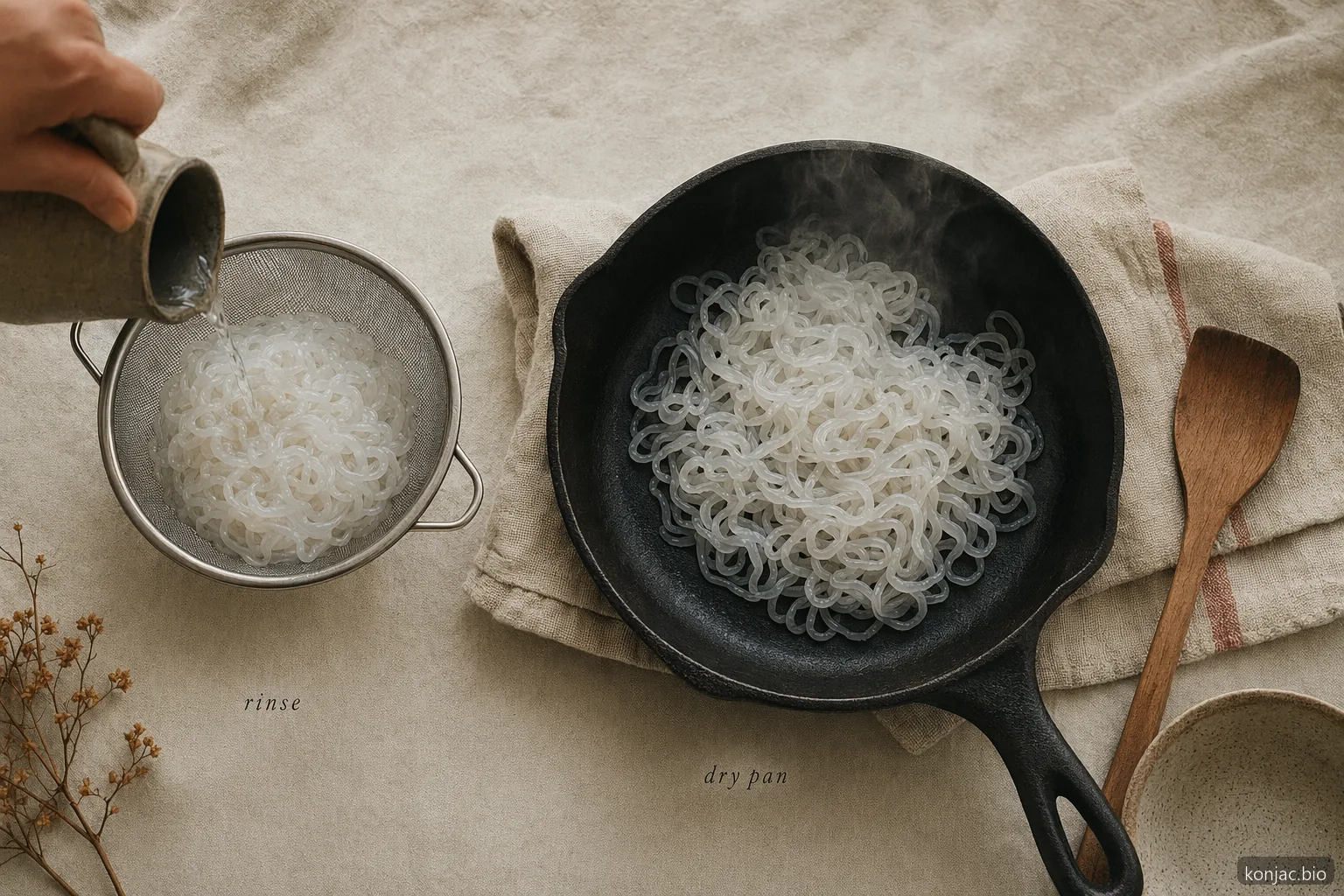
Why does this shirataki recipe start with rinsing and dry-pan cooking?
This shirataki recipe starts with rinsing and dry-pan cooking because packaged konjac noodles hold water and need surface drying before they absorb flavor.
The rinse removes packing liquid from the bag. Dry-pan cooking then drives off surface moisture, firms the bite, and reduces the slippery texture that makes many first-time shirataki meals disappointing.
Use medium-high heat and a wide skillet. The noodles may squeak slightly when stirred, which is a good sign that moisture is evaporating. Do not add oil at the beginning, because oil traps water against the noodle surface.
| Step | Time | Why it matters |
|---|---|---|
| Drain | 15 seconds | Removes packing liquid |
| Rinse | 60 seconds | Cleans the surface |
| Dry-pan cook | 3 to 5 minutes | Improves sauce cling |
| Add aromatics | 30 to 60 seconds | Builds flavor fast |
| Add sauce | 1 to 2 minutes | Glazes the noodles |
If the pan fills with steam, keep cooking. The sauce should go in after the noodles look glossy rather than wet. This single timing change makes the difference between watery noodles and a stir-fry that tastes intentional.
The 20-minute shirataki recipe for stir-fry noodles
This 20-minute shirataki recipe uses a hot skillet, a short ingredient list, and a concentrated sauce to make one filling serving or two side servings.
Ingredients:
- 1 package shirataki noodles, drained and rinsed
- 1 teaspoon neutral oil or sesame oil
- 1 garlic clove, minced
- 1 teaspoon grated ginger
- 1 cup sliced vegetables, such as bell pepper, cabbage, mushrooms, or spinach
- 3 to 4 ounces cooked chicken, tofu, shrimp, egg, or edamame
- 1 tablespoon soy sauce or tamari
- 1 teaspoon rice vinegar or lime juice
- 1 teaspoon chili paste, miso, or peanut butter, optional
- Scallions, sesame seeds, cilantro, or chili flakes for finishing
Method:
- Drain and rinse the shirataki noodles for 60 seconds.
- Dry-pan cook the noodles over medium-high heat for 3 to 5 minutes.
- Push noodles to one side, add oil, garlic, and ginger, then cook for 30 seconds.
- Add vegetables and protein, then stir-fry for 2 to 4 minutes.
- Add soy sauce, vinegar, and optional chili paste, miso, or peanut butter.
- Toss until the sauce coats the noodles and the pan looks almost dry.
- Finish with scallions, sesame seeds, herbs, or chili flakes.
For a richer bowl, add 1 beaten egg and scramble it in the pan before adding the sauce. For a plant-based version, use tofu, mushrooms, edamame, and tamari.
Food manufacturers and culinary teams can source wholesale konjac ingredients through konjac.bio, with specifications and bulk options available through contact.
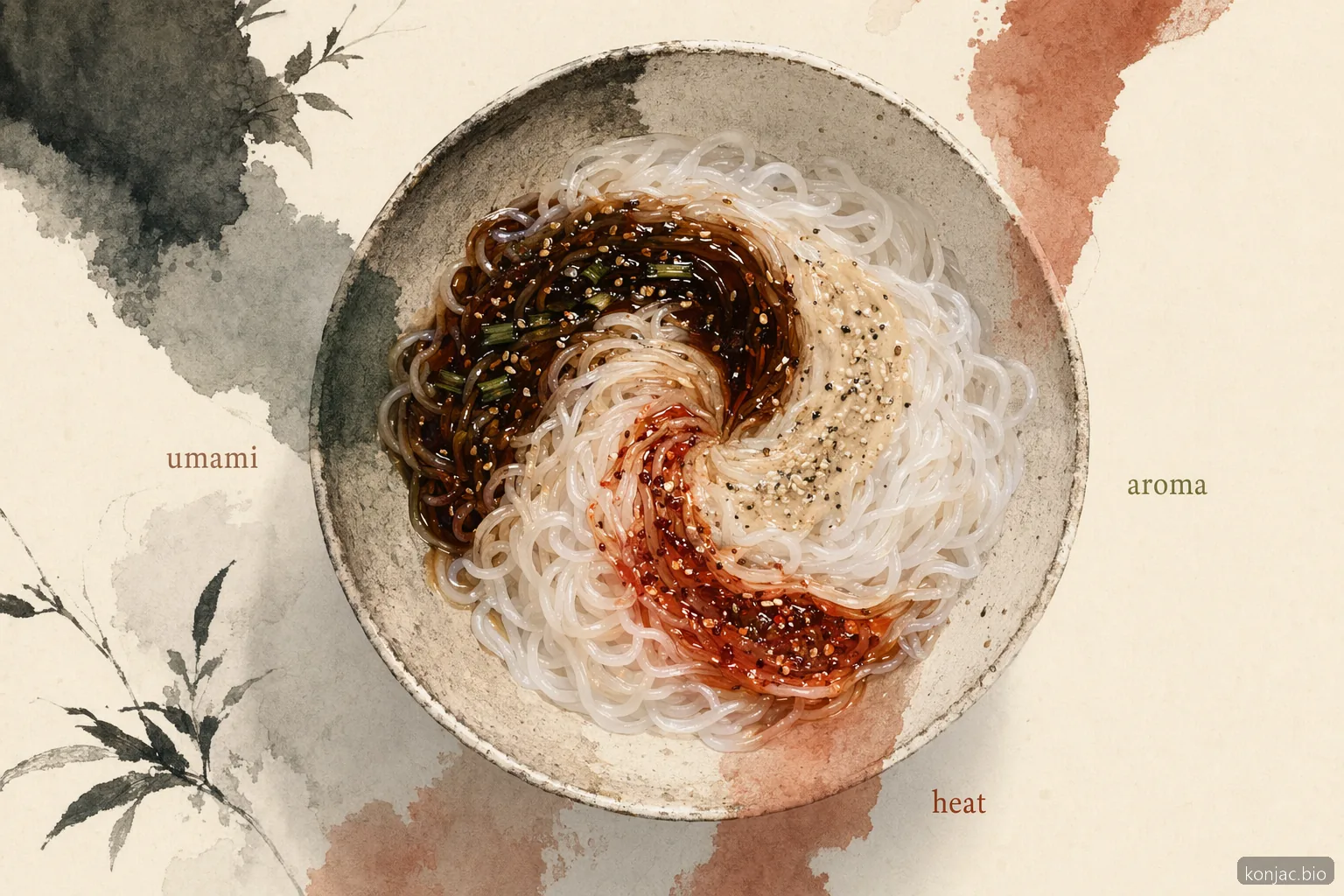
What sauces work best in a shirataki recipe?
The best sauces for a shirataki recipe are concentrated, salty, aromatic, and slightly acidic.
Shirataki noodles are not wheat pasta, so thin sauces behave differently. A watery broth can make the noodles feel separate from the dish, while a thick glaze or reduced sauce coats them better.
| Flavor style | Best sauce base | Good add-ins |
|---|---|---|
| Japanese-style | Soy sauce, miso, rice vinegar | Ginger, scallion, sesame |
| Korean-style | Gochujang, tamari, garlic | Cabbage, egg, sesame seeds |
| Thai-style | Lime, fish sauce, chili | Basil, peanut, shrimp |
| Italian-style | Tomato paste, olive oil | Garlic, basil, parmesan |
| Peanut-style | Peanut butter, soy sauce, vinegar | Cucumber, tofu, cilantro |
A reliable ratio is 1 tablespoon salty ingredient, 1 teaspoon acid, 1 teaspoon fat, and 1 teaspoon concentrated paste or sweetener if desired. Toss this with one drained package of noodles after dry-pan cooking.
If you want to explore other konjac formats, see konjac flour recipes for thickened sauces, batters, and gels.
Nutrition, safety, and ingredient notes for shirataki
Shirataki noodles are valued because konjac glucomannan provides soluble fiber while the noodles remain neutral enough for savory cooking.
The European Food Safety Authority approved the claim, “Glucomannan in the context of an energy restricted diet contributes to weight loss,” when specific intake conditions are met EFSA claim. That claim applies to glucomannan intake in a defined context, not to a single bowl of noodles by itself.
For home cooking, the practical nutrition point is simple: shirataki noodles are usually best when paired with protein, vegetables, and a flavorful fat. That turns a plain noodle swap into a complete meal with texture, color, and satiety.
Safety also depends on format. The U.S. Food and Drug Administration has flagged konjac-containing mini-cup jelly because of choking concerns related to gel texture and shape FDA guidance. That concern is different from cooking long shirataki noodles in a meal, but it is a useful reminder that konjac format matters.
Check package labels for allergen statements, added ingredients, and serving sizes. Some shirataki products include tofu, oat fiber, seaweed powder, calcium hydroxide, or other formulation ingredients that change texture and nutrition.
For more noodle-specific cooking ideas, see shirataki noodles recipes.
Frequently asked questions
01 Do shirataki noodles need to be boiled before stir-frying?
02 Why do shirataki noodles smell unusual when opened?
03 Can I use this shirataki recipe for meal prep?
04 Are shirataki noodles the same as konjac noodles?
05 What is the best protein for a shirataki recipe?
- Scientific Opinion on glucomannan health claims · European Food Safety Authority · 2010
- Konjac glucomannan review · PubMed · 2016
- CPG Sec. 550.750 Jelly Mini-Cups Containing Konjac · U.S. Food and Drug Administration · 2002
- Glucomannan and body weight systematic review · PubMed · 2012