What makes recipes for konjac noodles work?
Recipes for konjac noodles work when the noodles are dried first and flavored aggressively afterward.
Konjac noodles are mostly water plus glucomannan, a soluble fiber from the corm of Amorphophallus konjac, a plant used in Asian food systems for konjac gel, flour, and noodles konjac review. Because the noodles contain very little starch, they do not absorb sauce like wheat pasta or rice noodles.
The best cooking method has 3 steps:
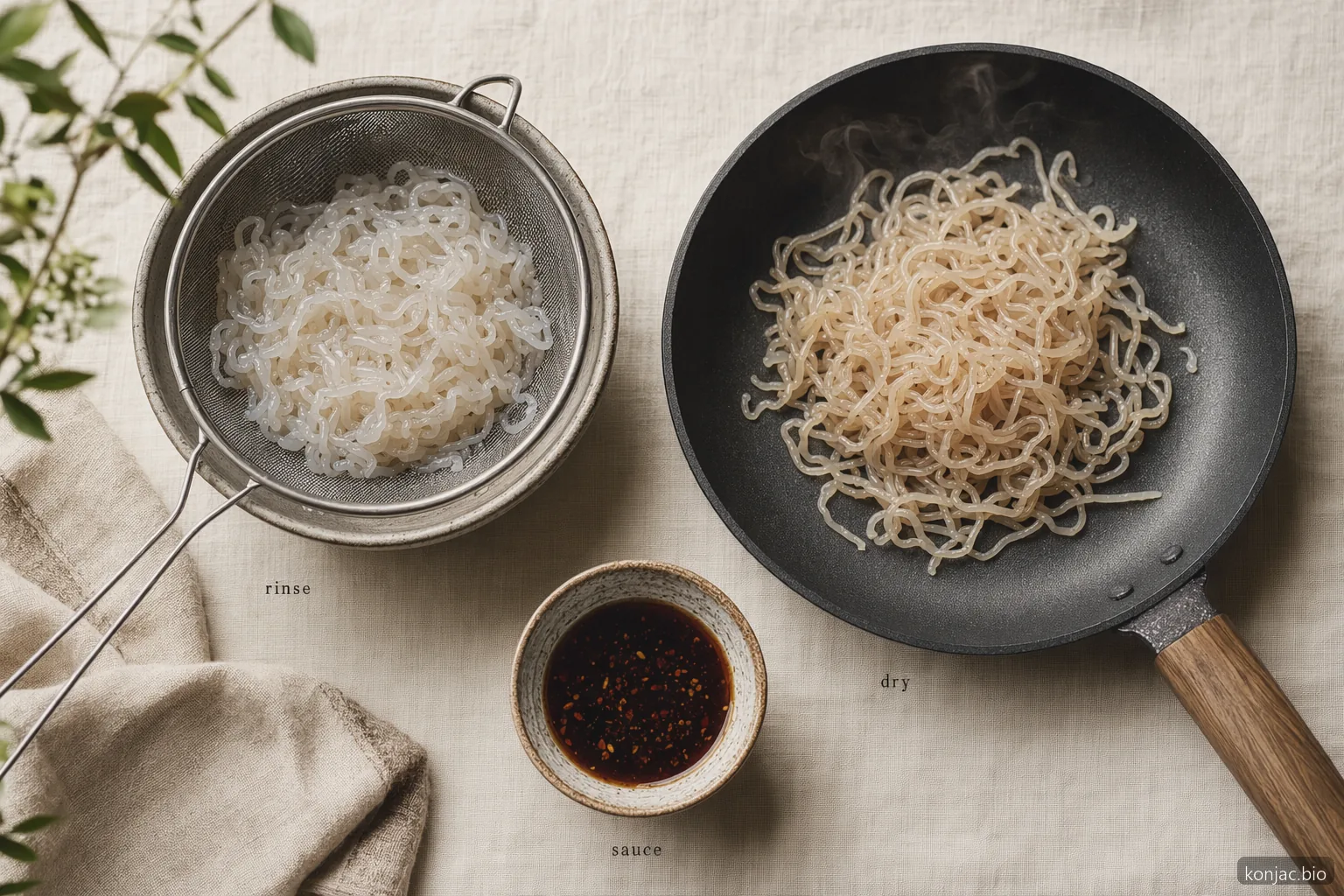
- Rinse: drain the pouch and rinse under cold water for 30 to 60 seconds.
- Dry: cook in a bare skillet for 2 to 4 minutes until steam drops.
- Season: add sauce, aromatics, protein, and vegetables after the noodles are hot and dry.
Think of konjac noodles as a texture carrier, not a starch base. They shine with sesame paste, soy sauce, chili oil, curry, tomato reduction, peanut sauce, miso, garlic butter, and concentrated pan sauces.
For a broader cooking framework, see the parent guide: Konjac Recipes: Cooking with Shirataki and Konjac Flour.
How should recipes for konjac noodles start?
Recipes for konjac noodles should start with rinsing, draining, and dry-pan cooking before any sauce is added.
Many pouches have a mineral aroma from the soaking liquid. Rinsing removes that liquid, while dry-pan cooking improves texture by driving off surface moisture. The noodles should squeak slightly in the pan before you add fat, sauce, or broth.
| Step | Time | What to look for |
|---|---|---|
| Drain | 10 seconds | Liquid fully removed |
| Rinse | 30 to 60 seconds | No pouch aroma remains |
| Dry-pan | 2 to 4 minutes | Less steam, springier bite |
| Sauce | 1 to 3 minutes | Noodles evenly coated |
Use a wide skillet rather than a small saucepan. More pan surface gives faster evaporation, which helps sauces cling instead of sliding off.
A practical ratio for one pouch is 200 g rinsed noodles, 1 tablespoon fat or paste, 2 tablespoons concentrated sauce, 100 to 150 g protein, and 1 to 2 cups vegetables. That ratio keeps the bowl filling without making the noodles watery.
Recipes for konjac noodles: 7 reliable meal ideas
These recipes for konjac noodles use concentrated sauces and short cooking times so the noodles stay springy rather than soggy.
Each idea below starts with one 200 g pouch of rinsed and dry-panned konjac noodles. Scale the protein and vegetables up for a larger meal.
- Garlic sesame noodles: Toss hot noodles with 1 tablespoon sesame paste, 1 tablespoon soy sauce, 1 teaspoon rice vinegar, 1 grated garlic clove, and chili flakes. Add cucumber, scallions, and a soft-boiled egg.
- Chicken stir-fry: Sear 120 g sliced chicken, add 2 cups broccoli or cabbage, then add noodles with 1 tablespoon oyster-style sauce and 1 teaspoon sesame oil. Poultry should reach 165 F for food safety FSIS chart.
- Peanut lime bowl: Whisk 1 tablespoon peanut butter, 1 tablespoon lime juice, 1 teaspoon soy sauce, 1 teaspoon chili paste, and 1 tablespoon warm water. Toss with noodles, shredded carrot, cilantro, and baked tofu.
- Tomato basil skillet: Reduce 1 cup crushed tomato with garlic and olive oil for 5 to 7 minutes, then fold in noodles. Finish with basil, black pepper, and grated hard cheese if desired.
- Miso mushroom noodles: Brown 150 g mushrooms, add 1 teaspoon miso, 1 teaspoon butter, and 2 tablespoons water. Toss in noodles until glossy, then finish with scallions.
- Curry coconut noodles: Simmer 2 tablespoons curry paste with 80 ml coconut milk, then add noodles, spinach, and shrimp or tofu. Keep the sauce thick enough to coat a spoon.
- Egg roll bowl noodles: Cook ground turkey or crumbled tofu with cabbage, ginger, garlic, soy sauce, and rice vinegar. Add noodles at the end for a higher-volume skillet meal.
For a wok-style variation, pair this page with shirataki stir-fry. For grain-style bowls with similar sauce logic, see konjac rice recipes.
How do you match sauces to konjac noodles?
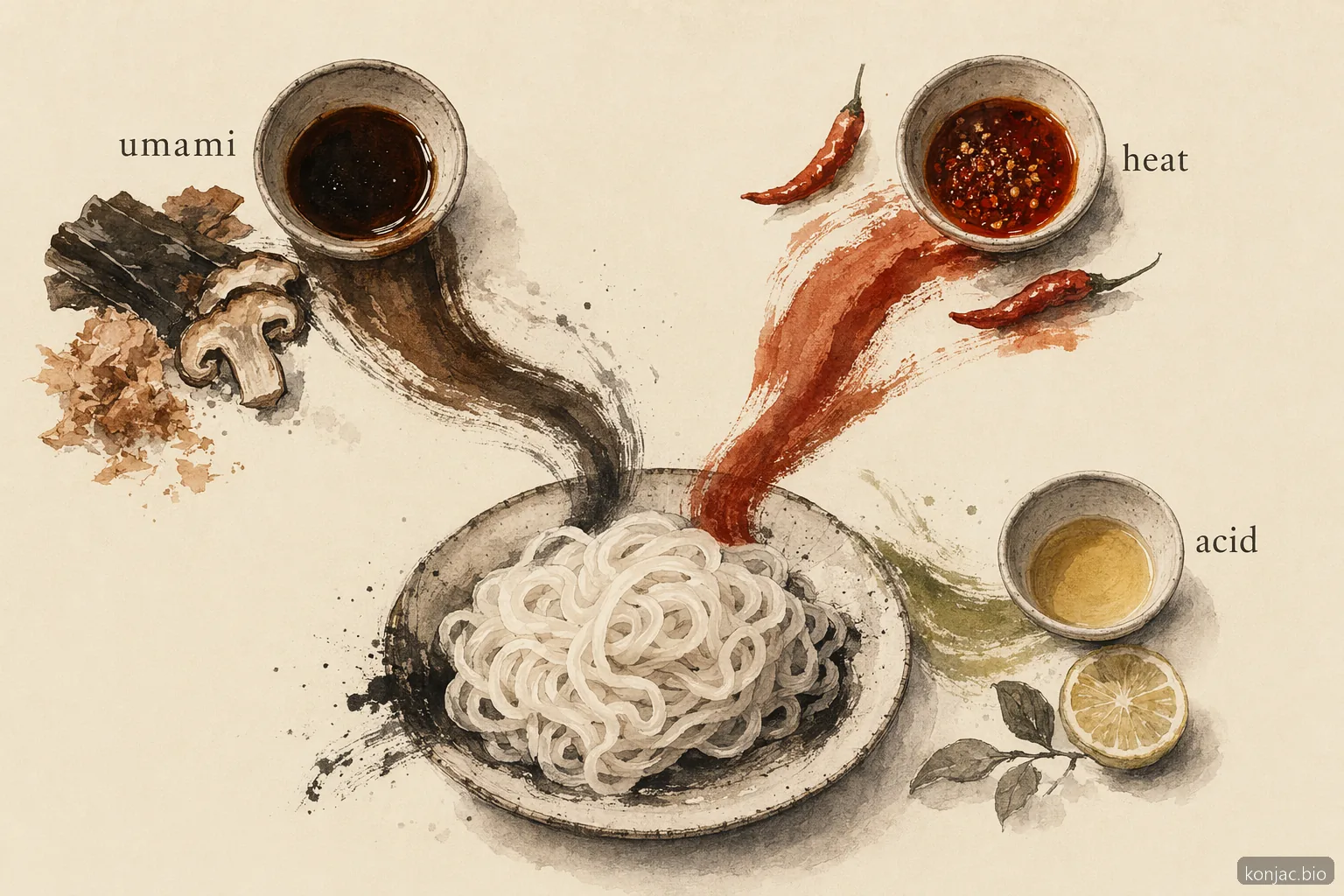
Konjac noodles match best with thick, salty, sour, spicy, or fatty sauces because the noodles themselves are mild and water-rich.
Thin sauces can collect at the bottom of the bowl. Thicker sauces cling better, especially when they include paste, oil, nut butter, tomato reduction, egg yolk, miso, cheese, or emulsified dressing.
| Flavor style | Good sauce base | Best add-ins |
|---|---|---|
| Japanese-inspired | Miso, soy sauce, sesame oil | Mushrooms, tofu, scallions |
| Thai-inspired | Peanut, lime, chili paste | Cabbage, cilantro, chicken |
| Italian-inspired | Reduced tomato, garlic, olive oil | Basil, spinach, shrimp |
| Korean-inspired | Gochujang-style chili paste, sesame | Egg, cucumber, beef or tofu |
| Comfort bowl | Butter, miso, mushroom pan sauce | Green beans, onions, herbs |
A simple sauce rule is 2 parts savory, 1 part acid, 1 part fat, then heat to taste. For example, combine 2 teaspoons soy sauce, 1 teaspoon rice vinegar, 1 teaspoon sesame oil, and chili flakes for a fast base.
Konjac glucomannan has been evaluated for authorized health claims in the European Union. The EFSA-approved weight-management claim states: “Glucomannan in the context of an energy restricted diet contributes to weight loss” EFSA opinion. In recipe writing, the safer phrasing is that glucomannan may support satiety when used as part of an energy-restricted eating pattern.
Cooking, storage, and safety notes for konjac noodles
Konjac noodles are simple to cook, but texture and safety improve when you handle the pouch like a refrigerated fresh food after opening.
Unopened shelf-stable pouches should be stored as directed on the package. After opening, drain unused noodles, cover them with clean water in a sealed container, refrigerate, and use them within a short window based on the label instructions.
Do not freeze konjac noodles if you want a smooth, springy texture. Freezing can make gel-based foods release water and become tougher after thawing.
Konjac is also used in gel candies and mini-cup jelly products, which are different from noodles. The FDA has warned about choking hazards linked to konjac-containing mini-cup jelly because the gel may not dissolve readily in the mouth FDA guidance. Cut noodles for young children or anyone who needs softer, shorter food textures.
B2B aside: konjac.bio sources konjac ingredients at wholesale for food manufacturers and product developers. For specifications, volumes, and pricing, contact the team.
Frequently asked questions
01 Do konjac noodles need to be boiled before cooking?
02 Why do konjac noodles smell unusual when opened?
03 Are recipes for konjac noodles good for low-carb meals?
04 How do you make konjac noodles less rubbery?
05 Can konjac noodles be used in pasta recipes?
06 Are konjac noodles the same as shirataki noodles?
- Glucomannan and nutrition-related health claims · European Food Safety Authority · 2010
- CPG Sec. 555.750 Jelly Cups Containing Konjac · U.S. Food and Drug Administration · 2001
- Konjac glucomannan review · PubMed · 2008
- Safe Minimum Internal Temperature Chart · USDA Food Safety and Inspection Service · 2024