What is the best recipe for shirataki noodles?
The best recipe for shirataki noodles is a dry-pan garlic soy stir-fry because it fixes the two common problems: excess water and bland flavor.
Shirataki noodles are made from water and konjac glucomannan, a soluble fiber from Amorphophallus konjac. Glucomannan is widely studied as a viscous dietary fiber, including in human nutrition research indexed by PubMed.
This base recipe is built for one 7-to-8-ounce drained bag of shirataki noodles. It works with spaghetti-cut, fettuccine-cut, or rice-shaped shirataki, but thinner noodles dry faster.
| Ingredient | Amount | Purpose |
|---|---|---|
| Shirataki noodles | 1 bag, 7 to 8 ounces drained | Main noodle base |
| Neutral oil | 1 teaspoon | Helps garlic bloom |
| Garlic | 2 cloves, minced | Aromatic base |
| Soy sauce or tamari | 1 tablespoon | Salt and umami |
| Toasted sesame oil | 1 teaspoon | Nutty finish |
| Rice vinegar | 1 teaspoon | Brightness |
| Chili crisp or flakes | 1 to 2 teaspoons | Heat and texture |
| Scallions | 2 tablespoons sliced | Fresh finish |
For more ways to use konjac ingredients across noodles, rice, and flour, see Konjac Recipes. B2B aside: konjac.bio sources konjac ingredients at wholesale for brands developing noodle, rice, and flour applications. Contact the team for specifications and pricing.
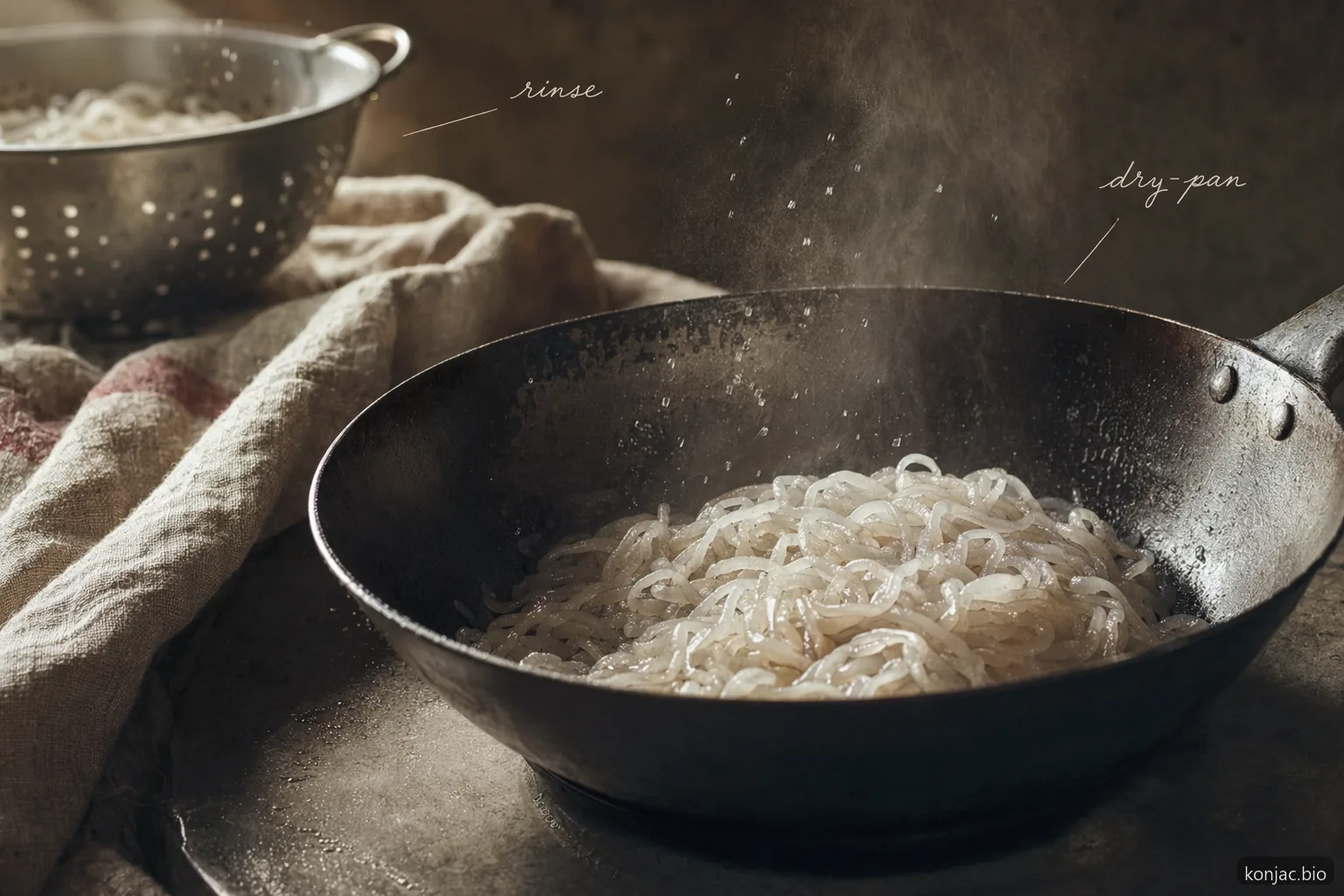
How do you prep this recipe for shirataki noodles so it is not watery?
You prep this recipe for shirataki noodles by rinsing, draining, and dry-panning the noodles before sauce touches the pan.
The package liquid can smell slightly alkaline or earthy. A short rinse under cool water removes that aroma, while dry heat drives off surface moisture so the sauce clings instead of pooling.
- Drain: Open the bag and pour the noodles into a fine-mesh strainer.
- Rinse: Rinse under cool running water for 30 seconds, tossing with fingers or tongs.
- Optional boil: Boil 2 minutes if the aroma is strong, then drain again.
- Dry-pan: Add noodles to a nonstick or stainless skillet over medium-high heat with no oil.
- Listen: Cook 3 to 5 minutes, tossing often, until the pan sounds squeaky and steam slows.
Do not add soy sauce during the dry-pan stage. Salt pulls moisture outward, so sauce should go in only after the noodles feel springy and look less glossy.
If using tofu, chicken, shrimp, egg, or mushrooms, cook those separately or push them to the side. Shirataki texture improves when the noodles get direct pan contact for several uninterrupted minutes.
15-minute garlic soy shirataki noodle walkthrough
This walkthrough uses one skillet, one strainer, and a small bowl. The sequence matters more than the ingredient list: dry the noodles first, bloom aromatics second, sauce last.
- Mix the sauce: In a small bowl, combine 1 tablespoon soy sauce, 1 teaspoon rice vinegar, 1 teaspoon toasted sesame oil, 1 teaspoon chili crisp, and 1 teaspoon water.
- Dry the noodles: Rinse, drain, and dry-pan 1 bag of shirataki noodles for 3 to 5 minutes.
- Add oil and garlic: Push noodles aside, add 1 teaspoon neutral oil, then add 2 minced garlic cloves. Cook 20 to 30 seconds.
- Toss: Pour in the sauce and toss continuously for 45 to 60 seconds.
- Finish: Add scallions, sesame seeds, black pepper, or a squeeze of lime.
For a meal-sized bowl, add 1 cup cooked vegetables and 3 to 4 ounces cooked protein. Bok choy, cabbage, snap peas, mushrooms, tofu, egg, shrimp, and shredded chicken all work because they cook quickly and do not need much sauce.
Keep the sauce concentrated. A standard wheat noodle can absorb starch-thickened sauce, but shirataki noodles are mostly water and fiber, so the surface coating carries the flavor. USDA FoodData Central lists many noodle foods by composition and nutrient profile in its USDA database, which is useful when comparing starch-based noodles with low-carbohydrate alternatives.
If you want a soup-style version instead of a dry stir-fry, use the same rinse and dry-pan steps, then add noodles to broth at the end for 1 minute. For rice-shaped konjac ideas, see konjac rice recipes.
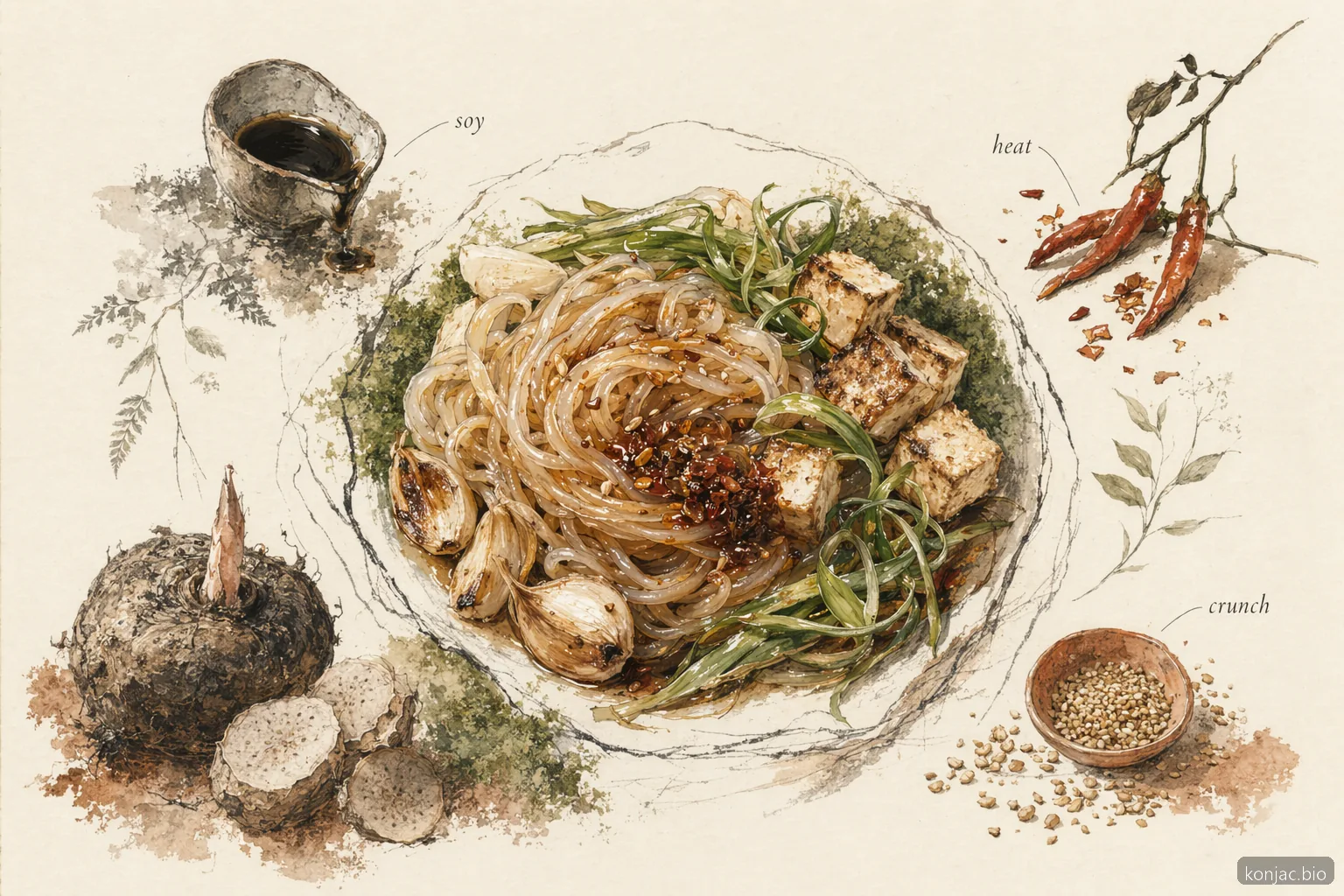
What sauces and add-ins work with shirataki noodles?
Bold, low-water sauces work best with shirataki noodles because the noodles do not absorb flavor like wheat, rice, or soba noodles.
Use sauces with salt, acid, aromatics, and fat. Avoid watery sauces unless you simmer them down first or add a thickener that fits your dietary needs.
| Style | Sauce ratio for 1 bag | Best add-ins |
|---|---|---|
| Garlic soy | 1 tbsp soy sauce, 1 tsp sesame oil, 1 tsp vinegar | Scallions, egg, bok choy |
| Peanut lime | 1 tbsp peanut butter, 1 tbsp lime juice, 2 tsp soy sauce | Cabbage, cucumber, tofu |
| Ginger miso | 1 tbsp miso, 1 tsp ginger, 2 tbsp hot water | Mushrooms, spinach, sesame |
| Tomato basil | 3 tbsp thick tomato sauce, 1 tsp olive oil | Zucchini, turkey, basil |
| Curry coconut | 2 tbsp thick coconut milk, 1 tsp curry paste | Peppers, shrimp, cilantro |
Crunch helps shirataki noodles feel more satisfying. Add roasted peanuts, sesame seeds, shredded cabbage, bean sprouts, cucumber, or lightly seared mushrooms right before serving.
For meal prep, keep wet toppings separate until reheating. Shirataki noodles can sit in a concentrated sauce, but raw vegetables release water and soften after several hours.
Safety, nutrition, and storage notes
Shirataki noodles should be chewed well, served in manageable portions, and stored like other refrigerated ready-to-eat foods after opening.
Konjac glucomannan is a viscous fiber. EFSA authorized the specific claim: “Glucomannan in the context of an energy restricted diet contributes to weight loss,” with conditions of use described in the EFSA opinion. That claim does not mean shirataki noodles alone cause weight loss, and recipes still depend on total meal composition.
The NIH notes that fiber ingredients such as glucomannan have been studied for weight management and may cause digestive discomfort in some people, especially when intake changes quickly, in its NIH fact sheet. Start with one serving if you are new to konjac foods and drink water with fiber-containing meals.
Konjac safety concerns are most often associated with mini-cup gel candies, not properly chewed noodles. The FDA has warned against konjac mini-cup jelly products because of choking risk in small gel formats, described in its FDA warning.
After opening, keep unused plain noodles submerged in fresh water in a sealed container and refrigerate. For cooked leftovers, refrigerate within 2 hours and use within 3 days, following general cold-storage guidance from FoodSafety.gov.
Frequently asked questions
01 Why do shirataki noodles smell when opened?
02 Can I skip the dry-pan step in a recipe for shirataki noodles?
03 How much sauce should I use for one bag of shirataki noodles?
04 Are shirataki noodles keto-friendly?
05 Can I meal prep shirataki noodles?
06 What protein works best with garlic soy shirataki noodles?
- Scientific Opinion on the substantiation of health claims related to konjac mannan (glucomannan) · European Food Safety Authority · 2010
- Dietary Supplements for Weight Loss: Fact Sheet for Health Professionals · National Institutes of Health Office of Dietary Supplements · 2024
- FDA warns consumers not to eat mini-cup jelly products containing konjac · U.S. Food and Drug Administration · 2001
- FoodData Central · U.S. Department of Agriculture · 2024
- Glucomannan and obesity: a critical review · PubMed · 2008