What are the best konjac noodles recipes for beginners?
The best konjac noodles recipes for beginners are fast dishes with strong sauces, cooked protein, and vegetables that release little water.
Start with recipes that take 10 to 20 minutes and use pantry flavors like soy sauce, garlic, sesame oil, tomato, miso, curry paste, or chili crisp. Konjac noodles are mild, so the sauce carries the dish more than the noodle itself.
| Recipe idea | Best noodle shape | Flavor base | Fast add-ins |
|---|---|---|---|
| Garlic sesame stir-fry | Spaghetti cut | Soy sauce, sesame oil, garlic | Egg, scallions, bok choy |
| Peanut lime noodles | Fettuccine cut | Peanut butter, lime, tamari | Cucumber, chicken, cilantro |
| Tomato basil skillet | Spaghetti cut | Tomato paste, olive oil, basil | Turkey, zucchini, spinach |
| Miso mushroom ramen bowl | Angel hair cut | Miso, ginger, broth | Mushrooms, tofu, egg |
| Thai curry noodle bowl | Fettuccine cut | Curry paste, coconut milk | Shrimp, peppers, Thai basil |
| Cold sesame cucumber salad | Spaghetti cut | Tahini, rice vinegar, chili oil | Cucumber, edamame, sesame seeds |
A reliable beginner formula is 1 package drained noodles, 1 tablespoon fat or paste, 2 tablespoons sauce, 1 cup vegetables, and 3 to 5 ounces protein. For a broader cooking map, see the parent guide to konjac recipes.
How should you prep konjac noodles before cooking?
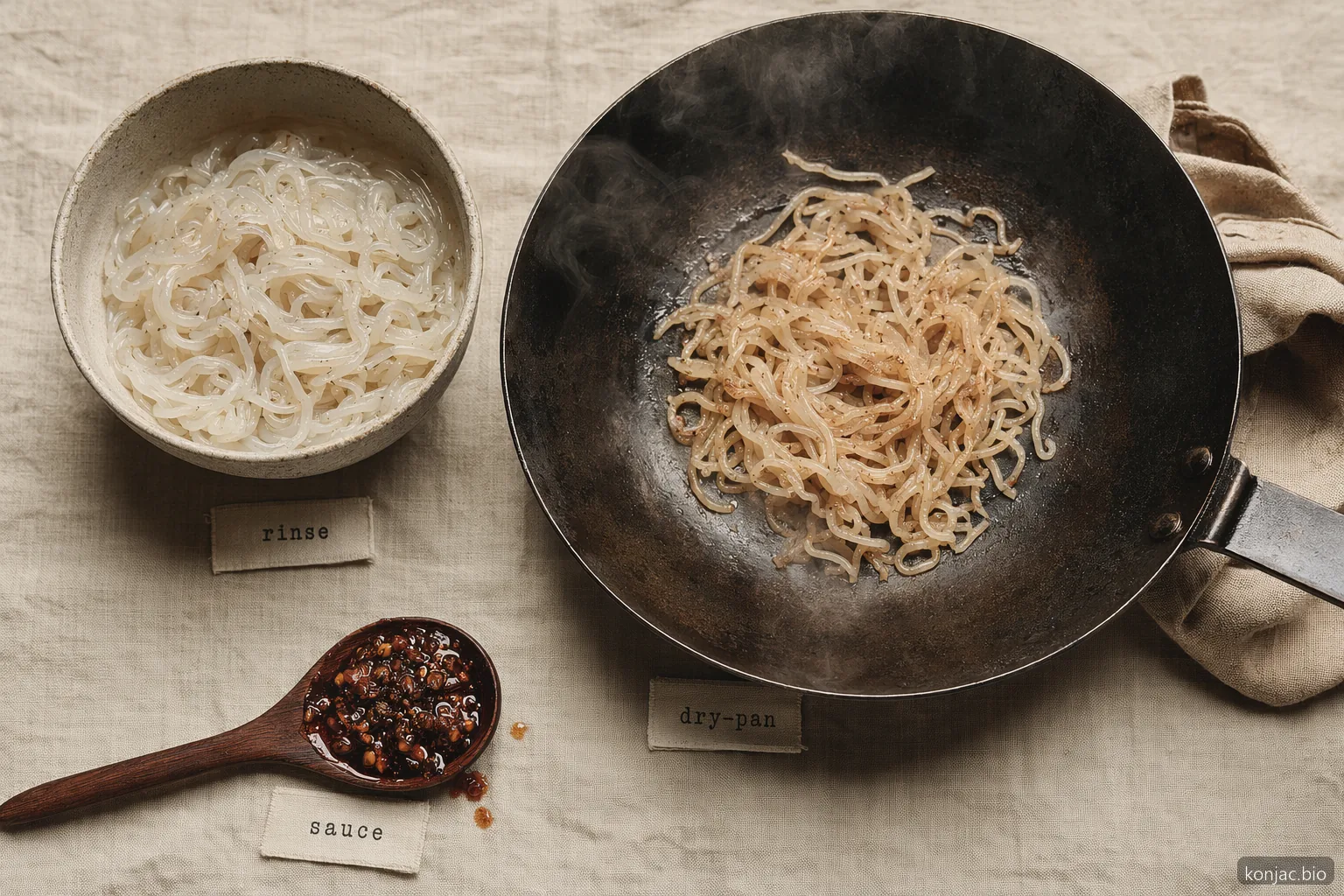
You should prep konjac noodles by rinsing them, draining them, then dry-panning them for 3 to 5 minutes before adding sauce.
The liquid in many packs has a natural aroma from the alkaline water used in processing. Rinsing under cold water for 30 to 60 seconds removes most of it, while dry-panning drives off surface moisture so sauce clings better.
- Drain: Empty the pack into a sieve and discard the packing liquid.
- Rinse: Rinse under cold running water for 30 to 60 seconds.
- Optional boil: Boil 1 to 2 minutes for a softer bite, then drain again.
- Dry-pan: Cook in a bare nonstick or stainless pan for 3 to 5 minutes, stirring often.
- Sauce last: Add oil, paste, aromatics, and sauce only after steam reduces.
Do not expect konjac noodles to brown like wheat noodles. Their high water content and gel structure make them springy, not chewy in the same way as pasta or ramen. USDA food composition data lists very low calories for shirataki-style noodles compared with wheat pasta USDA data, which is why many cooks use them in low-carbohydrate meal plans.
Konjac noodles recipes by cuisine and sauce style
Konjac noodles fit cuisines where sauce, broth, herbs, and aromatics define the bowl. They are less suitable for dishes that rely on pasta starch to emulsify sauce, such as classic cacio e pepe, unless you adjust the method.
For Asian-style bowls, build flavor with ginger, garlic, miso, tamari, rice vinegar, toasted sesame oil, and chili paste. For Mediterranean-style plates, use concentrated tomato paste, olive oil, capers, olives, herbs, and grilled protein.
| Style | Core sauce | Cooking note |
|---|---|---|
| Pad Thai-style | Tamarind, fish sauce, lime, egg | Keep sauce thick because noodles release water. |
| Japanese broth bowl | Miso, dashi-style stock, ginger | Add noodles after broth is seasoned. |
| Korean spicy noodles | Gochujang, sesame, vinegar | Use cucumber and egg for texture. |
| Italian tomato skillet | Tomato paste, garlic, olive oil | Reduce sauce before adding noodles. |
| Greek lemon bowl | Lemon, oregano, olive oil | Add feta or chickpeas for body. |
| Indian curry bowl | Curry paste, tomato, coconut milk | Simmer sauce thick, then fold in noodles. |
If you also cook with konjac in grain-style formats, compare texture and moisture handling in shirataki rice recipes. Noodle cuts carry sauce differently from rice-shaped konjac, especially in soups and skillet meals.
How do konjac noodles recipes stay flavorful without starch?
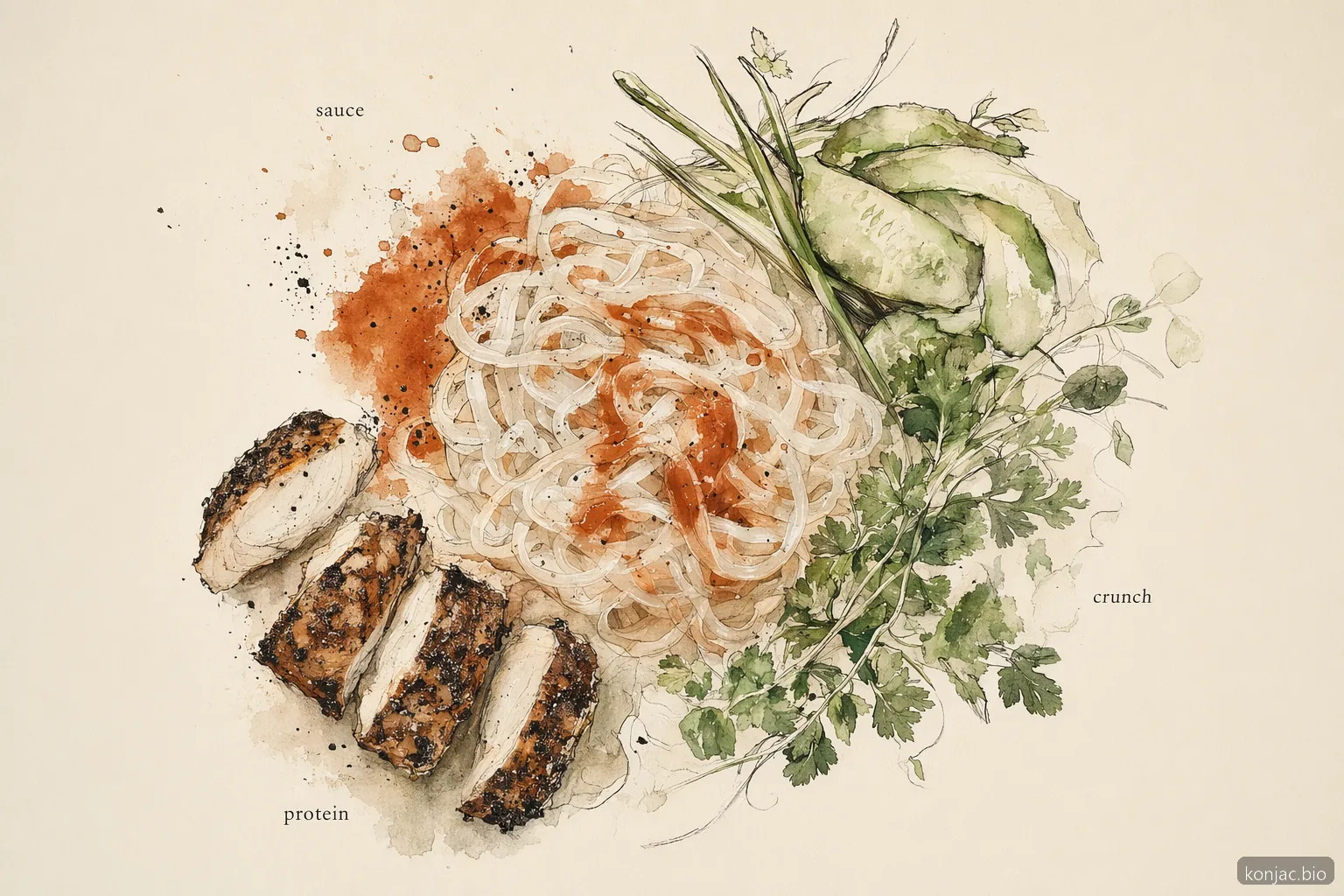
Konjac noodles recipes stay flavorful without starch by using concentrated sauces, dry heat, and ingredients that add fat, acid, salt, and crunch.
Wheat pasta releases starch into cooking water, which helps sauces emulsify. Konjac noodles do not provide that same starch, so the cook needs to create cling through reduction, nut butters, egg, cheese, tomato paste, miso, tahini, or coconut milk.
Use this sauce ratio for one drained 7 to 8 ounce pack:
- 1 tablespoon fat: olive oil, sesame oil, butter, chili oil, or coconut milk solids.
- 1 to 2 tablespoons concentrated base: miso, tomato paste, curry paste, tahini, peanut butter, or pesto.
- 1 tablespoon acid: lime juice, rice vinegar, lemon juice, or balsamic vinegar.
- 1 crunchy topping: sesame seeds, peanuts, cucumbers, cabbage, scallions, or toasted breadcrumbs.
Texture improves when watery vegetables cook separately before meeting the noodles. Zucchini, mushrooms, cabbage, and spinach can release enough liquid to thin a sauce, so sauté them first, reduce their moisture, then add the prepared noodles.
Meal prep, nutrition, and sourcing notes for konjac noodles recipes
Konjac noodles recipes are useful for meal prep when the sauce is packed thick and the vegetables are kept crisp. Store cooked noodles and sauce together for 2 to 3 days in a sealed container, but keep delicate herbs, cucumber, lettuce, and crunchy toppings separate until serving.
Glucomannan is the functional fiber behind konjac noodles. EFSA’s approved wording states: “Glucomannan in the context of an energy restricted diet contributes to weight loss” when intake conditions are met EFSA claim. This does not mean a noodle bowl alone delivers that outcome, and finished foods vary by serving size, fiber content, and label formulation.
FDA labeling rules define dietary fiber categories for Nutrition Facts purposes FDA fiber. A PubMed-indexed review has also evaluated glucomannan for body weight and satiety-related outcomes PubMed review. For home cooking, the practical takeaway is simple: build balanced plates with protein, vegetables, fat, and a sauce that tastes complete.
B2B aside: konjac.bio sources konjac ingredients at wholesale for food brands developing noodles, rice alternatives, gels, and fiber-forward products. For specifications and volume pricing, contact the team.
Frequently asked questions
01 Do konjac noodles need to be boiled before stir-frying?
02 Why do konjac noodles smell when opened?
03 Are konjac noodles the same as shirataki noodles?
04 What sauces work best for konjac noodles recipes?
05 Can konjac noodles be used for meal prep?
- Scientific Opinion on the substantiation of health claims related to glucomannan · European Food Safety Authority · 2010
- Dietary Fiber on the Nutrition Facts Label · U.S. Food and Drug Administration · 2024
- Glucomannan and obesity: a critical review · PubMed · 2005
- Konjac Glucomannan · ScienceDirect · 2024
- FoodData Central · U.S. Department of Agriculture · 2024