Does glucomannan for weight loss actually work?
Glucomannan for weight loss may support lower calorie intake by increasing fullness before meals, especially when used at the EFSA-approved dose. EFSA’s authorized wording is: "Glucomannan in the context of an energy restricted diet contributes to weight loss" under specific use conditions in the EFSA opinion.
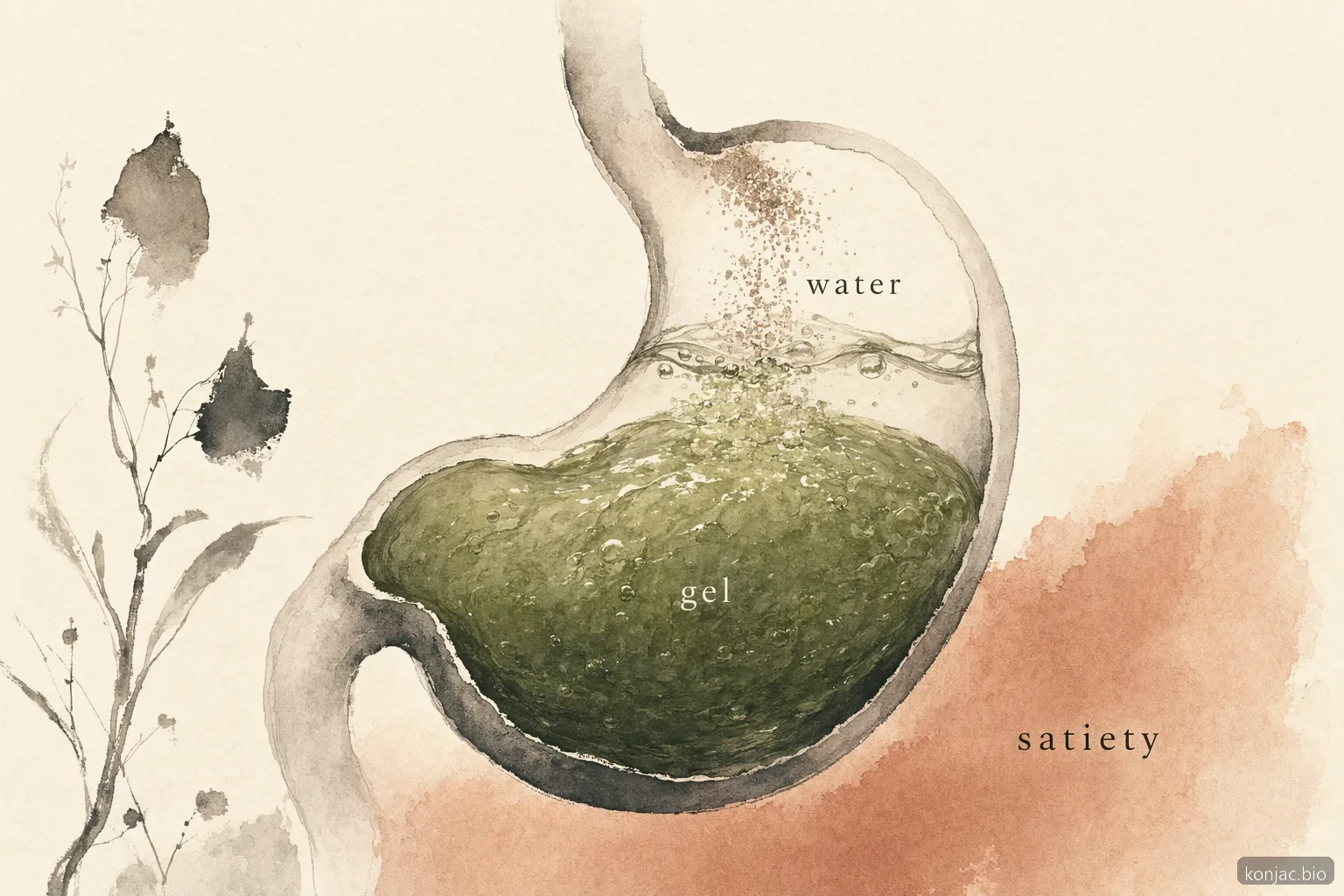
Glucomannan is a water-soluble, viscous fiber from the corm of Amorphophallus konjac. In water, it hydrates into a thick gel that slows stomach emptying and increases meal volume without adding meaningful digestible carbohydrate.
The practical outcome is satiety, not a direct fat-burning effect. A systematic review of randomized controlled trials found mixed but generally modest weight outcomes, with results depending on dose, diet context, and study design in the systematic review.
For a broader keto context, see Konjac for Keto and Weight Loss. Glucomannan is one tool in a calorie-aware eating pattern, not a standalone plan.

How much glucomannan for weight loss should you take?
The evidence-based dose for glucomannan for weight loss is 3 g per day, taken as 1 g before each of three meals with 1-2 glasses of water. EFSA specifies this dose and timing as the condition for its approved weight-management claim in the EFSA opinion.
A simple schedule is:
- Breakfast: 1 g glucomannan 15-60 minutes before eating.
- Lunch: 1 g glucomannan 15-60 minutes before eating.
- Dinner: 1 g glucomannan 15-60 minutes before eating.
Many people start with 0.5 g once daily for 3-4 days, then increase gradually. This can reduce common fiber adjustment issues such as bloating, gas, or softer stools.
Capsules are convenient because they pre-measure the dose. Powder is more flexible for recipes, but it must be dispersed fully in liquid before swallowing because glucomannan expands quickly.
Why glucomannan for weight loss fits keto eating
Glucomannan for weight loss fits keto because it is a high-viscosity fiber with very low digestible carbohydrate and strong food-structure benefits. It can add volume to meals while keeping net carbs low.
In keto meals, glucomannan appears most often in three formats:
- Shirataki noodles: ready-to-rinse konjac noodles used instead of wheat pasta.
- Konjac powder: a thickener for sauces, puddings, soups, and batters.
- Konjac rice shapes: low-carb rice alternatives used in bowls and stir-fries.
The keto value is practical. A plate of protein, vegetables, and shirataki noodles can feel larger than the same plate without noodles, while adding little energy. For noodle-specific preparation, see shirataki noodles. For thickening and baking use, see konjac flour.
The NIH fact sheet describes glucomannan as a soluble dietary fiber used in weight-management supplements, while noting that evidence quality varies across trials. That matches real-world use: helpful for fullness, strongest when paired with planned meals.
How do you use glucomannan safely for weight loss?
Use glucomannan safely by taking it with plenty of water, avoiding dry swallowing, and starting with a small dose. The safety concern is physical expansion: dry glucomannan can swell before reaching the stomach.
Follow these safety rules:
- Use water: take each 1 g dose with 1-2 full glasses.
- Do not dry-scoop: powder should be fully mixed into liquid or food.
- Start gradually: begin below the full dose if your fiber intake is low.
- Separate timing: take away from prescription products or supplements unless your clinician says otherwise.
- Stop if swallowing feels difficult: choose food forms instead of capsules if needed.
Konjac’s expansion is also why certain mini-cup gel candies have drawn regulatory concern. FDA guidance identifies konjac mini-cup gel candies as a choking hazard because the gel can be difficult to dislodge, especially in small cup formats, in FDA guidance.
Normal food forms such as rinsed shirataki noodles and hydrated sauces are different from dry powder or firm mini-cup gels. The key is hydration, texture, and portion control.
Best forms of glucomannan: capsules, powder, noodles, and flour
The best form of glucomannan depends on whether the goal is measured dosing, meal volume, or product formulation. Capsules are easiest for dose control, while food forms work better for people who want fullness from a larger plate.
| Form | Best use | Main advantage | Watchout |
|---|---|---|---|
| Capsules | Pre-meal routine | Accurate 1 g dosing | Must take with enough water |
| Powder | Shakes, sauces, puddings | Flexible and concentrated | Clumps if added too fast |
| Shirataki noodles | Pasta swaps, stir-fries | Meal volume with low net carbs | Needs rinsing and dry-pan heating |
| Konjac flour | Thickening and food manufacturing | Strong viscosity at low use levels | Requires precise hydration |
For home use, the most sustainable choice is the one that fits an existing routine. A capsule before meals may be easier for strict dosing. Shirataki noodles may be easier for people who want a bigger keto dinner without adding pasta.
For product developers, konjac.bio sources konjac ingredients at wholesale for noodles, dry blends, keto foods, and functional formulations. Request specs and pricing through our contact page.
Frequently asked questions
01 Does glucomannan burn fat?
02 When should I take glucomannan for weight loss?
03 Can I use glucomannan on a keto diet?
04 How long does glucomannan take to help with weight loss?
05 Is glucomannan safe every day?
- Scientific Opinion on the substantiation of health claims related to konjac mannan and reduction of body weight · EFSA Journal · 2010
- The effect of glucomannan on body weight in overweight or obese children and adults: a systematic review of randomized controlled trials · PubMed · 2011
- Dietary Supplements for Weight Loss: Fact Sheet for Health Professionals · NIH Office of Dietary Supplements · 2024
- CPG Sec. 515.100 Konjac Mini-Cup Gel Candies · U.S. Food and Drug Administration · 2023