What is sugar free konjac jelly?
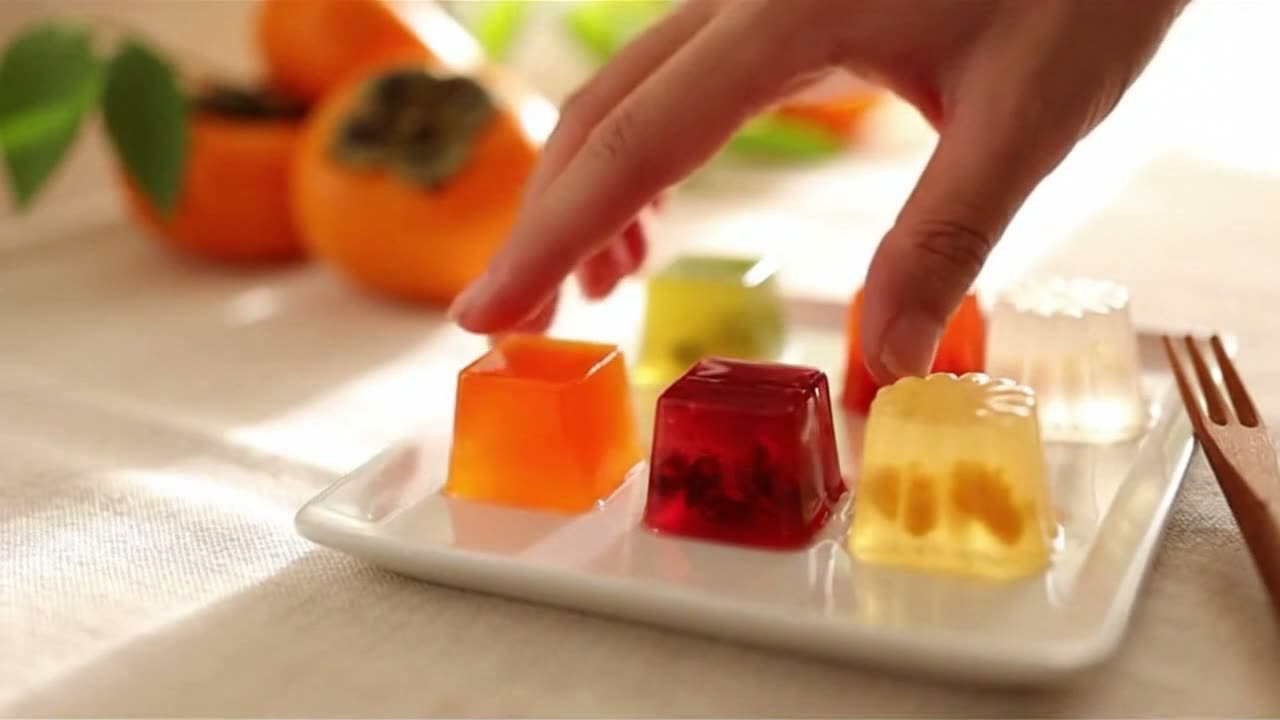
Sugar free konjac jelly is a chewy gel snack that replaces table sugar with low-calorie or non-nutritive sweeteners while using konjac glucomannan for texture.
The key ingredient is glucomannan, a soluble polysaccharide from the corm of Amorphophallus konjac. Konjac gel is valued because small usage levels can build a firm, elastic texture in water-based foods.
In the United States, a food labeled sugar free must contain less than 0.5 grams of sugars per reference amount customarily consumed and per labeled serving under the eCFR rule. That does not always mean calorie free, carbohydrate free, or suitable for every diet.
Most sugar free konjac jelly products fall into 3 retail formats:
- Mini cups: bite-sized gels, often fruit flavored, with the highest choking scrutiny.
- Pouches: squeezeable jelly drinks or spoonable snacks with softer gel strength.
- Blocks or strips: firmer formats used in dessert bowls, fruit cups, or foodservice.
For a format-by-format view of standard konjac desserts, see Konjac Jelly: The Asian Dessert and Its Western Successors.
How is sugar free konjac jelly made?
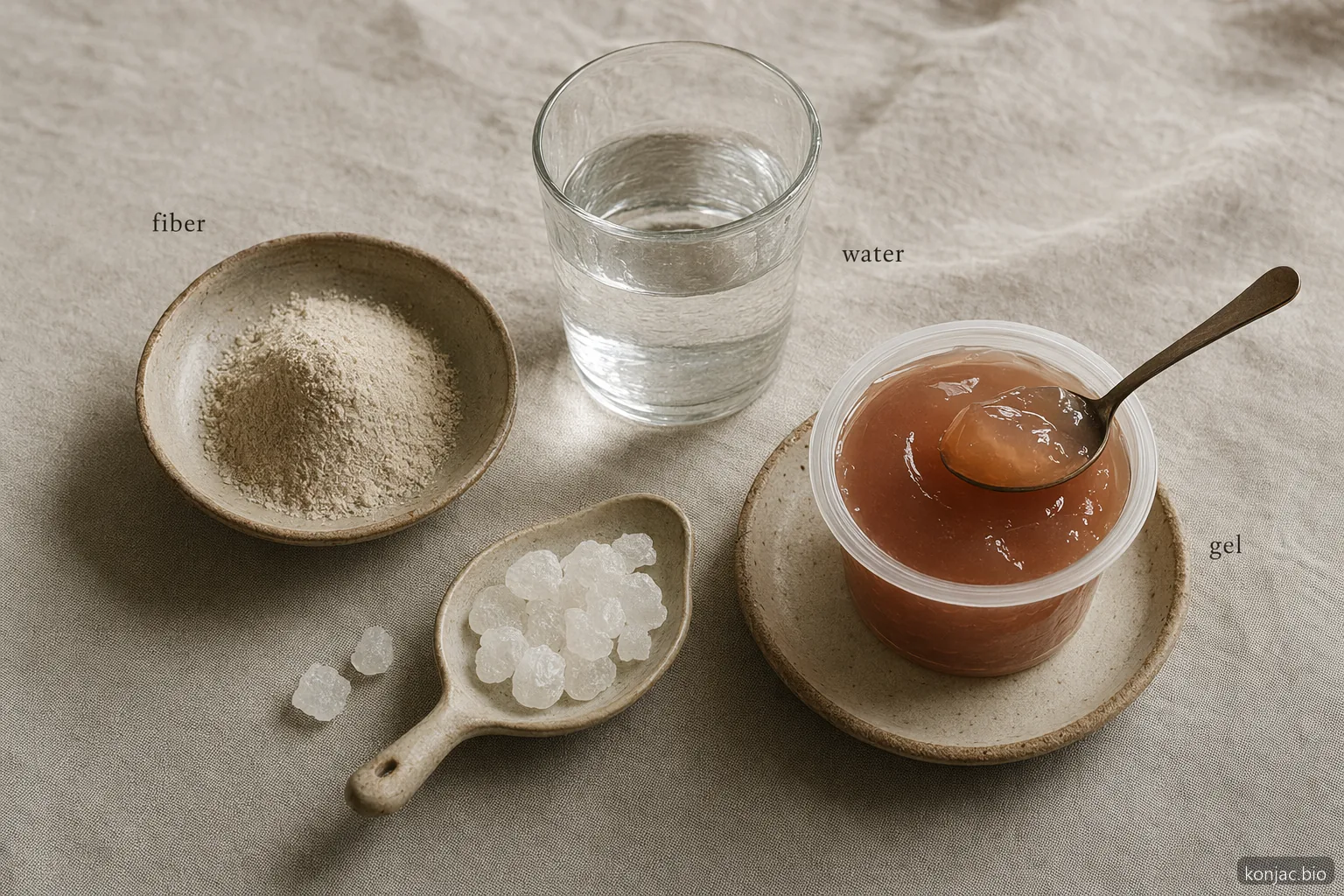
Sugar free konjac jelly is made by hydrating konjac powder, combining it with sweeteners and acids, then setting the mixture into a stable gel through heat, pH, and hydrocolloid control.
A typical formula starts with water, konjac gum or konjac glucomannan, citric acid, flavor, color, and a sweetener system. Many manufacturers also use carrageenan, locust bean gum, potassium chloride, or calcium salts to tune bite, syneresis, and heat stability.
The process is simple in concept but sensitive in production. Konjac hydrates slowly, so poor dispersion can create fish-eyes, clumps, or uneven texture. High shear mixing, staged powder addition, and controlled hydration time are common safeguards.
- Premix powders: Blend konjac with other dry ingredients to reduce clumping.
- Hydrate: Add to water under agitation and allow the gum to fully swell.
- Heat: Pasteurize or hot-fill according to product format and shelf-life target.
- Flavor and acidify: Add fruit flavors, acids, and sweeteners within stability limits.
- Fill and set: Deposit into cups, pouches, or trays before cooling and packing.
Texture changes quickly with small formula adjustments. A pouch jelly usually needs a softer gel that can flow through an opening, while a dessert cup needs enough strength to hold its shape on a spoon.
Sugar free konjac jelly nutrition: calories, fiber, and sweeteners
Sugar free konjac jelly is usually positioned as a low-calorie snack, but nutrition depends on serving size, sweetener choice, and the actual grams of konjac fiber in the product.
Konjac glucomannan has been studied as a viscous soluble fiber. The European Food Safety Authority allows the claim, “Glucomannan in the context of an energy restricted diet contributes to weight loss,” when specific conditions are met, including 3 grams daily in 3 doses of 1 gram with 1 to 2 glasses of water before meals, per the EFSA claim.
A single jelly pouch or cup may contain far less than 3 grams of glucomannan. Brands should avoid implying that a snack automatically delivers the same intake used for that authorized claim.
| Label item | What to check | Why it matters |
|---|---|---|
| Sugars | Less than 0.5 g per serving for sugar free | Confirms the front-label claim |
| Total carbohydrate | Fiber, polyols, and other carbs | Not the same as sugars |
| Calories | Per cup, pouch, or 100 g | Serving sizes vary widely |
| Sweeteners | Stevia, sucralose, erythritol, monk fruit | Affects taste and digestive comfort |
| Fiber | Actual grams per serving | Shows how much konjac is present |
The U.S. Food and Drug Administration lists several high-intensity sweeteners and explains that they are much sweeter than sucrose and used at very low levels in foods, per FDA sweeteners. In sugar free konjac jelly, sweetener blends are common because one sweetener rarely matches sugar’s onset, body, and finish by itself.
Is sugar free konjac jelly safe to eat?
Sugar free konjac jelly can be eaten safely when it is made, labeled, and consumed appropriately, but firm mini-cup gels have a documented choking risk.
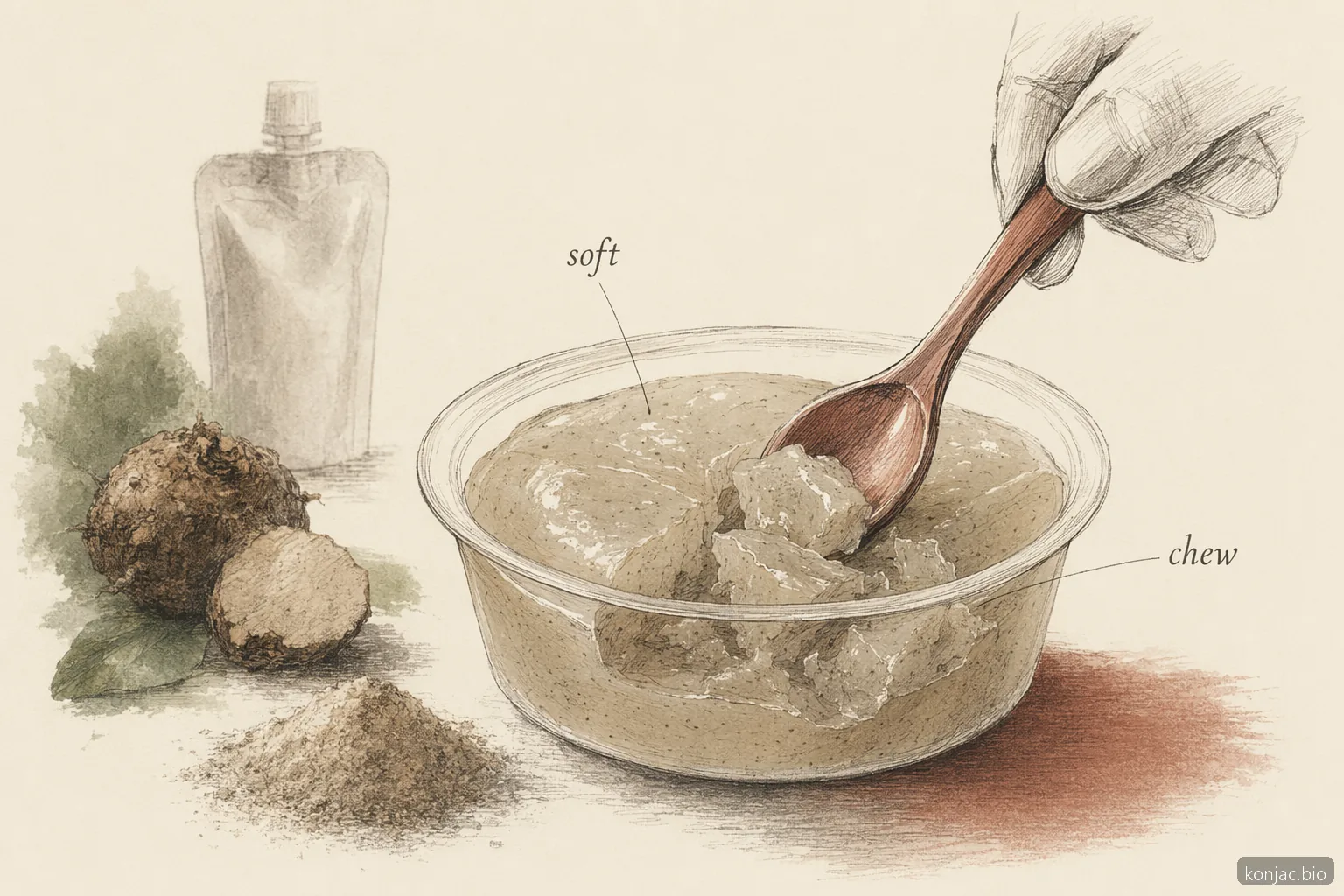
The main safety issue is not sugar replacement. It is texture, shape, and how the gel breaks in the mouth. A small, slippery, firm gel can be difficult to chew and may move quickly toward the throat.
The FDA maintains an import alert for certain gel candies containing konjac because of choking hazards, especially with mini-cup formats, per the FDA alert. This does not mean every konjac jelly product has the same risk, but it does make format design and warning language central for brands.
Practical consumer checks include:
- Choose pouches or spoonable cups for softer eating texture.
- Chew thoroughly rather than swallowing whole pieces.
- Do not give firm mini-cup gels to very young children.
- Check the label for age guidance, choking warnings, and serving instructions.
- Avoid eating konjac jelly while running, laughing, or driving.
For deeper product design detail, see our konjac jelly cups safety cluster.
How should brands formulate sugar free konjac jelly for Western markets?
Brands should formulate sugar free konjac jelly around label compliance, texture safety, sensory quality, and supply-chain consistency before choosing packaging or flavor.
Western buyers often expect a fruit-forward taste, clear nutrition panel, low calories, and a familiar eating experience. That means the product cannot rely only on novelty. It must taste good at repeat-purchase levels and be easy to understand from the front of pack.
A practical formulation brief should include 6 specifications:
- Target claim: Sugar free, no added sugar, low calorie, source of fiber, or another local claim.
- Serving size: Cup, pouch, or multipack portion with calories stated clearly.
- Gel profile: Spoonable, squeezeable, chewable, or firm dessert texture.
- Sweetener blend: Select for sweetness curve, aftertaste, cost, and allowed-market status.
- Acid system: Balance citric, malic, or lactic acid with flavor and gel stability.
- Safety review: Match texture, warnings, and package opening to intended user group.
Konjac also differs from gelatin in sourcing and texture. Konjac is plant-derived and can support vegan positioning, while gelatin is animal-derived and melts differently in warm conditions. For ingredient selection, compare konjac jelly vs gelatin.
konjac.bio sources konjac ingredients at wholesale for food brands developing jelly snacks, pouches, and dessert systems. Contact our team for pricing and specification support.
Frequently asked questions
01 Is sugar free konjac jelly actually zero sugar?
02 Does sugar free konjac jelly have calories?
03 What sweeteners are used in sugar free konjac jelly?
04 Is sugar free konjac jelly good for weight management?
05 Why do some konjac jelly cups have choking warnings?
06 Can sugar free konjac jelly be vegan?
- 21 CFR 101.60 Nutrient content claims for calorie and sugar content · Electronic Code of Federal Regulations · 2024
- Scientific Opinion on the substantiation of health claims related to glucomannan · European Food Safety Authority · 2010
- Import Alert 33-15: Detention Without Physical Examination of Gel Candies Containing Konjac · U.S. Food and Drug Administration · 2024
- High-Intensity Sweeteners · U.S. Food and Drug Administration · 2024