What are konjac jelly pouches?
Konjac jelly pouches are single-serve squeeze packs of fruit-flavored gel made with konjac glucomannan, water, sweeteners, acids, and stabilizers.
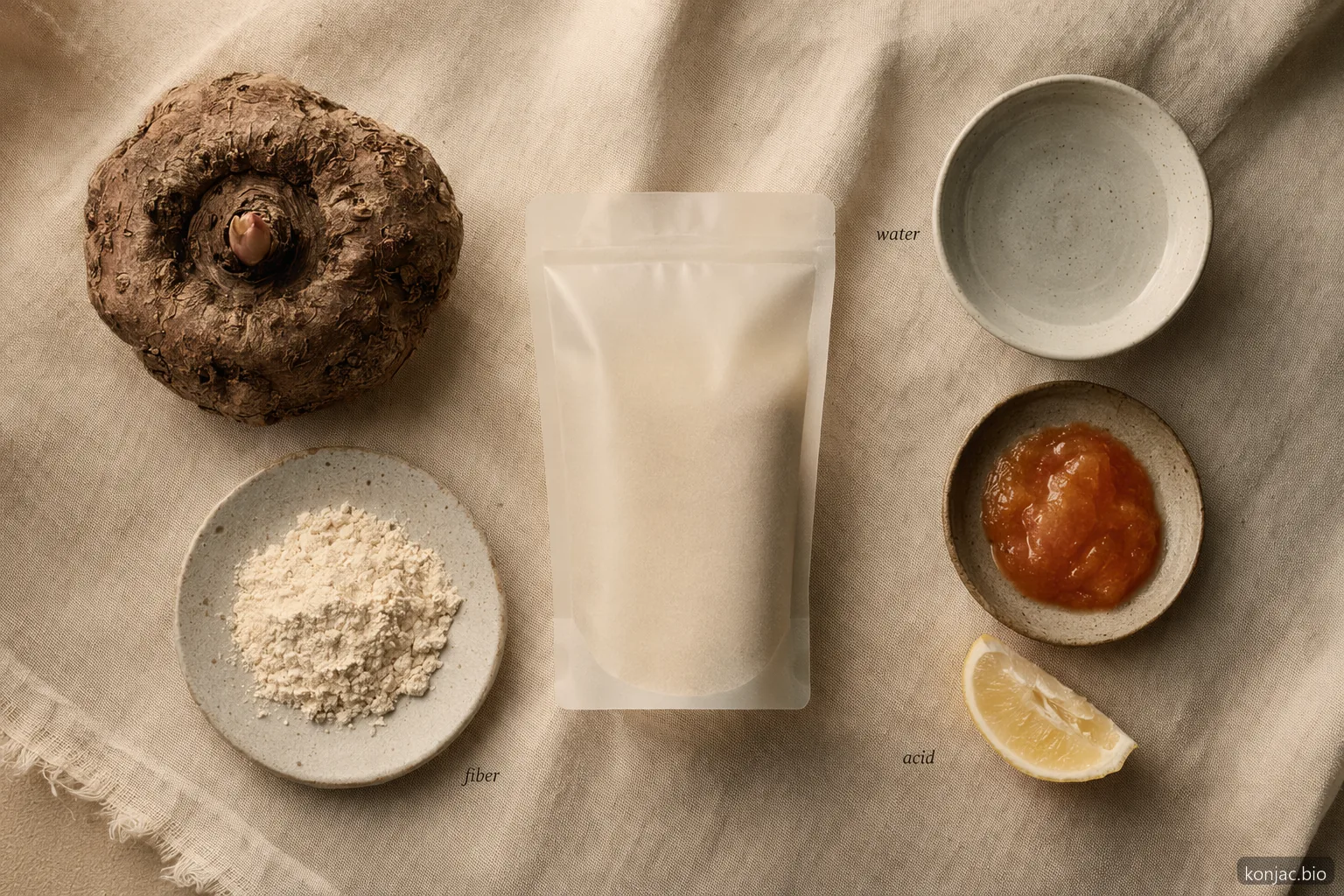
The defining ingredient is glucomannan, a soluble dietary fiber from the corm of Amorphophallus konjac, a plant used in Asian foods such as shirataki and konjac jelly. Glucomannan has been studied for viscosity, satiety, and weight-management contexts in human nutrition literature, including a PubMed review.
The pouch format changes the eating experience. Instead of scooping jelly from a cup, the user twists off a cap and squeezes a small amount into the mouth or onto a spoon. Good pouch design encourages small bites, clear flow, and a texture that breaks down with chewing.
For a wider background on Asian jelly desserts, texture systems, and Western product formats, see the parent guide: Konjac Jelly: The Asian Dessert and Its Western Successors.
How are konjac jelly pouches different from konjac cups?
Konjac jelly pouches differ from cups mainly by delivery format, portion control, and how the gel enters the mouth.
A cup presents a formed gel that is eaten with a spoon or sucked from a small container. A pouch presents a flowable gel that can be squeezed in controlled amounts. That difference matters for texture, viscosity, safety labeling, and how consumers use the product on the go.
| Feature | Konjac jelly pouches | Konjac jelly cups |
|---|---|---|
| Eating method | Squeezed slowly from a spout | Scooped or released from a cup |
| Typical texture goal | Soft, flowable, chewable gel | Set gel with spoonable bite |
| Portion style | Single pouch, often capped | Single cup, often peel-top |
| Use case | Lunchbox, gym bag, travel snack | Dessert cup, chilled snack tray |
| Label focus | Squeeze slowly, chew, supervise children | Chew well, avoid swallowing whole |
Konjac cup products have received more regulatory attention because small, firm mini-cup gel candies can be a choking hazard. The U.S. FDA maintains an import alert for certain mini-cup gel candies containing konjac under FDA alert. For cup-specific format details, see konjac jelly cups.
Ingredients, nutrition, and label claims on pouch labels
A typical pouch formula starts with water, then uses fruit flavor, acidity, sweetener, and a gel system built around konjac glucomannan. Many formulas also include gelling partners such as carrageenan or other hydrocolloids to tune flow, bite, and stability.
Nutrition varies by formula, not by pouch format. A sugar-free pouch, a reduced-sugar pouch, and a juice-sweetened pouch can look similar on shelf while delivering different carbohydrate, calorie, and sweetness profiles. In the United States, Nutrition Facts panels must declare serving size, calories, total carbohydrate, dietary fiber, and added sugars under FDA food labeling rules, including guidance on FDA fiber.
Fiber claims deserve special attention. In the European Union, the authorized wording for glucomannan is: 'Glucomannan in the context of an energy restricted diet contributes to weight loss,' with conditions of use specified by EFSA in its EFSA claim. A pouch label should not imply more than the actual grams of glucomannan, serving frequency, and local regulations support.
Product developers should ask for a specification sheet, certificate of analysis, microbiology limits, heavy metal limits, allergen statement, and factory food-safety certification such as ISO 22000. For product teams, konjac.bio sources konjac ingredients at wholesale volumes and can discuss viscosity, mesh size, and documentation through contact.
For a deeper ingredient breakdown, see konjac jelly ingredients.
Safety rules for konjac jelly pouches
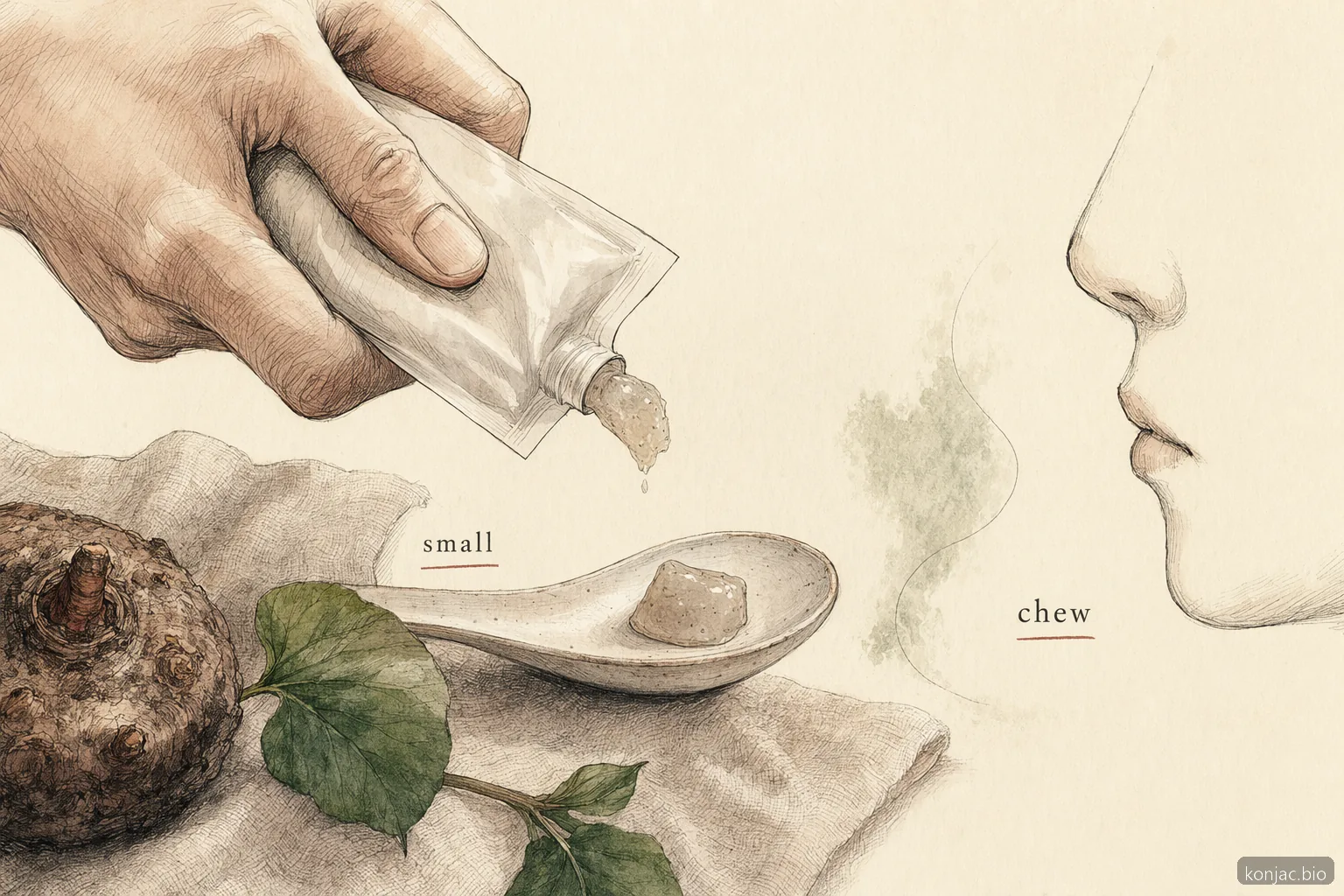
Konjac jelly pouches should be eaten slowly, squeezed in small amounts, and chewed before swallowing. The product is a gel, not a drink, even when it comes in a pouch.
Choking risk is the main safety issue for konjac jelly formats. The FDA import alert focuses on mini-cup gel candies containing konjac because a small, slippery, resilient gel can be difficult to dislodge if swallowed whole, especially by young children or older adults. Pouches can reduce some cup-specific risks by allowing smaller squeezes, but poor use can still create risk.
Clear front-pack and back-pack instructions are useful. Practical label language often includes:
- Chill before eating for best texture.
- Squeeze gently and eat small amounts.
- Chew thoroughly before swallowing.
- Do not swallow a large gel piece whole.
- Adult supervision is recommended for children.
- Not suitable for children under the age specified by local regulation or brand policy.
Texture design also matters. A pouch gel should flow through the spout without forming one large plug, and it should break down under normal chewing. Quality checks should include viscosity, gel strength, pH, soluble solids, cap integrity, and finished-pack leakage.
How should shoppers choose konjac jelly pouches?
Shoppers should choose konjac jelly pouches by reading the ingredient list, Nutrition Facts panel, warning statement, and serving instructions before buying.
A practical label check takes less than 60 seconds. Start with the serving size and calories, then check total sugars, added sugars, sugar alcohols, dietary fiber, and sodium. If the pouch uses intense sweeteners, look for the named sweetener rather than relying on a front-pack phrase such as low sugar.
Texture preference is personal. Some pouches are soft and drinkable-looking, while others are firmer and more jelly-like. A good pouch should still signal chewing behavior through its label and mouthfeel, because konjac gel is not the same as juice or a smoothie.
Use this quick checklist:
- Ingredient clarity: konjac powder, glucomannan, sweetener, acid, flavor, and stabilizers are named clearly.
- Fiber honesty: grams of fiber per serving match any front-pack claim.
- Safety wording: the pouch says to squeeze slowly and chew.
- Cap design: the closure is secure, intact, and not damaged.
- Storage instructions: shelf-stable, chilled, or refrigerated directions are clear.
- Market fit: flavor, sweetness, and portion size match the intended consumer.
For buyers comparing formats, pouches usually win on portability, while cups often win on dessert-like presentation. The better choice depends on the eating occasion, target age group, and safety communication.
Frequently asked questions
01 Are konjac jelly pouches safer than konjac jelly cups?
02 Do konjac jelly pouches help with weight management?
03 How many calories are in konjac jelly pouches?
04 Can children eat konjac jelly pouches?
05 Do konjac jelly pouches need refrigeration?
06 What should B2B buyers ask before sourcing konjac for pouches?
- Safety of glucomannan for weight management claims · European Food Safety Authority · 2010
- Import Alert 33-15: Mini-cup gel candies containing konjac · U.S. Food and Drug Administration · 2024
- Glucomannan and obesity: a critical review · PubMed · 2008
- Questions and answers on dietary fiber · U.S. Food and Drug Administration · 2024
- Dietary supplements for weight loss fact sheet · NIH Office of Dietary Supplements · 2024