What is everydaze konjac jelly?
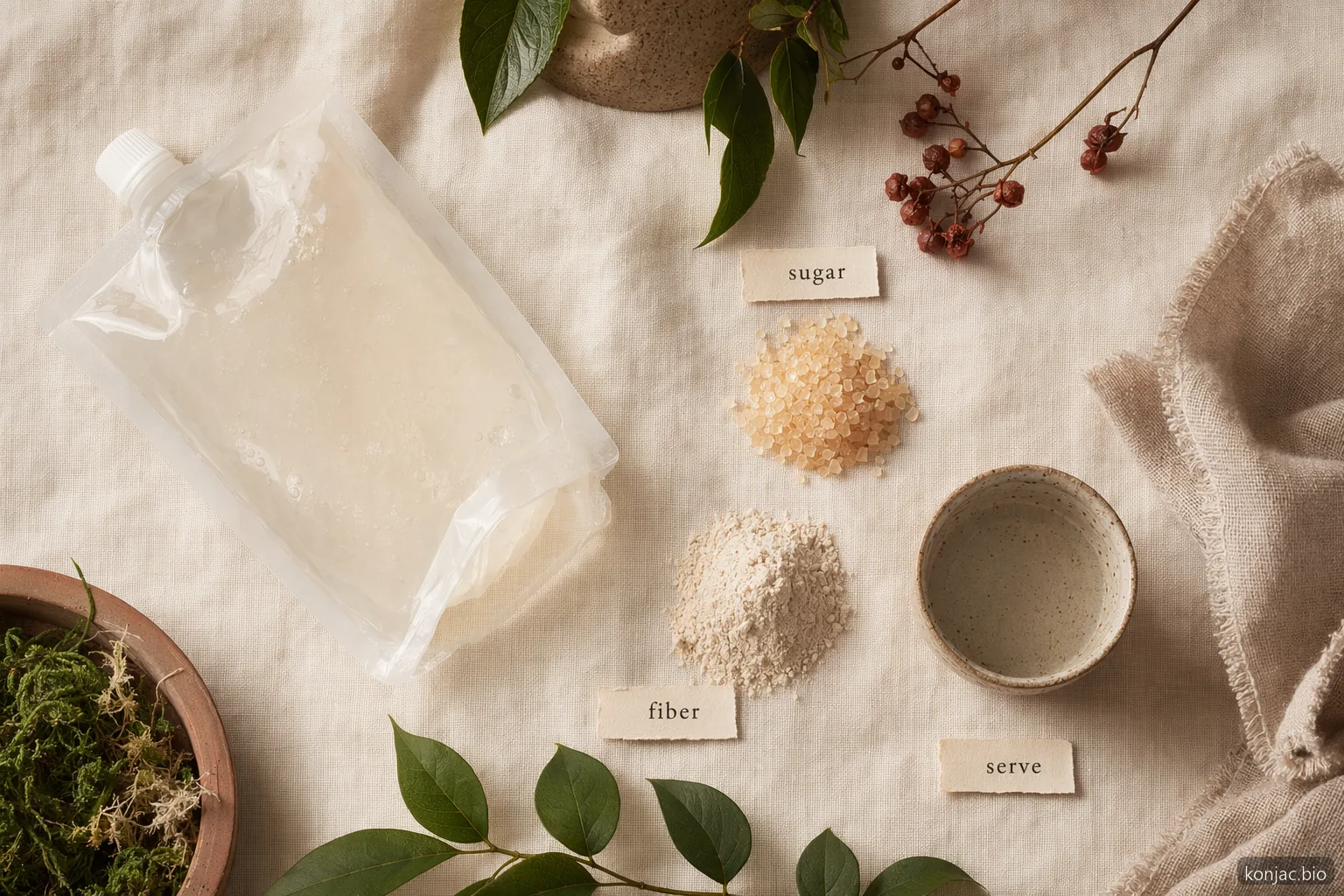
everydaze konjac jelly is a ready-to-eat jelly snack pouch built around konjac texture, fruit-style flavors, and single-serve convenience. It is best understood as a Western-facing version of Asian konjac jelly: portable, sweet, chewy, and positioned as a lighter dessert or snack.
The functional ingredient behind the texture is konjac, from Amorphophallus konjac, a plant whose corm is processed into glucomannan-rich flour. Glucomannan is a soluble dietary fiber that forms thick gels when hydrated, a property described in human nutrition references such as the NIH fiber overview.
Most shoppers evaluate this product for four practical reasons:
- Texture: bouncy, slippery, and more elastic than gelatin dessert.
- Portion control: a pouch creates a fixed serving size.
- Calories: many konjac jelly snacks are marketed as lower-calorie sweets, but the label decides the number.
- Flavor variety: fruit-style profiles make the format familiar for Western snack aisles.
For category background, see the parent guide to konjac jelly, which explains how Asian cup, pouch, and drinkable jelly formats evolved into modern retail snacks.
How does everydaze konjac jelly compare with traditional konjac jelly?
everydaze konjac jelly is closer to a modern pouch snack than to older mini-cup konjac jelly candies. Traditional Asian konjac jelly includes multiple formats, while Western products often focus on portability, calorie transparency, and fruit-forward flavor.
| Feature | Everydaze-style pouch | Traditional Asian konjac jelly |
|---|---|---|
| Format | Squeezable or tear-top pouch | Cups, pouches, bowls, and jelly drinks |
| Use case | Desk snack, lunchbox item, dessert swap | Dessert, convenience-store snack, chilled treat |
| Texture | Soft gel with chew | Can range from soft jelly to firmer bite |
| Label focus | Calories, sugar, sweeteners, fiber | Flavor, texture, fruit inclusions, serving style |
| Safety focus | Consume slowly, chew fully | Mini-cup formats have drawn regulatory scrutiny |
The biggest difference is not the botanical source. It is the eating format. A pouch generally encourages smaller, squeezed portions, while a mini-cup candy can be swallowed as a single piece if handled carelessly.
The U.S. Food and Drug Administration has flagged gel candies containing konjac in mini-cup formats because of choking risk, especially where the gel is firm and shaped for one-bite consumption FDA alert. That warning does not mean all konjac jelly formats are identical, but it does make format, serving instructions, and supervision meaningful.
Label checkpoints before buying
A konjac jelly label should be read like a snack label, not like a supplement label. The front of pack may emphasize fruit flavor, low calories, or fiber, but the Nutrition Facts panel and ingredient list carry the details that decide how the product fits your diet.
Use this five-point checklist:
- Serving size: confirm whether one pouch equals one serving or whether the pouch contains multiple servings.
- Calories: compare calories per pouch, not calories per 100 grams, if you eat the full pouch.
- Total sugars: fruit-style flavor does not automatically mean fruit-derived sweetness.
- Sweetener system: look for sugar, erythritol, stevia, sucralose, or other listed sweeteners.
- Fiber amount: check whether fiber is present in a meaningful gram amount or only used for texture.
The FDA explains that Nutrition Facts labels are designed around serving size, calories, nutrients, and daily value context FDA label. For jelly snacks, serving-size clarity matters because a small pouch can look nutritionally modest while still delivering concentrated sweetness.
Glucomannan should not be assumed to provide the same effect in every product. EFSA authorized the exact claim, "Glucomannan in the context of an energy restricted diet contributes to weight loss," but the opinion ties the claim to specific intake conditions, including 3 grams of glucomannan daily in three 1 gram doses with 1 to 2 glasses of water before meals EFSA opinion. A single jelly pouch may not meet those conditions.
Is everydaze konjac jelly safe to eat?
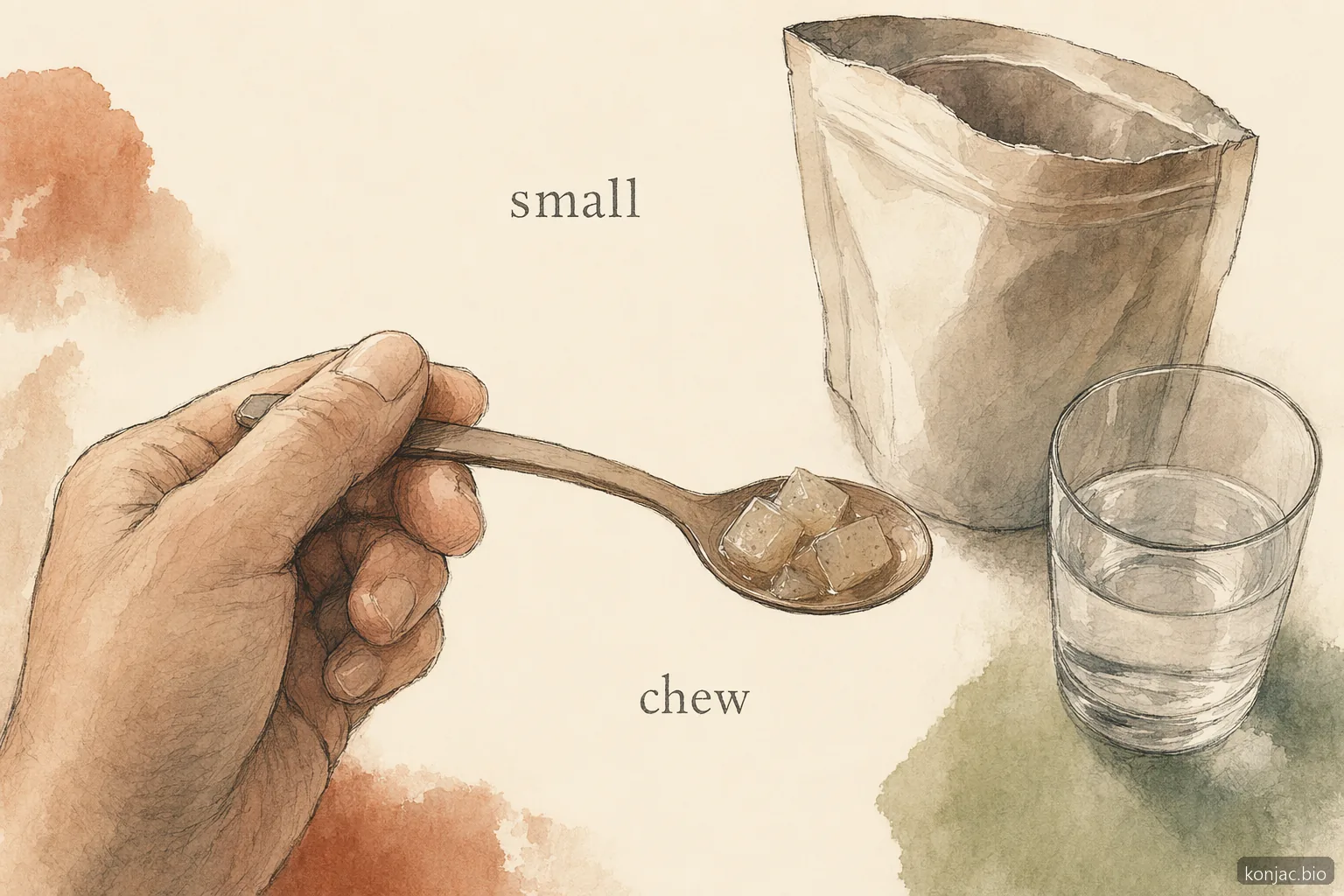
everydaze konjac jelly can be a normal snack for many adults when eaten slowly, chewed fully, and used according to the package directions. The main safety consideration is physical swallowing risk, not the fact that konjac comes from a plant.
Konjac gels can be slippery and resilient. That texture is exactly why consumers like the product, but it also means children, older adults with swallowing difficulty, and anyone eating quickly should be cautious. Pouch products should not be squeezed directly into the throat.
Regulators have paid special attention to mini-cup gel candies containing konjac because small, firm gels can be difficult to dislodge if swallowed whole. FDA import controls identify gel candies containing konjac as a choking-risk category FDA alert.
Practical use rules are simple:
- Eat small amounts at a time.
- Chew fully before swallowing.
- Do not freeze into hard plugs unless the label specifically supports that use.
- Keep away from young children unless the product is age-appropriate and supervised.
- Discard damaged pouches, swollen packaging, or products with off odors.
For more category-specific safety context, see konjac jelly safety.
Where it fits in the konjac jelly category
Everydaze-style products show how konjac jelly moved from Asian grocery shelves into Western snack routines. The product format matches consumer demand for portable sweets, controlled portions, and flavors that feel closer to candy or fruit snacks than traditional desserts.
This does not make every pouch nutritionally equal. Two konjac jelly products can differ sharply in calories, sugars, acidulants, preservatives, flavor systems, and actual konjac content. A buyer comparing products should inspect the Nutrition Facts panel, ingredient sequence, allergen statement, country of origin, and storage instructions.
For consumers, the best use case is occasional snacking: chilled after lunch, kept in a work bag if shelf-stable, or used as a portioned dessert alternative. For retailers, the format competes with fruit snacks, gelatin cups, low-calorie desserts, and Asian drinkable jellies rather than with staple foods.
For product teams, konjac jelly quality depends on more than glucomannan alone. Texture stability, pH, heat processing, fruit flavor compatibility, and packaging integrity determine whether a pouch feels premium or watery. See konjac jelly pouches for format and manufacturing considerations.
B2B aside: konjac.bio sources konjac ingredients at wholesale scale for brands developing jelly, noodle, and gelled snack lines. Contact the team for specification-driven pricing.
Frequently asked questions
01 Is everydaze konjac jelly the same as Asian konjac jelly?
02 Does everydaze konjac jelly have glucomannan benefits?
03 Is everydaze konjac jelly low calorie?
04 Can children eat everydaze konjac jelly?
05 What ingredients should I look for in everydaze konjac jelly?
- Scientific Opinion on the substantiation of health claims related to glucomannan · European Food Safety Authority · 2010
- Import Alert 33-15: Detention Without Physical Examination of Gel Candies Containing Konjac · U.S. Food and Drug Administration · 2024
- Fiber Fact Sheet for Health Professionals · National Institutes of Health Office of Dietary Supplements · 2022
- How to Understand and Use the Nutrition Facts Label · U.S. Food and Drug Administration · 2024
- Effect of glucomannan on overweight or obese adults: a randomized controlled trial · PubMed · 2008