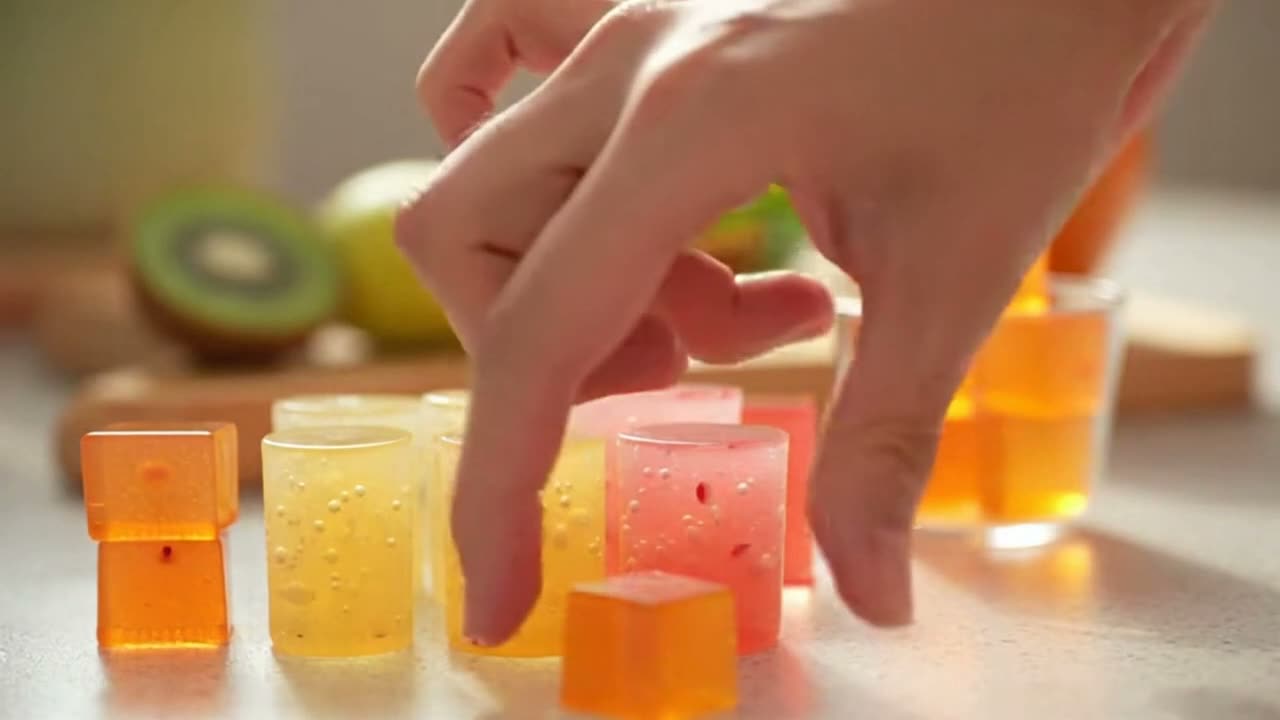
What is drinkable konjac jelly?
drinkable konjac jelly is a soft gel snack that can be squeezed, sucked, or sipped from a pouch or cup without a spoon.
The core texture comes from konjac glucomannan, a soluble fiber associated with the corm of Amorphophallus konjac; the U.S. dietary supplement fact sheet from NIH describes glucomannan as a fiber derived from konjac root and used in weight-management products NIH sheet. In food applications, formulators combine konjac with water, fruit juice or flavor, acidulants, sweeteners, color, and sometimes complementary hydrocolloids.
The format sits between a beverage and a dessert. A typical product brief can specify a 100 g, 150 g, or 180 g pouch, a low-sugar or full-sugar recipe, and a viscosity target that lets the gel flow through a spout without breaking into hard pieces.
For broader category context, see konjac jelly, which covers Asian dessert roots, Western snack adaptations, and the difference between cup, pouch, and spoonable formats.
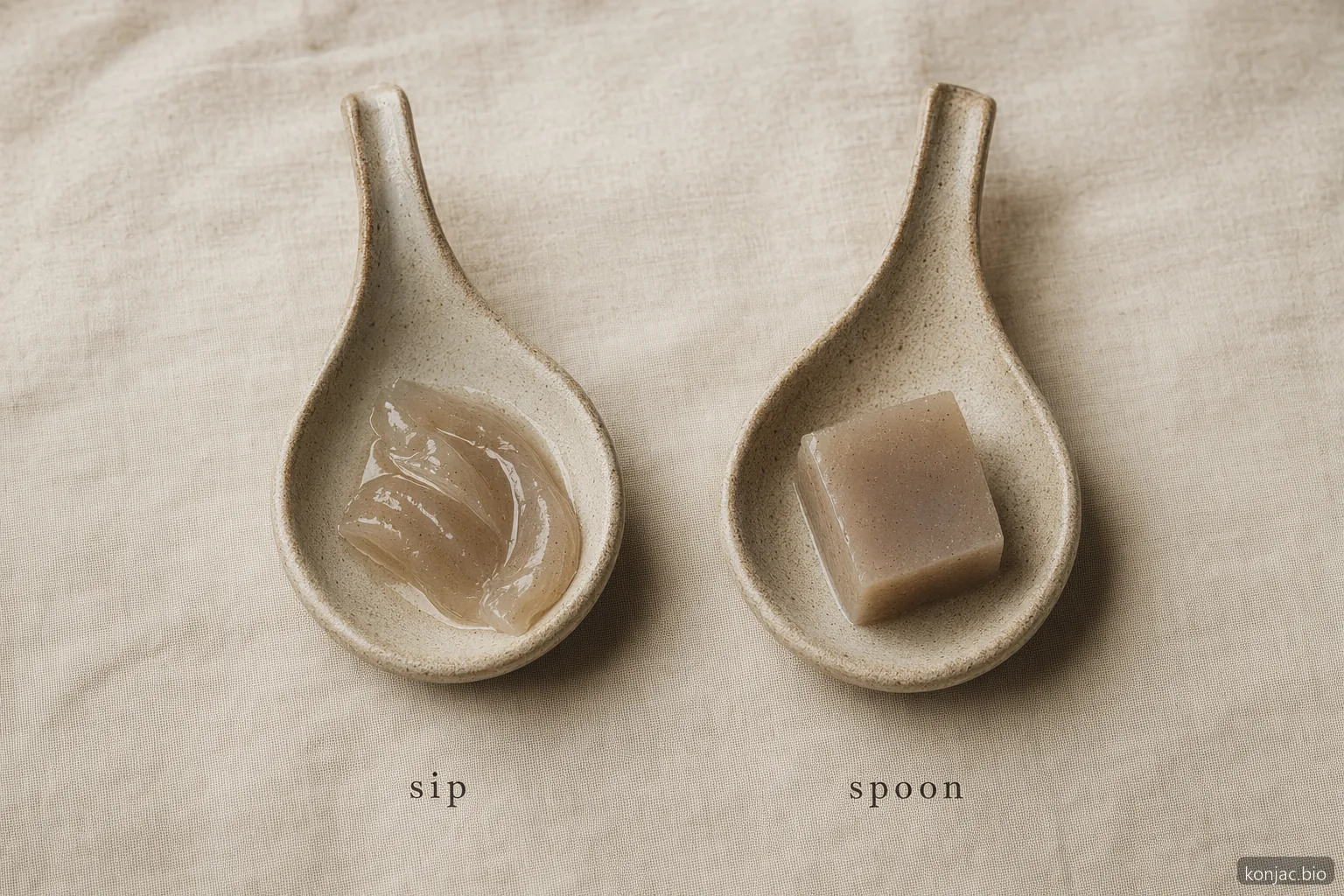
Drinkable konjac jelly vs spoonable konjac jelly
Drinkable konjac jelly and spoonable konjac jelly use the same base concept, but the finished texture, serving occasion, and packaging logic are different.
| Feature | Drinkable format | Spoonable format |
|---|---|---|
| Texture | Soft, squeezable, semi-fluid gel | Firm gel that holds shape on a spoon |
| Packaging | Spouted pouch, squeeze pouch, bottle, or cup | Cup, tray, tub, or molded dessert pack |
| Use case | On-the-go snack, lunchbox, chilled beverage shelf | Dessert cup, fruit jelly, plated snack |
| Formulation priority | Flow, swallowability, and stable suspension | Cut, bite, spoon release, and gel strength |
| Risk control | Avoid hard plugs and uncontrolled gel chunks | Avoid overly firm pieces in small single-bite cups |
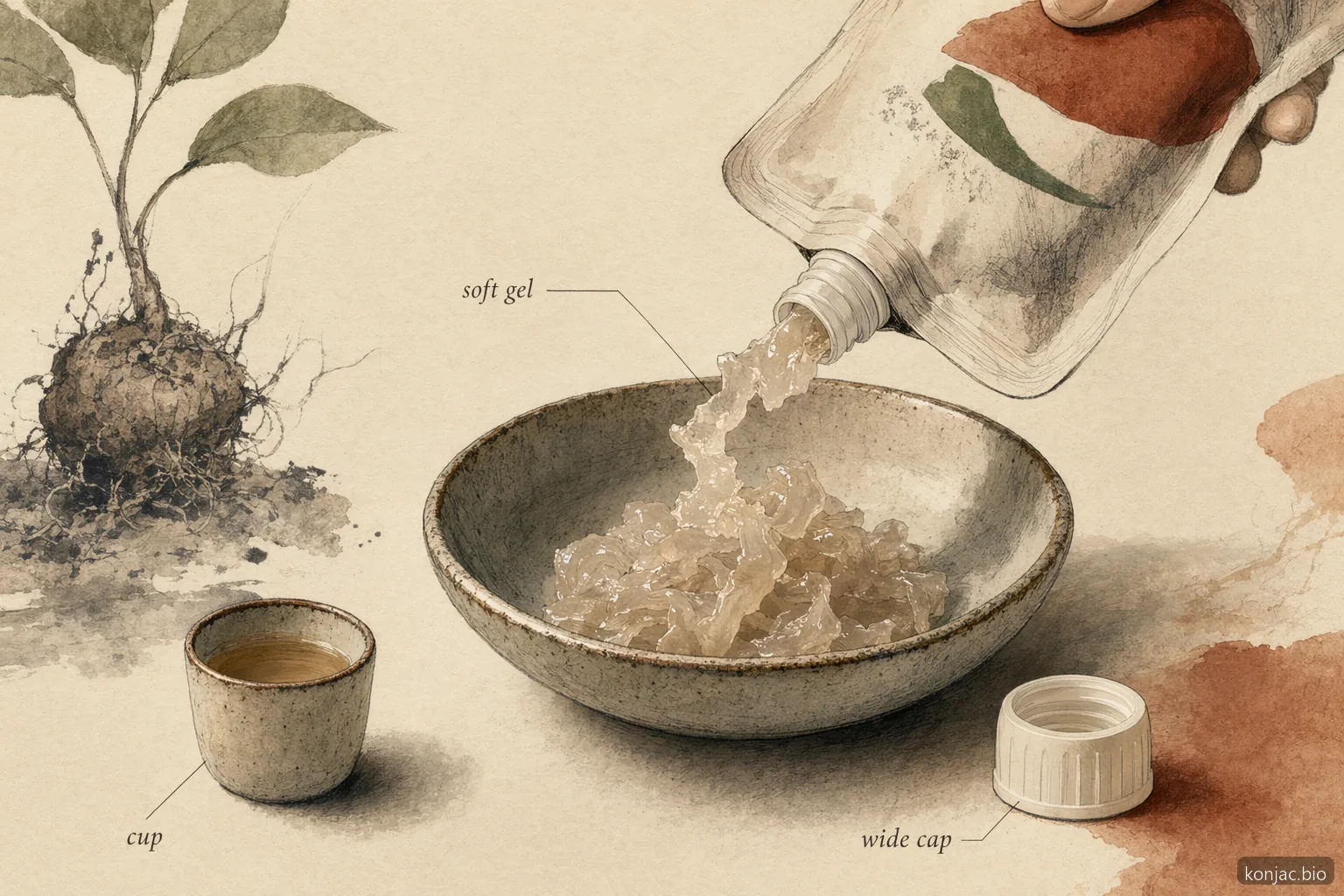
The pouch format usually needs a more forgiving gel. If the product is too thin, it feels like juice with pulp. If it is too strong, it can form a plug at the spout or break into firm fragments.
For teams comparing pouch formats, a related packaging guide can sit under konjac jelly pouches. For regulatory and serving-format checks, a safety-focused companion page can sit under konjac jelly safety.
The same base gel also appears in konjac gummies and shirataki noodles, though the eating experience differs. Gummies are drier and chewier, meant to be bitten like candy; shirataki noodles are savory, rinsed before cooking, and eaten with a fork. A pouch sits between these: softer than a gummy, less firm than a mini cup, and not meant to be swallowed as one plug.
What ingredients create the drinkable texture?
Drinkable texture comes from hydrated konjac glucomannan balanced with water, acid, sweetener, processing heat, and shear.
In the United States, konjac flour is marketed as a food ingredient without a specific listing in food regulations, while in the EU it is an authorized additive. In a drinkable jelly, the formulator usually starts with rapid dispersion in water, then controls hydration time so the powder does not clump.
A practical formulation map often includes five variables:
- Konjac level: enough to create body, but not so much that the product sets like a cube.
- Sweetener system: sugar, allulose, erythritol, stevia, fruit concentrate, or a blended approach.
- Acid system: citric acid, malic acid, or fruit acid for flavor balance and pH control.
- Thermal process: hot fill, pasteurization, or retort chosen around target shelf life and packaging.
- Shear: mixing speed and filling pressure that keep the gel smooth rather than ropy.
Fruit pulp, aloe pieces, coconut gel, nata-style inclusions, or juice sacs can be added, but inclusion size matters. A pouch product should not rely on large, firm pieces to deliver bite because the user may squeeze the full serving directly into the mouth.
How many calories are in a drinkable konjac jelly pouch?
Calories depend mainly on the sweetener system and fruit solids, not on konjac itself, since glucomannan contributes little usable energy as a soluble fiber. A pouch built on water, konjac, and high-intensity sweeteners sits at the low end; a juice-heavy, sugar-sweetened pouch is closer to a conventional fruit dessert. Calories per 100 g on the Nutrition Facts panel is the most reliable comparison, since pouch sizes vary (see the FDA guide to the Nutrition Facts label).
Safety, serving size, and packaging choices
Safety starts with designing a soft, flowable product that does not encourage consumers to swallow firm gel pieces whole.
U.S. regulators have flagged small gel candies containing konjac because certain mini-cup formats can pose a choking hazard when the gel is sucked from the cup and swallowed intact FDA alert. That concern is format-specific: the problem is not simply the word konjac, but the combination of firm gel, small cup, suction, and a bite-sized unit.
A safer drinkable concept should be designed around controlled flow. The gel should pass through the spout smoothly, with no rigid core, no marble-like pieces, and no suction event that releases the whole serving at once.
Serving guidance should be direct on pack. Brands commonly use plain-language cues such as “shake well,” “consume slowly,” “do not freeze,” and age guidance appropriate to the market. A product intended for young children needs extra caution because small children have less reliable chewing and swallowing behavior.
Packaging checks should include cap size, spout diameter, burst resistance, hot-fill compatibility, and post-process texture drift. A good specification measures texture at day 0, after heat exposure, after chilled storage, and near the end of shelf life.
Label copy should also spell out how to squeeze, not just how much: tell consumers to release one small portion at a time, chew briefly, and swallow slowly rather than squeezing the full pouch into the mouth at once.
How should brands position drinkable konjac jelly?
Brands should position drinkable konjac jelly as a texture-led snack first, then support any fiber or weight-management messaging with compliant local wording.
In the European Union, the EFSA-approved wording for glucomannan is: Glucomannan in the context of an energy restricted diet contributes to weight loss EFSA opinion. That wording depends on use conditions and should not be generalized into broad health promises.
For the U.S. market, teams should separate front-of-pack marketing from Nutrition Facts and ingredient labeling. If a product highlights fiber, the declared fiber amount, serving size, and ingredient statement need to support the claim. If the serving is mostly water and flavor, the product may be better positioned around fun texture, fruit taste, and lower sugar rather than aggressive functional claims.
Quality buyers should ask suppliers for lot-level certificates of analysis, allergen statements, heavy metal limits, microbial specifications, and food safety certification. ISO 22000 is one recognized food safety management standard used by food manufacturers and ingredient suppliers ISO 22000.
konjac.bio sources konjac ingredients at wholesale for product developers building jelly, pouch snack, and beverage concepts. Contact the team to discuss grade, viscosity, documentation, and pricing.
Brands should avoid over-promising on weight effects: a 2013 systematic review of randomized controlled trials found glucomannan did not produce a statistically significant body-weight effect across included studies, which is why dose, diet, and format matter more than the ingredient name (2013 systematic review). Because glucomannan is a fermentable fiber, large servings may cause bloating or gas in some people, so one starting pouch with water is more sensible than several at once.
Frequently asked questions
01 Is drinkable konjac jelly the same as a konjac drink?
02 Does drinkable konjac jelly contain fiber?
03 Is drinkable konjac jelly safe for children?
04 Can drinkable konjac jelly be marketed for weight management?
05 What makes a good B2B specification for drinkable konjac jelly?
06 Is drink konjac jelly the same as drinkable konjac jelly?
07 Is a konjac jelly snack different from a gelatin snack?
- Scientific Opinion on the substantiation of health claims related to glucomannan · European Food Safety Authority · 2010
- Weight Loss Fact Sheet for Health Professionals · National Institutes of Health Office of Dietary Supplements · 2024
- Import Alert 33-15: Detention Without Physical Examination of Gel Candies Containing Konjac · U.S. Food and Drug Administration · 2024
- ISO 22000 Food safety management systems · International Organization for Standardization · 2018
- How to Understand and Use the Nutrition Facts Label · U.S. Food and Drug Administration · 2024