What is drink konjac jelly?
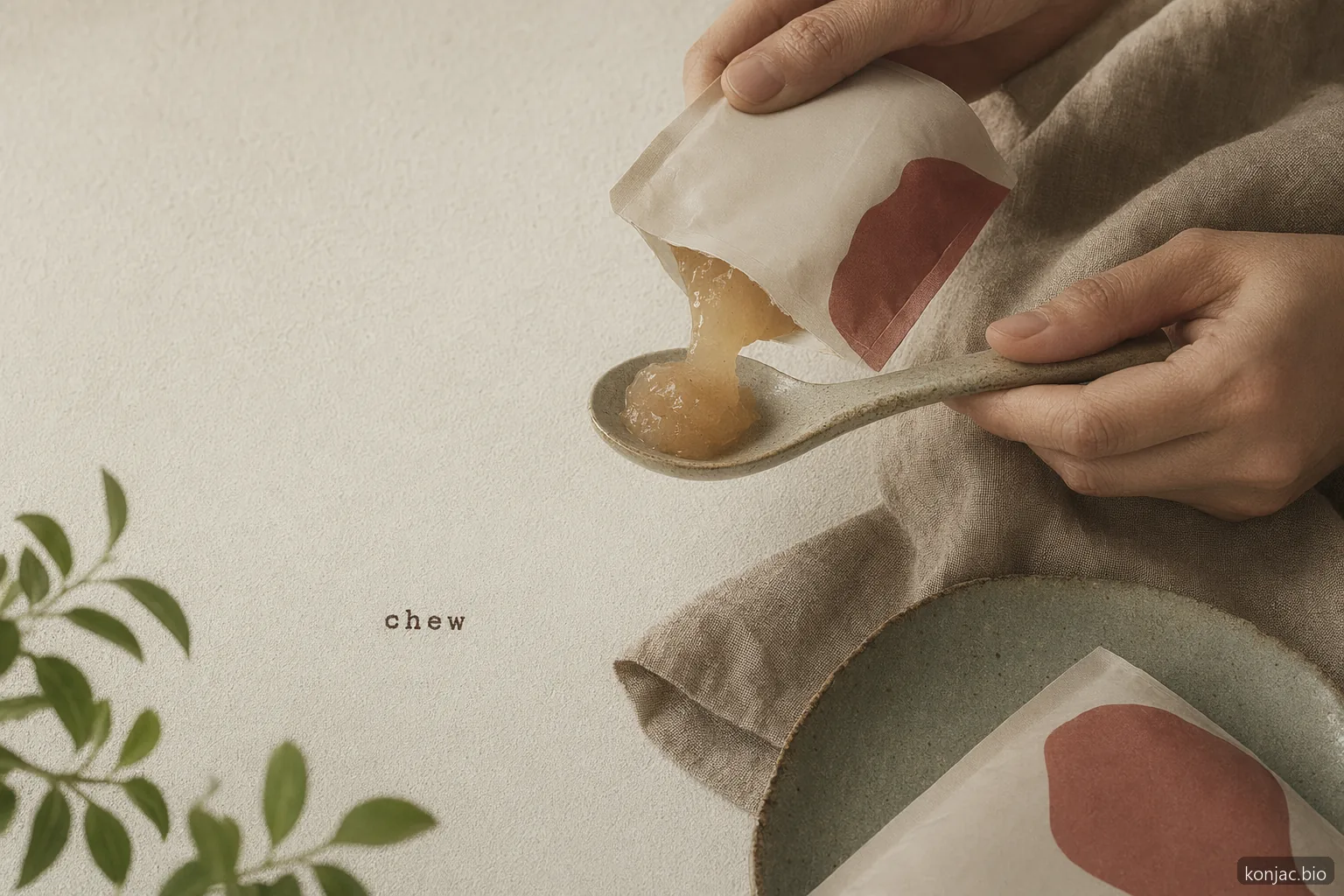
Drink konjac jelly is a soft, squeezable jelly snack that flows from a pouch but keeps enough gel structure to feel like jelly in the mouth. It usually combines water, fruit juice or flavor, sweetener, citric acid, and konjac glucomannan, a soluble fiber from the corm of Amorphophallus konjac described in food and nutrition literature as a high-viscosity polysaccharide glucomannan review.
The word drink can be confusing. A typical product is closer to a spoonable or squeezable jelly than a beverage with low viscosity. The intended eating pattern is slow sipping, light chewing, and swallowing in small amounts.
In Asia, pouch jelly formats often sit beside fruit jelly cups, agar desserts, and functional snack pouches. Western consumers usually discover the format through low-calorie snacks, fruit jelly pouches, or konjac jelly pouches positioned for portion control.
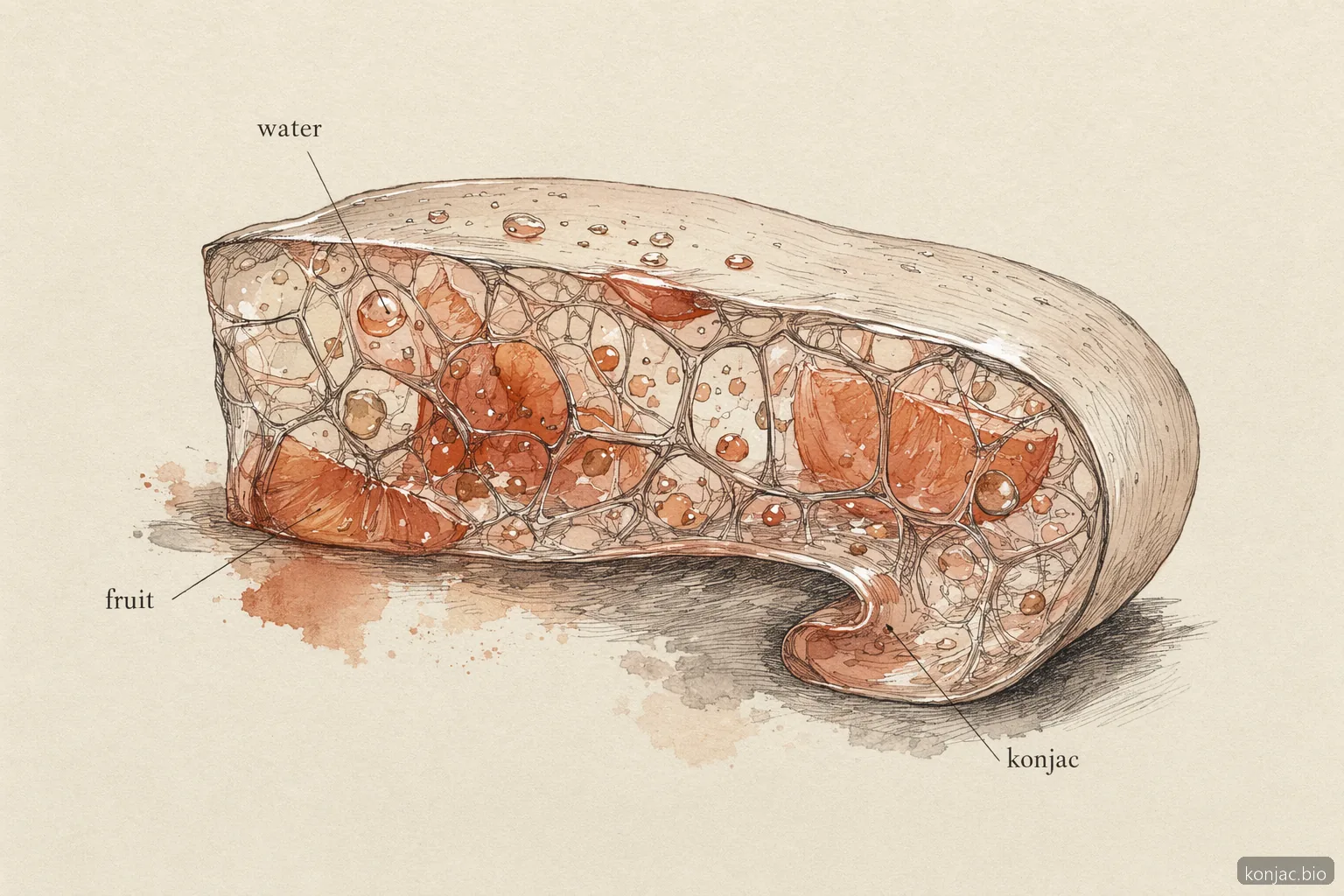
Texture is the main difference from juice. Konjac glucomannan hydrates and thickens water, then works with acidity, calcium, or other hydrocolloids to create a flexible gel. A brand can make the same base feel slurpable, spoonable, or sliceable by changing gum percentage, heat process, pH, and solids.
How do you drink konjac jelly safely?
You drink konjac jelly safely by squeezing out small portions, chewing or holding the gel briefly in the mouth, and swallowing slowly. The safest consumer instructions avoid rapid sucking, large pieces, and eating while running, driving, laughing, or lying down.
Konjac jelly safety matters because firm gels can be harder to break down than liquid drinks. The U.S. Food and Drug Administration has identified certain mini-cup gel candies containing konjac as a choking hazard, especially when the gel shape and firmness allow it to lodge in the throat FDA gel candy.
Pouch products are not identical to mini-cup candies, but the same design logic applies. A narrow spout, softer gel, smaller serving flow, and clear warning text can reduce misuse. Brands should validate the eating experience with realistic consumer handling, not only with bench-top viscosity data.
Practical label language can be simple:
- Consume slowly and chew before swallowing.
- Do not squeeze the full pouch into the mouth at once.
- Not suitable for infants or very young children.
- Use extra care for older adults or anyone with swallowing difficulty.
Safety also depends on storage and seal integrity. Acidified fruit gels need validated pH, heat process, water activity, packaging, and shelf-life controls. For export or private label work, many buyers ask for HACCP plans, allergen statements, and food safety systems such as ISO 22000 or FSSC 22000.
What is in drink konjac jelly?
Drink konjac jelly usually contains water, konjac glucomannan, sweetener, acidulant, flavor, color, and sometimes fruit juice, vitamins, or electrolytes. The short ingredient list can still produce very different textures because konjac interacts strongly with water, heat, ions, pH, and other gums.
A typical commercial formula is built around these functions:
| Component | Typical role | Common examples |
|---|---|---|
| Water phase | Creates volume and hydration | Water, juice, tea infusion |
| Gelling system | Builds viscosity and gel bite | Konjac glucomannan, carrageenan, agar |
| Sweetness | Balances acidity and flavor | Sugar, erythritol, stevia, sucralose |
| Acid | Controls tartness and pH | Citric acid, malic acid |
| Flavor system | Defines sensory profile | Peach, grape, lychee, mango |
| Process aids | Improves stability and filling | Calcium salts, buffers, preservatives where permitted |
Konjac glucomannan is the signature ingredient. EFSA evaluated glucomannan in relation to weight management and authorized the wording: "Glucomannan in the context of an energy restricted diet contributes to weight loss" EFSA opinion. The authorized conditions are specific, including 3 g of glucomannan daily in three 1 g portions with 1 to 2 glasses of water before meals.
That EFSA wording does not mean every pouch can make the claim. A finished snack must deliver the required glucomannan amount, present the claim exactly where allowed, and meet local labeling rules. Many drink konjac jelly products are sold mainly for texture, low calories, and fruit flavor rather than an approved health claim.
Drink konjac jelly versus cups, gummies, and shirataki
Drink konjac jelly is best understood as one branch of the konjac jelly family, not as a replacement for every konjac food. Cups, pouches, gummies, and shirataki noodles use the same botanical source but deliver different eating experiences.
The core comparison is practical:
| Format | Texture | Use case | Main design concern |
|---|---|---|---|
| Drink konjac jelly | Soft, squeezable gel | Snack pouch, portion-controlled dessert | Safe flow and chewable gel strength |
| Konjac jelly cup | Firm gel in a cup | Chilled dessert or fruit jelly | Piece size and choking-risk design |
| Konjac gummies | Chewy bite | Candy-style snack | Moisture control and chew consistency |
| Shirataki noodles | Elastic noodle | Low-calorie noodle dish | Rinse quality and cooking texture |
For consumers, the decision is mostly sensory. A pouch is convenient for commuting, lunchboxes, and chilled snacking. A cup feels more like dessert. Gummies feel like candy. Shirataki belongs in savory meals and is usually rinsed before cooking.
For brands, the decision is technical. Pouches need flow through a spout without becoming watery. Cups can hold a stronger gel but carry higher shape-related safety scrutiny. Gummies need bite stability over shelf life. If a team is choosing formats, a broader konjac jelly category map helps define the right texture, claim strategy, and pack size.
Formulation and sourcing notes for drink konjac jelly brands
A successful drink konjac jelly formula balances gel strength, flavor release, pouch flow, nutrition targets, and local labeling rules. The same 150 g pouch can feel premium, watery, rubbery, or difficult to swallow depending on hydrocolloid grade, hydration sequence, heat history, and filling temperature.
Four formulation checkpoints are especially important:
- Konjac grade: Purity, viscosity, particle size, odor, and hydration speed affect texture and clarity.
- Gel system: Konjac alone can be very viscous, while blends with carrageenan, agar, or gums can refine bite and flow.
- Acid and heat: Fruit flavors often need low pH, but acid and heat can change viscosity if process control is weak.
- Packaging: Spout diameter, pouch stiffness, fill weight, and headspace shape the real eating experience.
Product teams should test the gel after processing, after transport simulation, and at the end of shelf life. A pouch that looks perfect on day 3 can synerese, thicken, thin out, or lose fruit aroma by month 6 if the system is not robust.
For B2B buyers, konjac.bio sources konjac ingredients at wholesale scale and can discuss grades for jelly, pouch, noodle, and snack applications. To compare pricing, specifications, and supply options, contact the team at konjac.bio contact.
Adjacent development work often overlaps with konjac jelly powder when brands want dry premixes, faster sampling, or co-manufacturing flexibility. A powder system can simplify pilot trials, but the finished pouch still needs sensory, safety, and shelf-life validation.
Frequently asked questions
01 Is drink konjac jelly actually a drink?
02 Is drink konjac jelly low in calories?
03 Can children drink konjac jelly?
04 Does drink konjac jelly help with weight management?
05 What flavors work best in drink konjac jelly?
06 What should brands test before launching drink konjac jelly?
- Mini-Cup Gel Candy · U.S. Food and Drug Administration · 2024
- Scientific Opinion on the substantiation of health claims related to glucomannan · European Food Safety Authority · 2010
- Glucomannan and obesity: a critical review · PubMed · 2008
- Dietary fiber: Essential for a healthy diet · National Institute of Diabetes and Digestive and Kidney Diseases · 2024