What is konjac foods glucomannan powder?
Konjac foods glucomannan powder is a refined food ingredient rich in glucomannan, a water-soluble polysaccharide from the corm of Amorphophallus konjac. The plant is recognized botanically as Amorphophallus konjac by Kew's Plants of the World Online Amorphophallus konjac.
In food manufacturing, the powder is valued because small inclusion rates can create large viscosity changes. That makes it useful in low-calorie noodles, plant-based gels, sauces, frozen desserts, bakery fillings, and powdered drink mixes.
Konjac foods glucomannan powder is not the same thing as raw ground corm. Commercial grades are cleaned, milled, separated, dried, and standardized so buyers can specify viscosity, particle size, color, odor, and microbiological limits.
| Term | Meaning in food use |
|---|---|
| Konjac flour | Broad ingredient name for milled konjac material, often discussed in konjac flour sourcing. |
| Glucomannan powder | More purified fraction focused on soluble fiber and viscosity. |
| Konjac gum | Functional hydrocolloid name used in formulation and labeling contexts. |
| Shirataki base | Hydrated konjac system formed with water and alkaline setting. |
How does konjac foods glucomannan powder work in food?
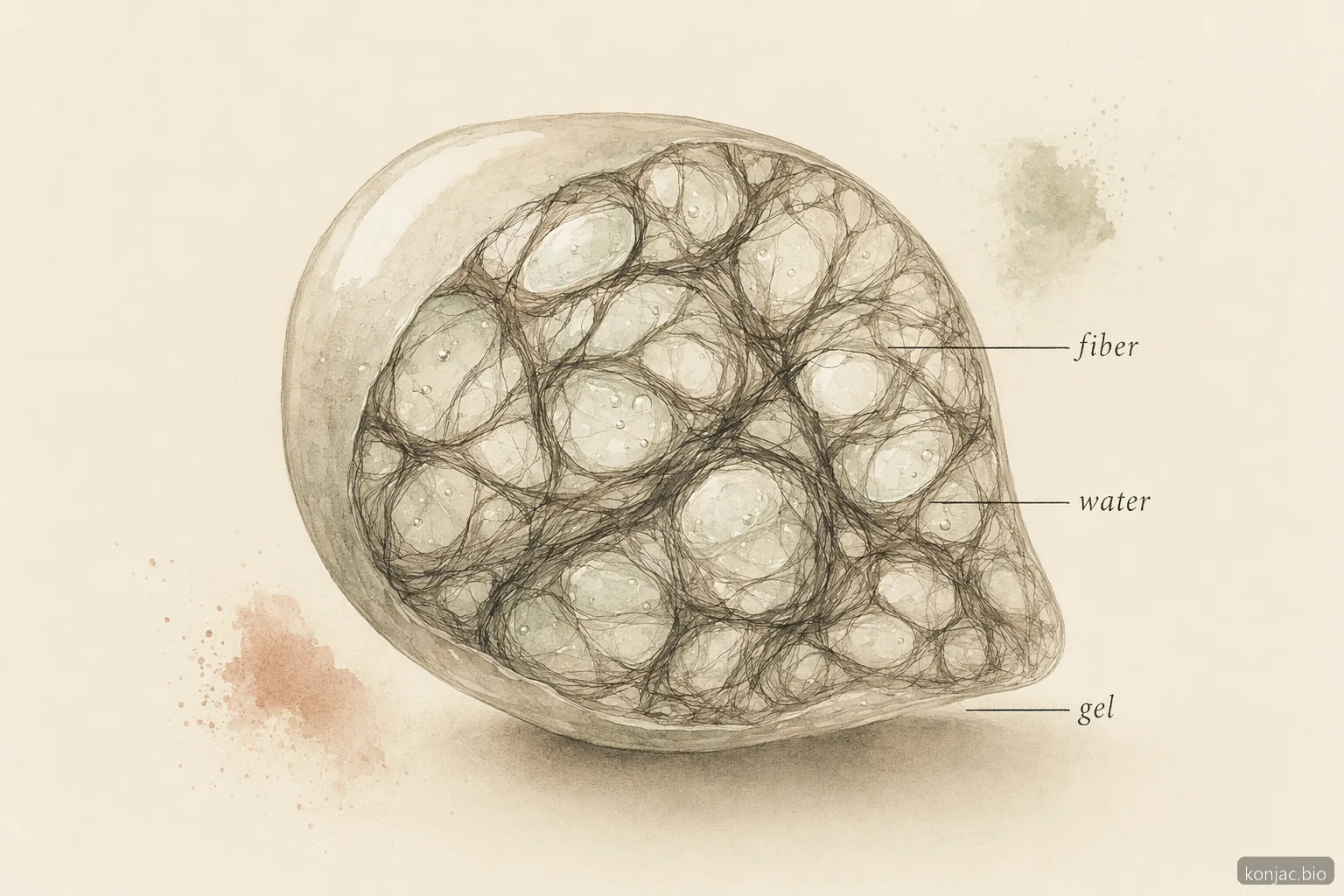
Konjac foods glucomannan powder works by absorbing water and forming highly viscous dispersions that stabilize texture. Its glucomannan chains hydrate in water, increase thickness, and can form elastic gels when paired with alkaline salts or compatible hydrocolloids.
The core formulation point is hydration. Konjac powder should be dispersed with strong agitation, often into other dry powders first, because direct addition to still water can create fish-eyes, which are dry cores surrounded by hydrated gel.
Typical food systems use konjac for three jobs:
- Viscosity: sauces, syrups, beverages, and fillings gain body without much added solid material.
- Gel structure: noodles, jelly pieces, gummies, and plant-based formats gain bite and elasticity.
- Water control: frozen desserts, meat alternatives, and bakery fillings can reduce syneresis and improve freeze-thaw texture.
Konjac glucomannan has been reviewed as a functional polysaccharide with strong hydration and film-forming behavior in food and biomaterial systems PubMed review. For side-by-side naming and grade differences, see konjac flour vs glucomannan.
Konjac foods glucomannan powder uses in finished products
Finished foods use konjac powder when a product needs texture, fiber, and water management from one ingredient. The highest-volume applications are shirataki noodles, low-calorie pasta alternatives, jelly formats, sauces, frozen desserts, and powdered nutrition blends.
Usage levels depend on viscosity grade and the target texture. A beverage may use a fraction of one percent for mouthfeel, while a gelled noodle or gummy system can use a higher level with water, calcium hydroxide, or another setting system.
| Product type | Function | Formulation note |
|---|---|---|
| Shirataki noodles | Elastic gel network | Hydrate fully before alkaline setting. |
| Sauces | Body and cling | Preblend with sugar, starch, or salt for dispersion. |
| Gummies | Chew and water binding | Pair with pectin, carrageenan, or starch as needed. |
| Bakery fillings | Syneresis control | Validate viscosity after heat and shear. |
| Powdered mixes | Fiber and thickness | Use instantized or fine grades for rapid hydration. |
Konjac.bio sources konjac ingredients at wholesale scale for food manufacturers and distributors. If your team needs samples, specifications, or container pricing, use the contact page.
For practical kitchen and pilot-plant handling, a companion guide on how to use konjac flour can help teams compare hydration steps, ratios, and common texture problems.
How should formulators specify purity, mesh, and viscosity?
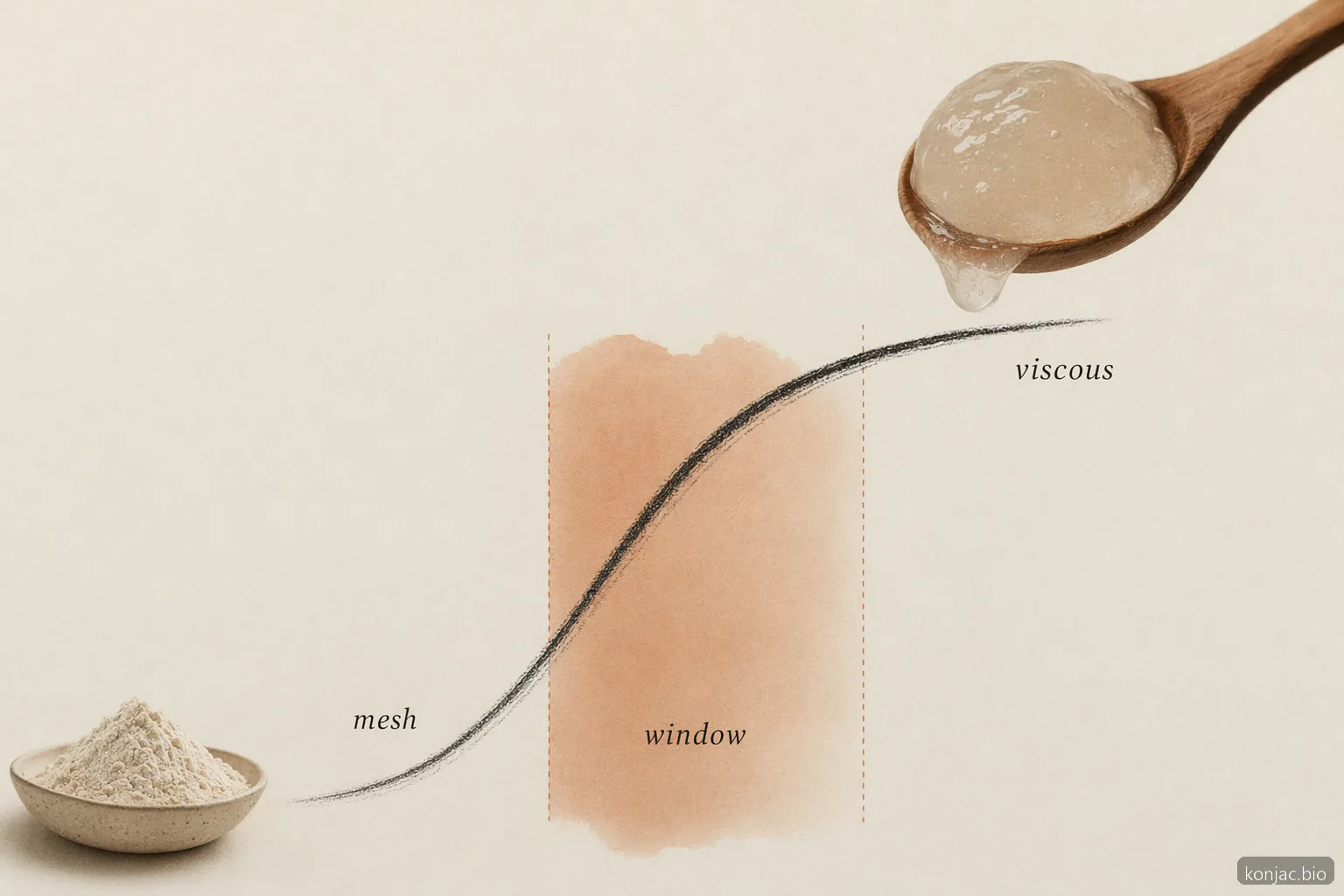
Formulators should specify konjac foods glucomannan powder by viscosity, particle size, glucomannan content, moisture, ash, pH, color, odor, and microbiological limits. These values affect hydration speed, finished texture, label consistency, and purchasing comparability.
A common mistake is buying on price per kilogram only. A lower-viscosity powder can require a higher dose, create more sediment, or fail in high-shear filling lines, which can erase the apparent savings.
Ask suppliers for a specification sheet that includes:
- Viscosity method: concentration, temperature, spindle, speed, and hydration time.
- Mesh size: fine powder hydrates faster, while coarse grades may disperse more easily.
- Moisture and ash: useful for shelf-life control and mineral load.
- Microbiology: total plate count, yeast and mold, coliforms, Salmonella, and E. coli.
- Food safety system: HACCP plan, allergen statement, traceability, and certification status.
For food safety management, ISO 22000 defines a framework for food-chain organizations that combine hazard control, communication, and management-system requirements ISO 22000. Buyers can also request COA history from at least 3 lots to check whether viscosity and microbiology stay inside range.
Safety, labeling, and responsible use
Konjac glucomannan is widely used in foods, but responsible use depends on hydration, serving format, and local labeling rules. Dry powders and highly elastic gels can create safety concerns if they are swallowed without enough liquid or shaped into small firm pieces.
The U.S. FDA has flagged mini-cup gel candies containing konjac because of potential choking hazards FDA alert. Product developers should validate piece size, gel strength, warning language, and intended consumer group before launch.
For nutrition positioning, use careful wording. The EFSA-approved wording for weight management is: “Glucomannan in the context of an energy-restricted diet contributes to weight loss,” under specified intake conditions EFSA opinion. A separate EFSA opinion also supports the wording “Glucomannan contributes to the maintenance of normal blood cholesterol levels” when conditions of use are met EFSA cholesterol.
Label names vary by market and application. Common choices include konjac flour, konjac gum, konjac glucomannan, glucomannan, or dietary fiber, but final wording should be checked against the target market's food labeling rules.
Practical safety controls are simple: disperse powder fully, avoid dry spoonful serving formats, validate gel dimensions, and include clear preparation directions when the ingredient is sold directly to consumers. Food brands should confirm claims, directions, and serving sizes with regulatory counsel before printing labels.
Frequently asked questions
01 Is konjac foods glucomannan powder the same as konjac flour?
02 How much konjac glucomannan powder is used in food formulas?
03 Does konjac glucomannan powder have approved health claims?
04 What makes a good B2B konjac powder specification?
05 Is konjac powder safe in noodles and jelly products?
- Scientific Opinion on the substantiation of health claims related to glucomannan and reduction of body weight · European Food Safety Authority · 2010
- Scientific Opinion on the substantiation of health claims related to glucomannan and maintenance of normal blood cholesterol concentrations · European Food Safety Authority · 2009
- Import Alert 33-15: Detention Without Physical Examination of Gel Candies Containing Konjac · U.S. Food and Drug Administration · 2024
- Konjac glucomannan: A review of structure, physicochemical properties, and application · PubMed · 2017
- Amorphophallus konjac K.Koch · Plants of the World Online, Royal Botanic Gardens, Kew · 2024