Is konjac flour gluten-free?
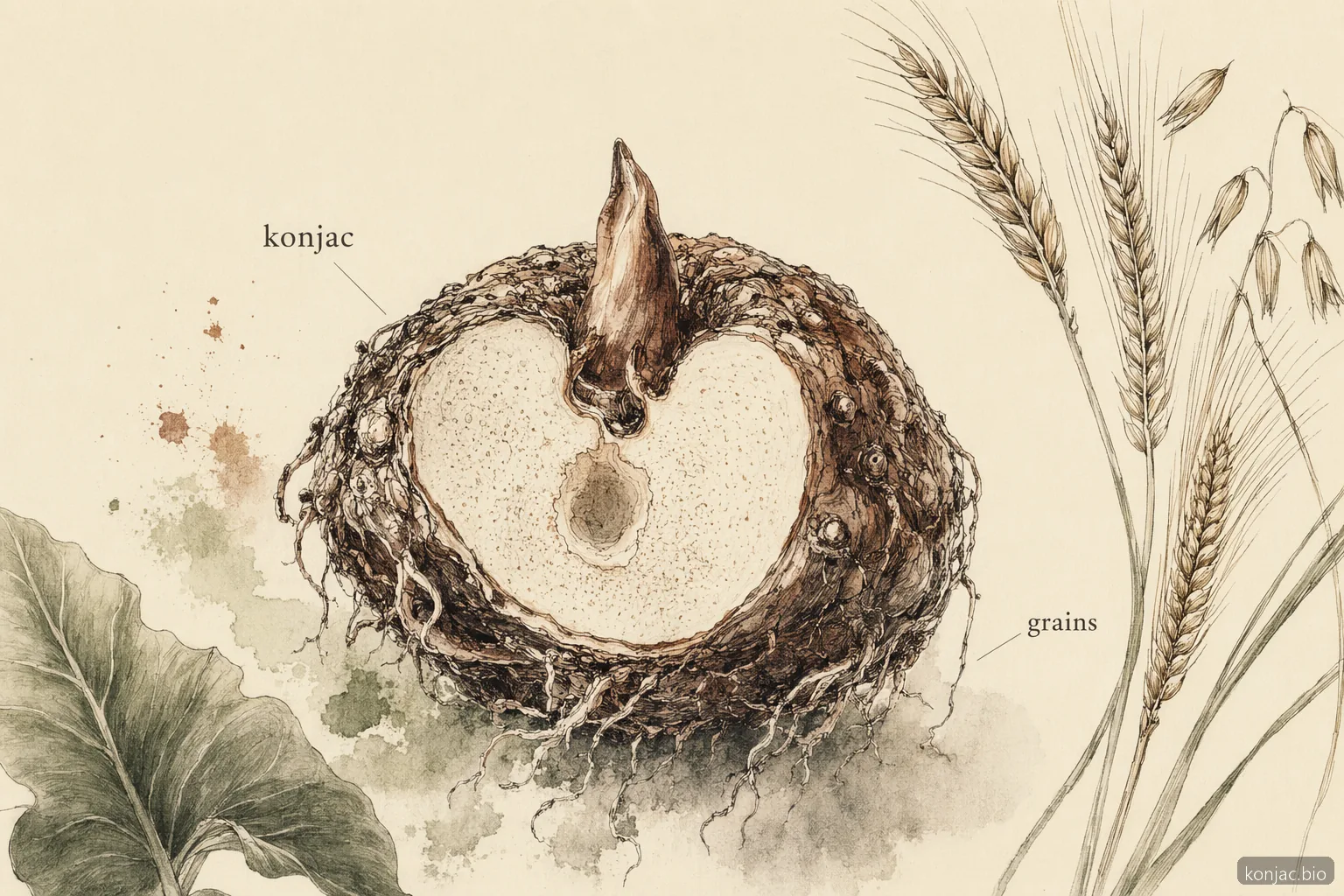
Yes, pure konjac flour is gluten-free because it is made from Amorphophallus konjac corms, not gluten-containing grains.
Gluten is the protein family found in wheat, barley, rye, and related grain ingredients. The NIDDK names wheat, barley, and rye as gluten sources in celiac diet guidance NIDDK diet.
Konjac flour is a hydrocolloid ingredient rich in glucomannan, a soluble dietary fiber fraction. FDA GRAS Notice 96 describes konjac flour as a food ingredient derived from the tuber of Amorphophallus konjac FDA GRN 96.
For consumers and food brands, the distinction is simple: pure konjac flour is gluten-free by source, but a packaged ingredient still needs gluten-free controls. Shared wheat flour lines, shared packing rooms, or blended carriers can change the risk profile.
Why does konjac flour gluten-free verification matter?
Konjac flour gluten-free verification matters because U.S. gluten-free labeling depends on finished-food compliance, not only ingredient origin.
The FDA gluten-free rule sets a limit of less than 20 parts per million gluten for foods bearing a gluten-free claim FDA gluten-free. That threshold applies to the labeled food, including ingredient handling and cross-contact exposure.
Verification is especially relevant when konjac flour is used in finished products that also contain oats, starch blends, seasonings, plant proteins, or bakery premixes. A konjac ingredient can be clean while a final blend fails a gluten-free specification because another component or facility introduces gluten.
| Control point | What to check | Why it matters |
|---|---|---|
| Raw material | 100% konjac flour, no wheat carrier | Confirms botanical source |
| Processing line | Dedicated or validated cleaning | Reduces cross-contact risk |
| COA | Lot-level gluten result when required | Supports label decisions |
| Packaging | Sealed food-grade bags | Protects powder in storage |
| Supplier statement | Allergen and gluten-free declaration | Supports audits and specifications |
For a broader ingredient overview, see the parent guide: konjac flour.
Where gluten risk can enter a konjac supply chain
Gluten risk usually enters after harvest, during milling, blending, repacking, warehousing, or finished-food production.
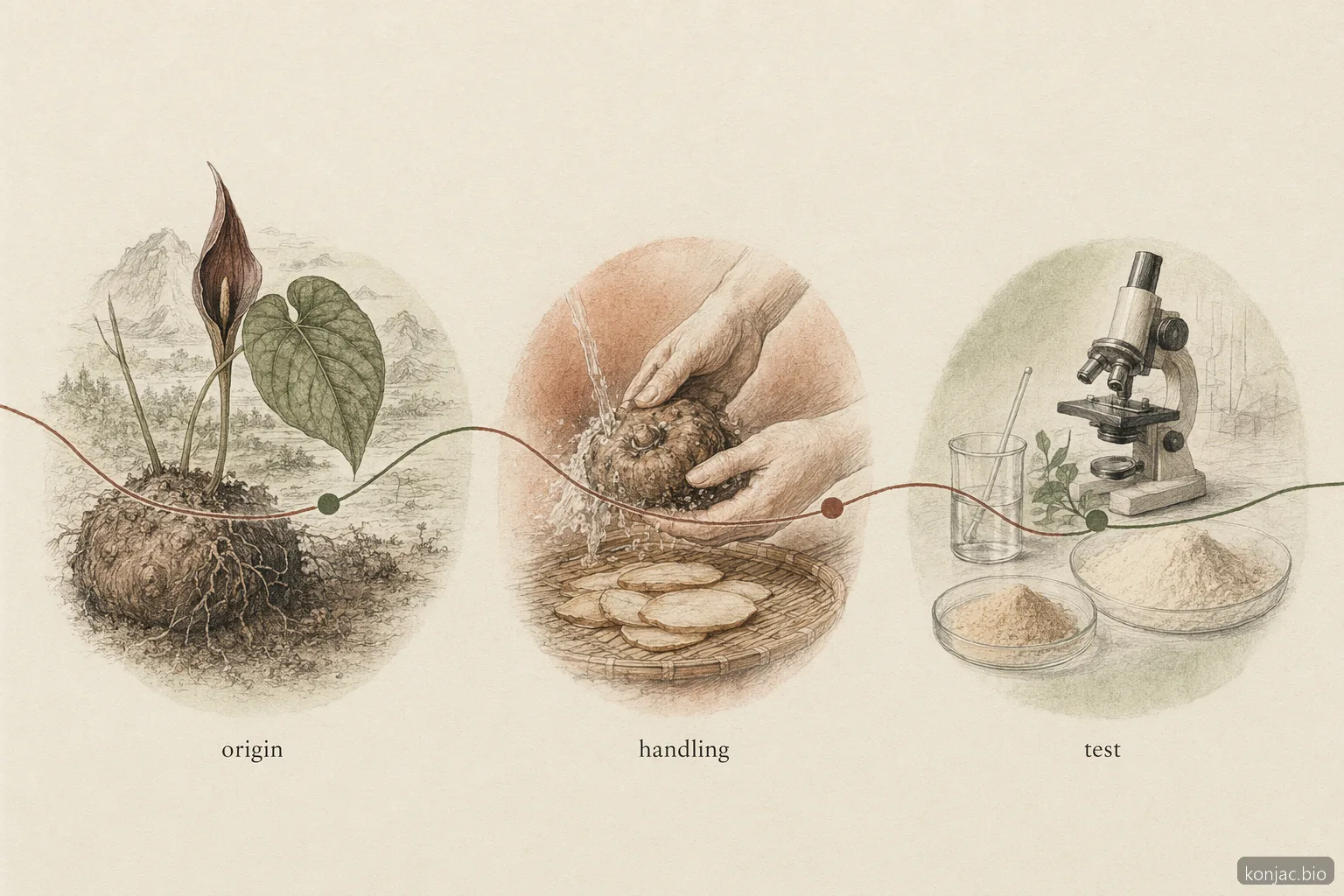
Konjac roots are washed, sliced, dried, milled, and purified into flour or powder fractions. A facility that also handles wheat flour, wheat starch, barley malt powder, or rye-based ingredients needs allergen segregation and validated sanitation.
Common risk points include:
- Shared milling equipment: fine powders can remain in screens, ducts, and dust collection systems.
- Shared packing lines: scoops, hoppers, bag sealers, and filler heads can carry residue.
- Blended ingredients: instant mixes may include starches, sweeteners, flavors, or anti-caking agents.
- Warehouse handling: torn bags, open pallets, or relabeled drums can create avoidable exposure.
- Foodservice kitchens: gluten-free noodles can contact wheat noodles through boiling baskets or prep tables.
Mini-cup jelly is a separate safety category: the FDA has flagged konjac-containing gel candies because of choking hazards, not because of gluten FDA import alert. This distinction matters because gluten-free safety and physical choking risk are different regulatory questions.
For B2B formulators, konjac.bio sources wholesale konjac flour with documentation for application, viscosity, particle size, and gluten-free needs. Contact konjac.bio for wholesale pricing and specification support.
How should brands specify konjac flour gluten-free for labels?
Brands should specify konjac flour gluten-free by combining ingredient identity, supplier documents, gluten limits, and cross-contact controls in the purchasing specification.
A practical specification should include the exact ingredient name, botanical source, target mesh or viscosity, allergen status, gluten-free requirement, and testing method if a claim will appear on pack. The FDA rule allows gluten-free labeling only when the food meets the regulatory criteria, including the less than 20 ppm gluten threshold FDA gluten-free.
Use a clear supplier checklist:
- Ingredient: konjac flour or konjac glucomannan from Amorphophallus konjac.
- Composition: no wheat, barley, rye, malt, or gluten-containing carrier.
- Allergen statement: current, lot-connected, and signed by the supplier.
- Gluten target: less than 20 ppm for materials used in gluten-free finished foods.
- Testing: ELISA method and lab name when testing is required.
- Food safety system: HACCP, ISO 22000, BRCGS, SQF, or equivalent documentation.
- Traceability: lot code, production date, packing date, and shelf-life data.
Konjac can also be compared with refined glucomannan powder when viscosity, clarity, and dosage precision matter. For that formulation choice, see konjac vs glucomannan.
Using konjac flour gluten-free in foods
Konjac flour gluten-free applications work best when formulators account for hydration, viscosity, calcium setting, and sensory balance.
Konjac flour hydrates strongly in water and can increase viscosity at low use levels. In gluten-free systems, that makes it useful for binding, thickening, gel structure, water retention, and texture correction when wheat gluten is absent.
| Application | Typical role | Formulation note |
|---|---|---|
| Shirataki noodles | Gel structure | Use controlled alkalinity and calcium setting |
| Gluten-free bread | Moisture retention | Start low to avoid gumminess |
| Sauces | Thickening | Pre-disperse to reduce clumps |
| Plant-based foods | Binding | Pair with starches or proteins |
| Frozen foods | Water control | Test freeze-thaw texture |
Glucomannan has authorized EU health-claim language in a specific context: “Glucomannan in the context of an energy restricted diet contributes to weight loss” EFSA claim. The claim has conditions of use, including daily intake and water consumption, so it should not be copied into labels without regulatory review.
For kitchen-scale ratios, hydration behavior, and product development examples, see konjac flour uses.
Frequently asked questions
01 Is konjac flour safe for people avoiding gluten?
02 Can konjac flour replace wheat flour in gluten-free baking?
03 Does konjac flour need gluten-free certification?
04 What is the difference between konjac flour and konjac glucomannan?
05 Can konjac noodles be labeled gluten-free?
- Gluten-Free Labeling of Foods · U.S. Food and Drug Administration · 2024
- Eating, Diet, and Nutrition for Celiac Disease · National Institute of Diabetes and Digestive and Kidney Diseases · 2024
- GRAS Notice No. GRN 000096: Konjac Flour · U.S. Food and Drug Administration · 2002
- Scientific Opinion on the Substantiation of Health Claims Related to Glucomannan · European Food Safety Authority · 2010
- Detention Without Physical Examination of Gel Candies Containing Konjac · U.S. Food and Drug Administration · 2024