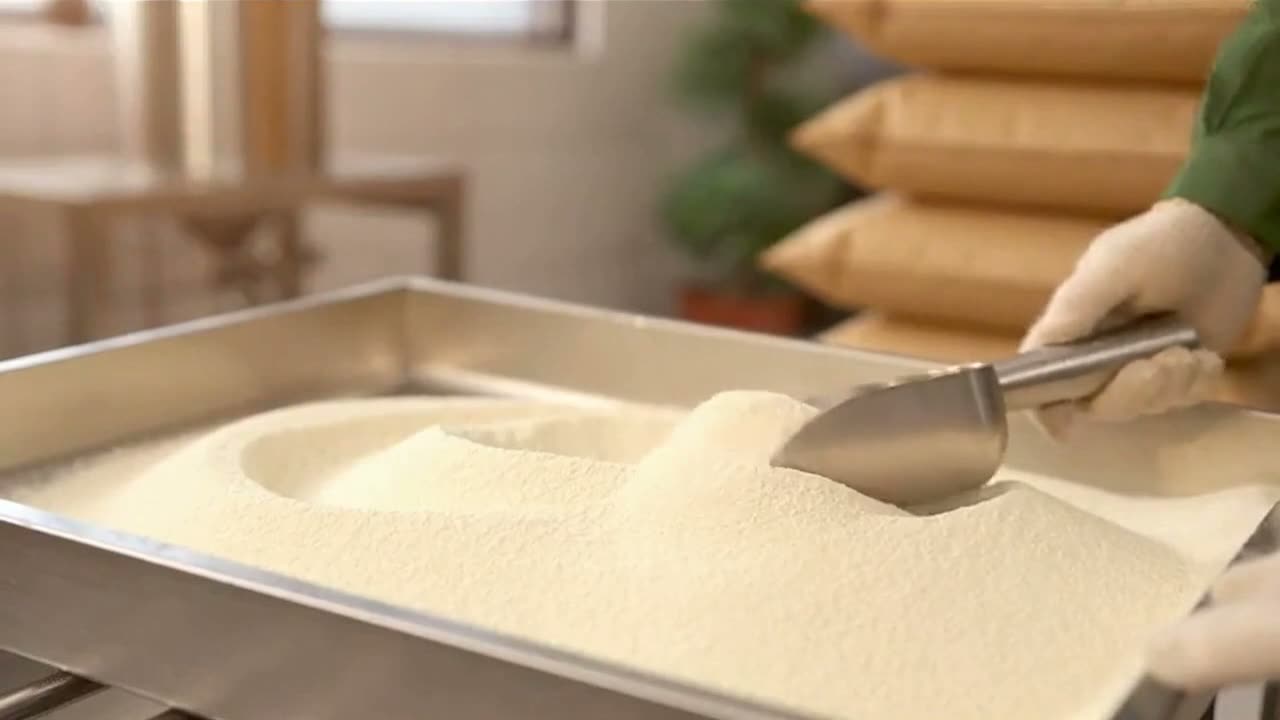
Is konjac flour healthy for everyday eating?
Konjac flour can be healthy for everyday eating when it is used as a small fiber ingredient, not as the main source of nutrition. It is made from the corm of Amorphophallus konjac and is prized because its glucomannan fiber absorbs large amounts of water and forms a viscous gel.
That gel behavior explains why konjac flour appears in shirataki noodles, low-calorie gels, sauces, bakery systems, and vegan binders. The same property also means serving size and hydration matter more than with ordinary wheat flour.
The healthiest role for konjac flour is functional: it can add soluble fiber, slow texture breakdown, and create fullness in foods that otherwise contain little fiber. The U.S. FDA defines dietary fiber as non-digestible carbohydrates that are intrinsic in plants or isolated fibers with beneficial physiological effects FDA fiber.
Konjac flour is not a strong source of protein, essential fats, iron, calcium, vitamin C, or B vitamins. A healthy konjac food still needs nutrient-dense partners such as vegetables, legumes, eggs, tofu, fish, poultry, whole grains, nuts, or seeds.

What health benefits does konjac flour have?
Konjac flour may support fullness, lower calorie density, and normal blood cholesterol levels because glucomannan is a viscous soluble fiber. The key is viscosity: once hydrated, glucomannan thickens the food matrix and increases volume without adding many digestible calories.
The strongest regulatory language comes from EFSA. The EFSA-approved wording for weight management is: Glucomannan in the context of an energy restricted diet contributes to weight loss EFSA opinion. EFSA links that claim to a daily intake of 3 g glucomannan, taken as three 1 g doses with 1 to 2 glasses of water before meals, within an energy restricted diet.
EFSA also supports the wording: Glucomannan contributes to the maintenance of normal blood cholesterol levels. The condition of use is 4 g glucomannan per day EFSA cholesterol.
Human nutrition data are not unlimited, but the direction is consistent enough to be useful. A 2008 systematic review and meta-analysis reported that glucomannan intake was associated with reductions in total cholesterol, LDL cholesterol, triglycerides, body weight, and fasting blood glucose, while noting variation across trials PubMed review.
These benefits are best understood as fiber-related support, not a stand-alone health fix. Konjac flour works best when the overall meal pattern already includes vegetables, adequate protein, unsaturated fats, and reasonable portions.
How much konjac flour is a healthy serving?
A healthy serving of konjac flour is usually small: often measured in grams for foods, or fractions of a teaspoon for home thickening. Because glucomannan swells rapidly, more is not automatically better.
For foods, konjac flour often performs at low use levels because it creates high viscosity. In a sauce, 0.2 percent to 0.8 percent may noticeably thicken the system. In noodles or gels, the level depends on calcium setting, water content, target bite, and regional formulation rules.
| Use case | Typical role | Practical guidance |
|---|---|---|
| Sauces and soups | Thickener | Disperse first, hydrate fully, then adjust viscosity. |
| Shirataki noodles | Gel network | Rinse well and pair with protein and vegetables. |
| Gluten-free baking | Binder | Use lightly with starches, flours, and hydrocolloids. |
| Fiber drinks | Viscous fiber | Mix thoroughly and drink with enough water. |
For the EFSA weight-management wording, the referenced condition is 3 g glucomannan daily in three 1 g portions, each with 1 to 2 glasses of water before meals EFSA opinion. For the EFSA cholesterol wording, the referenced condition is 4 g glucomannan daily EFSA cholesterol.
Dry konjac flour should not be swallowed as a powder. Its rapid water binding makes thorough dispersion and adequate fluid intake a basic safety step.
Where konjac flour fits in a balanced diet
Konjac flour fits best as a texture and fiber tool inside meals that already contain nutrients. A bowl of shirataki noodles becomes more balanced when it includes tofu, egg, shrimp, chicken, edamame, mushrooms, bok choy, sesame oil, or a mineral-rich broth.
Compared with wheat flour, konjac flour is not used by the cup. It behaves more like psyllium, xanthan gum, guar gum, or oat beta-glucan in that small amounts can strongly change viscosity, water retention, and mouthfeel.
For food developers, the main value is formulation control. Konjac flour can help create low-calorie noodles, spoonable gels, pourable dressings, reduced-sugar fruit preparations, and gluten-free structures. Ingredient buyers should specify viscosity grade, particle size, glucomannan content, moisture, ash, sulfur dioxide limits, and microbiological standards.
For a broader ingredient overview, see our konjac flour guide. If you are comparing specifications, the konjac flour vs powder guide explains naming and grade differences, while using konjac flour covers kitchen and formulation handling.
Konjac.bio sources konjac flour at wholesale scale for food, beverage, and supplement manufacturers. For viscosity targets, COA review, and bulk pricing, contact the team.
Is konjac flour healthy for everyone, and what are the risks?
Konjac flour is not ideal for everyone because its strong swelling and gel-forming behavior can create digestive discomfort or choking risk if used incorrectly. Safety depends on hydration, format, serving size, and the person using it.
The most important risk is physical obstruction from poorly hydrated konjac products. The FDA has highlighted choking concerns with mini-cup gel candies containing konjac because the gel may not dissolve easily in the mouth and can be difficult to dislodge FDA jelly.
Common digestive effects can include bloating, gas, loose stools, or abdominal fullness, especially when intake rises quickly. A practical approach is to start with small amounts, hydrate fully, and increase fiber gradually over several days.
People with swallowing difficulty, narrow gastrointestinal anatomy, or prior adverse reactions to high-viscosity fibers should be especially cautious. Children should not be given dry konjac powder, poorly hydrated gels, or firm mini-cup jellies.
Konjac flour can still be part of a healthy pattern for many adults. The safest format is fully hydrated food, consumed in sensible portions, with enough fluid and enough nutrient-dense ingredients around it.
Frequently asked questions
01 Is konjac flour healthy for weight loss?
02 Is konjac flour safe to eat every day?
03 Does konjac flour have calories?
04 Is konjac flour healthier than wheat flour?
05 Can children eat konjac flour?
06 What is the healthiest way to use konjac flour?
- Scientific Opinion on glucomannan and reduction of body weight · European Food Safety Authority · 2010
- Scientific Opinion on glucomannan and maintenance of normal blood cholesterol concentrations · European Food Safety Authority · 2009
- Effect of glucomannan on plasma lipid and glucose concentrations, body weight, and blood pressure · PubMed · 2008
- Questions and Answers on Dietary Fiber · U.S. Food and Drug Administration · 2024
- Import Alert 33-15: Detention Without Physical Examination of Gel Candies Containing Konjac · U.S. Food and Drug Administration · 2024