Is konjac flour gluten free by nature?
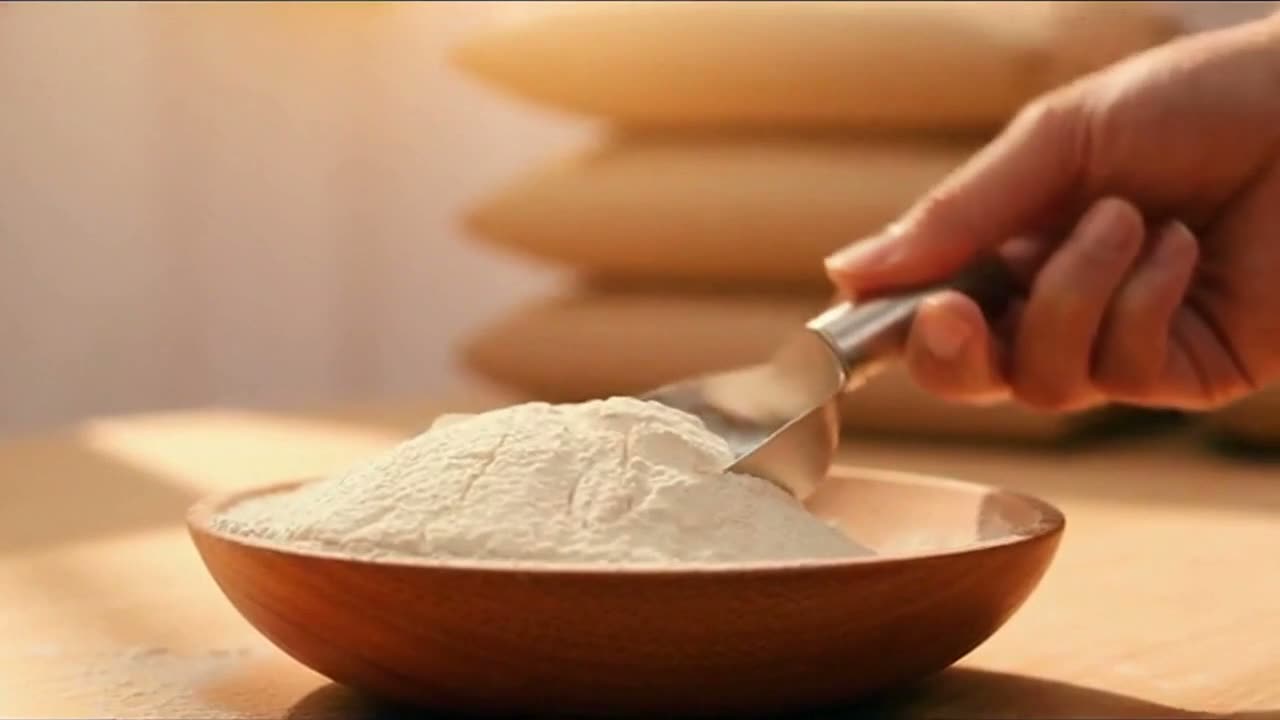
Pure konjac flour is gluten-free by nature because it comes from Amorphophallus konjac, not from wheat, barley, or rye. Gluten is the protein family found naturally in wheat, barley, and rye, according to NIDDK gluten.
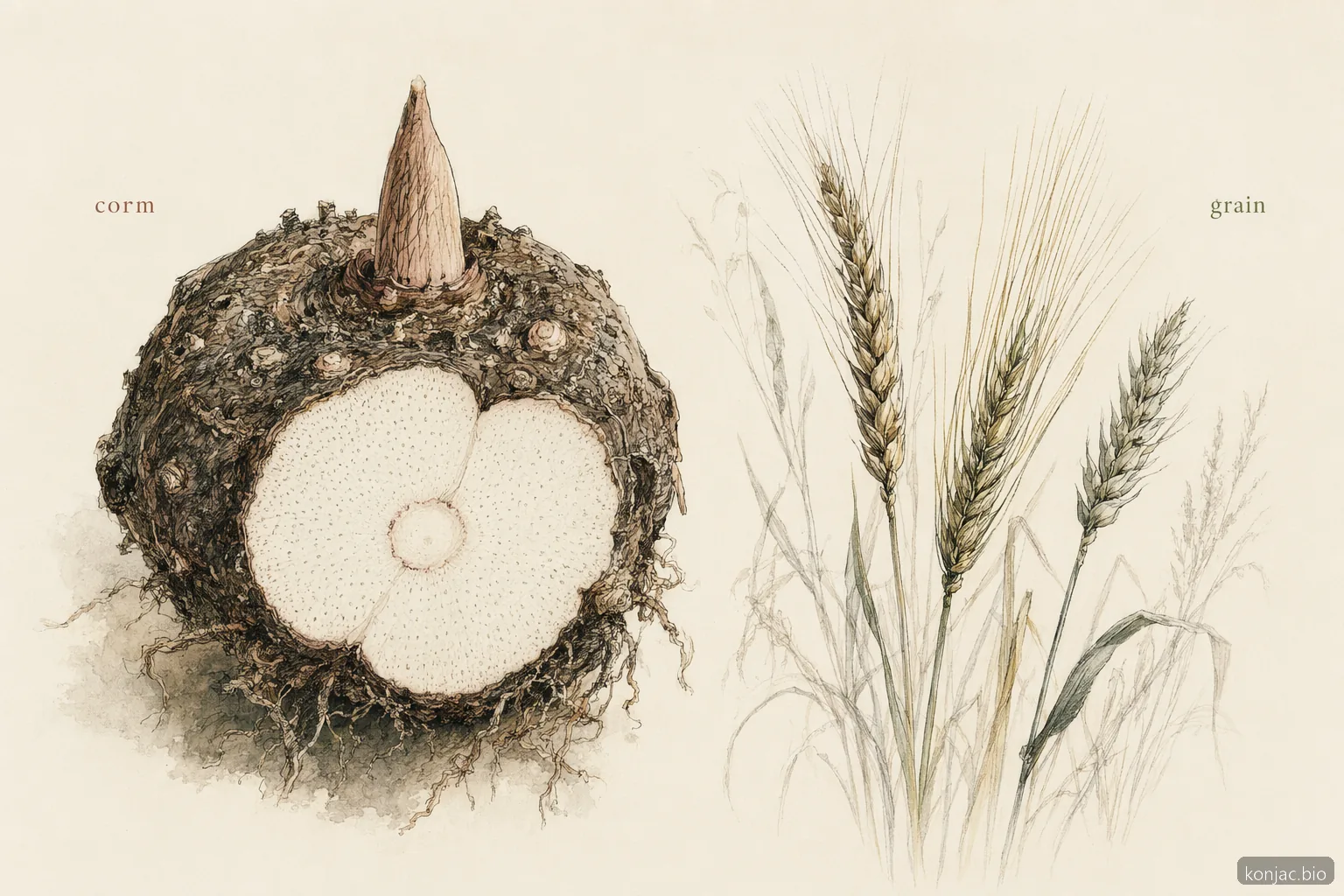
Konjac flour is milled from the corm of Amorphophallus konjac, a plant species listed by the Royal Botanic Gardens, Kew as A. konjac. Its main functional carbohydrate is konjac glucomannan, a water-binding polysaccharide used to thicken, gel, and add soluble fiber to foods.
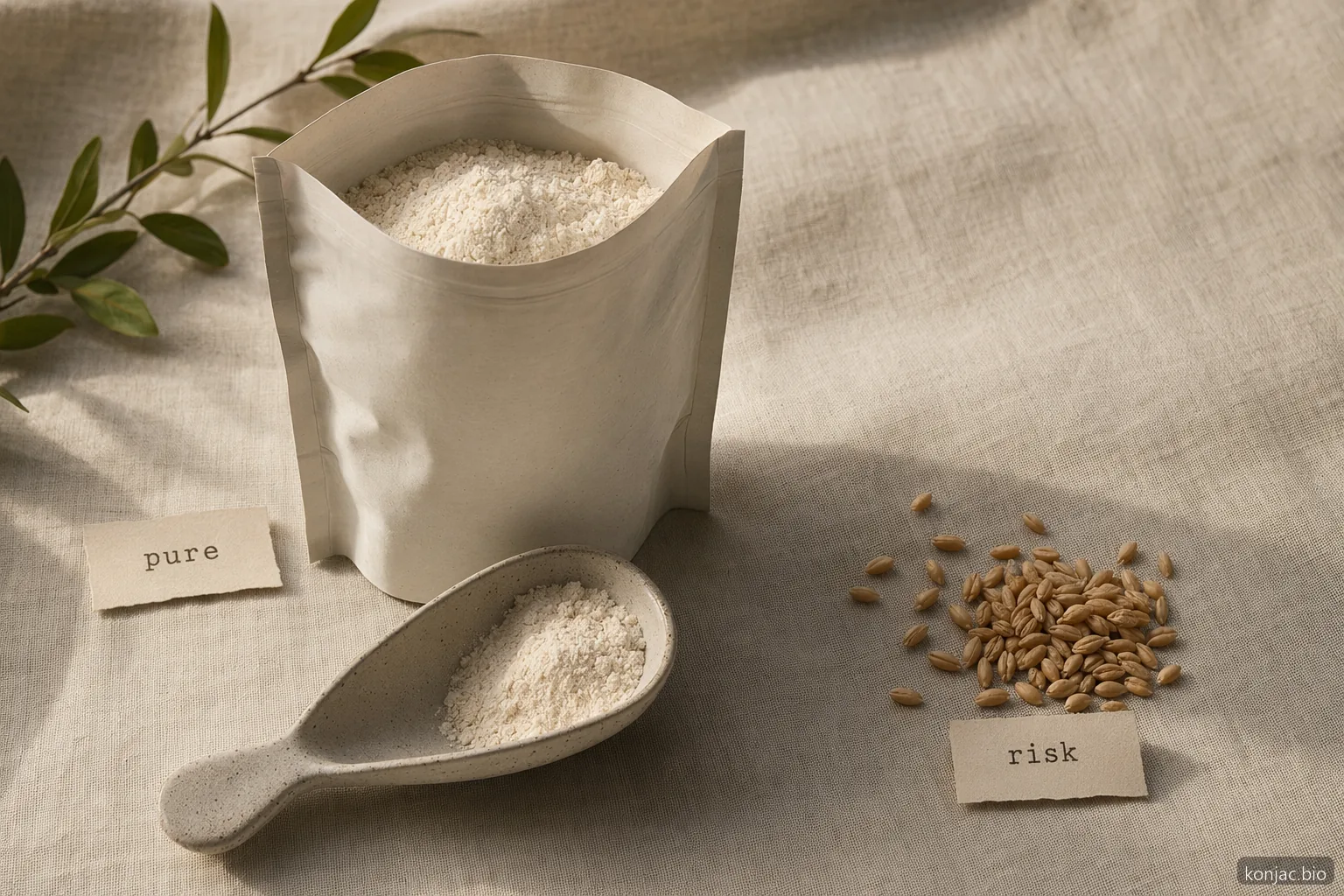
The word pure matters. A bag that contains only konjac flour or konjac glucomannan should not contain gluten grains as ingredients. A finished product that contains konjac plus wheat flour, malt extract, barley-based seasoning, or wheat-derived starch is not the same thing as pure konjac flour.
Why is konjac flour gluten free different from wheat flour?
Konjac flour is different from wheat flour because it is mostly a soluble fiber ingredient, while wheat flour is a cereal flour containing gluten-forming proteins. Wheat flour can create elastic dough, but konjac flour creates viscosity, gel strength, and water retention.
That difference changes how it behaves in recipes. Konjac does not build bread structure the way gluten does. Instead, it can help bind water in gluten-free doughs, thicken sauces, stabilize fillings, and improve the bite of shirataki-style noodles.
| Ingredient | Main role | Gluten status | Typical use |
|---|---|---|---|
| Pure konjac flour | Thickening, gelling, water binding | Naturally gluten-free | Noodles, sauces, bakery systems |
| Wheat flour | Dough structure and starch bulk | Contains gluten | Bread, pasta, cakes |
| Rice flour | Gluten-free starch base | Naturally gluten-free | Batters, breads, noodles |
| Xanthan gum | Viscosity and suspension | Usually gluten-free when verified | Sauces, dressings, bakery blends |
For formulation comparisons, see our sibling guide on konjac flour vs xanthan gum. Konjac is often used at lower percentages than cereal flours because a small dose can absorb a large amount of water.
How can konjac flour stop being gluten-free?
Konjac flour can stop being gluten-free when gluten-containing ingredients are added or when cross-contact occurs during harvesting, milling, blending, packing, or food production. The most common risk is not the konjac plant itself, but the supply chain around it.
In the United States, a food labeled gluten-free must contain less than 20 parts per million gluten under the FDA gluten-free labeling rule FDA standard. That threshold applies to foods making a gluten-free claim, not to every konjac product on a shelf.
Check these risk points before buying:
- Ingredient list: avoid wheat flour, barley malt, rye, brewer's yeast, and wheat-based binders.
- Allergen statement: look for wheat declarations where required by local labeling law.
- Facility note: shared equipment does not always mean unsafe, but it increases verification needs.
- Certification: third-party gluten-free marks add testing and audit expectations.
- Product type: baking blends, sauces, instant noodles, and jelly desserts often contain more ingredients than plain powder.
A plain powder with a gluten-free claim and a lot-specific certificate is easier to verify than a flavored finished food. For commercial purchasing, ask suppliers for the product specification, allergen statement, gluten test method, and most recent certificate of analysis.
Label checklist for buying gluten-free konjac flour
A good konjac label should make the ingredient identity, gluten status, and manufacturing controls easy to verify. The cleanest retail ingredient panel usually says konjac flour, konjac powder, or konjac glucomannan, with no cereal flour, malt, or seasoning blend added.
Use this five-step label check:
- Confirm the single ingredient: the ingredient panel should list only konjac flour or konjac glucomannan for a plain powder.
- Look for a gluten-free claim: in the United States, that claim is tied to the FDA's less than 20 ppm standard FDA labeling.
- Review the allergen box: wheat must be declared when it is an ingredient in FDA-regulated packaged foods under U.S. allergen labeling requirements FDA allergens.
- Ask for documentation: commercial buyers should request allergen statements, gluten test results, and lot traceability.
- Check usage instructions: konjac thickens quickly, so labels should explain hydration and dosage clearly.
For B2B buyers, konjac.bio sources konjac ingredients at wholesale scale and can support specification review for gluten-free product lines. Contact the team for pricing and documentation.
Do not use the front label alone as proof. Marketing phrases such as plant-based, low-carb, keto, or vegan do not automatically mean gluten-free. The gluten-free claim, ingredient list, allergen declaration, and supplier paperwork carry more weight.
Using gluten-free konjac flour in recipes and formulations
Gluten-free konjac flour works best when it is treated as a hydrocolloid, not as a one-for-one flour replacement. A typical home recipe may need only a pinch to 1 teaspoon, while commercial formulations usually test small percentages against water level, processing temperature, and target texture.
In sauces, konjac can add body without wheat roux. In gluten-free baking, it can improve moisture retention and reduce crumbling when paired with rice flour, tapioca starch, oat flour certified gluten-free, or psyllium. In noodles, it helps create the firm, elastic texture associated with shirataki and miracle noodles.
For home use, disperse konjac into other dry ingredients before adding liquid. Directly dumping konjac into hot liquid can form clumps because the outer surface hydrates quickly. A blender, whisk, or dry premix usually gives better dispersion.
Safety also matters. Konjac gels and expands with water, and the FDA has warned that mini-cup gel candies containing konjac can pose a choking hazard FDA warning. Powdered konjac should be fully hydrated in foods or consumed with adequate liquid, following the package directions.
For practical dosing and kitchen methods, see our guide on how to use konjac flour. For ingredient background, return to the parent guide: Konjac Flour and Powder.
Frequently asked questions
01 Is konjac flour gluten free for people avoiding wheat?
02 Does FDA gluten-free labeling apply to konjac flour?
03 Can konjac noodles contain gluten?
04 Is konjac glucomannan the same as gluten?
05 What is the safest way to buy gluten-free konjac flour in bulk?
- Gluten-Free Labeling of Foods · U.S. Food and Drug Administration · 2024
- Eating, Diet, and Nutrition for Celiac Disease · National Institute of Diabetes and Digestive and Kidney Diseases · 2023
- Amorphophallus konjac K.Koch · Plants of the World Online, Royal Botanic Gardens Kew · 2024
- Scientific Opinion on health claims related to konjac mannan · European Food Safety Authority · 2010
- Import Alert 33-15: Detention Without Physical Examination of Gel Candies Containing Konjac · U.S. Food and Drug Administration · 2024